UN-recognized government forces members take part in the "Operation Peace Storm" of the Libyaâs Government of National Accord (GNA) against the forces of warlord Khalifa Haftar, in Salahaddin region south of the capital Tripoli, Libya on April 18, 2020. (Photo by Amru Salahuddien/Anadolu Agency via Getty Images)
A slew of South Africans and South African companies have been named in an investigative report to the United Nations security council’s sanctions committee. The report focuses on a sanction-busting operation in Libya — and reads like a remake of the movie The Dogs of War.
The intricate plan, which was partially executed in 2019, involved minute details, including a “hit-squad” to “terminate” specific targets and people; drones, fixed-wing aircraft, and helicopters from South Africa; and assisting opposition forces in Libya to overthrow the government.
According to the confidential report, which the Mail & Guardian has seen part of, the investigators found the mastermind behind the plan, called Project Opus, was the notorious private-military “mercenary” contractor, Erik Prince, who is also an ally of former United States president Donald Trump.
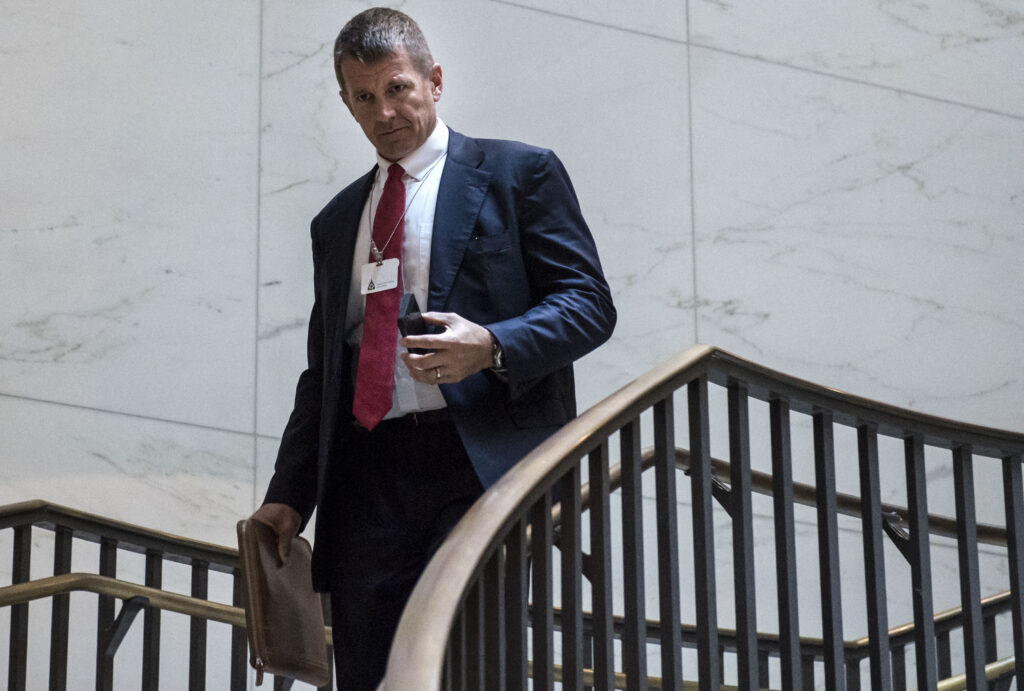 Erik Prince, former Navy Seal and founder of private military contractor Blackwater USA, arrives to testify during a closed-door House Select Intelligence Committee hearing on Capitol Hill in Washington, DC, November 30, 2017. (Photo by SAUL LOEB / AFP)
The supply of six helicopters from South Africa through Botswana to Benghazi in Libya has been previously reported; now the UN report confirms the exact details of all the local entities involved.
RELATED ARTICLE
The report also includes proof of payments, passport details, sale agreements for the aircraft, and attempts to obtain statements from all involved.
White House connection
With a few exceptions, most of the 20-man ground team or “hired hit squad” and other central figures and companies preferred to hide behind lawyers. The investigators found that Prince and several of his Lancaster 6 and Frontier Resource Group companies were directly or indirectly involved in setting up a military force, using various “cover stories”.
It also shows how Prince used his White House connections in his negotiations.
Prince, a former US Navy Seal officer and founder of the defunct private military company Blackwater USA, is also the brother of former US secretary of education Betsy DeVos.
Prince did not co-operate with the UN inquiry; last year his lawyer told the New York Times that he “had nothing whatsoever” to do with sanctions busting in Libya.
Prince’s main lieutenant and business associate in the Libyan operation is identified as Christiaan Durrant, an Australian and former fighter pilot who is also the chief executive of Lancaster 6, based in the United Arab Emirates (UAE).
Last year Durrant told Australia’s ABC network, as quoted in the New York Times: “We don’t breach sanctions; we don’t deliver military services, we don’t carry guns, and we are not mercenaries.”
The Libyan project’s chief of operations is a South African, Steven Lodge, who now resides in Aberdeen in the United Kingdom. Durrant and Lodge were co-directors in Umbra Aviation, based at Shaka’s Rock in KwaZulu Natal, but with a business address in Groenkloof, Pretoria.
Lodge served in the South African Air Force as a pilot, together with Ryan Hogan, who also features as one of the two South African helicopter pilots in the Libyan affair. Both have also been connected to the supply of helicopters and services to Mozambique’s armed forces against the armed insurgency in the north.
Neither Prince, Lodge, nor Durrant, responded to the M&G’s requests for comment regarding the report. We will update this story if and when we receive their comments. Hogan could not be reached for comment.
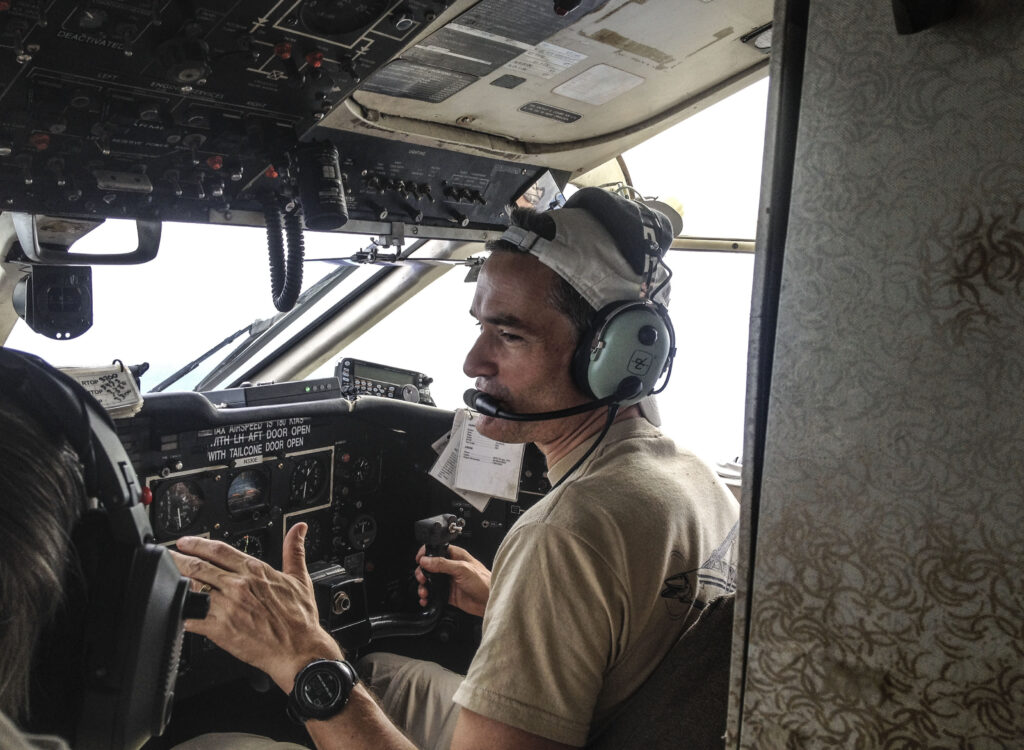 Christiaan Durrant, an Australian and former fighter pilot who is also the chief executive of Lancaster 6, based in the United Arab Emirates (UAE).
Multimillion-dollar operation in Libya
According to the report, the South African involvement in the $80-million operations can be gleaned from the supply of three Gazelle and three Super Puma helicopters to General Khalifa Haftar, the commander of the Libyan National Army, in June 2019.
Haftar leads the opposition forces, which was waging various attacks on Tripoli targets with the backing of many countries, such as the UAE.
The Puma helicopters belonged to Starlite Aviation Group, a South African company that moved its head office to Dublin in Ireland and its management team to Mauritius. Starlite, however, still has flying academies, a maintenance facility and a ground base in South Africa.
The three Pumas destined for Libya were earlier subcontracted in Afghanistan to support the US forces deployed there until the end of 2018. The three machines were imported back into South Africa on a temporary import permit, which was due to expire when Starlite sold them to L-6 FZE in June 2019 in a deal that Durrant allegedly negotiated on behalf of Prince.
According to the UN report, the Pumas were sold to L-6 FZE for $10.9-million. The three Gazelles, which were based in South Africa, were earlier demilitarised and were allegedly earlier used in Nigeria when a group of private military contractors assisted in training the Nigerian armed forces against the terror group Boko Haram.
The helicopters were deregistered from the Civil Aviation Authority’s registry, and it was stated that they were to be transferred to Jordan.
However, the papers used for this transfer were found to have been falsified, and the government of Jordan denied any knowledge of such.
The report states that the South African company Panzer Logistics, and local businessman Willie van der Stoep, were involved in arranging the freight forwarding of the six helicopters through Botswana and then by air to Benghazi in Libya. Van der Stoep is a former employee at Umbra Aviation.
“The response to the panel’s enquiries to the individuals and companies involved, through their legal counsel in January 2020, was to introduce a second cover story that Project Opus A was providing technical support services for an ‘oil and gas project in Libya’,” reads the report.
The M&G contacted Van der Stoep for further comment on the report, but did not receive a response.
Duncan MacArthur, director of Panzer Logistics responded, saying: “As to Panzer’s involvement, we simply provided ground transport assistance up to Gaborone. Our involvement was thoroughly investigated by [South African] authorities and the matter closed. We were provided a copy of a contract to conduct geo surveys and we were told the aircraft were going to Aman, Jordan. Our task was the safe transport from Gauteng to Gaborone. That was the limit of our involvement.”
The necessary getaway
Later, in a statement, Lodge claimed he was only contracted to set up a logistics base in Libya. He claimed neither Prince nor himself were involved in the export and import of the helicopters from South Africa, even though the waybill shows his name as the consignor.
Meanwhile, according to Lodge, two inflatable special forces boats were purchased from a Malta company to support his aviation logistics base. However, according to the report, the boats served as a quick getaway for the strike force in an emergency.
That became necessary when Haftar realised that he paid $80-million for old helicopters, but had been under the impression that he was buying attack helicopters ready to fly.
Lodge and his team, mostly South Africans who are known to the M&G, as well as British citizens, aborted the “maritime and assault rotary-wing aviation phase of the operation” from Haftar’s base and made their way by sea in the two boats.
One boat developed mechanical problems halfway. The team was required to board one boat and travel for 36 hours at a snail’s pace from Benghazi to Valetta harbour in Malta, arriving on 1 July 2019.
The cover story provided to the Maltese Police was that the men were workers from an oil field operation and needed to leave Libya quickly because of deteriorating security concerns. The report states the team were awarded handsomely for their aborted mission at $900 a day per person for an operation that was supposed to last between three and six months. They left Malta on commercial flights.
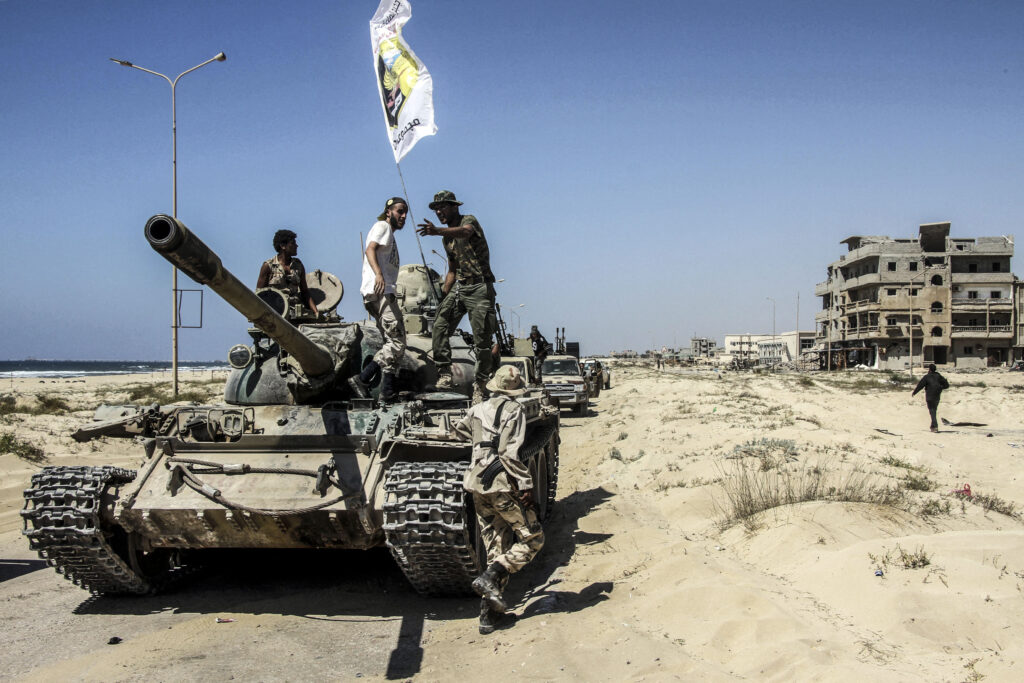 Members of the self-styled Libyan National Army, loyal to the country’s east strongman Khalifa Haftar, ride over a tank in the eastern city of Benghazi’s central Sabri district on July 5, 2017, during a military operation to retake the last remaining neighbourhood under jihadist control. – Haftar announced on July 5, 2017 the “total liberation” of the country’s second largest city, only hours after his LNA said they had cornered the last jihadists in the central district of Al-Sabri after routing them from the Soug al-Hout neighbourhood. (Photo by STRINGER / AFP)
Adequate answers hard to come by
Prince did not respond to questions by the UN investigators. Durrant’s September 2020 interview with investigators found “no evidence to his claims, little substantive detail and no rebuttal evidence to any of the findings” of the panel of investigators.
Lodge responded by providing a statement in reply, but the panel could also find no rebuttals and little substantive details in his response. Panzer Logistics did not offer any response, apart from a legal team stating that it represents the company.
The investigating panel made all possible attempts to contact as many of the men who were part of the ground team as possible.
Lodge, Hogan and another South African, who previously served as a paratrooper in the British Army, subsequently surfaced in northern Mozambique. This after Lodge and Hogan landed in Pemba in yet another Gazelle helicopter to proceed with a private military contract for the Mozambican authorities against armed insurgents in Cabo Delgado.
The panel’s report spans 121 pages. The maze of code names and false names, cover stories, offshore bank accounts and secretive weapons transfers spanning eight countries has been unravelled and was handed to the UN Security Council’s sanctions committee on 18 February.
The committee will decide on further action against those named in the report.
A senior UN representative told the M&G that should the committee conclude the findings are appropriate, any individual or entity would be subject to an asset freeze and travel ban measures.
[/membership]