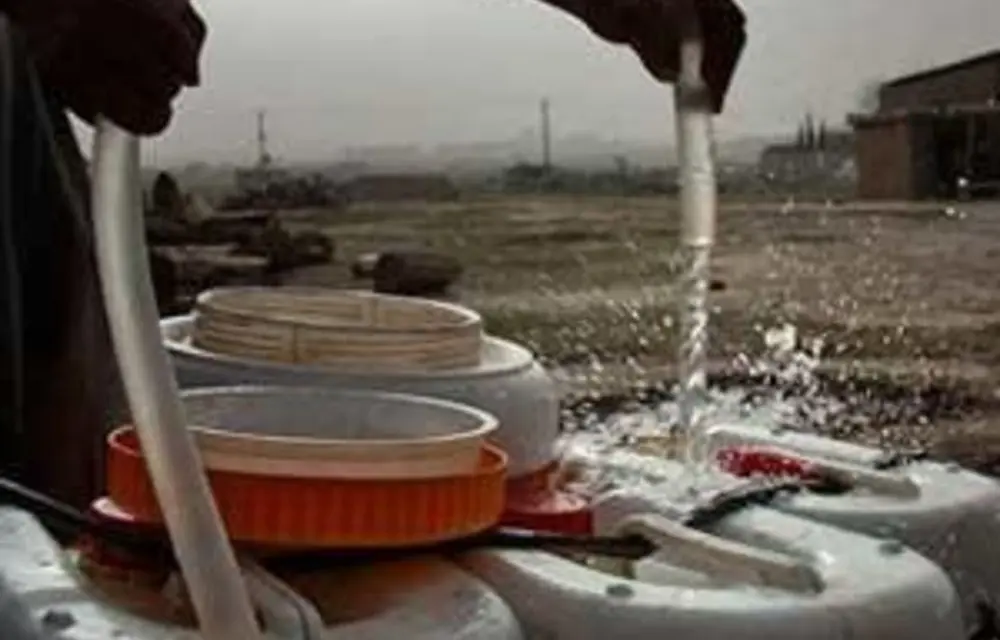
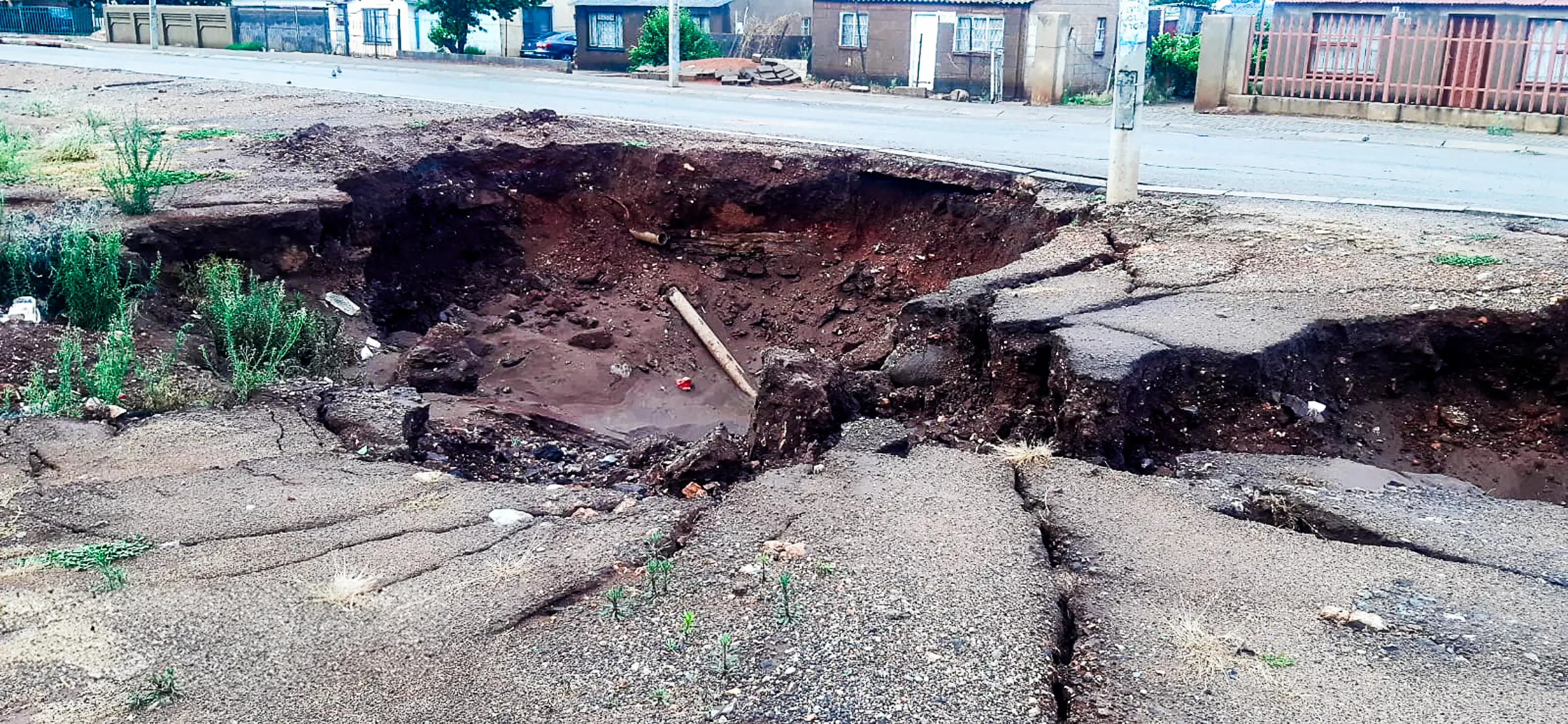
Phuleng Primary School in Kroonstad. Photos: KST website
President Cyril Ramaphosa has denied it, but according to a forensic investigation by audit firm PwC the Shanduka Foundation was part of a half-billion rand contract to refurbish Free State schools in 2013.
The PwC, in 2019, red-flagged the project, and now the provincial department of education is trying to get condonation for the allegedly unsolicited bid.
The R500-million irregular expenditure incurred by the Free State government appears to have undermined Ramphosa’s defence that his foundation did not have any contracts with the province’s school-building projects.
The Free State education department has unsuccessfully asked the provincial treasury to condone the R500-million irregular expenditure related to a “non-compliant” partnership with the Kagiso Shanduka Trust (KST).
Emails sent from January to last month between the provincial education and treasury departments, which the Mail & Guardian has seen, show how the latter refused to condone the millions of rands in irregular expenditure.
In one email in February, the chief financial officer at the education department, Dr Joseph Sekolanyane, wrote to the provincial treasury requesting condonation, saying that of the 100 Kagiso Shanduka Trust projects that the department assessed, only four projects were identified as poor workmanship.
“This will be taken to KST to rectify,” Sekolanyane said.
But the request was rejected last month by the provincial treasury, which acknowledged that the education department received “great benefits” from the partnership.
The letter was signed by the finance MEC, Gadija Brown, on 19 April, two days after Ramaphosa’s office issued a statement refuting claims that the foundation had a tender with the education department.
“The model was to address infrastructure development, curriculum support, social development and leadership in schools, which would be implemented at a district level. Their proposal to co-finance the development of education in the rural areas on a 50/50 basis with the department made financial sense considering that [the education department] is delivering on its mission at half the cost.
“Provincial treasury is, however, of the opinion that there were no good grounds for the noncompliance, that appointing [KST] on the basis of an unsolicited bid did not meet any innovation requirements, which was a transgression of [the national treasury practice note] of 2008/2009,” the rejection letter reads.
The letter added: “Based on the above mentioned facts, the request for condonement of irregular expenditure related to nonadherence to unsolicited bid requirements is not condoned.”
Change: The Free State department of education’s MEC, Tate Makgoe, together with Kagiso Shanduka Trust
project managers and a De Beers’ representative visit one of the KST’s project school, Phuleng Primary School in Kroonstad, to monitor the progress made since the project started. Photos: KST website
The education department’s condonation plea followed a forensic report published in October 2019 by PwC, which found that the KST had caused the Free State education department about R508-million in irregular expenditure.
The report recorded that the department’s irregular expenditure for KST was R498 229 558 but PwC said when it compared this to the basic accounting system payment data, “we identified a difference of R10-million”.
“The difference relates to the R10-million payment made on 14 October 2016 to Kagiso Shanduka Trust. The department should update its [irregular expenditure] register with this amount,” the PwC report said.
The Shanduka Foundation was established by the Shanduka Group and its founder, Ramaphosa, in 2004. The foundation changed its name to the Cyril Ramaphosa Foundation in 2015, after he disinvested from Shanduka Group in 2014.
The Shanduka Foundation formed a partnership with Kagiso Trust in 2013 to assist Free State schools with infrastructure development that included building and renovating classrooms, computer and science laboratories and libraries, as well as upgrading hostels and kitchen areas.
The reasons cited by PwC for the irregular expenditure was that, because the KST approach was an “unsolicited bid” — meaning that the trust approached the provincial government itself — the bid did not meet the requirements of a 2008/2009 national treasury practice note on unsolicited bids; it did not meet the innovation requirements set out in the national treasury regulation — in other words, the proposal had to be original.
The KST had proposed to assist with improving schools infrastructure in the Free State, provided the provincial department matched whatever investment the trust made.
“The concept of private sector co-funding a project with [the] government and then also being responsible for delivery on the project predates 2004.
“Appointing KST on the basis of an unsolicited bid … did not meet any of the innovation requirements [and] was a transgression of the [national treasury practice note] of 2008/2009. As a result, the expenditure meets the definition of irregular expenditure,” the report reads.
The KST contract with the provincial education department is at odds with what Ramaphosa’s office said last month in a public statement —that the Shanduka Group had not received tenders from the Free State.
“Shanduka Group never received a tender for the construction of any schools in the Free State. Shanduka did not operate in the construction industry. The nature of Shanduka’s investments and operations are publicly available,” the presidency said.
But, according to the PwC report, the foundation approached the education department in an “unsolicited bid” and participated in construction work, the contract of which caused the province to incur irregular expenditure.
A senior official in the Free State government said an urgent meeting was called last week after Ramaphosa released his statement.
The official said Premier Sisi Ntombela summoned the provincial treasury and the department of education’s MEC, Tate Makgoe.
“They were trying to find a way on how they can [formulate] this to ensure that this is not an irregular expenditure. They are in a panic mode because they want this thing resolved. They want to protect themselves and the president. When they started this project it was a mess, no compliance was done and that’s why they are trying to clean this up,” the official said.
KST chief executive Themba Mola said there was no fraud or corruption in its work with the education department, adding that the partnership raised funding of R500-million, including R115-million from the trust.
“We vehemently and categorically state that there has been no tender awarded to KST by the Free State department of education (FSDOE), and KST does not compete or bid for government tenders to build school infrastructure. We only implement school infrastructure projects that fall under the partnership agreement with the FSDOE,” Mola said.
“We are proud of the impact we have made in the Free State and our achievement speaks for themselves. The benefits of the programme have been positively realised over the years and can be observed in the improvement in the pass rate and quality of matric results in both the Motheo and Fezile Dabi districts,” he added.
Free State education spokesperson Howard Ndaba said the PwC report recommended that the department physically verify whether any losses were incurred from the projects related to the KST partnership.
Phuleng School construction
“After all projects were verified and no loss was established, the department approached the provincial treasury for condonation of the irregular expenditure. The department is still working in partnership with KST.
“This is after the market was tested through Request for Proposals [for a public/private partnership] to test the market in 2018,” Ndaba said.
“This approach was in compliance with [the auditor general’s] recommendation. The report from PwC did not recommend that anybody be charged.”
Presidency spokesperson Tyrone Seale did not respond to requests for comment by the time of publication.
[/membership]