The SAS Makhanda.
The South African National Defence Force (SANDF) will be tackling the extremist militia in northern Mozambique head-on with its own version of a “rebel truck” — also known as the Goat (gun on a truck).
It will be the first time the Goats will be used operationally after it was developed and manufactured last year. The weapons system has never been shown to the public. According to arms manufacturers, the concept is the same as those used by rebel forces in countries like Libya, where an air defence gun is mounted on a normal Toyota Land Cruiser.
Equipped with twin Russian 23mm air defence guns, the trucks are normally used to defend land forces against an air assault. Used in the “rebel” configuration, they become a deadly weapon, which can mow down vehicles and structures. People won’t stand a chance of survival, one expert involved in the project told the Mail & Guardian.
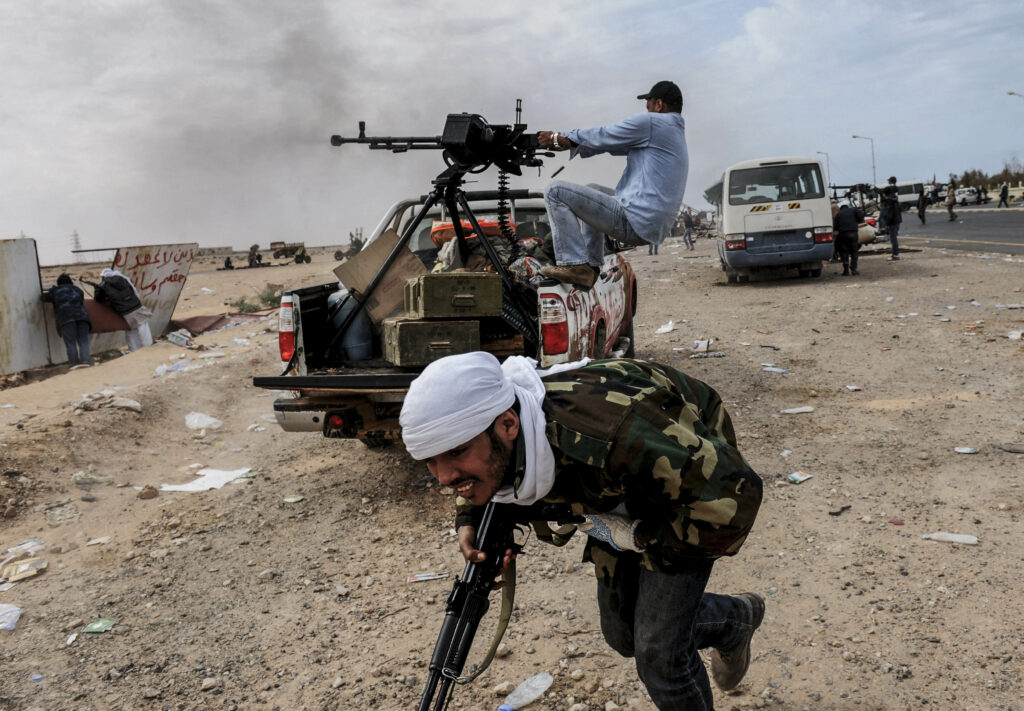 A gun on a truck (Goat) being used by Libyan rebel fighters in early 2011.
The weapons system was developed in conjunction with Armscor and the Council for Scientific and Industrial Research at a cost of about R6-million. It was initially meant for possible use by the special forces, but they apparently baulked at the idea, because the Goat doesn’t fit in with their usual modus operandi when they deploy in an area undercover.
According to a former defence force general, the four to six completed Goats have been added to the inventory of the Air Defence Artillery Formation of the defence force. The original guns have been in use by the defence force since 1960 and were also used extensively during the border war in the 1980s to ’90s.
Armament experts are, however, less optimistic about the success the Goat will achieve. It offers no protection on the sides against enemy fire for the gunner crew of two, because only the canopy of the vehicle is bulletproof.
Similar systems were used with great success in Libya with its sandy and flat landscape, but the lay of the land in Cabo Delgado is vastly different, with thick bush and few roads to manoeuvre on.
The defence force is maintaining its silence about how and which type of forces it will deploy as part of its commitment of 1 495 soldiers for the Southern African Development Community (SADC) Mission in Mozambique (Samim), but at least three convoys of vehicles have been spotted and posted on social media as they moved through the Ressano Garcia border post at Komatipoort.
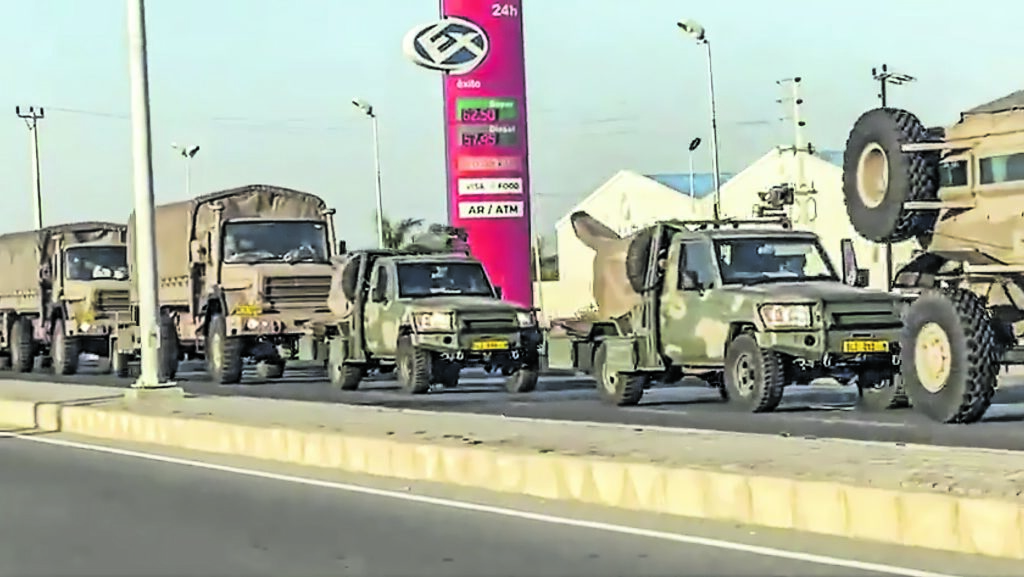 The SANDF has developed its own version of the Goat, which is being deployed in Mozambique. (Roberto Schmidt/AFP)
At least three of the Goat systems were visible in these convoys, which also included a number of Casspir armoured personnel carriers, armoured Mfezi ambulances and Samil trucks piled with supplies. The convoys are led by vehicles from the Mozambican police on their way towards Pemba’s operational area.
Soldiers from the Botswana Defence Force have also deployed to Mozambique, and Zimbabwe announced that it will contribute about 300 instructors to train the Mozambique Armed Defence Forces (FADM). Angola offered some advisers, as well as the use of its heavy-lift Ilyushin 76 cargo aircraft. Tanzania has this week announced that it will resume its patrols on its border with Mozambique in the Kibiti area. A Tanzanian military aircraft also delivered some troops and equipment in Pemba on Tuesday.
According to analysts who have studied the insurgency in Mozambique, a number of the extremists’ leader group are apparently Tanzanians.
Angola’s Ilyushin 76 landed at the Waterkloof Air Force Base in Centurion on Tuesday evening and would probably upload some of the SANDF’s heavier equipment, which cannot be deployed by road. The Ilyushin can carry a payload of up to 60 tonnes.
The Rwanda Defence Force has, in the meantime, been delivering significant losses to the extremists, who are known as al-Sunna or al-Shabaab among the local population. Rwanda has been acting as the aggressive strike force of the bigger attempt to finally drive the extremists from the Cabo Delgado province, where they have been waging a war of terror aimed at the local population since 2017.
More than 30 insurgents have been killed.
“The insurgency is losing grip, while the extremists are destroying everything they can hold on. [This is] a very poor strategy for anyone with long term goals,” said Colonel Ronald Rwivanga, spokesperson for the Rwanda Defence Force.
“So, while we may be registering successes wherever we have fought the insurgents, working as a collective entity [with SADC] is critical for the consolidation of these battle successes — winning the war, so to speak.
“SADC, and especially South Africa, has ships that could be critical in cutting off the insurgents’ sea lines of communication, blockading them,” Rwivanga said.
The South African Navy’s SAS Makhanda, a warrior class strike craft, arrived in Pemba port last weekend, from where it will conduct maritime patrols to prevent any unauthorised supply deliveries by sea to the insurgents. According to Mail & Guardian sources in Mozambique, two fast interceptor boats (named Namiliti and Umbeluzi), which were donated by India to the FADM in 2019 as part of an agreement to strengthen defence co-operation between the two countries, departed from Pemba harbour this week.
It is assumed that they will work in tandem with the SAS Makhanda along the coastline towards the strategic town of Mocímboa da Praia, where the extremists have been in control for months.
 Displacement: Soldiers from the Rwanda Defence Force prepare to board a plane for a military mission to Mozambique from Kigali on 10 July. (Photo by SIMON WOHLFAHRT/AFP via Getty Images)
On Tuesday this week, after the Rwandans cleared Awasse from extremist control, the Mozambican inspector general of the police, Bernardino Rafael, flanked by Samim soldiers, visited the area with a contingent of local media. Rafael said that the extremists destroyed the electricity substation at Awasse. This meant that the power supply to all the nearby villages, as well as to the cellphone towers, has been interrupted too.
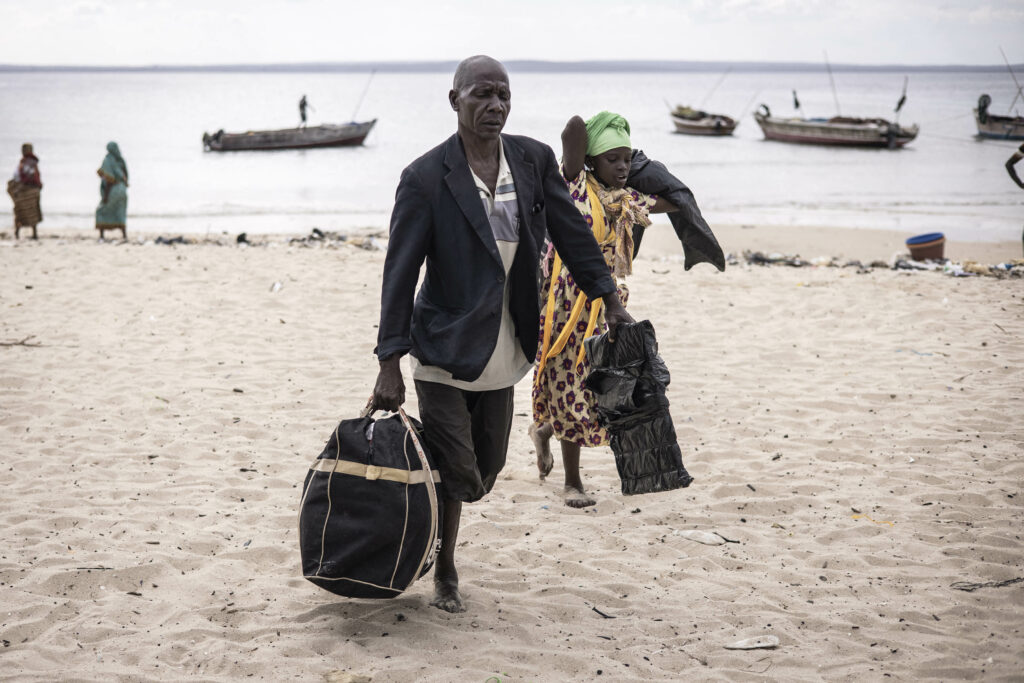 A man and a young girl arrive at Paquitequete beach in Pemba on 22 May 22, after fleeing Palma by boat with 49 other people. (Photo by JOHN WESSELS / AFP)
However, according to sources there have not been any skirmishes between the Samim forces and the extremists. Not all the convoys of equipment have yet arrived, and the advance teams of both South Africa and Botswana, together with a Cessna Caravan light aircraft from the South African Air Force, are doing reconnaissance before the combined forces will surge northwards.
[/membership]