Mark Boucher during the South African national cricket team training session at Six Gun Grill Newlands on January 09, 2022 in Cape Town, South Africa. (Photo by Ashley Vlotman/Gallo Images)
In two weeks’ time, Mark Boucher, the Proteas’ coach, will don all the protective cladding he can muster as he defends himself against accusations of “gross misconduct” by his employers, Cricket South Africa (CSA).
The Boucher disciplinary hearing comes shortly after the arbitration hearing against Boucher’s former skipper, Graeme Smith, whose two-year stint as the CSA’s first director of cricket ended in March.
According to the estimates of an insider, the two legal matters combined will set the CSA back a cool R10-million in legal fees. Covid-19 reeling the CSA can ill-afford this cost.
“CSA admitted before parliament’s portfolio committee on sport earlier this year that they’ve spent R50-million on legal fees recently, but the Smith and Boucher matter will have added to that significantly,” the insider added.
Boucher is not the only CSA employee who has been disciplined recently. So, too, have Welsh Gwaza, the former company secretary, and Kugandrie Govender, the former interim chief executive.
Both appeared before Terry Motau, a respected senior counsel, who won the respective cases against them for the organisation who paid daily fees for him and his legal team running into hundreds of thousands of rands.
Motau will chair the CSA disciplinary hearing against Boucher, leading some to speculate that the outcome of the week-long hearing is a foregone conclusion.
This might be all in a day’s work for the CSA’s high-flyers but since disgraced former chief executive Thabang Moroe took over from Haroon Lorgat in 2017, the CSA has become a slave to the law, with representatives of Johannesburg’s leading legal firms flitting in and out of their Glenhove Road offices like the proverbial sandwich lady.
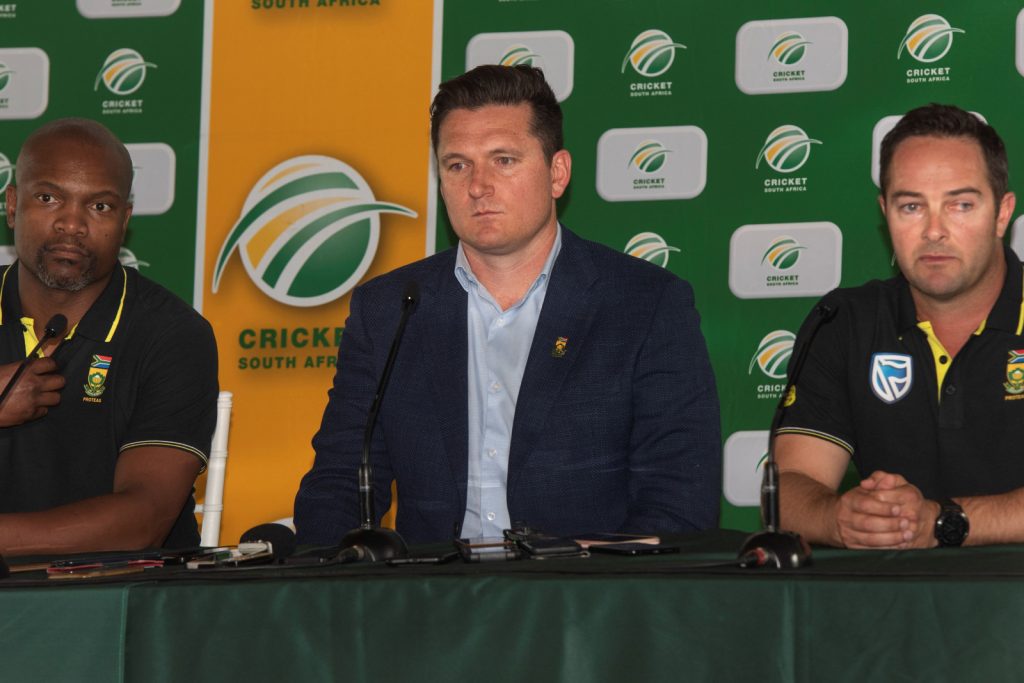 Enoch Nkwe, former Proteas assistant coach, Graeme Smith and Mark Boucher(R), the South African Cricket coach. (Photo by Brenton Geach / AFP) (Photo by BRENTON GEACH /AFP via Getty Images)
Lorgat is a good place to start because, last week, the CSA announced it was entering into partnership with SuperSport to “form a new company that will manage a dynamic new T20 competition”. There was an element of back to the future in all this because wasn’t this very thing announced by the two parties four years ago, when Lorgat was jettisoned as CSA chief executive because the inaugural edition of the T20Global League was a steaming wreck?
In its place, the CSA started the Mzansi Super League, a T20 competition loosely mirrored on the Indian Premier League and Australia’s Big Bash. All well and good, except that post-Lorgat, the CSA’s leadership decided it didn’t like SuperSport very much and gave the broadcast rights to that cash-cow, the SABC. Of course, they couldn’t pay.
SuperSport weren’t going to be humiliated in public, so pulled out of the joint venture. From then on, tensions between the respective organisations ran high. Now they’ve made up and are back together. Don’t be surprised if Smith plays a role in the latest new T20 venture.
Moroe had an uncanny knack of either overreaching or annoying people. A talented man, sometimes he did both at the same time. Under his watch, a culture of court action became commonplace, although it was sometimes those acting against the CSA that were forced to seek legal solutions. One such was the SA Players’ Association (SACA), which took the CSA to the South Gauteng high court at the end of May 2019, on the eve of the Proteas opening World Cup fixture against England.
The reason for doing so? The SACA believed that the CSA’s financial forecasts for the 2018-2022 broadcast rights and budgeting cycle were seriously off the mark and considered discussions about domestic restructuring (which would lose SACA members their jobs) premature.
The SACA argued that rather than stand to lose R654-million in the next four-year cycle, the figure was closer to a billion rand. Moroe banned then SACA chief executive Tony Irish from meetings — he “adds no value”, said Moroe In a confidential mail aired in the court papers — and having exhausted all avenues to get to the financial truth, the SACA took the CSA to court.
In January 2020, the CSA rescinded the decision to tamper with the domestic playing format and the parties settled. The CSA paid the SACA’s approximate R700 000 in legal fees and stumped up double that in legal fees of their own. Just another day in the mad reign of King Thabang.
His heavy-handedness alienated others. The CSA and the Western Province Cricket Association (WPCA) got involved in a protracted kerfuffle in the latter half of 2019 over the ins and outs of footing the bill for developments at Newlands.
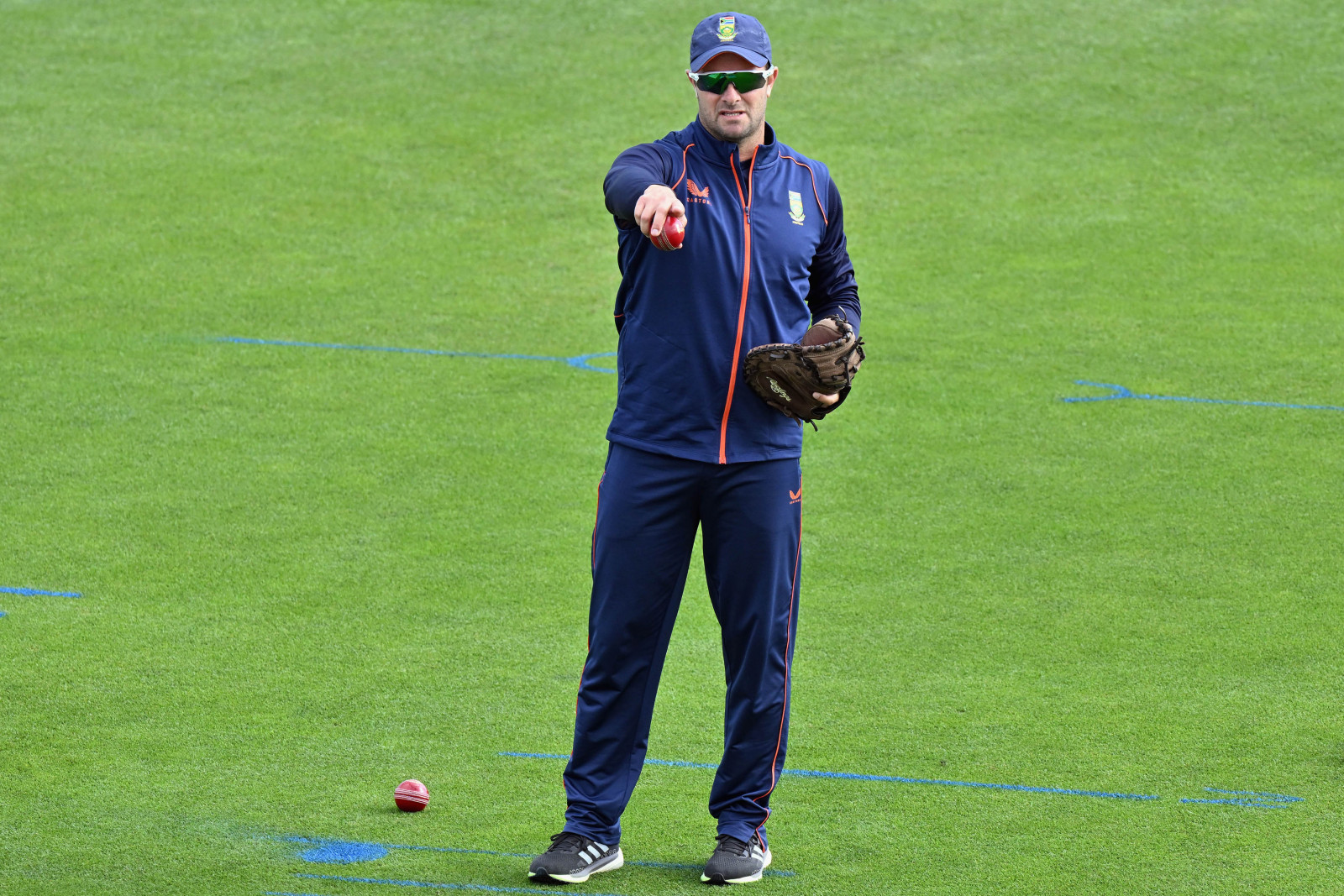 Head Coach Mark Boucher of South Africa reacts prior to day one of the Second Test Match in the series between New Zealand and South Africa at Hagley Oval on February 25, 2022 in Christchurch, New Zealand. (Photo by Kai Schwoerer/Getty Images)
So heated did matters become that the CSA activated their “step-in” rights, to which the WPCA board mounted a legal challenge — which they won. “The award confirms that the decision taken by CSA to suspend the WPCA board was invalid, unlawful and is therefore set aside,” noted then WPCA president Nicholas Kok in November 2019.
For good measure the CSA footed WPCA’s R1.5-million legal costs.
The story of this rampant dysfunction was contained in the Fundudzi Report, which the CSA board commissioned but wouldn’t make public on the (no doubt expensive) advice of legal firm Bowman Gilfillan. Bowman’s were the recipient of much legal work from the CSA at the time, largely because Gwaza was a former Bowman’s employee.
Bowman’s advice on the Fundudzi was shown to be spectacularly hair-brained when Minister of Sport Nathi Mthethwa waded in and dissolved a CSA board that had spent much of its time apologising for Moroe. One of the first acts of the interim CSA board formed in its place? They released the Fundudzi on the CSA’s website. A careful read showed the report contained less high explosive than expected. Way to go Bowmans.
And let’s not forget last year’s curiously dubbed Social Justice and Nation-Building hearings, during which Werksmans Attorneys were on hand to lend ombudsman Dumisa Ntsebeza a helping hand. For facilitating and managing the process, Werksmans raked in between R5-million and R6-million, estimates the self-same source.
It’s led to a joke in the industry which goes as follows: “Why can’t the CSA be sued anymore?”
“Because they’ve briefed every attorney in Jo’burg — there’s no one left.”
[/membership]