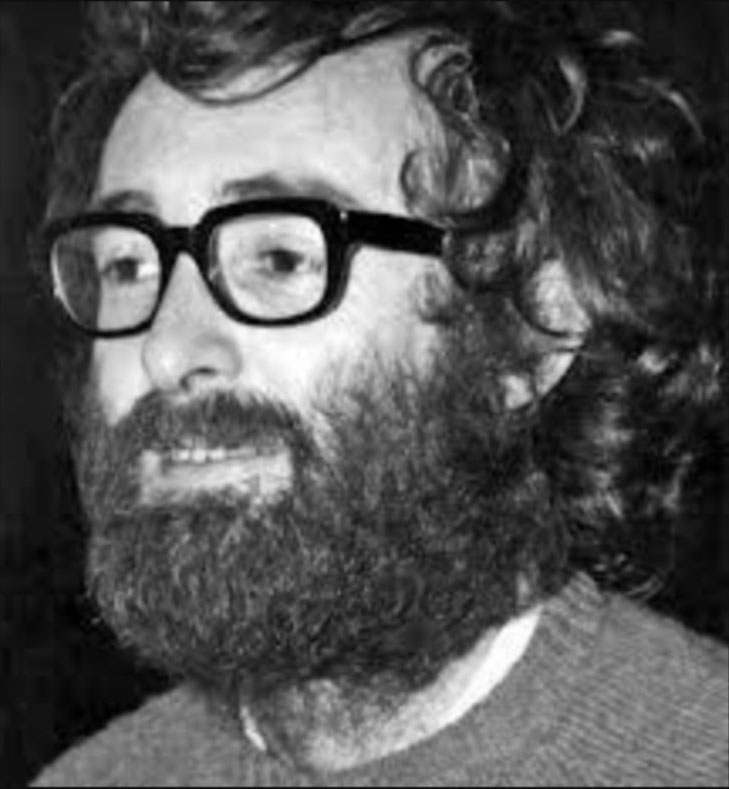
Rick Turner's family believes that the truth may come out, 45 years after the academic was assassinated(Photograph courtesy of the Helen Joseph collection at the Historical Papers Research Archive of the University of the Witwatersrand)
Forty-five years after the murder of anti-apartheid activist Rick Turner, fresh evidence has given his family new hope that the truth about who shot him dead on 8 January 1978 will finally be uncovered — along with who gave the order.
Turner’s daughters — who were at home with him at his Durban home when he was shot through the window — had given up hope that his killers would be identified and held to account due to a cover-up of the shooting and the passage of time.
But new evidence by a former Security Branch operative during the re-opened inquest into the death of anti-apartheid activist Hoosen Haffejee in detention the previous August has sparked a fresh investigation by the National Prosecuting Authority (NPA).
Turner’s youngest daughter Kim, who was nine years old when he was shot dead in front of her and her sister Jann, said that testimony at the Haffejee inquest confirmed that Security Branch surveillance on the family home had been lifted to facilitate the murder of her father.
Mohun Gopal, then a junior Security Branch constable with two years experience, told the Haffejee inquest in 2021 that he had been ordered by a Major Benjamin to “keep observation” on Turner’s home in Dalton Avenue, Bellair, a month before the murder.
Two weeks later he had submitted reports to Colonel Jimmy Taylor, but was pulled off surveillance by Benjamin on Taylor’s orders the day before Turner was shot dead.
Gopal told the inquest court that he had been “shocked” and “dismayed” when he heard about Turner being assassinated.
“When I asked Benjamin about it, he said that I work on a ‘need to know basis’,” Gopal said in his evidence.
Gopal told the court he was “fuming mad” about what had happened because “I felt that I was party to the murder of Dr Rick Turner”.
Gopal’s evidence and pressure from the Turner family and lobby group Foundation for Human Rights (FHR) led to the NPA unit which is investigating outstanding Truth and Reconciliation Commission (TRC) cases, opening a new inquiry into his murder.
Lawyer Kiren Rutsch, who acts for the Turner family, said they were working with the NPA team and the FHR to ensure that the case was investigated thoroughly and brought back to court.
 “During apartheid life was very cheap and life continues to be cheap in South Africa. People are murdered every day and very little is done about it. It is important that when these things happen, the state does something about it.”
“We are working to ensure that the interests of the family are protected and advanced during the process and to make sure that justice is achieved, along with closure for the family,” Rutsch said.
He was unable to say when the matter would get to court.
Kim Turner said in an interview from the United States, where she and her sister Jann live, that she was hopeful that the new investigation would finally give them answers as to who was responsible for her father being murdered.
She said that they had previously come to terms with accepting that they would never know the truth.
“This is an old murder which happened a long time ago. It is something we thought was very much done. We had really made peace with it and then, for it to suddenly come out of the blue like that,” she said.
“Now, I’m sitting down once a month talking to a whole lot of people — including the police — about the case. It all seems so surreal,” Turner said.
She said it was important that the reasons for her father’s death were documented and that those who were responsible for it were held to account.
During TRC hearings, the murder and robbery unit head who had investigated the killing, Captain Chris Earle, gave evidence that his investigation was shut down by the police top brass despite possible involvement of Bureau of State Security (Boss) operative Martin Dollincheck in the murder.
Turner said she believed her father’s assassination may have marked the beginning of a shift in strategy by the regime from detaining and jailing opponents of apartheid to murdering them.
“What is important is for us to document that that is what was happening then and the switch in the way they were fighting whatever fight they thought they were fighting against anti apartheid campaigners,” she said.
“I have never felt any animosity towards the people who did these things, but it’s always important that when a crime is committed people are held to account and pay a price for it.”
Turner said it was also important that the “culture of impunity” that surrounded the perpetrators of apartheid era human rights abuses was broken down to prevent this from being carried over into the democratic era.
“During apartheid life was very cheap and life continues to be cheap in South Africa. People are murdered every day and very little is done about it. It is important that when these things happen, the state does something about it,” she said.
She said the death of Taylor and other feared Security Branch operators might see more people with information about the killing to come forward, as had been the case in the Haffejee matter.
“It is important to get as much evidence as we can. The initial police investigation was very cursory. They didn’t do very fundamental things,” she said.
“Because people like Taylor have died, people now feel that they are able to talk. This is a last opportunity to see if we could get new information.
“When we went to the TRC an ambulance driver came forward and gave evidence because he heard people talking about it on the radio. Maybe people will feel comfortable now and will be able to add little bits to the picture and help us to find out what really happened.”
Last year NPA head Shamila Batohi told parliament that their TRC team was investigating 97 apartheid era matters, including 38 deaths in detention.
[/membership]