Voting day in Msholozi. (Delwyn Verasamy/M&G)
Jacob Zuma’s uMkhonto weSizwe party has challenged what it called “massive fraud”, in last month’s general elections but residents of the Msholozi informal settlement in Gauteng, which is named after the former president, are satisfied that their votes were accurately recorded.
Msholozi is the clan or lineage name of the former president, and of all people who use the birth surname of Zuma.
Fiercely loyal to Zuma, the residents support his party’s legal action against the Electoral Commission of South Africa (IEC) over alleged “serious electoral irregularities”. They won’t entertain any suggestion that Zuma mismanaged the country as president and believe the 82-year-old deserves another chance to lead.
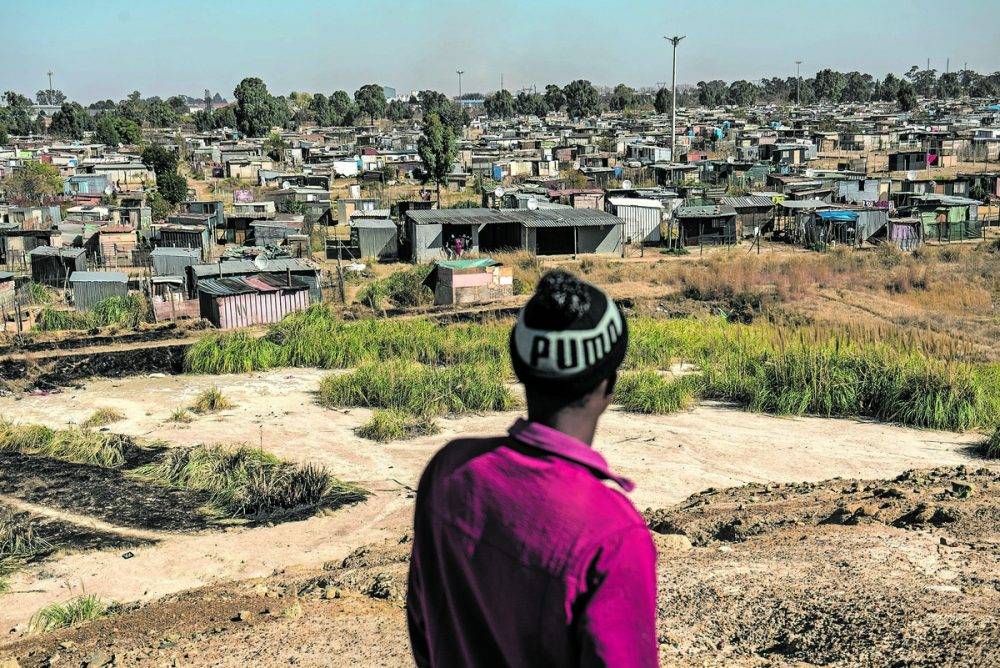
The informal settlement is a congested sea of corrugated-iron shacks in the industrial section of Benoni, Ekurhuleni, surrounded by old dumps that are a relic of the golden era of mining in the Witwatersrand.
But despite the rich past of a region that once boasted the deepest gold mines in the world and had anchored South Africa’s economy from the late 19th century, the area is now plagued by underdevelopment.
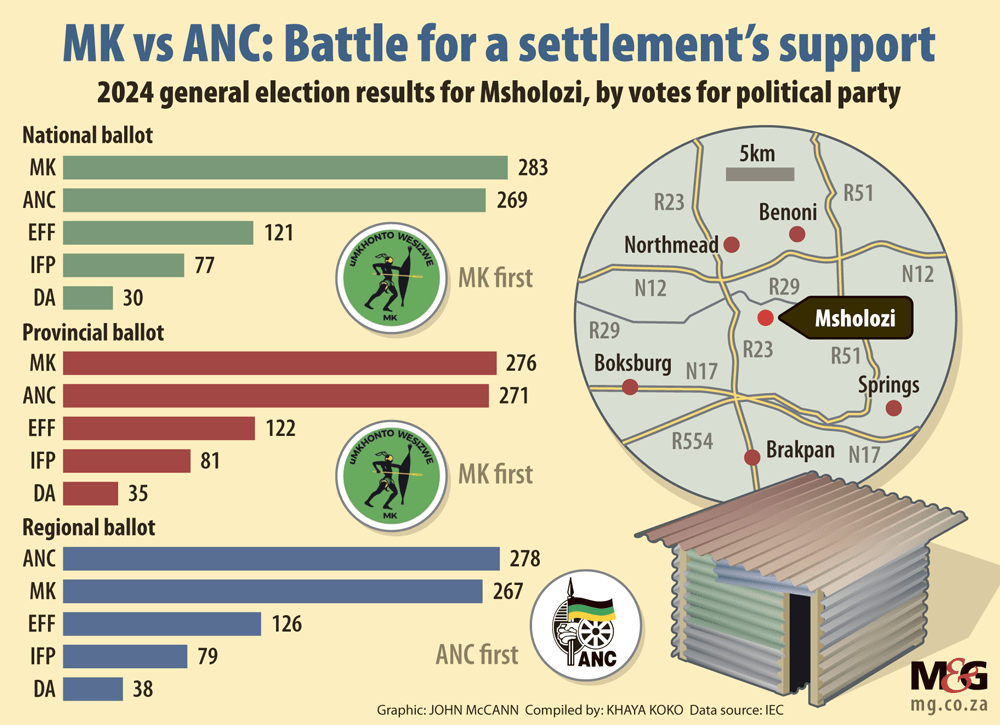
In the process of investigating whether there was any substance to MK’s claim of “stolen votes”, the Mail & Guardian found the party’s results, captured on the IEC slip at the Msholozi informal settlement voting station, had been accurately recorded in the final results on the commission’s portal.
 (Graphic: John McCann/M&G)
However, the Democratic Alliance (DA) — which has joined forces with the ANC and the Inkatha Freedom Party, among others, to form a grand coalition they are calling the government of national unity — was the party that seemed to have missing votes in Msholozi, although they only amounted to six.
The results slip, seen by the M&G, showed that the DA received 36 votes on the national ballot but this was published by the IEC as 30.
The Msholozi settlement was named after Zuma when the initial group started erecting homes on the vacant industrial land in 2010, according to Sizwe Nkosi, the 32-year-old secretary of the community committee that handles its affairs.
“The founder of Msholozi — the late Siphiwe Edward Radebe, affectionately known as ‘the old man from the veld’ — was an employee at Benoni Hyper Motor Spares.
“Mr Radebe came up with the name Msholozi because of his and the people’s love for our former president, who was still in office at the time,” Nkosi told the M&G.
One of Nkosi’s duties is to block out yards for people so the Ekurhuleni municipality has an idea of the number of residents in the area, helping them plan the provision of services.
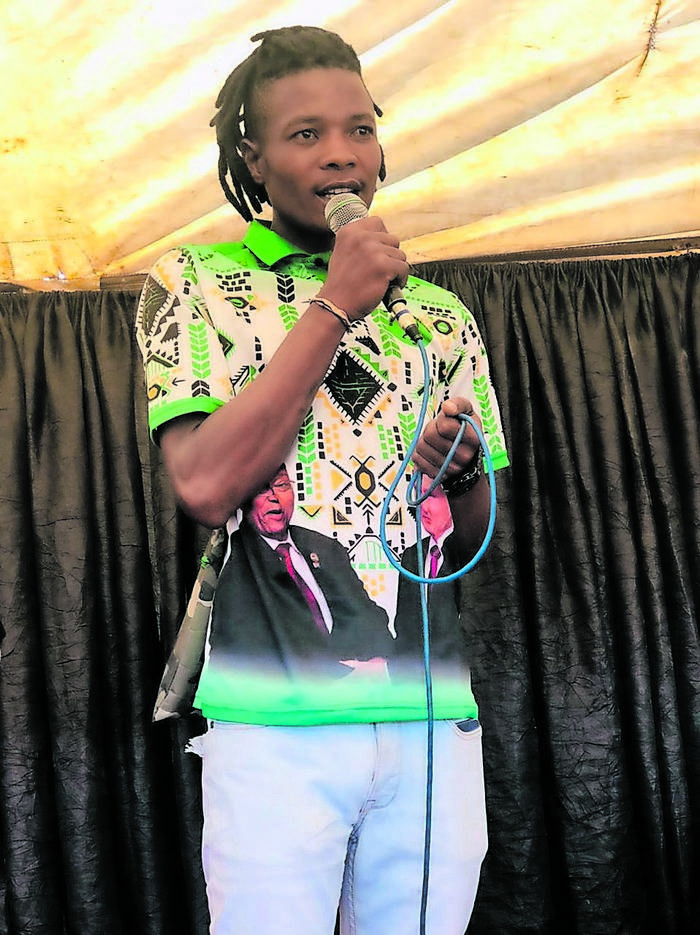 High hopes: Sizwe Nkosi, secretary of the community committee in Msholozi informal settlement in Gauteng.
Despite being a “proud” MK party member and voter, Nkosi said he did not consider party affiliation when serving his community, adding that political tolerance in the area was generally high.
“As I am speaking with you now, I am assisting this Economic Freedom Fighters member, whose yard measurements done by the municipality are not accurate,” he said.
“I don’t have time to get into political spats and favouritism because I was elected by the community to be their secretary — people from different political formations.”
“The [MK] members also know and respect the fact that I do not give them special treatment when it comes to assisting or resolving residents’ issues,” he added.
Nkosi said he supported the MK party’s legal challenge to last month’s results and trusted South Africa’s court system.
MK national organiser Nkosinathi Nhleko, who was police minister during Zuma’s tenure as president, filed the founding affidavit in the electoral court, alleging “objectively verifiable evidence of serious voting irregularities”.
Nkosi said while he was satisfied that the votes in the Msholozi settlement had been accurately captured, this did not mean that the same was true elsewhere. “Our leaders must challenge these results because you don’t want people to think that elections are rigged. Who will vote again if that is the case?” he asked.
Even as the court challenges play out, Msholozi residents are pleased that Zuma’s party made such a strong showing in its election debut, getting nearly 14.6% of the votes nationally, and knocking the EFF from its spot as the third-largest party in the country.
Ayanda Buthelezi pointed to the mine dumps in the distance, where strong winds were blowing dust clouds over the dense industrial section of Ekurhuleni.
“These are the winds of change,” he said with a smile.
“What uMkhonto has achieved in a few months since its launch is the start of bigger things to come,” Buthelezi added, reflecting on how Msholozi residents had got behind the Zuma-led party when it launched at the end of last year.
“More people will join the party because we only launched in December and had six months to campaign. Now we have another two years before the local government elections and the people will see that uMkhonto is the real vehicle for change,” he said.
The 35-year-old father of one dismissed any suggestion that Zuma’s presidential years were “wasted”, insisting that there were a lot more opportunities for people in his area to get work during that period.
“For example, this Eskom load-shedding business affected many businesses in this industrial section.
“Some have closed and those that are still operating have had to retrench their workers or cut shifts,” Buthelezi said.
“Many of us men in this community relied on casual work in peak seasons, especially at the small manufacturing plants. All of that is gone now and the managers are saying it was load-shedding.
“Zuma ended load-shedding and we had lots of work during that time,” Buthelezi said, alluding to the period between 2016 and February 2018 when Eskom’s rolling blackouts, which had been happening since 2008, were paused.
Buthelezi comes from KwaZulu-Natal and has family and friends who relied on the export business around Transnet’s coal terminal in Richards Bay, in the north of the province.
“The ports are also not employing people as much because we know Transnet is a mess. These problems with the [state-owned entities] started when Msholozi was removed from the presidency,” he said.
Asked about the state capture during Zuma’s presidency, which hollowed out entities such as Transnet, Buthelezi said that no definitive finding against the former president had come from the inquiry into the corruption.
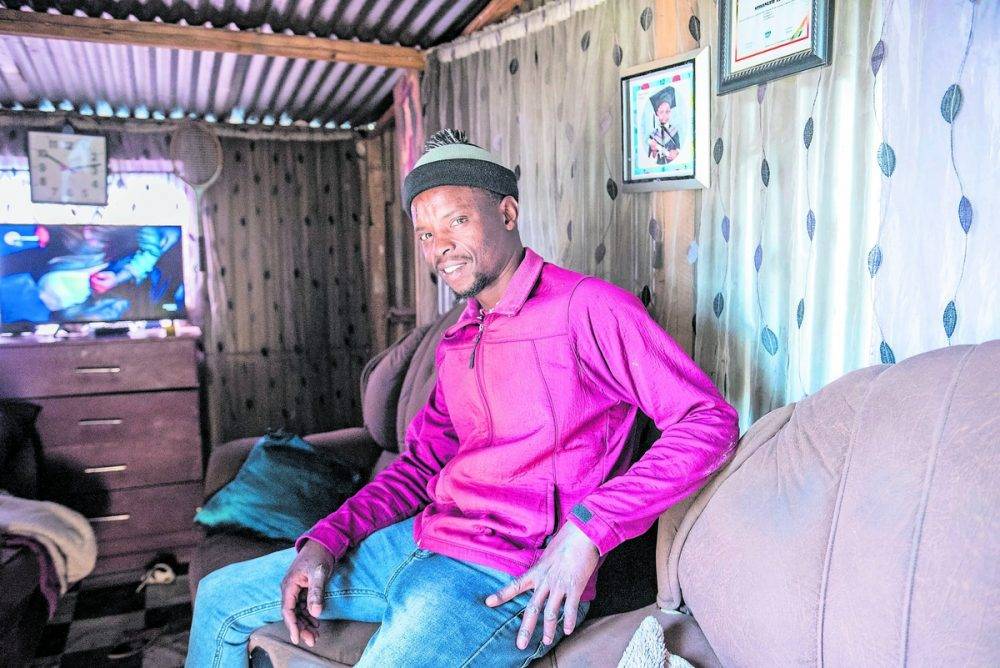 Jobs needed: Msholozi resident Ayanda Buthelezi voted for MK because he believes that its leader Jacob Zuma should be given another chance to be president of South Africa. (Delwyn Verasamy/M&G)
In January, Transnet said that last year, its Richards Bay coal terminal recorded its worst export figures since 1992 — when 48.59 million tonnes left our shores — shipping 47.21 million tonnes, compared with 50 million tonnes in 2022.
Buthelezi said he had voted for the MK party because he wanted Zuma to be given another chance to lead the country. “I want Zuma to return and finish what he started. He deserves a second chance with his own organisation, where he cannot be controlled or sabotaged like he was in the ANC,” he said.
Asked who he believed had sabotaged Zuma, Buthelezi pointed to a statement released by the MK party on Tuesday, announcing its intention to boycott President Cyril Ramaphosa’s inauguration on Wednesday, calling the newly minted government of national unity “racist”, and the re-elected president a “house negro”.
“Clearly, positions matter more to the ANC than the well-being of our people,” he said.
“The uMkhonto weSizwe party vows to use all legal means at our disposal to expose, fight and destroy the incoming, illegitimate regime of Ramaphosa, [DA leader John] Steenhuisen, and [Freedom Front Plus leader Pieter] Groenewald.”
The piped water supply in the Msholozi area was connected by the residents themselves.
Buthelezi said they collected around R100 a household to buy new pipes and the tools and equipment needed to connect to the area’s main water supply and new taps to be installed in each yard.
“The money was also used to pay the workers who did the digging, construction and installation of the pipes and communal taps.
“If you wanted a tap in your yard, each household would then pay the contractors to install it for them. I installed my yard tap myself because I have the skills to do so,” he explained.
Buthelezi added that, with his skills, he hoped for an opportunity to sustain his family without having to rely on the odd jobs that have become few and far between.
“I passed my grade 11 in 2009 and did not go to grade 12 the following year. Unfortunately, I come from a poor background, so going to find work to take care of myself and my family became a priority at the time,” he said.
“I do wish to have qualifications because the more established firms want people with a vocational education or trade certificate as proof that they can do what I know I can do.”
Residents said they hoped the municipality would meet them halfway by at least following through on its promises to electrify 300 houses.
“Ekurhuleni officials said the first homes to be electrified would be done by the end of 2022,” Nkosi recalled. “As you know, we have looked after ourselves with services for about 14 years now.
“Yes, we are grateful that the city has installed high mast-lights in our area near the taxi rank — it helps with people coming back from work at night.
“But it would be nice to also have legal electrical connections, rather than the izinyoka [illegal connections] that we have at the moment.”
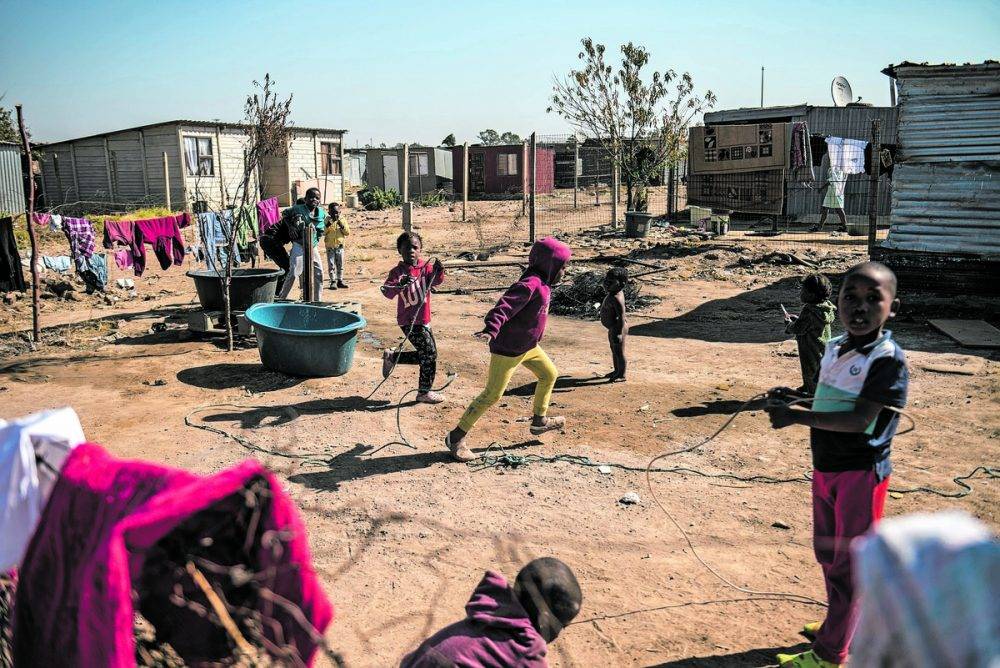
The illegal connections are hazardous, with live wiring running on the ground throughout the settlement.
They are a danger to the children playing in the streets, as a recent incident showed.
One resident, Ntombi, said a child had died about two months ago after touching the live electrical wires with her bare hands.
“It happens too often for anyone’s liking — the loss of children through electrocution. But it is the hand we have been dealt because we chose to live here in an area that is close to our places of work,” Ntombi said.
“We hope now that campaign season is over, and everyone has voted, the politicians can do something about this place and others like it.
“I hope uMkhonto weSizwe shook them up so they can work for us, instead of themselves.”
Ekurhuleni spokesperson Zweli Dlamini had not answered questions sent to him on Wednesday, by the time of going to print.