Undermined: The Magog community wants to stop SA Lithium from causing further damage to food sources, livestock and houses in Umzumbe on the KwaZulu-Natal South Coast. Photo: Supplied
The Magog community at Umzumbe on the KwaZulu-Natal South Coast has petitioned parliament to intervene and force a lithium mine in their area to meet environmental and health and safety standards.
They say that SA Lithium has been mining on land that is subject to a land claim, is operating within 500m of houses and has damaged property across the 1 000-household village in the Ray Nkonyeni local municipality’s ward 15.
To expand its operations, the company has removed a number of gravesites over the years and plans to re-bury members of several more families at an undisclosed venue.
Last week, Michael Sithole, who is a lawyer from Magog now working in Cape Town, submitted a petition to the National Council of Provinces’ public petitions and executive undertakings committee, asking that it visit the mine and intervene urgently.
SA Lithium, which is part South African and part foreign-owned, extracts lithium, tantalum and zinc ore as well as feldspar from the open-cast mine, for which began exploration in 2014 and started blasting early last year.
In his petition, Sithole said that the mine had failed to comply with legislation — including the Constitution, the Air Quality Act, the Water Services Act and the National Environmental Management Act — since it started operating.
“There has never been a public participation meeting, giving the community an opportunity to express their views in relation to the dangers posed by mining activities, and for safety and relocation negotiations,” Sithole said.
He said that mining was being carried out on land on which a number of graves were located — including those of his own family — and on land that was still subject to a land claim by the community.
The proximity of the mine to dwellings had led to cracks which “if not attended to by parliament may lead to a loss of lives through the collapse of houses or through mine blasting”.
Sithole said local traditional leader Inkosi Ngamizizwe Madlala was aware of the situation and had attended meetings to discuss damage to homes and crops and the loss of livestock “but has no powers with regards to the mine’s activities”.
“There have been a number of complaints by the community addressed to the mine but the mine ignores the community,” Sithole said.
“The mine was told that people were forcefully removed from the mining spot and the surrounding areas, therefore, there are graves of many people in the mining site.
“The mine has and continues to violate graves of the dead by mining on them, violate human rights by exposing human beings to mining health risks and health hazards from emission of lithium and blasting.”
The mine intends to remove more graves, and last month appointed Joan Consulting to conduct a public assessment, inviting comments from the community on this process.
Sithole has lodged an objection on behalf of his family and a complaint with the department of land reform because the company is mining on land that is subject to a claim.
The department has since written to SA Lithium confirming that part of the area it is mining is in fact subject to a land restitution claim.
Sithole asked parliament to intervene and visit the mine as this would not only encourage compliance by SA Lithium, but would also give the public petitions and executive undertakings committee “a better perspective of the situation”.
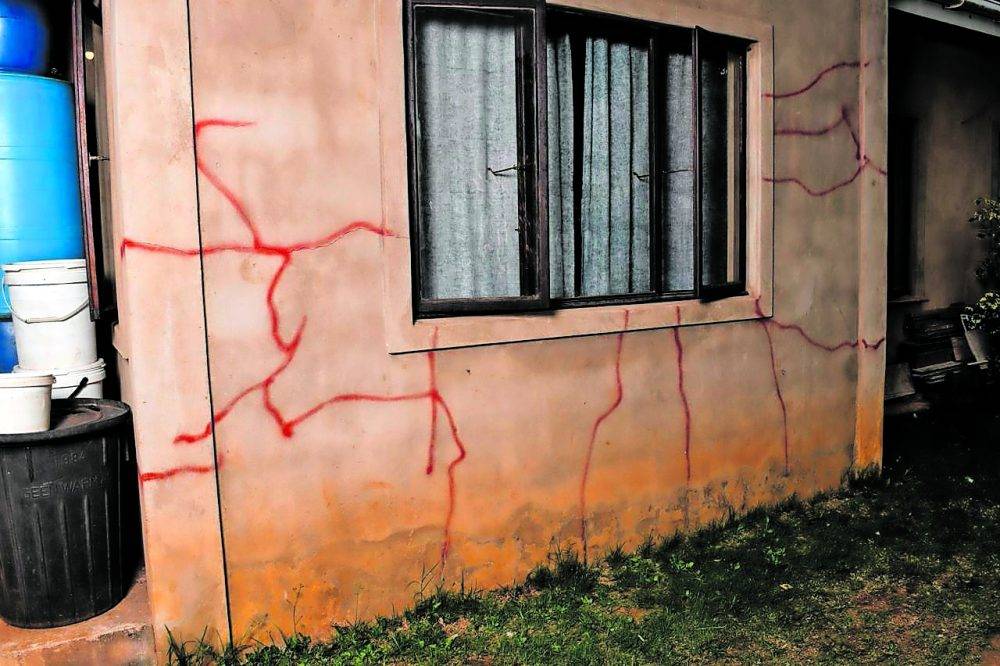 Damage caused by SA lithium in the Magog community
He asked the committee to consider his petition now, rather than in the first quarter of next year, due to the “level of arrogance” on the part of the mine management and the threat to the health of frail and ill elders in Magog and the broader Umzumbe community.
The lawyer said mining was taking place within 500m of a number of houses in the community and that it had destroyed — and intended to further destroy — food and water sources, livestock and property.
The majority of the community members were elderly or young children, a number of whom were sick due to the poor environmental conditions in the area.
As a result, the community’s legal team had appointed doctors to conduct health screening last month, the results of which will be available in the coming weeks.
“The community has explored every avenue without success,” Sithole said.
He said the community would go to court as a last resort as they did not want to interfere with the mine’s activities and place jobs under threat.
The visit by the committee was a necessary step that would have to happen first.
“Parliament’s intervention shall render the much needed balance between the right to a healthy environment, life, right to property, equality and human dignity vis-à-vis continued mining, massive revenue generation and the security of current and future jobs at the mine,” Sithole said.
“The protection of these aforesaid constitutional rights by parliament is a compelling case and outweighs any other interests in favour of the mine.”
The mine “does not respect South African laws”, Sithole said, and was planning to extend its operations to a 1 233-hectare parcel of land which is subject to a land claim by the community and on which graves are located.
For the duration of blasting activities at the mine, residents were compelled to leave their homes and gather at the local hall. This happened several times a week and placed the community under additional stress.
In his objection letter opposing the grave-relocation process, Sithole said that the bulk of the community did not have access to the publications in which the notice was published or access to computers to email their comments.
Instead, the company should address the community directly via the inkosi and its legal team.
He said SA Lithium was legally bound to follow a legitimate public process and could not simply abrogate this responsibility to a third-party consultant.
A working paper on the issues related to the mine, compiled by the community’s lawyer Barnabas Xulu, also recommends that the mine investigate the effectiveness of its information-sharing systems and develop a proper programme of action to abide by its licence conditions.
It recommends that a comprehensive business case with a community resettlement plan, time frames and phases be developed by the mine — and ratified by the community — to ensure that residents’ rights were upheld.
“The reports on the Umzumbe community reveal alarming violations of their legal rights under various legislative frameworks in South Africa,” Xulu wrote.
The importance of upholding legal provisions to safeguard community well-being, safety and environmental protection in the context of mining activities cannot be overstated.
“It is incumbent upon all stakeholders, including mining companies and governmental entities, to promptly address these shortcomings and respect the rights and dignity of the Umzumbe community as mandated by the law.
“Failing to do so not only neglects legal responsibilities but also perpetuates historical injustices and deepens the vulnerabilities of the affected communities,” he said.
Xulu said the community was ready to engage with the mine to understand its internal processes and to work together to resolve the situation.
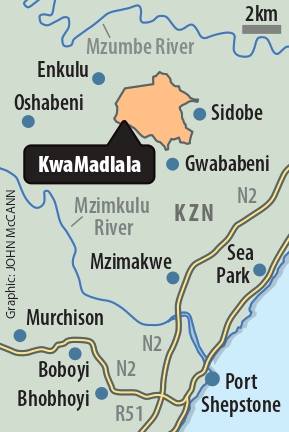 (Graphic: John McCann/M&G)
Ian Harbottle, director of SA Lithium, said the company is “fully compliant in all aspects of its mining operations.”
“We have a team of dedicated specialists and advisers (including environmental specialists) working together with SA Lithium to ensure all operations are done in a manner that is strictly compliant with environmental legislation and regulations. “
He said the company was providing vital infrastructure and employment to communities. It already employed 600 people and was set to take on another 1 300, benefitting nearly 10 000 people.
They were working with local suppliers and contractors wherever possible and were committed to “bettering and improving the lives of as broad a base as possible through such operations.”
“We are in regular communication with each of the local communities via their elected structures and are not aware of any rights having been violated as alluded to, with any issues that have been brought to our attention to date being fully investigated and thus far having proven to be false in every instance.”
“However, should the same be shared with us at some point, we are more than willing to discuss these matters with our local communities and with whom we continue to maintain an exceptional working relationship,” Harbottle said.