Budget botch: Finance Minister Enoch Godongwana (Dwayne Senior/Getty Images)
The budget bungle is a hard lesson in coalition politics for the ANC and its main partner, the Democratic Alliance (DA). While the announcement that the finance minister was abandoning the VAT increase was made abruptly minutes after midnight on Thursday, it was inevitable after events in the past fortnight.
The DA claimed credit for the about-turn but the smaller parties resisted the narrative that it is the hero of the story, with reason.
At a media briefing after the midnight confirmation of Minister Enoch Godongwana’s climbdown, DA federal chairperson Helen Zille said her party’s opposition to the budget delivered a clear victory for the country’s taxpayers.
The DA’s high court challenge to the budget had proven decisive in a two-month battle that began on 19 February when Godongwana withdrew an initial budget with a two percentage point VAT hike minutes before delivery, she said.
The minister’s announcement that he was reversing staggered a one percentage point increase came the day after the first part of the court application was argued in the high court.
“It was clear that the DA’s court intervention was the pivotal intervening factor that has enabled the people of South Africa to come out victorious,” Zille said.
The Economic Freedom Fighters (EFF) had joined in the DA’s case and its counsel pleaded on Tuesday that the National Assembly’s acceptance of the fiscal framework was marred by political misrepresentation.
Godongwana’s replying affidavit, in which he insisted that the increase could not be interdicted, was proof that the ANC had lied when it persuaded parties to vote in favour of the framework with the proviso that the minister would look for an alternative way to raise revenue.
That proviso was mooted by ActionSA and broke a deadlock in parliament’s standing and select committees, ensuring approval and paving the way for a 194 to 182 vote in the chamber in favour. It dawned on the parties soon after that the provision was not binding.
“If a vote is procured through deception it is unlawful,” advocate Tembeka Ngcukaitobi told the court.
On Thursday, the party demanded Godongwana’s resignation.
But Zille dismissed the notion that other political parties could claim credit for the minister’s U-turn.
“The minister somehow needs to save face and say I am making this concession after consultation with the smaller parties, and obviously the smaller parties will want to claim some credit,” she said. “That argument obviously cannot hold water.”
 ActionSA leader Herman Mashaba. (File photo)
She noted that although the ANC had held extensive consultations with smaller parties in the government of national unity, as well as ActionSA, those concluded last week without any indication that he was prepared to walk back the 0.5 percentage point VAT hike due to take effect on 1 May.
“Last Thursday the minister categorically said that the VAT increase would go ahead.”
But there were indications as early last week, and certainly on Tuesday before the court hearing began, that a rethink of the revenue proposals was afoot.
A planned meeting of parliament’s appropriations committee on the Division of Revenue Bill scheduled for the morning was postponed.
Smaller parties had planned to use the process to propose amendments to the treasury’s expenditure proposals that would see the minister present a revised fiscal framework to the National Assembly in coming weeks.
Although this would not have averted a VAT increase on 1 May, it could have meant that the measure was short-lived.
By the start of this week, political parties involved in the process knew that Godongwana was preparing to revoke the increase, although they were taken by surprise at how swiftly this transpired.
None pushed back more forcefully against the DA’s reading of events than Rise Mzansi leader Songezo Zibi, who chairs parliament’s standing committee on public accounts.
He said no political party was pleased with the planned VAT hike, but it should not have seen the budget process held hostage to the political aspirations of a single party and was not true that there was no collateral damage to the economy.
Economists would confirm that the bond yield curve had spiked since and as a result debt service costs had soared by more than R30 billion, Zibi said.
“Political parties are sitting in court because the maturity to sit in a room and discuss matters that relate to the budget and the budget only is not there,” he continued.
Zibi said the significance of the minister’s announcement after weeks of negotiations was that both Godongwana and the parties that hold a majority in legislature “can own” as they reprioritised spending to contend with revenue shortfall created by the decision to maintain the VAT rate at 15%.
The treasury has put that figure at R75 billion over three years, and said additional tax collected by the South African Revenue Service would be used to mitigate the downward revision of spending on social services.
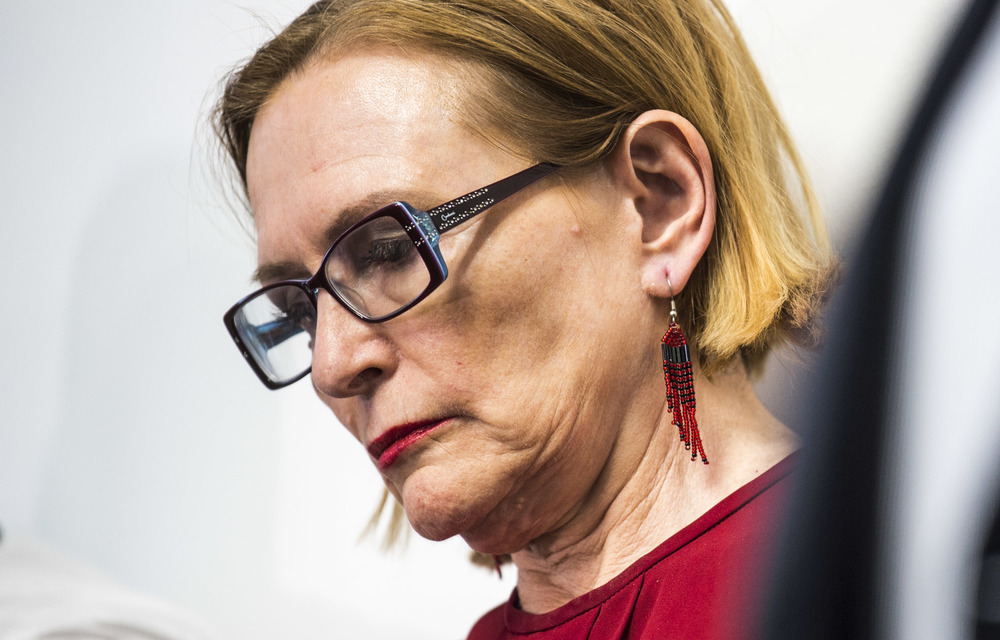 DA federal chairperson Helen Zille. (Delwyn Verasamy/M&G)
“Expenditure reviews will happen. It is not up to any political party to say they are the alpha and omega of how to make parliament more efficient. To propose that the treasury has done no work on expenditure reviews is a lie; I have the spreadsheets,” Zibi said. “The job of parliament is to do the work and not do political grandstanding.”
The treasury said Godongwana had written to the speaker of the National Assembly to indicate that he is withdrawing the Appropriation Bill and the Division of Revenue Bill to propose expenditure adjustments to cover this shortfall in revenue.
He will introduce revised versions of the two bills in the next few weeks.
The VAT debacle has been personally bruising for the minister, who said publicly that he took the decision to increase the rate despite reservations from senior treasury officials. He conceded that fellow ANC ministers had baulked at his initial plan for a two percentage point hike.
Zille said on Thursday that although the party was expecting Godongwana’s lawyers to propose a court settlement, it was at this point not prepared to withdraw part B of its application in which it is asking the court to declare section 7(4) of the Value Added Tax Act unconstitutional.
As for undoing parliament’s acceptance of the fiscal framework, it remained to be seen whether this would be done by way of a court order or a special sitting of the National Assembly.
“It ain’t over until it’s over,” she said.
The same goes for the fraught process of placing the 10-party coalition on steady footing after its instability rattled the markets in recent weeks.
Sources said a meeting would be called in the next week or two to discuss “a reset of the GNU” assembled in the aftermath of the elections last May in which the ANC lost its majority.
The battle over the budget has revived the contestation within the party over President Cyril Ramaphosa’s snap decision to invite the DA into a centrist coalition. In recent weeks, Deputy President Paul Mashatile has used the crisis to campaign against the DA’s continued presence in government.
A DA exit seemed all but inevitable after the 2 April vote in the National Assembly as Ramaphosa lost patience with the party but in the days that followed both parties retreated from the brink.
For the ANC, the factional risks and the lack of a viable replacement for the DA in the coalition proved sobering. In the DA, there was deep division as to whether to withdraw from the government and stern advice from donors not to.
On Thursday, Zille said agreement on the national budget was a necessary requirement for any coalition and surviving in the absence of such was unusual.
“We have a very strange coalition government,” she said, adding that it was too early to say what the future held but that a meeting with the ANC on Friday would give an indication.
The DA has to contend not only with a deep rift with the ANC but with the resentment of smaller parties in the coalition who accuse it of failing to consult and considering the pact a two-party arrangement at heart.
This was evident in criticism on Thursday from the Inkatha Freedom Party, the Good party, the Patriotic Alliance and others. The Inkatha Freedom Party’s Nkulekho Hlengwa, who is deputy minister of transport, said it was impossible to be both in government and opposition.
Zibi recalled that the DA’s opposition to tax increases had not been absolute. Rather, it had been prepared to accept a VAT hike provided the ANC agreed to meet a set of political demands, which he described as self-serving “points of extortion”.
These included a review of state spending and economic policy, amendments to the Expropriation Act, fast-tracking concessions to private investors on rail corridors and ports and naming deputy finance minister, Ashor Sarupen, co-chair of Operation Vulindlela.
The parties were close to agreeing on several of the demands but all bets have been off since the DA defied coalition orders to support the fiscal framework.