Before the move to the South African State Theatre in 2023, Black Labone events were hosted down the road from the theatre at African Beer
Emporium. Photo: Black Labone
Pretoria has always pulsed with artistic life, its movements shifting with each generation but always grounded in community, creativity, and cultural exchange.
There was a time in my youth, when the week was a carefully crafted itinerary of inspiration with events hosted in libraries, university campuses and pavements. For instance, one had a choice to attend Uhuru wa Maisha, Penseed Poets, or Street Poetry sessions during the week or simply hang out with artists busking with their punchlines and enjoy live music at Hip Hop Nites and Capital Arts Revolution.
The No Camp Chairs Poetry sessions on Sundays on the lawns of the Union Buildings ended a highly art-filled week. These times were certainly an artist’s delight, home to a generation of headwraps, dreads, chakra talks and dirty All-Stars with something to say.
“We can definitely confirm, Black Labone was inspired by sessions of old. Long before Black Labone was called a weekly festival, the program had come as an idea to establish a consistent and reliable creative safe space for young and seasoned artists,” says convenor Izah Kutsh.
Founded in 2017, Black Labone has been at the helm of Pretoria’s contemporary artistic renaissance. The word Labone, meaning Thursday in Sotho, signifies the weekly gatherings filled with live band showcases, arts-and-crafts exhibitions, DJ sets, and slam poetry performances.
Being an artist can come with isolation and being misunderstood by those around you, therefore being amongst like-minded peers brings a sense of belonging. At the centre of Black Labone’s ethos, Kutsh states, is fostering a strong sense of community.
“One of the reasons that Black Labone as a platform continues to thrive is because of its strong sense of community. We have created a welcoming space that is open to all, regardless of culture, gender, sexual orientation or background. The primary objective has been to build a creative community that fosters collaborations and creativity.”
Over the years, Black Labone has hosted rising and seasoned artists across the province and the continent. These include the likes of Huge Da Oracle, L8 Antique, Thabiso Thabethe, Malcolm Jiyane and saxophonist Agasi Nilotic who is part of the resident Black Labone House Band.
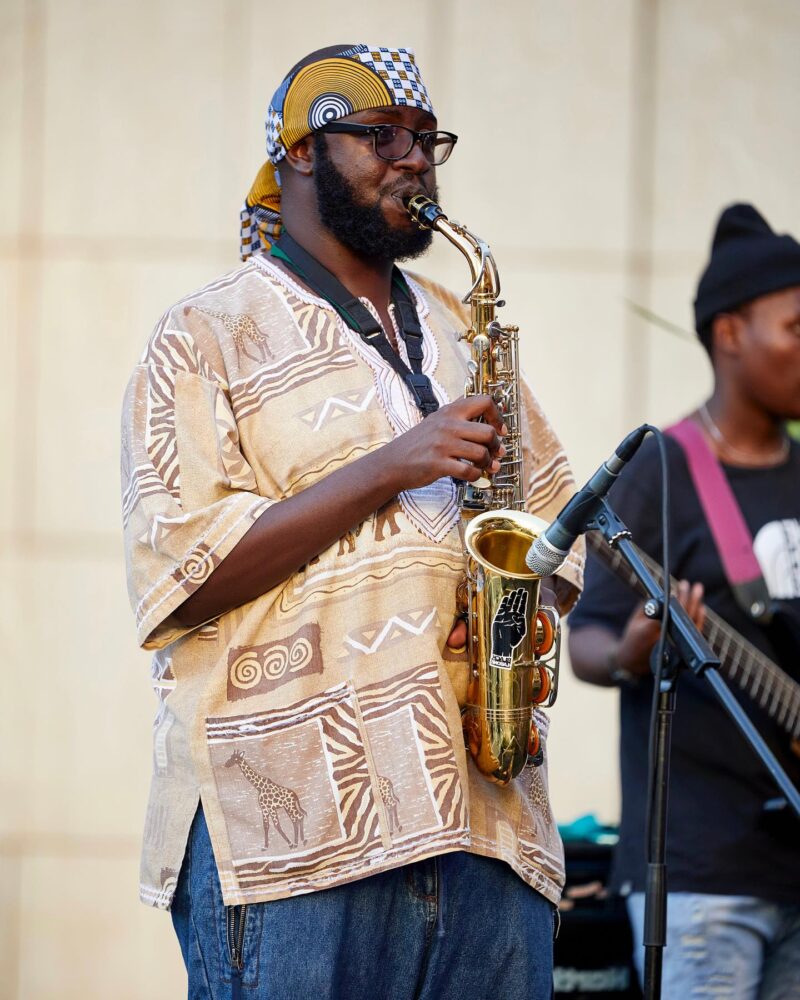 Saxophonist Agasi Nilotic who is part of the Black Labone House Band. Photo: Black Labone
Before the move to the South African State Theatre (SAST) in 2023, Black Labone events were hosted down the road at African Beer Emporium (ABE). For half a decade, ABE has been a cultural home for Black Labone’s ardent performers and attendees.
The venue, which closed down in 2023, was also host to a number of culturally charged events including The Trancemicsoul Sessions, Tshwanefontein, Market Wa Pitori, The Breakfast Club and Market at the Sheds.
Being at ABE, Kutsh explained, gave the Black Labone team a chance to work and be mentored by industry giant Henk van der Schyf and creative entrepreneur Theresho Selesho.
“ABE was the launchpad for Black Labone’s growth. When the venue closed, we were sad but also pleased that we still kept a strong bond with the owners, staff and team.”
Beside the excitement, Kutsh added that the big move to SAST came with uncertainty on the future of the arts movement.
“There were concerns of Black Labone losing its creative autonomy, concerns of the theatre’s capacity to manage the large amounts of audiences that we would draw on a weekly basis and the impact to the whole landscape of the national theatre as we were opening its doors to hordes of non-traditional theatre audiences.”
Through collaborations, the theatre and the arts movement were able to find a working model.
Kutsh affirmed that operating from a national theatre not only boosts their profile but has brought a formalised structure and access to professional performance infrastructure. Currently, the arts movement draws 400 to 600 people per week to the theatre and 800 to 1000 people on an eventful Thursday.
An example could be the much-attended Black Labone Earth Day, an annual flagship event originally emerging from the weekly Thursday sessions.
“The Earth Day Celebration is a unique and vibrant event marking Black Labone’s anniversary, a reflection on its achievements, and a tribute to its cultural and community impact. Over eight years, it has grown exponentially in scale, attendance, and diversity of performances, attracting both local and international artists,” Kutsh added proudly.
This year’s 8th Annual Earth Day Celebration hosted four active stages, over 100 artists and thousands of enthusiastic spectators. Performers included the likes of Amongst The People I Know, Mandla Ntlaks and Magatsela More.
In extending its reach beyond the weekly sessions, Black Labone has made some strides in working with some big festival names in the country such as Catch a Fire Reggae Festival, Miliepop and Capital Craft Beer Festival. Partnerships were formed with Music in Africa’s Access Africa and Tshwane FM’s 21Fest: Unlocking the City.
The support to the festivals, Kutsh added, entailed curatorial services, live performance infrastructure, audience development, operational support and community engagement.
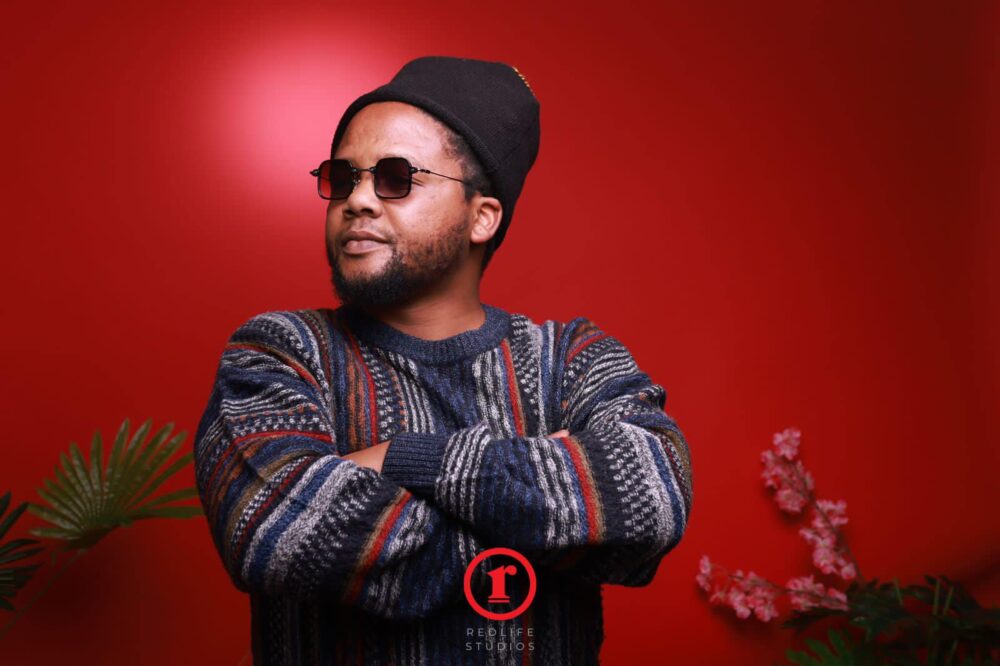 Izah Kutsh, convenor at Black Labone. Photo: Redlife Studios
“At the end of it all we can say that 2025 was also the year of “the seed”, a symbol of planting new ideas, sprouting of new collabs and long-term relationships. This year could possibly be one of the most significant in the growth of the movement.”
As such adaptability has been a key element for the art movement’s sustainability.
“Black Labone organically adapts to its immediate environment; one could say that it is “environmentally friendly” in the cultural sense. The movement adjusts to the physical space, the audience and the resources available. It does not exist in isolation. ”
Running an arts movement is generally passion-driven voluntary work with profit hardly a thought.
“We regard ourselves as caretakers of a movement rather than practitioners in a business. That mindset keeps our priorities aligned, our decisions grounded and our structure sustainable. ”
Reflecting on the year that was, Kutsh and the team have much to be proud of and more to look forward to in 2026.
Future collabs with A Billion Sauls Summer and Spotify Wrapped Festival could take the Pretoria-based art movement to higher heights.
Black Labone arts movement has become more than an event — it is a cultural hub, a gathering place and a creative ecosystem that keeps Pretoria’s artistic heartbeat strong.
After almost a decade in operation, Black Labone has learned and adapted well to continue the work done by yesteryear Pretoria-based art movements and events such as The Love House, Live & Direk, MoonBox Sessions, Escalating Heights, Mushroom Lounge Sessions, House 28 Dancehall Sessions, and Arts Kitchen amongst many others.
From starting their events with limited resources that included one microphone, one speaker and a camping torch as a stage light to now hosting events at a national theatre, Black Labone is testimony to sheer resilience and tenacity.
As they say goodbye to yet another successful year, Kutsh concluded that Black Labone will remain to be fuelled by collaborations, adaptability and a strong sense of community in the broader creative industry.
- The last Black Labone event for the year will be on Thursday 11 December