
/ 30 April 2026

Where are the unions and the ANC for suffering silicosis victims?

Noziqhamo Mgidi 4361
Waiting widow: Noziqhamo Mgidi’s husband died before the settlement was reached. Photos: Delwyn Verasamy

The strike by mineworkers in Marikana in August 2012 marked a significant milestone in the mining sector because, for the first time in the history of the industry, workers rebelled against traditional labour unions and chose to represent themselves.

Workers in Rustenburg’s platinum belt decided to form strike committees early that year after falling out with the National Union of Mineworkers (NUM) because of its cosy relationship with mining houses. This resulted in one of the biggest strikes in the platinum belt in January that year and led to the mass dismissal of thousands of workers.

Unfortunately, the strike was marred by intimidation, violence and as has been the case in the past,  equally violent repression by the state’s security forces.

Traditionally, in South Africa, the labour force on mines has been drawn from the peasantry — rural people with limited education and even worse political education.

But it is an undeniable fact that a human being, regardless of their background, does not need a university degree to know when their human rights are being violated.

Even Africans captured and transported to the US in the transatlantic slave trade of centuries past did not need a university professor to tell them they were being oppressed and violated by their masters. Hence, they eventually rose up, defying violent repression, imprisonment and death.

Historically, the NUM, led by its then general secretary Cyril Ramaphosa — now President of South Africa — had been the power representing and fighting for the labour and human rights of mineworkers. This was after almost a century of non-representation of workers in this sector because of state repression.

Under the apartheid regime, the mineworkers’ strikes of 1922, 1946 and 1987 displayed the barbaric lengths the state was prepared to go to suppress the voice of workers — assault, torture, murder and mass dismissal.

With the end of legislated apartheid in 1994, it was expected that the ANC government, a strong ally of the labour movement during the struggle years, would be different.

But the Marikana strike proved this expectation wrong. Ramaphosa, by then an influential senior figure in the ANC and a shareholder in the mining industry, was expected, given his background, to support workers.

But history shows that he chose the side of capital and used his influence to urge the state to crack down on striking miners at Marikana rather than calling for and pursuing dialogue to resolve the labour dispute.

The former revolutionaries in union T-shirts are now the men in pinstriped suits, like the mining magnates they once opposed. It should be noted that the majority of mineworkers — most of them unskilled — have, throughout the history of industrialised mining in South Africa, been black, poor and drawn largely from rural areas and neighbouring countries in the Southern African Development Community (SADC) region.

Many of those working for a pittance in the gold mining sector contracted the deadly, incurable lung disease silicosis. A class action brought by lawyers on behalf of workers in 2012 was successful in the courts but this has not translated into meaningful change for most litigants in the suit, which covered those employed on mines between 1965 and the time the action was filed in Johannesburg.

Notungana Kwekwe 3136
Added responsibility: Notungana Kwekwe took in her granddaughters after their mother died of grief when her husband died from silicosis.

Recently, a proposed amendment announced by the Tshiamiso Trust — set up to disburse compensation — now threatens to shut out even more former mineworkers with the disease from compensation they were promised after a successful class action.

Hundreds of thousands of current and former mineworkers and their dependents have lodged claims with the Tshiamiso Trust for silicosis — a preventable but incurable lung disease — related to tuberculosis.

Yet, as of October 2024, only about 25 500 claimants had received payouts totalling R4.6 billion, according to trust data. Many others remain in the system, while thousands are believed to have died waiting.

Now, amendment No. 9 seeks to eliminate Occupational Diseases in Mines and Works Act (ODMWA) certificates as valid proof for compensation claims. These certificates, issued by the state, confirm that a miner’s lung disease is directly linked to underground work. For thousands of former mineworkers, they remain the only official evidence of illness.

In far-flung villages in rural Lesotho, the Eastern Cape, Mozambique, Eswatini and elsewhere across the SADC region, hundreds of families continue to live in abject poverty — a result of the legacy of gold mining in South Africa.

Breadwinners have died from silicosis with little to show for years spent on the gold mines. Those who still live with the condition are subjected daily to red tape that compounds their struggle for compensation.

I have been in their homes, where sometimes the only available food is a packet of salt. Children and grandchildren have not been spared by the scourge of unemployment ravaging South Africa. Those former mineworkers who are still alive are disabled by the disease, battling to do even the most basic chores as their lungs deteriorate.

As the world marks Workers’ Day, one would have expected that the South African government, run by the ANC and built on the toil and sacrifice of workers, would be fighting to ensure that mineworkers are supported and assisted to navigate the bureaucratic minefield blocking their compensation.

One would have thought an ANC government would be working to derail the generational cycle of poverty affecting families tied to the mining sector, particularly gold mining.

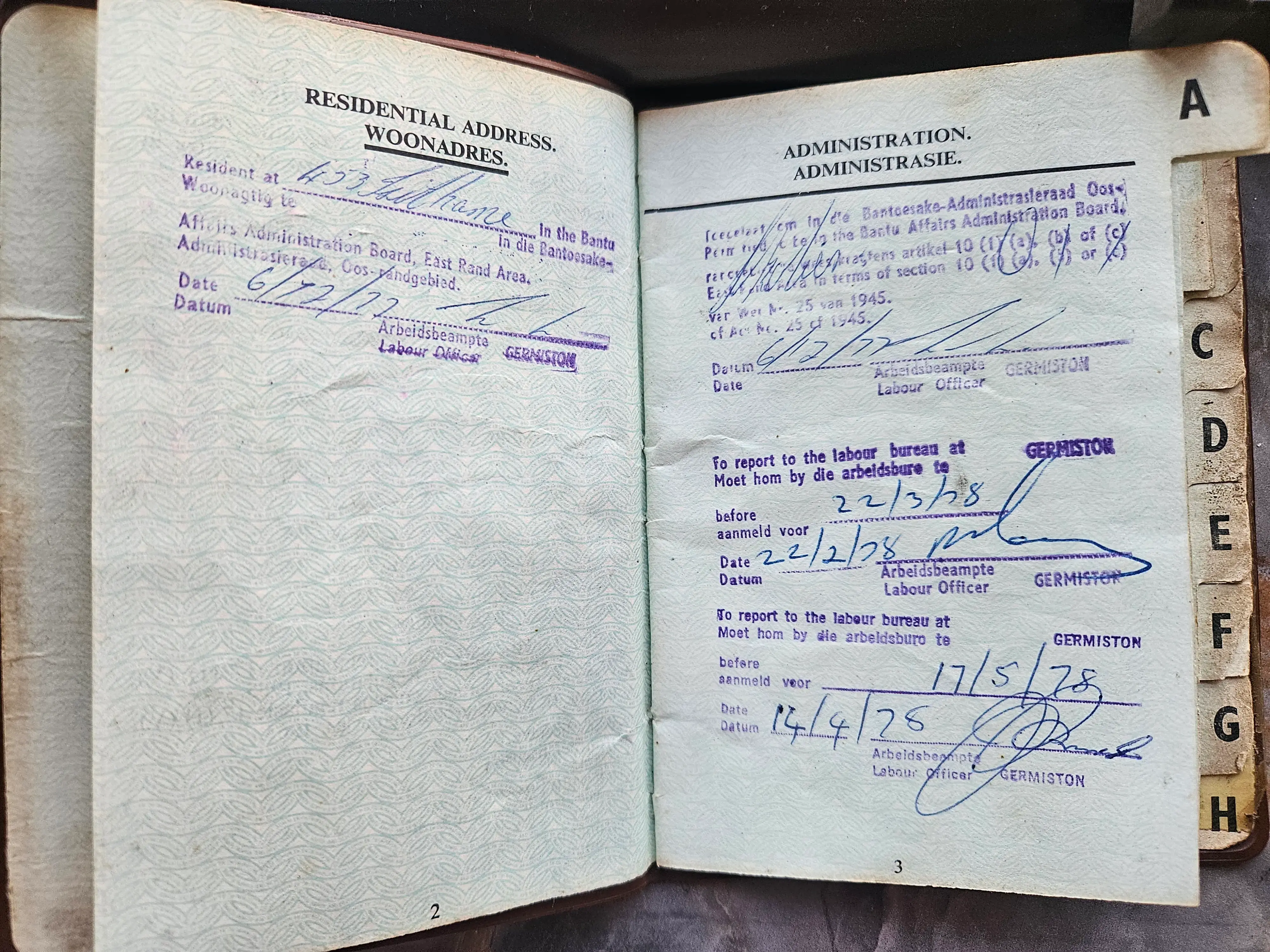
This Workers’ Day, I am reminded of the words of Zwelendaba Mgidi. He spent the best years of his life working on the gold mines of the Witwatersrand. Years later, he returned home to Flagstaff, a sick and wasted man with failing lungs. He is dead now and his family remains dirt poor. He had nothing to show for years underground. He took his last breath, still engaged in the long battle for compensation. He was bitter, broke and broken.

His words still haunt me: “Those ones who owned the mines, I hate them, I hate them very much.”

I wonder how many others share this feeling — children, spouses, grandchildren and descendants of men like Mgidi. Hate is a strong word. But I share Mgidi’s feelings towards the current regime’s indifference to former gold mineworkers afflicted by silicosis. I hate the pain they and their families endure to access compensation won in the courts. I hate the suffering that greets me each time I enter those homes. I hate the emptiness that lingers long after visiting the graves of silicosis victims.

The ANC, as a (former) liberation movement aligned with workers, should do more to help these men and their families access compensation. 

Workers of the world, unite.

Lucas Ledwaba is the author of Broke & Broken — The shameful legacy of gold mining in South Africa (BlackBird-Jacana, 2016).