Gun barrels needed: Rangers from the Virunga National Park in the DRC. The park has contracted Truvelo to supply it with steel components to manufacture gun barrels. (Alexis Huguet/AFP/Getty Images)
NEWS ANALYSIS
If it is true that blame never results in change, there can be scant hope that the inquisitorial hearings of the South African Human Rights Commission (SAHRC) into the July unrest will lead to a more coherent response from security agencies if the country sees a repeat soon.
Previous commissions have shown these seldom yield little more than nonbinding recommendations, violence and policing researcher Mary de Haas said, and three weeks set aside for hearings was too short to get to the bottom of the complex events, underpinned with politics around former president Jacob Zuma’s arrest, that devastated the province.
“I have experience of quite a few commissions and very few of them achieve anything much,” De Haas told the Mail & Guardian.
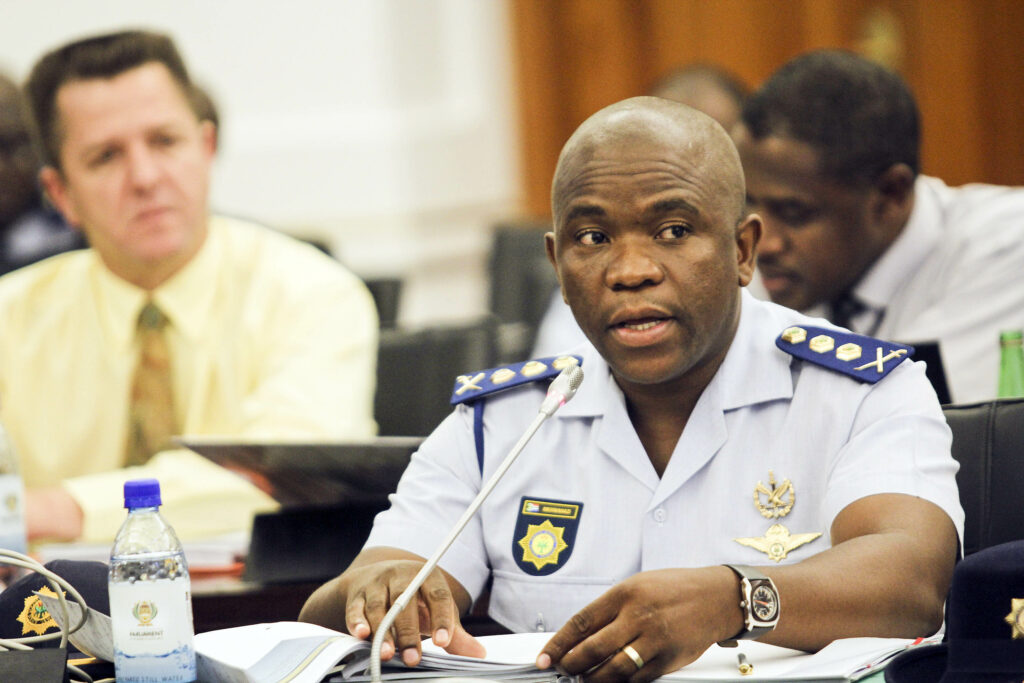
Serious accusations, shot through with politics, flowed in the past 10 days of testimony, nowhere more so than between KwaZulu-Natal police commissioner Nhlanhla Mkhwanazi and former defence minister Nosiviwe Mapisa-Nqakula.
At issue was the delayed deployment of soldiers to the province, with numbers reaching thousands only after the violence waned. Mkhwanazi was adamant that he sounded an early warning that the army was needed, in particular to guard key points and allow the police to contain the mayhem in communities and business centres.
Instead, the South African Police Service (SAPS), with reinforcements from its Special Task Force, had to guard what they could — from state buildings to shopping malls — and accept that if the rest burnt to the ground it was “tough luck” because they lacked the numbers to be everywhere, he said.
“The very first thing we wanted the SANDF [South African National Defence Force] to do for us was to protect the national key points for the intention of releasing police officers to go out on the street for the purpose of enforcing the law and protecting the citizens,” Mkhwanazi said.
In her testimony last week, Mapisa-Nqakula, who became defence minister under Zuma in 2014, accused Mkhwanazi of withholding information on where soldiers were needed and wasting time, in his sole briefing to her, with remarks unrelated to operational requirements.
His attitude proved that animosity between the country’s security agencies, particularly regarding intelligence, persisted.
“The reluctance of the KZN police commissioner to share information just brought this matter home again,” she insisted.
The SANDF was not clear where to deploy, because the police seemed to disrespect the military’s operational commander in the province, Colonel Nyalunga, possibly because of his rank. Hence she made sure that she flew to KwaZulu-Natal with generals by her side.
Becoming more personal, she hinted that he let the side down by taking four days of paternity leave immediately after the unrest to be with his wife while she gave birth in Pretoria.
This week, the provincial commissioner countered that much of Mapisa-Nqakula’s testimony was a lie, and in an casual but perhaps calculated aside let slip that she set up camp, with then intelligence minister Ayanda Dlodlo and a contingent of top brass, at the five-star Beverly Hills hotel after arriving in the province on 15 July.
On that day, Mkhwanazi said the actual number of soldiers on the ground were just more than half the 800 the minister told the media.
“I must say on the record … I warned the minister, ‘Minister, you do not go public and tell a lie and say these numbers are deployed because they are not here,’” he said.
Turning to the former minister’s complaint that the police were excluding Colonel Nyalunga from briefings “to such an extent that the SANDF was not even clear on where to deploy”, he said it was perturbing that she would include something that is not true in a sworn statement.
“When one takes an oath, I believe that you tell the truth.”
The inference was plain — the minister had committed perjury. Moreover, she never raised this alleged difficulty in their meeting, or he would have set the record straight.
“She would have got the real truth if she had asked,” Mkhwanazi said, adding that his requests to Nyalunga were on record, and it was clear that the colonel was having difficulty securing the military deployment at the pace and level the police requested.
Mkhwanazi said the first he heard of the minister’s complaint that the provincial police were obstructing deployment was when she testified at the hearings.
“I was upset at the former minister, on what she was doing, what she was saying about me was a blatant lie that was broadcast on TV about my role and my interaction with the SANDF and her role in the eight days she was here.”
Mkhwanazi’s testimony was instructive for several more reasons.
First, he confirmed the lack of warning from crime intelligence that the province was heading for widespread violence. The same had been said, less assertively, by national police commissioner Khehla Sitole. He told the commission situations like these were won or lost in the first few hours, hinting at the lack of early warning and rapid reinforcement.
On Mkhwanazi’s telling, the police were braced for trouble around Nkandla, where supporters of Zuma were converging in protest at the former president’s pending arrest after he was sentenced to 15 months in jail for contempt of court.
But the day after it happened, on 9 July, as freeways were blocked and trucks torched in short order in different corners of the province, they realised the province faced a far wider, orchestrated threat.
“In the middle of the night we got the news that trucks had been torched on the freeway on the N3, and we counted the number of trucks, we realised that it is a serious organised event that we did not know anything about,” he recalled.
The police requested an intelligence report, but it provided no answer on what was plotted and by whom, and much remains unclear to this day.
“The looting and the chaos that happened from the 9th was planned but we cannot tell the timelines of that planning because we never had intelligence.”
Also testifying on Wednesday, Lieutenant General Godfrey Lebeya, head of the Hawks, formally known as the Directorate for Priority Crime Investigation [DPCI], confirmed that his elite unit too had been in the dark.
“The DPCI would have been happy to receive any intelligence. That would have helped with any investigations. It would have been ideal,” said Lebeya.
Their testimony points to well-known problems with crime intelligence, some of them related to the standoff between Sitole and the former head of the crime intelligence, Peter Jacobs. He is an ally of former Western Cape detective boss Jeremy Vearey, who was fired after attacking Sitole on social media.
Both are pushing back against Sitole, who is fighting suspension and seems a likely fall guy for what transpired in KwaZulu-Natal, where Mhkwanazi confirmed the unrest death toll reached 281.
 (Frennie Shivambu/Gallo Images)
 (Danielle Karallis/Foto24/Gallo Images)
She said, he said: There was no love lost between then-defence minister Nosiviwe Mapisa-Nqakula (left) and provincial police commissioner Nhlanhla Mkhwanazi (right), who gave contradictory accounts of, specifically, how the army was deployed to help police contain the looting during hearings into the unrest.
Of these, 36 happened in Phoenix. Most of the victims here were black and witnesses have told the commission at least some were murdered by Indian residents who turned to vigilantism as the township burnt.
Mkhwanazi was asked to confirm that he had at one point served as acting national commissioner and therefore knew what the responsibilities of the post were. (He acted in the post between 2011 and 2012.) He remained silent.
Evidence leader Smanga Sethene repeated the question and warned Mkhwanazi that he was committing an offence by not answering.
“I don’t want to,” Mkhwanazi said, patently seething at what seemed an invitation to undermine Sitole. An adjournment was called to defuse the tension.
De Haas wondered why the commissioners were gunning for Sitole, instead of scrutinising provincial dynamics.
“[And] why are they only focusing on police and not looking at the national body which collates intelligence from different agencies, including state security? I checked at the time with two independent sources who would have known what was before that committee, and there was, according to them, nothing to warn of what was going to happen after Zuma’s arrest,” she said.
“Before his arrest they had had reports about anticipated trouble around the arrest itself and then large numbers of police were deployed in the province. But that seems to be the end of the intelligence, at least at a national level.”
Still in the hot seat, Mkhwanzi also bristled at questions from Sethene and Buang Jones suggesting that the police failed to defuse deadly racial tension in Phoenix, which in his first-hand observation resembled a war zone with roads barricaded every five metres.
Sethene asked how many people the police arrested for erecting these. None, said the commissioner, because it was not done in front of their eyes. They could not be everywhere on roads totalling more than 1 000 kilometres and without witnesses it would have been a waste of time in a province under siege with holding facilities overflowing.
He said he assumed responsibility for the police’s response but questioned why the commission was more concerned with deaths in Phoenix than with those happening daily next door in Inanda.
“Inanda is known for rapes and all these other crimes that you have. The very same communities that are crying about the murders that happened in Phoenix … slaughter each other every single day. So, we ask ourselves a question, what is [the] problem?”
Many of those who died in the unrest were trampled to death as shops were looted. Hunger may have driven them to the malls, but this pointed to a problem in society the police alone could not solve, he said.
“What must the police do? Yes, we take the blame,” he said.
“We fire the rest of the police because society doesn’t like them, employ new police officers … we are still going to get the same results until we get to the bottom of the problem. The problem is society.”
The commission concludes on 3 December with testimony from Police Minister Bheki Cele. It will then prepare a report for the president. It is reliably understood that this will be sent to parliament, where Mapisa-Nqakula now presides as speaker, and put to the portfolio committee on police.
[/membership]