A Transnet marshall opens the gate platform for the South African luxury Blue Train lounge ahead of a press train journey on September 8, 2015 in Pretoria. South Africa transport giant Transnet began on September 8, a partnership with Africa's largest tourism, leisure and gaming group Sun International. Transnet chose Sun International as the winning bidder to develop and implement a marketing strategy for the Blue Train.
AFP PHOTO/GIANLUIGI GUERCIA (Photo by GIANLUIGI GUERCIA / AFP)
Herbert Prinsloo dedicated a quarter of a century of love to Africa’s most luxurious train. When he began to suspect that friends of Transnet were being handed free trips he was investigated, charged and kicked to the pavement. Now, inspired by the courage of whistleblowers testifying at the Zondo Commission, he has come forward to tell his story.
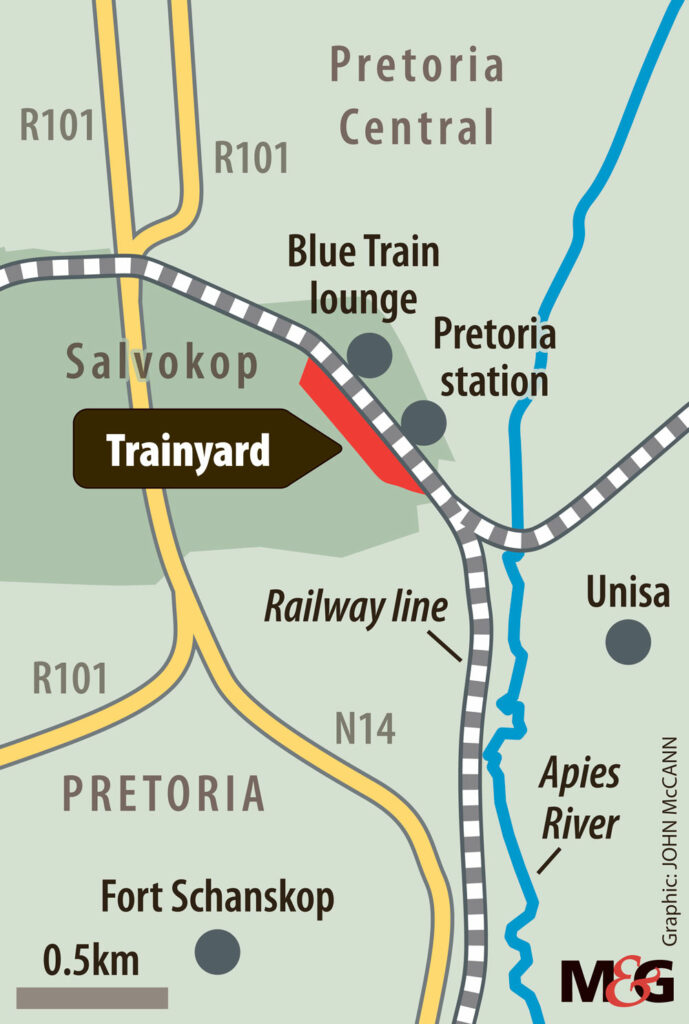
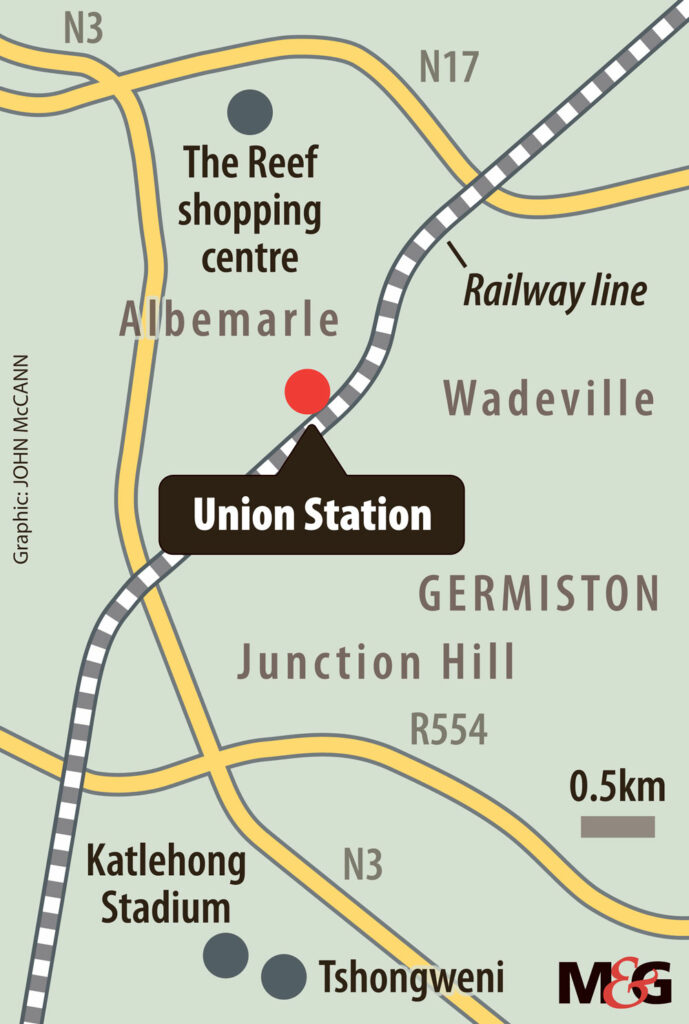
The luxurious Blue Train derailed for a second time in three months; first on 8 November last year at Union Station near Germiston and again on 16 January at the Salvokop trainyard in Pretoria. No passengers were on board in both incidents.
Blue Train personnel, who are unwilling to be named, paint a picture of deterioration that has been going on for years.
A former train manager, Herbert Prinsloo, was dismissed in 2017 after sounding the alarm in 2016 about the hazardous condition of the Blue Train and informing a senior Transnet official at head office about free trips being offered to friends of Transnet executives.
Three other line managers — who are too afraid of repercussions to be named — were investigated, charged and ultimately dismissed or suspended indefinitely.
Prinsloo said the state-owned enterprise had claimed it did not have the funds to carry out repairs.
It was only when he watched whistleblowers Cynthia Stimpel (former SAA treasurer) and Suzanne Daniels (former Eskom head of legal and compliance) testifying at the Zondo of inquiry into state capture on television that the penny dropped.
“This thing of trumped up charges is exactly what happened to me. I was a good citizen and worker and ambassador for South Africa,” he says.
“When they mentioned the Guptas in the Zondo commission, I said: ‘Man, there is something here too. The Guptas get everything for free. Like the coal mines and all that stuff, they didn’t even pay for it.
“We would be informed if VIPs were travelling. We would be told: ‘This is Mr Siyabonga Gama’s people’ or whoever from the top, and that there must be special attention to make sure that there is enough Blue Label whisky, etc.”
The first time Prinsloo saw the Guptas was at the ANC centenary event held in Mangaung in 2012. Malusi Gigaba, then the minister of public enterprises, took them on a site inspection of the luxurious Blue Train.
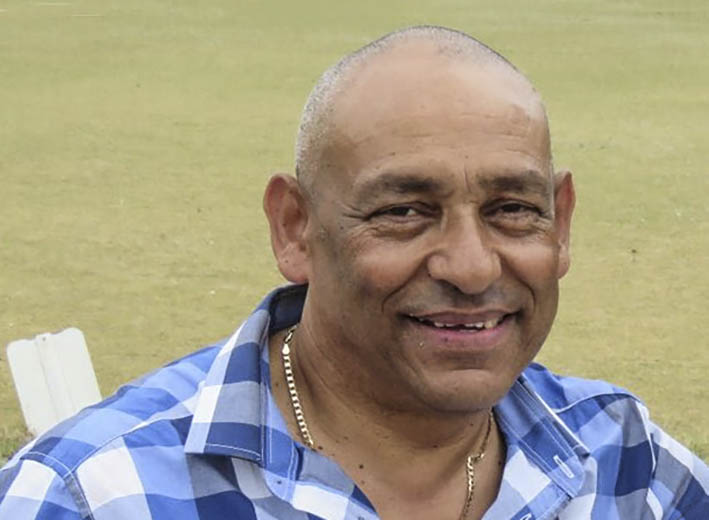 Herbert Prinsloo.
“We were told that there were some rich Indian men coming to inspect the train. I tried to greet them but they went straight to the observation car. Then Marius Fransman [then deputy minister of international cooperation] arrived wearing his white Panama hat. He also went straight to the back. Brian Molefe [then Transnet’s chief executive] and Mafika Mkhwanazi [former Transnet board chairperson] were passengers on that trip.”
On two occasions the Guptas chartered the train in the name of Oakbay Investments, the holding company for the family’s businesses. One of Prinsloo’s co-accused was acting train manager on one of these trips.
“It was after the wedding at Sun City in 2013,” he confirmed. “I took them to Cape Town. They brought their own chef and had a lot of demands. All the utensils had to be sterilised and they used their own pots and plates. With Herbert’s trip and mine, [former president Jacob Zuma’s son] Duduzane Zuma came along.”
Prinsloo, worked for Transnet as a bedding attendant for nine years before becoming rooms manager on the Blue Train and the train manager in 2012, connected with Stimpel after seeing her on TV. He joined her whistleblowers’ support group and she assisted him with his written submission to the Zondo commission.
The Mail & Guardian sent a list of 32 questions to Transnet, including about the derailment in November last year, and about the overall state of the train, its railworthiness, the last time it had a full service, the competency of technical staff, whether the handbrake system had been repaired or replaced and the lifespan of the train.
“It was after the wedding at Sun City in 2013 … I took them to Cape Town. They brought their own chef and had a lot of demands. All the utensils had to be sterilised and they used their own pots and plates.”
Herbet Prinsloo
Only questions about the November derailment were answered:
“The Blue Train derailment, that took place on 07 November, has been referred to a board of inquiry. (BOI) in order to establish the root cause of the incident and eradicate speculation,” it said.
“We can confirm that maintenance of the Blue Train is carried out routinely. The last such service took place on 28-30 October and in addition to that, a pre-departure checklist was completed at the departure home depot … Prior to every departure, a roadworthy certificate is also issued.”
Prinsloo said that minor faults with, for example, air conditioning, coffee machines and electricity, were dealt with in the depot. But “when there was a proper service, staff would work on the Trans-Karoo, the Orange Express and other mainline trains for a couple of months”.
A chef who worked on the train with Prinsloo said: “The train was not properly serviced and maintained. When we told the leadership, they blamed the line managers and served us with trumped-up charges. Nothing was taken care of; even linen and cutlery and crockery was short. We were told they were trying to raise costs to build another train. There were two days at most between trips to fix major problems and the depot was not equipped to deal with them.”
The rooms manager at the time said: “On many occasions we told the executive manager the train was a disaster waiting to happen. On one occasion in my 20 years working on the Blue Train, the train nearly derailed because the water geyser underneath the carriages fell off. Since we left it has become worse.”
This was confirmed by personnel currently working on the train, who said the situation was now worse than ever.
A couple who travelled on the Blue Train shortly before the November 2021 derailment spoke about sitting on the tracks for half of the time they were away.
“We were supposed to have gone to Pretoria but because of some problems they dropped us off in Meyerton in the dark and organised transport for us to get to OR Tambo [International Airport] to take an Uber home,” the couple said.
Prior to being fired, Prinsloo approached the Employee Assistance Programme for counselling as the condition of the train deteriorated. “I was working 320 hours a month and I couldn’t sleep at night because of stress.”
Pictures he took of the train after the derailment were presented in a special security meeting in April 2016. He also gave evidence to a senior Transnet official about passengers who didn’t pay.
Rusting pipes, wheel diameters out of alignment; damaged brake cylinders; a dangerously precarious handbrake system, problems with air cushions and levelling valves, floors that had disintegrated; electronic doors that didn’t close properly; and coach structures and door frames that had rusted through were some of the problems listed at the meeting, which was attended by Blue Train technicians.
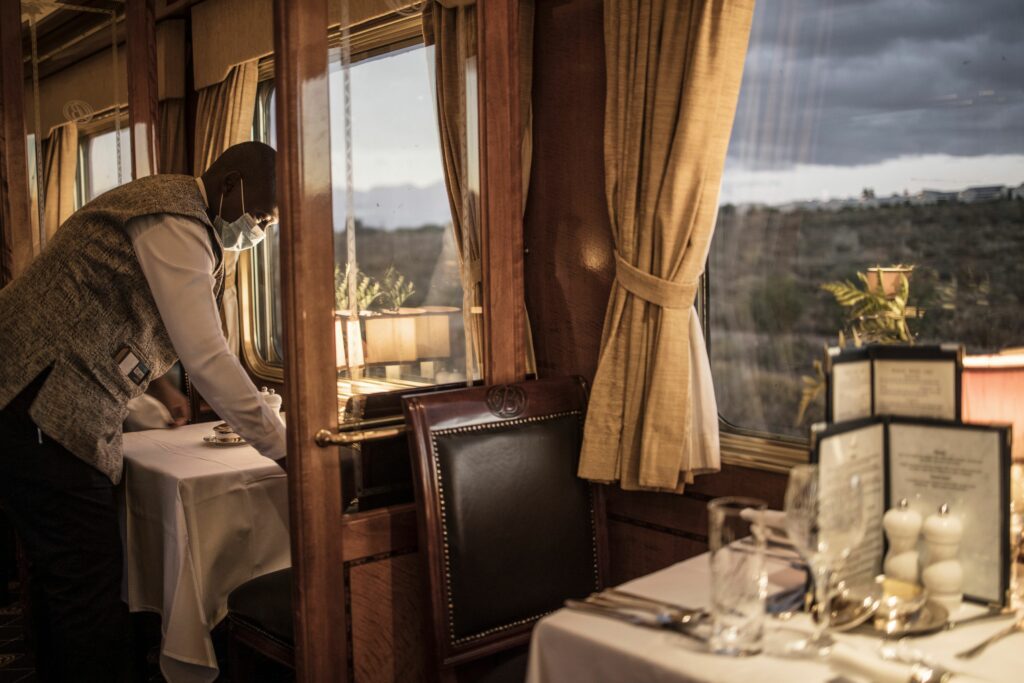 A waiter clears a table as the Karoo semi-desert landscape is seen from the Blue Train on February 25, 2021. – Forty-eight hours to stop thinking about anything, to let yourself be pampered, to play the princes and princesses. The Blue Train, the ultimate luxury travel train experience, crosses South Africa for more than 1,400 km from Cape Town, its southern tip, to its capital Pretoria, through fields and slums, urban centres and dream landscapes. (Photo by MARCO LONGARI / AFP) (Photo by MARCO LONGARI/AFP via Getty Images)
According to Prinsloo’s recording of the meeting, the chairperson, who was part of the technical team, urged: “Let’s not create the perception that the train is inherently unsafe …The last thing we need is for people to go out of this meeting and tell the world the train is unsafe.”
“It’s a ticking time bomb,” a Transnet representative chipped in.
The Blue Train was built in 1972 and was due to be scrapped in 1995. The new train was constructed on the existing frame, which was gradually collapsing. Companies that produced the original parts were no longer in existence.
 (John McCann/M&G)
“Something has to be changed or redesigned because the components are not available,” the chairperson noted. “That’s where we sit at this point in time.”
Prinsloo asked in the meeting whether the train was railworthy and safe. “I have been in train accidents before and I can feel it now, the build-up. We are just waiting for something to happen.”
Before the train left the depot, he was asked to sign the railworthy certificate. He refused.
“Why should somebody that works inside the train with people and food and all that, sign? I am not an engineer, why should I be the person to sign the train off? Even the engineers said I shouldn’t sign,” he said.
In late 2016, Prinsloo was told that he and three other line managers were under investigation. A butler working on the train at the time, who asked not to be named, was asked to testify against Prinsloo and the others. When he refused, he was sent home for a year.
“I was supposed to say that Herbert and them were doing certain stuff but none of these things happened when I was there,” he said.
Initially Prinsloo and his co-accused were represented by the South African Transport and Allied Workers Union, but the labour group collapsed and they had to represent themselves. Arbitration by the Transnet Bargaining Council came to an end when the council instructed Transnet to reformulate the charges because they didn’t make sense. The state-owned enterprise claimed it couldn’t afford arbitration and an internal disciplinary hearing was held instead.
 (John McCann/M&G)
In February 2017, Prinsloo was found guilty of two of the original 12 charges against him and an additional charge of stealing tips. None of the charges could be substantiated. He was fired on the “balance of probability”.
[/membership]