Bunny chow to the rescue: Pastor Burt Elliot and facilitator Uzusiphe Nkuzo help run the Gang Intervention and Prevention Programme at Ubuntu4All in Imizamo Yethu, Hout Bay, Cape Town. (David Harrison/M&G)
“When you hang out with dogs, you will be bitten by fleas. It’s the same thing here — when you walk with gangsters, you become a gangster.”
The statement encompasses the philosophy of Uzusiphe “Bob” Nkuzo, a former member of the Bad Boy Crew gang in the Imizamo Yethu informal settlement in Hout Bay, Cape Town.
After a flare-up of gang violence in Imizamo Yethu in 2013, Pastor Burt Elliot was asked to step in.
At that time, Papa Burt, as he is known, had been working with gangs for eight years through the Hope Prison Ministries at the Pollsmoor maximum-security prison.
Papa Burt’s method of getting the Imizamo Yethu gang members to open up was simple. The young men would gather around a rock to talk, while feasting on home-made bunny chows. Anyone else who was in need of a free meal was also welcome.
“People said gangsters can’t change,” says Papa Burt during an interview at the Ubuntu4All nonprofit, adjacent to Imizamo Yethu.
Today, most of Imizamo Yethu youth gangs have been dismantled, with the events of those earlier years a memory — albeit a vivid one — for the survivors who chose to sever ties with the violent life.
“It was hectic,” says Nkuzo, who is sitting next to Papa Burt.
Initially, the 2013 rampage was thought to be inflamed by ethnic tensions in the informal settlement. This theory was strengthened when a Congolese man was robbed and stabbed to death. But subsequent robberies and violent attacks were not ethnic specific. Gang members were soon identified as the perpetrators.
At their peak, about 28 subgroups of youth gangs terrorised Imizamo Yethu residents between 2013 and September 2015. The major gangs, led by older men, divvied up the area. Uptown was for the Bad Boy Crew “operations”, while downtown was the territory of the rival Xaba gang. A school was in the middle.
Many of the fledgling gangsters attended that school “and sometimes you would be in the same class as your enemy”, says Nkuzo.
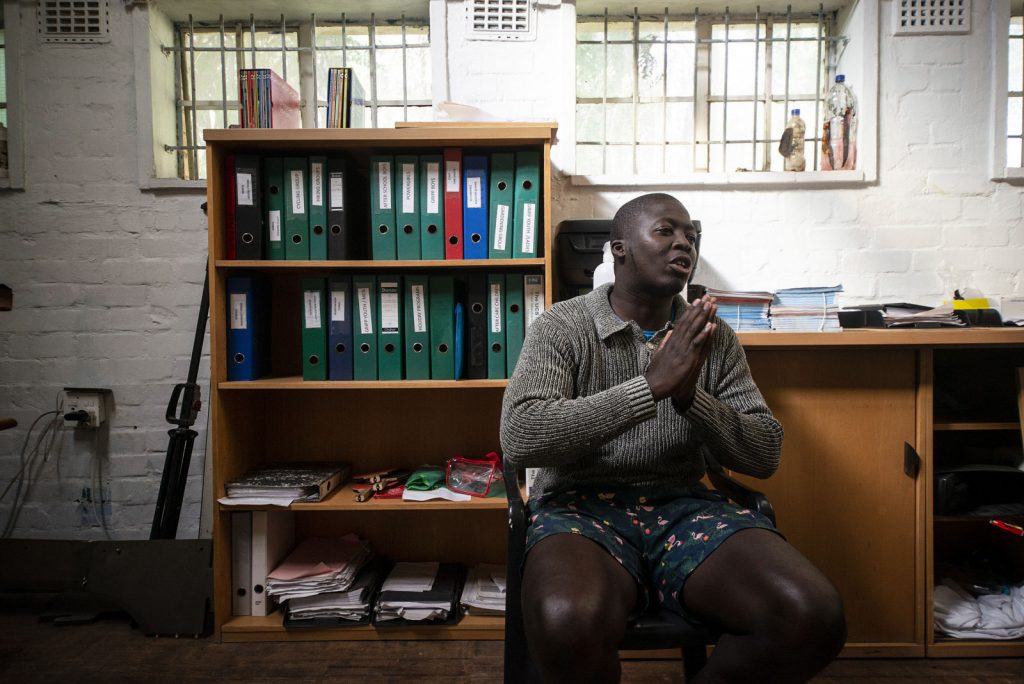 Uzusiphe Nkuzo
The girls who were part of gangs proved their allegiance in various ways. During class or breaks, they would communicate the location of “enemies” to their respective crews. They would also carry weapons because patrollers only frisked the boys before they were allowed to enter the school.
After school hours, they once forcefully removed a rival gang member from a taxi and stabbed him. The wound was not fatal.
“That is how it worked back then.”
In an effort to staunch the violence and safeguard the streets, a group of older men established a patrol unit and curfew. The teenagers had to be home by 10.30pm, after which patrols would start.
In 2014, the patrolling unit identified which youths belonged to which gangs and, with local police in attendance, the parents of the young men and women were called in. Some parents were made aware that their children were part of a gang for the first time.
The police met the groups, asking them what was going on, so they could understand the violence and what sparked it.
For the majority of the boys and girls who participated in the gang activities, violence was something familiar to them and, in many cases, they thought it the only answer to a situation.
“Violence is the only way to sort things out. We adopted it as a cultural thing,” affirms Nkuzo.
He recalls how fathers would sometimes watch their sons fight each other with sticks to settle a dispute, “but they would intervene when one child was overpowered by the other”.
In Imizamo Yethu, where many fathers are absent, “you fight someone and he comes back with a gun”.
“You get exposed to violence from a very young age. Alcohol is a big thing,” adds Nkuzo, pointing out how mothers would visit shebeens carrying babies on their backs.
“What we watch on television is violence. Kids get entertained by a form of violence every day; every movie is a form of violence. We see violence each and every day.”
Gangs that seem to show a lifestyle of wealth, branded clothing and dream cars convince youngsters that “crime pays”.
Nkuzo, who is 26, joined a gang when he was 13 years old.
“For me, it wasn’t a matter of wanting to join a gang.”
A group of boys was playing soccer when Nkuzo’s friend was stabbed by a gang member. Nkuzo tried to defend him. “From there, they said you are part of [the gang], because I was defending the guy.”
“Nkuzo grew up and attended school with many of the boys affiliated with the Bad Boy Crew. But what led to the change in his life?
“See those pictures?” he says, pointing to a wall covered with colourful photos. “I use them as a mind map. That is how I made a turn.”
Most of the young men in the photos are no longer alive.
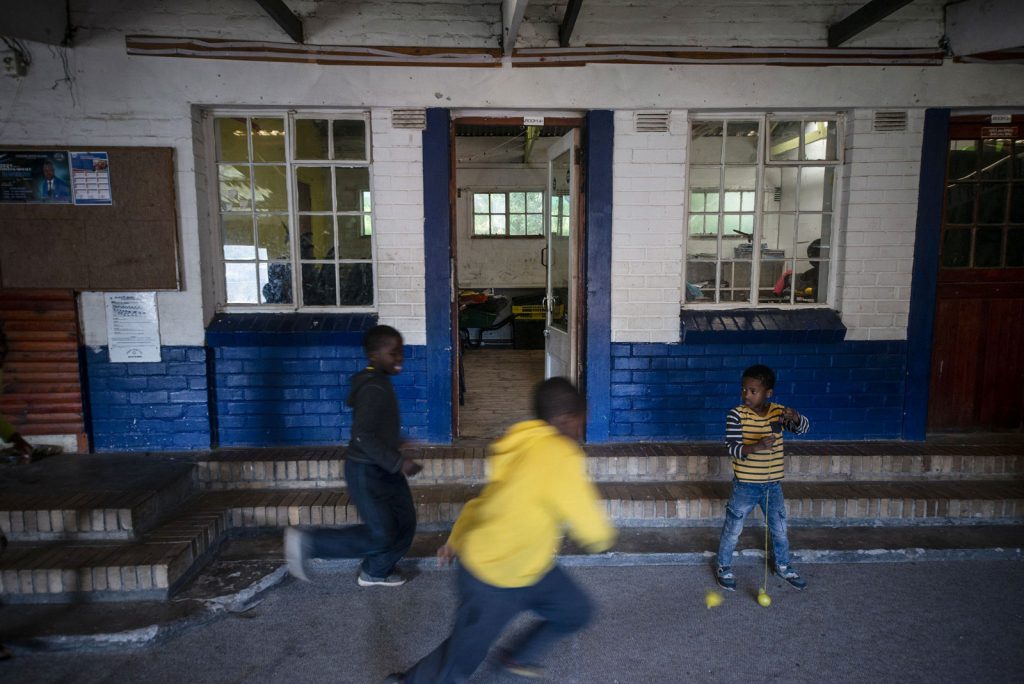 The Gang Intervention and Prevention Programme at Ubuntu4All. (David Harrison/M&G)
Nkuzo has lost “a lot” of friends because of gang violence. Others, however, are doing well — a result of “that bunny chow”, he laughs.
Papa Burt introduced Nkuzo and several other boys to an alternative life in 2014.
“If there was not a place where we could call youngsters and engage with them, like what we are doing now, things would have just continued in a cycle. Because that is where my life changed,” says Nkuzo.
“What most people say is we need more police and security in the area. But most criminals know they will be arrested, and they do it anyway … However, if you change a man’s perspective, they might know there is more to life than that, and it would be more of a change.
“My life is different now; I feel I am living for a purpose.”
After completing the Western Cape government-funded Chrysalis programme, Nkuzo became a facilitator at Ubuntu4All, where he teaches young people life skills, takes them on hikes, plays soccer with them and talks to boys about the past, present and future.
Initially, Papa Burt was called in to run a 12-week gang intervention programme in early 2014.
“It wasn’t a programme yet, it was engaging people — finding out what they are doing, why they are doing it and if they want to change.”
The main idea was to sit and listen to the parents and youngsters in the various groups, says Papa Burt. This took place around the rock, with bunny chows on hand.
The boys were encouraged to work at a local car initiative, led by Papa Burt, who also taught them other practical skills, such as how to make cheese, biltong and amasi.
Ubuntu4All was established seven years ago, after the needs of the children had been identified.
Today, Ubuntu4All runs Gripp — the Gang Intervention and Prevention Programme.
“We do diversion programmes in the form of hikes; camps; life-skills empowerment; basic entrepreneurial skills, such as manufacturing biltong; permaculture training; sewing and sourcing partnerships with business,” says Papa Burt.
“To date, many of our participants who came through the programme are working, with full-time and part-time contracts in retail businesses, studying as teachers, sports facilitators and teaching assistants and some are studying in other fields to better their lives.”
Papa Burt admits that he prefers to stay “under the radar”, because “when something works, people want to take it and implement it elsewhere, that is a DSD [department of social development] approach, [but] each environment must be contextualised”.
 Imizamo Yethu, Hout Bay, Cape Town. (David Harrison/M&G)
When Papa Burt is asked his opinion about using crime-prevention programmes designed by academics, he responds: “Bra, have you ever been on the streets?”
Ubuntu4All, whose funds diminished as a result of the Covid-19 pandemic, is largely funded through MAMAS Alliance CSI.
The organisation is helping about 350 children through its programmes.
Although the violence is “different” to that in 2013 to 2015, it persists in Imizamo Yethu.
Extortion gangs have killed nine people since January.
But Papa Burt remains adamant that young men and women can be diverted before they cross the line into gangsterism.
“I’ve learned over the years, one day at a time, one life at a time and you can only change those who are interested,” he says.
[/membership]