There’s an air of uncertainty over the tented homeless shelter behind Durban’s Elangeni Hotel, set up by the eThekwini municipality to house some of the city’s street people when the Covid-19 lockdown began in March 2020.
The residents, some of whom have been living in the shelter since the lockdown began, have no idea for how long the municipality will keep the facility open — or what will happen to them when it does eventually close.
The shelter and several others were set up by the city, working with NGOs, in the first days of the Covid-19 crisis, housing around 2 400 homeless people who were on the streets when the three-month lockdown was implemented.
They were set up literally overnight as part of the city’s safe open spaces programme, which had been speeded up by the health crisis.
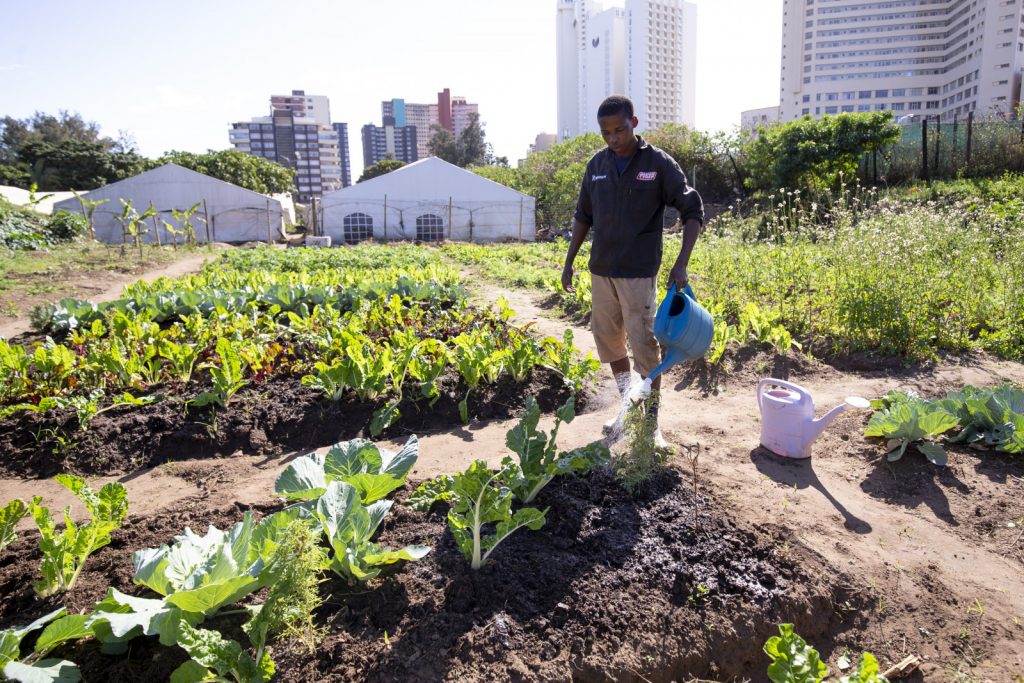 Luthando Thukuthe works in the garden started by homeless people living in a camp arrange by the city during lockdown on the beachfront in Durban. Photograph: Rogan Ward
After June 2020 about 1 800 remaining residents were moved to the North Beach camp and two other sites, with the majority leaving after the lifting of the Covid-19 state of disaster regulations.
Since then their numbers have dwindled to about 500, with about 200 people now living at the North Beach tented camp, where residents are still running a vegetable garden they set up in June 2020.
They still have running water and showers supplied by the eThekwini municipality and receive a weekly visit from a mobile clinic, but are no longer getting meals at the site. Electricity supply was also cut some time ago.
Residents sleep on mattresses placed on top of wooden pallets they have converted into beds. Their clothes hang from the tent frames or from rails they have made out of abandoned metal tubing.
There are no cooking facilities — fires are banned — and residents get their meals at the Denis Hurley Centre or from some of the other feeding schemes running in the city.
Sithembiso Duma, 33, from Newlands in north Durban, has been living at the camp since the end of March 2020, when he was admitted after several days of processing at the reception centre the city set up at the Moses Mabhida Stadium.
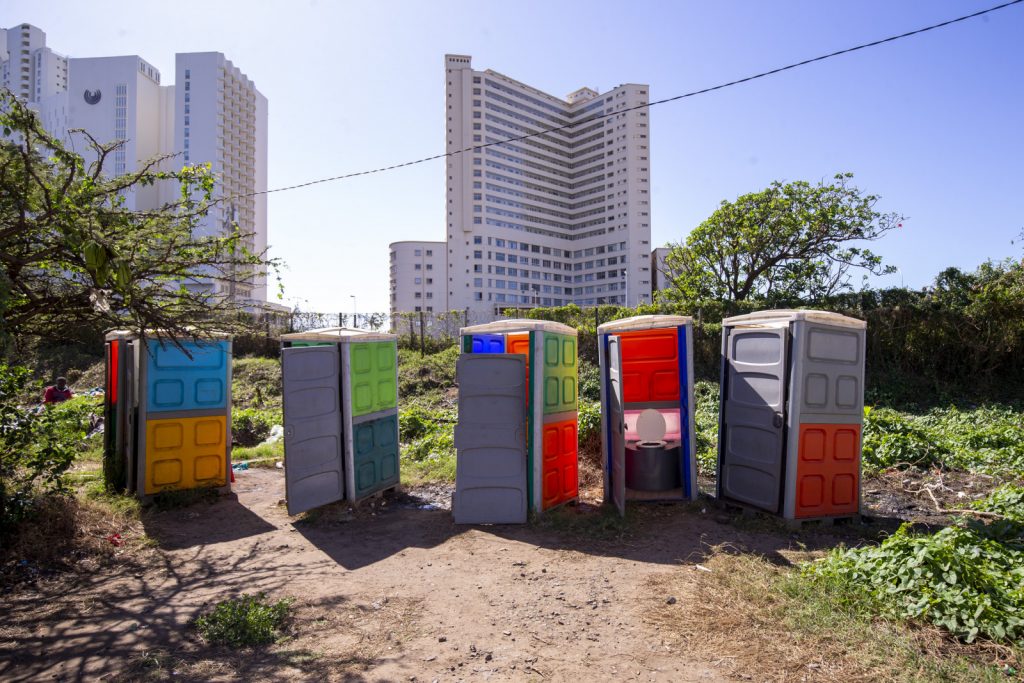 Toilets for the homeless people living in a camp arranged by the city during lockdown on the beachfront in Durban. Photograph: Rogan Ward
Duma had been on the streets for almost four years — having had to leave his family home because of a dispute and later losing his job — before moving into the shelter.
“I’ve been here from the beginning,” Duma said this week. “Things are bad here now. There’s no food. We go and look for food and for jobs every day, but it’s hard to find work.”
“I have to get out of here, but I don’t know how and where I’m going to go. Some of the guys just sit here every day and sleep. It’s bad. Some of the people are sick but we are all sleeping together in the tents. It’s bad,” he said.
“We don’t know what’s going to happen, if they are going to let us stay here. We don’t know when we are going to have to go, or if they will give us somewhere else to stay. Nobody has told us anything, so for now we are just here.
“I also want my place, my own room, and a job, but how am I going to get a job?”
Michael Mofokeng, 42, who sleeps in the same tent as Duma, was among the residents that started the vegetable garden on the site to make some extra money and keep occupied.
But Mofokeng took ill last year and has been bedridden since and has had to stop gardening.
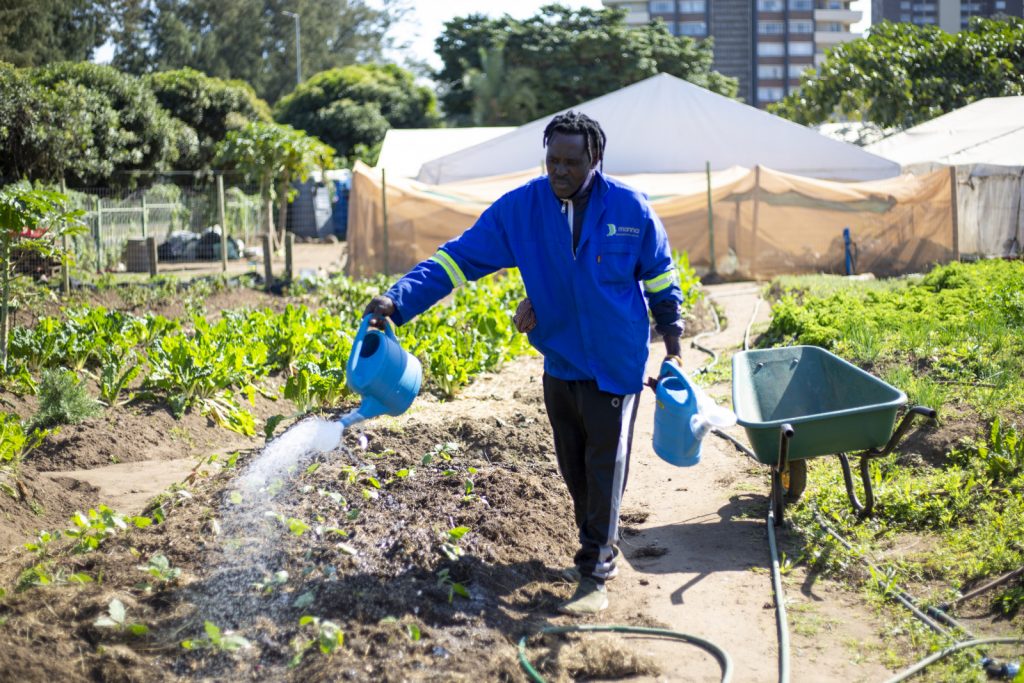 Cyprian Maphanga works in the garden started by homeless people living in a camp arrange by the city during lockdown on the beachfront in Durban. Photograph: Rogan Ward
Mofokeng looks skeletal and clearly far from recovery but he is confident he will get better.
“I have been very sick so I can’t do anything. I get medicine from the clinic. I’m getting better, but it is taking very long,” Mofokeng said.
Cyprian Maphanga, 47, has been in the camp since 2021 and is one of three residents who are involved in the market garden, which was revived last year.
It started off with 20 participants and became successful — with discount grocer Boxer and other supermarkets taking bulk orders for spinach and other vegetables — but collapsed after some of those involved moved to Umbumbulu to start a farm.
Maphanga, who became homeless after he lost his job working for an electrician about five years ago, said he started gardening to try to make enough money to get out of the camp and feed himself.
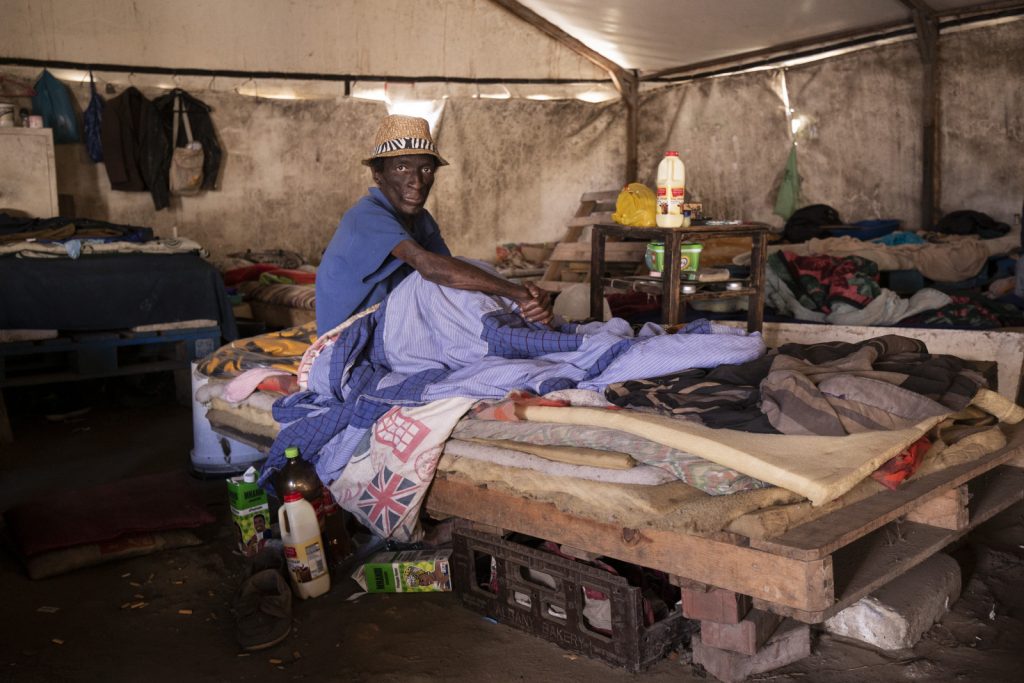 Michael Mofokeng in his bed in a tent for the homeless people arranged by the city during lockdown on the beachfront in Durban. Photograph: Rogan Ward
“I started doing this because I needed to make money. I did learn to grow things when I was young so it was easy for me. I like working,” he said.
Now, he is able to pay R900 a month for a place in a shelter nearby for himself and his partner, with the money he has earned selling spinach, cabbage, carrots and a wide variety of herbs that are propagated on site.
“I hope they can let us carry on here if they close the camp. There was nobody using the land before this and we can carry on farming here,” he said.
Maphanga’s goal is to make enough money to move back to Pietermaritzburg and start farming on his family’s land, which he believes he can turn into a successful business.
“I’ve learned here that I can feed myself and earn a living from growing vegetables. I hope I can go home one day and do the same thing there,” he said.
 Permaculture specialist Gabriel Mngoma shows Luthando Thukuthe and Cyprian Maphanga how to harvest seeds in the garden started by homeless people living in a camp arrange by the city during lockdown on the beachfront in Durban. Photograph: Rogan Ward
Maphanga, Basil Nyawuza [featured image] and Luthando Thukuthe each take a small “salary” from the sales they make and reinvest the balance in the farm, purchasing seeds and seedlings.
They receive mentoring every Tuesday from permaculture consultant Gabriel Mngoma, who is also assisting the group with finding new markets for their produce as well as helping them perfect their farming techniques.
Using food waste from the Elangeni Hotel and bokashi composting, the group have managed to improve their crop yields, and are hopeful that they have a serious harvest ahead of them.
Mngoma said they believed that the municipality would allow them to carry on farming once the camp closed.
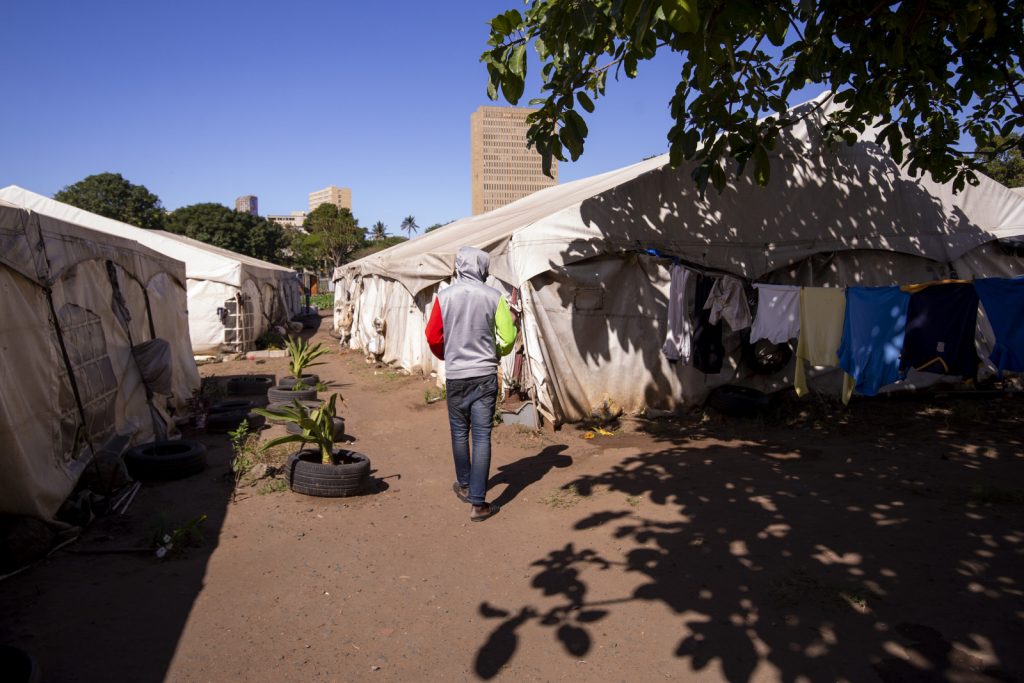 A general view of tents for the homeless people living in a camp arranged by the city during lockdown on the beachfront in Durban. Photograph: Rogan Ward
“This is a very positive project that can involve people permanently and give them a living. It is actually a model that the city could use in other areas with vacant land and could be used to improve food security in communities,” Mngoma said.
In May, the municipality said the three facilities it was running for the homeless would stay open until it had completed the construction of a permanent safe open spaces centre in the Block AK area in Greyville.
City spokesperson Msawakhe Mayisela had not responded to questions from Mail & Guardian at the time of writing.
[/membership]