Sweet nothings: Sugar cane farmer Pratish Sharma on his farm in Maidstone. He is anxious about being paid
for cane he delivered to Tongaat Hulett after the company got into financial difficulties. Photo: Rogan Ward
Pratish Sharma’s family has been living and farming at Isinembe near Tongaat, north of Durban, since 1883, when his ancestor, Gangaparsad Sharma, settled in the area.
Today, Sharma and his father, Roy, farm sugar cane on about 320 hectares of land, employing 65 workers and supplying sugar giant Tongaat Hulett with about 16 000 tonnes of cane for refining every year.
The Sharmas are among the more than 12 300 sugar cane farmers who are contracted to the property development and sugar giant and who may lose everything if Tongaat Hulett, currently under business rescue, collapses.
The company went into freefall after balance sheet fraud, allegedly carried out by former chief executive Peter Straude and other managers, was discovered, forcing it to sell off properties and farms to reduce its debt.
Late last month it defaulted on payments to creditors and was placed under business rescue after banking institutions rejected the business recovery plan presented by its new leadership, which took over in 2019.
Staude, former chief financial officer Murray Munro, four other directors and Deloitte auditor Gavin Kruger and several other managers are out on bail over the fraud, which totals R3.5-billion, and will appear in court again in February 2023.
Sharma is still waiting to be paid more than R400 000 for the cane he delivered to the Maidstone mill in September, and is concerned that his payment for October, due at the end of this month, may also not be honoured.
In an interview at his farm on Tuesday, Sharma, a director of SA Canegrowers, one of several representative bodies in the industry, said that although they had been told they would receive the payment for September “in a couple of days”, they were still concerned about getting paid for October’s cane and the rest of the year’s harvest.
The payment default “sent shockwaves along the entire value chain”, leaving farmers, workers, haulage companies, mechanics, fuel suppliers and the local stores that supply farmers and their staff with their daily needs all waiting to be paid.
A total of 12 300 growers of varying sizes are affected by the Tongaat Hulett crisis, along with their suppliers and workers.
“It’s a very difficult situation here in the farming community and in Tongaat itself, which is dependent on this industry for its survival,” Sharma said.
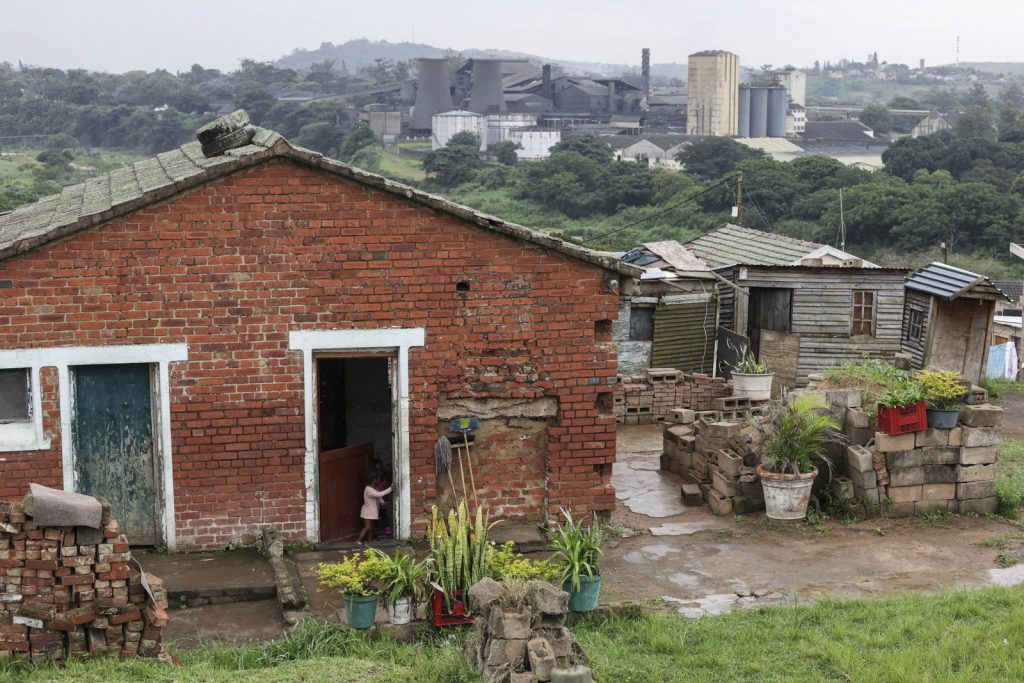 Spillover: Houses near the Tongaat Hulett mill in Tongaat, KwaZulu-Natal. The company’s problems have put
thousands of cane workers’ and growers’ jobs on the line. Photo: Rogan Ward
Spillover: Houses near the Tongaat Hulett mill in Tongaat, KwaZulu-Natal. The company’s problems have put
thousands of cane workers’ and growers’ jobs on the line. Photo: Rogan Ward
He said that although September and October payments will help them survive in the short term, if no long-term solution is found and the North Coast mills close, the region’s canegrowers are doomed.
The only independent North Coast mill, Glenhow at Stanger, is already fully booked and transporting the cane to the Sezela Illovo Sugar Mill on the South Coast would not be financially viable, because of the high haulage cost to move cane hundreds of kilometres for milling.
“If we don’t find a long-term solution all of this cane has no market. If the mills do close — Felixton, Maidstone and Amatikulu — these whole vast lands all the way up the coast will be unproductive unless we plant something else,” Sharma said.
“It will take time and capital investment to plant something else. Sugar cane is planted in a 10-year cycle, so what you see in these fields is a 10-year investment, not a season-on-season one.”
In the meantime, Sharma and other farmers are waiting to hear whether the mills will start up again, so that they can continue with this year’s harvest, with 1.3 million tonnes of cane waiting to be harvested by mid-December, when the season ends.
“They now have a payment plan to pay for what cane we delivered in October. We are holding thumbs that it happens. We have already agreed to partial payment at the end of the month and the rest over two or three weeks,” Sharma said.
“At least we have a plan. It won’t be as bad as at the end of October, when there was no payment and nobody knew what was happening. At least now we can inform our creditors as to what is happening.
“We want to restart this season. If we don’t survive this season and get paid for this crop we can’t move. No bank will talk to a farmer with no capital. The next big question is, will we have a mill next season?” Sharma said.
He said although farmers were discussing the prospect of buying the mills collectively, this was still at an early stage and the mechanism for working out how to do so had not been agreed upon.
“We have to do something. We can’t just lie down and die. It’s not going to be easy and it’s not going to be quick.”
A spokesperson for Metis, the business rescue practitioners, confirmed that they had met Tongaat Hulett’s creditors, as required in terms of the Companies Act, this past week to update them on the business rescue process and a proposed payment plan.
Enjoying this story? READ The bittersweet story of Tongaat Hulett and its demise by Anathi Madubela
The spokesperson said payments had been made to critical suppliers and creditors, including small-scale farmers. “The BRPs [business rescue practitioners] continue their efforts to obtain additional post commencement finance.”
The spokesperson said the business rescue practitioners had also asked creditors for approval to extend the date for publishing the business plan for Tongaat Hulett until the end of January 2023 and expected feedback by 11 November.
Andrew Russell, the chairperson of SA Canegrowers, told the Mail & Guardian that some small-scale growers supplying the Tongaat mills at Felixton, Amatikul and Maidstone, had received their overdue payments for cane they had delivered in September.
“We welcome this development, given the particular financial vulnerability of small-scale grower operations, and are grateful that the business rescue practitioners have understood the urgency of prioritising grower payments to prevent the permanent collapse of their businesses,” Russell said.
But about 300 commercial growers, who supplied more than half of Tongaat Hulett’s cane in September and employ about 14 600 workers, had still not been paid and the livelihood of the majority of the region’s sugar cane workers was still under threat.
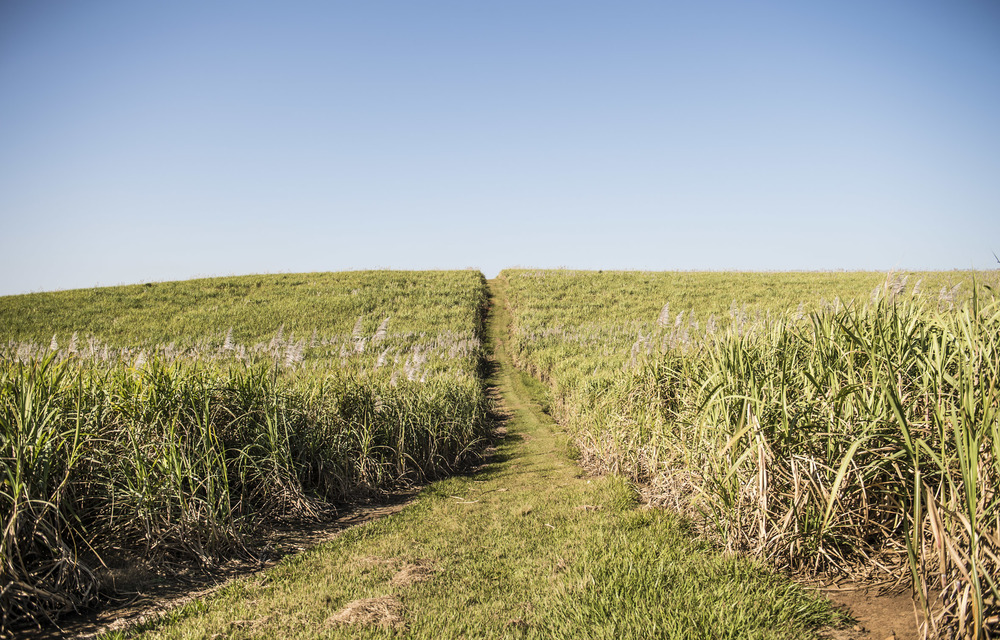 An Old sugar farm of Tongaat Hullet. (Delwyn Verasamy/M&G)
Russell said it “remains critical” that the business rescue practitioners prioritise paying these growers, which would allow them to pay workers, contractors, haulage companies and other suppliers.
There were still questions about Tongaat Hulett’s ability to pay growers more than R345-million, which was due at the end of November for the more than 570 000 tonnes of cane they delivered in October.
“If this is not addressed now, the industry may find itself in this same crisis in a few weeks’ time,” Russell said.
“It is also critical that clarity is provided on plans for the remainder of the season, and to try to secure the future of Tongaat Hulett for the sake of the thousands of livelihoods dependent on cane growing in the north coast of KwaZulu-Natal,” he said.
[/membership]