Controversy: The city council wants to put a social housing development on the site of an abandoned hospital in Woodstock, Cape Town, Photos: David Harrison
The findings of a social impact report could throw a wrench in the works for the City of Cape Town’s plans to shoehorn a high concentration of social housing developments into the historical suburb of Woodstock.
The report recommended that, in line with submissions by residents, the neighbourhood’s Castle bowling green be reserved as green space and, ultimately, become part of an ungraded community park.
But, in a seemingly prolonged process, the city council has not yet submitted the heritage impact assessments, of which this report forms part, to Heritage Western Cape, which could give the city the green light to develop about 800 units, known as the Earl Street Social Housing Project.
At the end of January, the Mail & Guardian reported on the growing tension between Woodstock residents and the city council as the latter pressed on with plans to develop sites for social housing purposes.
The land earmarked for the project includes the now-defunct Woodstock Hospital — illegally occupied by more than 2 000 people — and the bowling green bordering the historical Melbourne Terrace in Earl Street.
Among the residents’ main objections were the lack of safe green spaces in an area where few have gardens, because properties are small, and the immense strain densification would place on water and sewerage infrastructure.
The assessments meant to guide the city’s decisions regarding social housing in the suburb have not yet been reviewed by Heritage Western Cape, nor has a local spatial development framework for Woodstock been completed.
The final heritage impact assessments — which include social impact assessments — for the Woodstock Hospital and bowling green were expected to be submitted to Heritage Western Cape at the end of January for further feedback and consultation with residents.
But although the consultants completed their work in time early in the year and submitted it to the city, these assessments have not been filed to Western Cape Heritage for review nor been sent to residents.
The city in mid-March told the M&G that it had “issued instructions to our heritage consultants in February 2023 to proceed with submitting the [heritage impact assessments] to Heritage Western Cape for its approval in respect of this site”.
It failed to explain why it instructed the heritage consultants to submit their own reports when it is not within their remit to do so.
Once these are eventually submitted, “further public engagements are anticipated to commence via Heritage Western Cape once they have considered [the assessments]”, according to the city.
In its latest communication to the M&G this week, it said the submission to Heritage Western Cape is “likely” to happen in the second week of April.
Reliable sources told the M&G that the city does not agree with the final social impact assessment report in its entirety.
According to the city, the assessments, which will only be publicly available once submitted to Heritage Western Cape, support the development of social housing in the Woodstock and Salt River area.
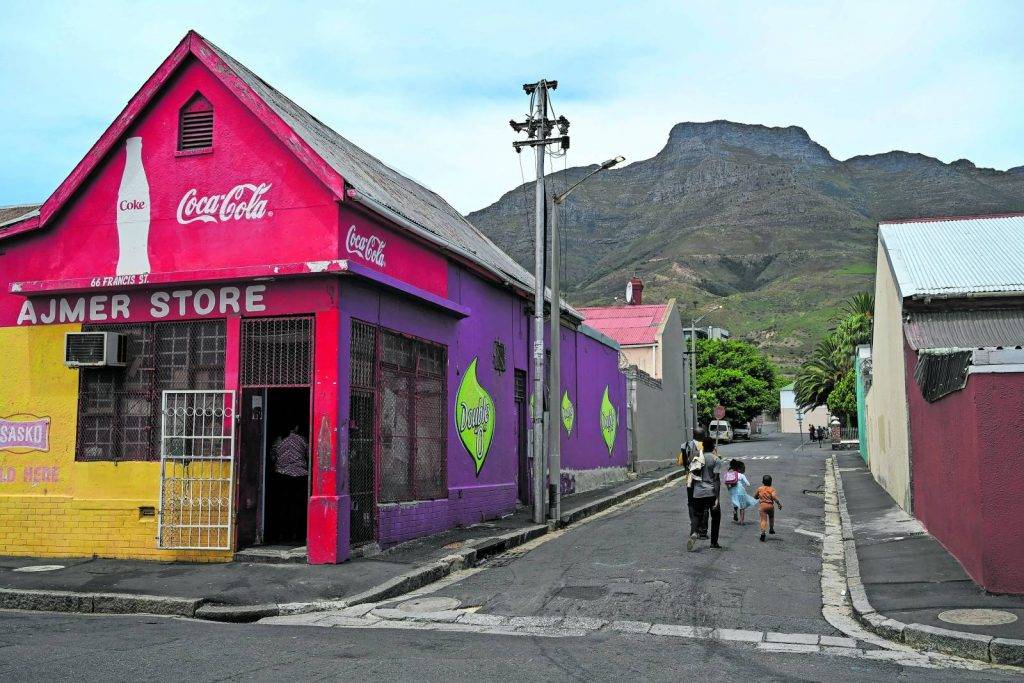 Breathing space: In Woodstock, properties are small and few homeowners have gardens, a fact an urban park could alleviate. Photo: David Harrison
The city confirmed that the social impact assessment recommends that the bowling green should rather be developed into a public urban park. The finding is final but the city could appeal it.
Aidan Karl van den Heever from the city communications office said this recommendation “will be taken into account in the upcoming statutory decision-making processes regarding this property”.
The social heritage impact assessment recommends that the Earl Street site, which is understood to be the bowling green bordering Melbourne Terrace and the adjacent Golders Green Park, should be transformed into an urban park “to benefit both the existing and future residents of Woodstock”.
In its response to an M&G inquiry about whether the city had made adjustments to the social impact assessment, it said: “Clarifications and refinements have been made — not adjustments. It added: “The reports have already been finalised and incorporated into the heritage impact reports,” which are still under review by different city stakeholders.
A homeowner in Melbourne Terrace, Lien Vanneste, told the M&G neighbours were relieved at the consultants’ recommendations and hoped the city would respect these.
“In summary, my thoughts, and I am confident in saying that is the opinion of all the neighbours at the Melbourne Terrace, is that we would like to express that we support social housing projects but considering the city’s plans to develop the Woodstock Hospital into a social housing facility already, we agree with the consultant and likewise consider the Earl Street site not suitable,” Vanneste said.
“We think it should be developed as a community park for the current residents of Woodstock and the future residents of the social housing complex that is to be built on the current hospital site.”
Meanwhile, residents claim the city’s promises to address the abandoned Woodstock Hospital are “mere hot air”.
When the M&G visited the defunct hospital in January, people living there said they did not feel safe because of the presence of gangsters, theft and rampant drug dealing.
Roy Kemmis-Betty, who lives near the hospital, describes it as “dilapidated, dangerous and an eye sore”.
Kemmis-Betty told the M&G the hospital’s security was ineffective, with anti-social behaviour, endless parties, continuous noise, disturbances and fighting carrying on unabated.
Residents raised their concerns during a meeting with city officials on 3 February and were assured the council would address the concerns. But, according to Kemmis-Betty, nothing has changed.
“Nothing has improved since the meeting … the anti-social behaviour continues [and] the raw sewage continues to run out of the premises,” he said, slamming the city officials’ promises as “all hot air and postulation”.
The M&G has established that circumstances at the hospital remain unchanged since its visit in January.
Further, it is clear that the city is aware of nearby residents’ complaints about the illegal inhabitants of the abandoned building. Replying to an inquiry, the city confirmed that residents are concerned about “general public disturbances, crime and anti-social behaviour”.
 Breathing space: In Woodstock, properties are small and few homeowners have gardens, a fact an urban park could alleviate. Photo: David Harrison
The city claims it has addressed issues since the February meeting by appointing a managing agent “to provide facilities management services, which include cleaning and grounds maintenance, security provision, building management and social interventions”.
However, there has been a managing agent at the hospital since the M&G’s visit in January.
The cost of employing a managing agent and managing the site amounts to R1.5 million monthly — paid by the city.
While there is no clear indication when the occupiers will be removed from the hospital, the city council is in the process of completing a court-ordered survey of the unlawful occupants.
The council has promised talks about alternative emergency accommodation between itself and illegal occupants who qualify for the benefit will take place in coming months.