“Co-emergence is emerging together. Walking side-by-side with our hands together, and diffusing the logic of individuality.”
Nkhensani Mkhari, the RMB Latitudes special project curator
As Johannesburg art-lovers descend on Houghton Estate for this week’s RMB Latitudes art fair, emerging and independent artists will present more than 100 pieces of works of art in the Independent Artists Exhibition, or “INDEX”.
From 26 to 28 May, Shepstone Gardens will play home to some of Africa’s celebrated artists, and fresh talent. The Gothic and Mediterranean architecture of Shepstone Gardens will house artworks from 31 South Africans and international galleries.
For Nkhensani Mkhari, the RMB Latitudes special project curator, INDEX is all about bringing fresh talent to the rosters of major galleries and working with artists in Johannesburg. Mkhari notes South Africa is uniquely an art market, rather than an art ecosystem.
“INDEX is a fun project. It’s literally an index of [art] practice in South Africa,” says Mkhari. “Like an index that simply points things out or helps you find information easily, like an index in a book, we’re creating a repository of that fashion at an art fair, which is not traditional.”
With more than 1 500 artists from about 200 countries, Latitudes has become one of the largest online markets for African art. This year, exhibiting these artworks in both a physical space and online is reframing the art gallery and exhibition model.
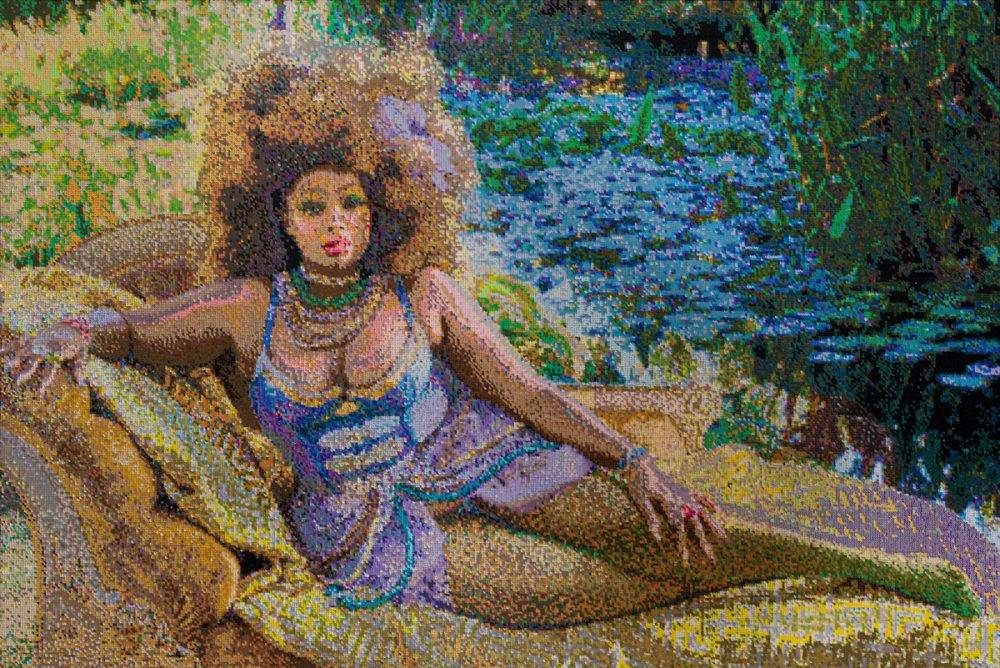 ‘The Chaise
Lounge’ by Frances Goodman will be on display at the art fair.
‘The Chaise
Lounge’ by Frances Goodman will be on display at the art fair.
“We aim to be inclusive, accessible and optimistic,” says Lattitude’s co-founder, Roberta Coci. “It’s a rebellion against the rigid rules of art fairs.”
The art fair also aims to be more democratic in that it will not only serve wealthy collectors. Artists’ names and access to studios breaks the industry’s opaque nature. Like the Turbine Art Fair in Johannesburg, Latitude is an opportunity for people to buy their first piece of art.
Beyond INDEX, this year’s central theme at Latitudes is “co-emergence”, where the spectator of the arts approaches it with their own life experiences, realities and perspectives, while the artist communicates their own messages.
The theme looks at how these diverse and often vernacular aesthetic and cultural influences echo each other in the diaspora and African contemporary art. After all, “diaspora” also refers to a distance, and “echo is both a product of and a symbol for space”, says Mkhari.
“Co-emergence is emerging together. Walking side-by-side with our hands together, and diffusing the logic of individuality.”
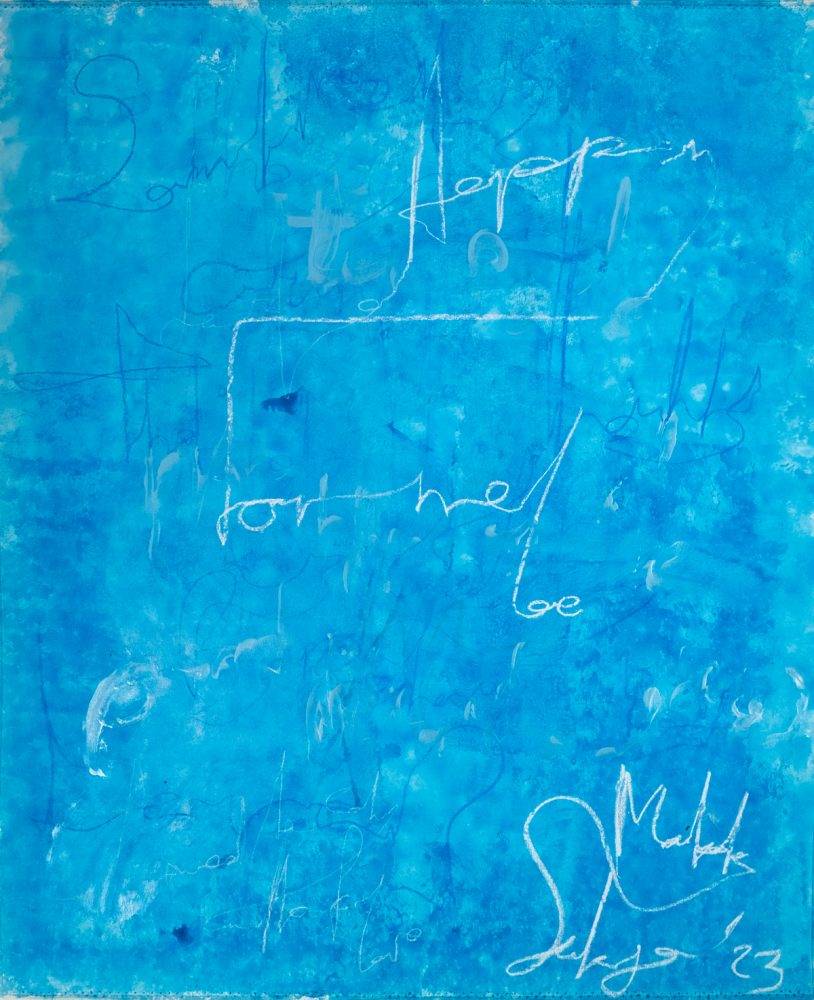 Work by Mankebe Seakgoe. Seakgoe will be presenting at the fair.
This notion of coming together is a sort of contrarian act in a world that celebrates hyper-individualism. Collective action is the modus operandi at Latitudes 2023.
“If you want to go fast, go alone. If you want to go far, go together, and that’s what co-emergence is about; galleries and independent artists together, and not separately,” says Mkhari.
Crediting South African artist Mitchel Gilbert Missena, Mkhari says “art is boring, but ideas are interesting. The interest in the art under the theme of co-emergence is the idea behind the work, beyond whether something is considered ‘pretty’.”
As a former information design student, Mkhari’s curatorial work designs information and structures it so it’s easy for people to consume, creating ease as a very empathetic practice, because “it’s about people”, Mkhari adds.
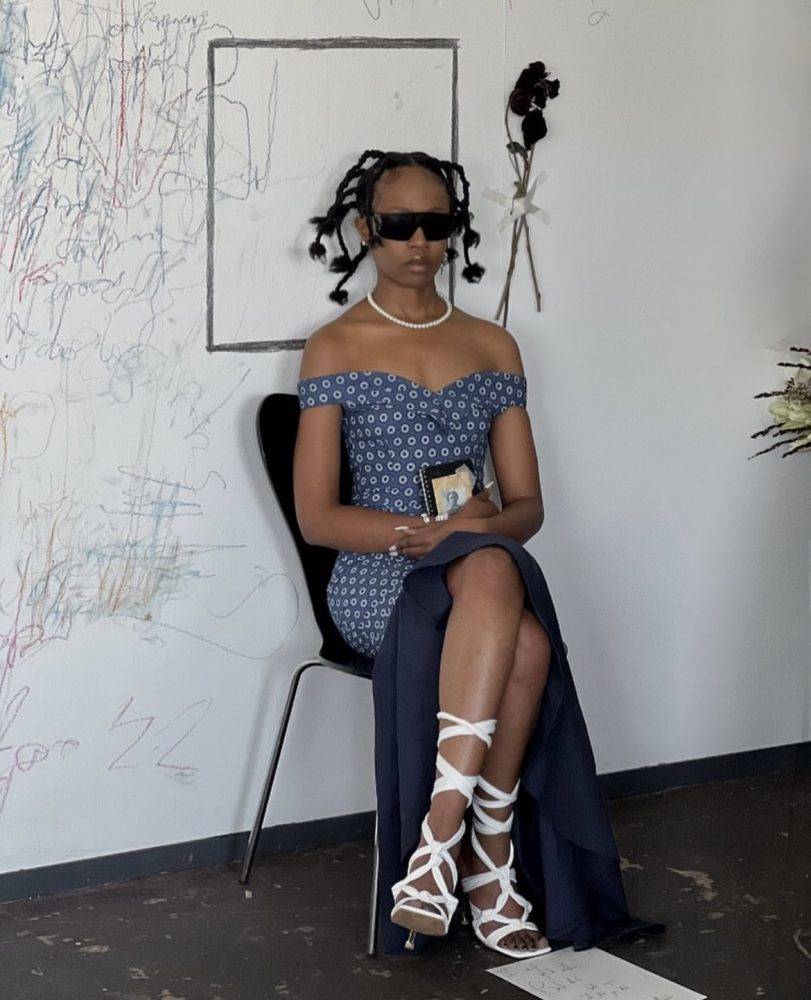 Mankebe Seakgoe
Dream, rest, resonance
INDEX does not only give space to young artists, but creatives at different chapters of their artistic careers. INDEX is a sincere gesture that aims to spotlight 40 artists to gallerists, collectors and art enthusiasts, which they might not be aware of.
Expect a mixture of emerging artists, mid-career artists who may have gone into obscurity, or the office worker who makes art in their bedroom, but nobody gives them the time of day because they’re invisible, says Mkhari.
This exhibition is divided into three themes: Dream, Rest and Resonance. The notion of dream can be found in paintings, rest through sculptures and resonance through photography.
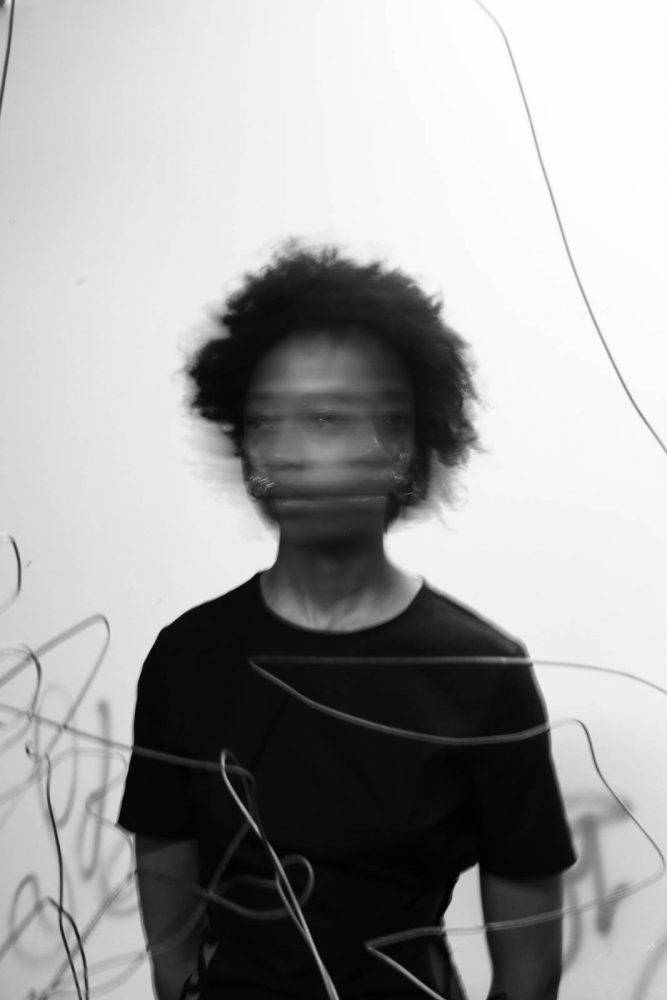 Mankebe Seakgoe will be presenting work at the RMB Latitudes Fair.
“Most people think of art as a retinal encounter, where you simply see it. But you experience it,” says Mkhari. “Art is like oxygen, we really don’t have life without it. It’s part of the everyday, not necessarily something you have to go to a gallery to experience.”
INDEX is more than an amalgamation of 40 artists, but a sincere gesture that protects independent artists in a world where gatekeeping is rife. Just because an artist has not been tapped by these gatekeepers in the form of a gallerist, curator, or collector, does not mean they aren’t creating work worthy of spotlighting.
“I think my life’s purpose is to support artists and protect artists, and help them grow and expand their practice. It’s one of the highest forms of cultural works,” says Mkhari.
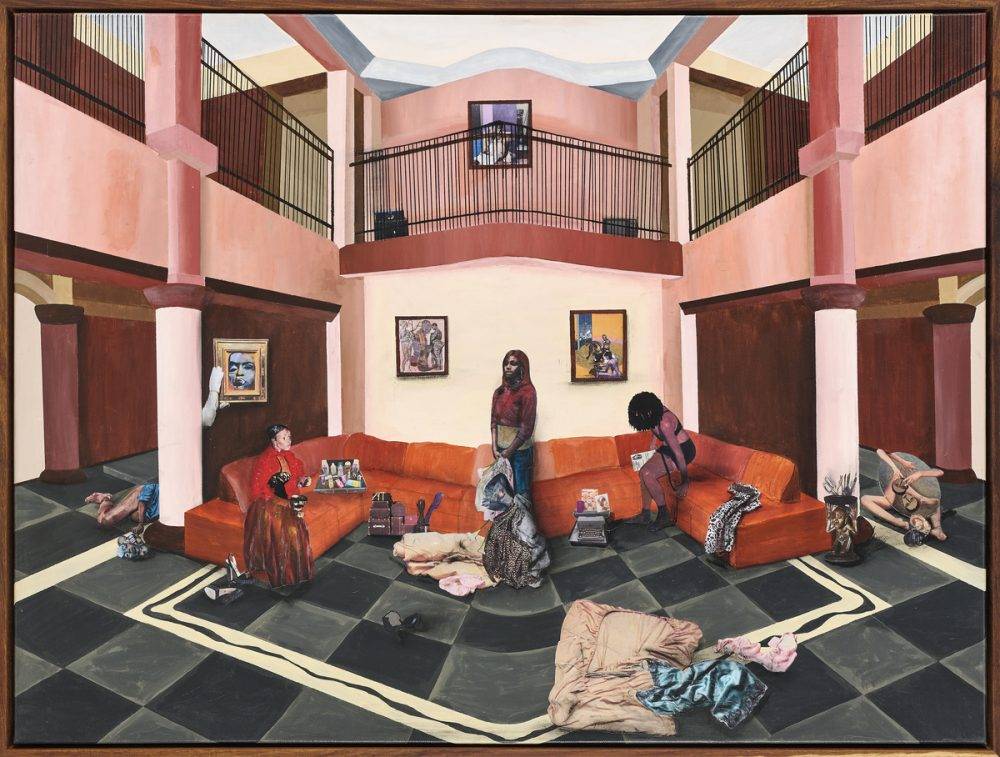 ‘Mold Me ll’ by Cinthia Mulanga,
Navigating emotions
Two multidisciplinary artists, Bulumko Mbete and Mankebe Seakgoe, are presenting works that are more than simple retinal experiences; they speak to the three underlying themes of INDEX. For Seakgoe, a recent graduate from the School of Arts at Wits University, the 2023 RMB Latitudes art fair is her first physical art fair.
“Both artists have made leaps and bounds within their practice in the past two years,” says Mkhari. “They are purveyors of an emergent gestural syntax in the male-dominated South African industry, with their work challenging conventional modes of communication, and what we’ve come to know as ‘retinal art’ through a weaving of new narratives and counteractive modes of making.”
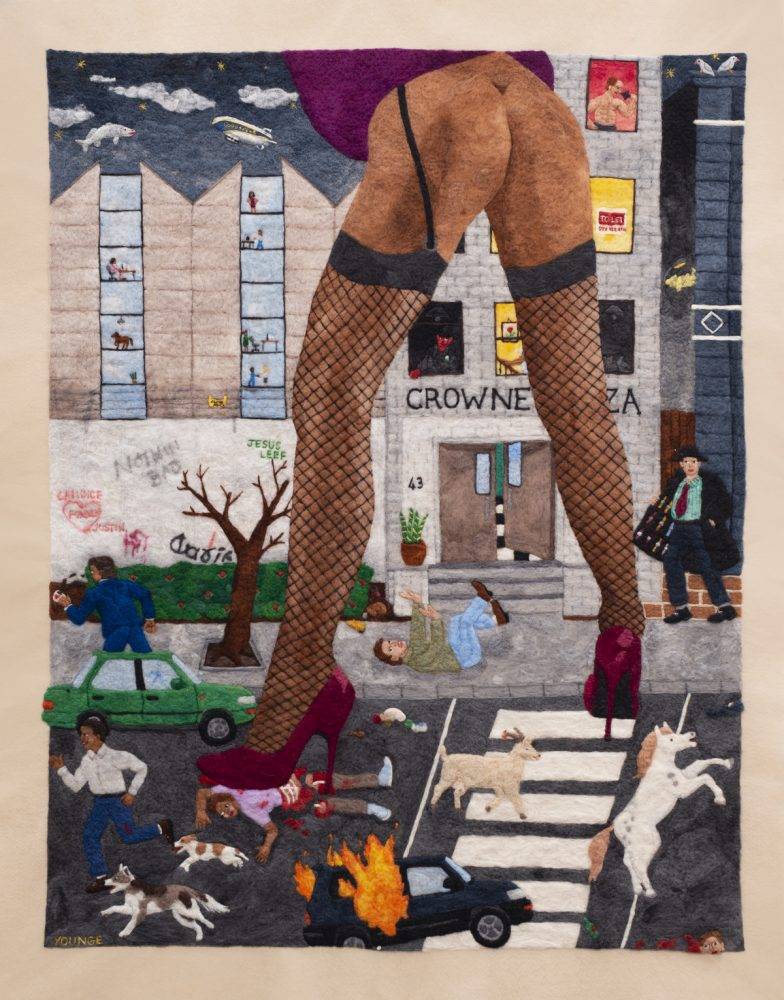 ‘When the Church Bells
Go, So Do the Gunshots’ by Michaela Younge,
‘When the Church Bells
Go, So Do the Gunshots’ by Michaela Younge,
Seakgoe will be presenting a piece titled The Heavens and Hell Fought a Great War for Our Union, She Thought, making reference to black literature and meditations on different emotions.
“I have ‘scrambled eggs in the mind’ when it comes to communication, and that comes from moving around when I was young. So with that comes a gap in language,” says Seakgoe.
Born in Polokwane, Limpopo, the many moves during Seakgoe life thus far, to places where different languages are spoken, is the reason she spends more time listening than speaking. Seakgoe is observing others’ mannerisms to understand the languages, as a sort of meditative practice.
“My work for INDEX was a meditation on a singular thought for a couple of months. Currently, I’m meditating on emotions, and keeping emotions simple, which is a strange ethine for me,” says Seakgoe.
Mixed with a study of colour, Seakgoe’s work is a pursuit of understanding and navigating the complex emotions of love. For a long time, Seakgoe “was exploring what love means, and still trying to figure that out”.
“[Love] this strange moment where you feel a very deep connection to a stranger, but what is that moment?,” says Seakgoe. “It should be simple, but I’m looking at what emotions are, what they feel like, and what they look like. It’s a story of emotions, navigating emotions.”
Mkhari also points to the notion of exploring love at the hands of the artist. “I just want to bring people together in celebration of life, which is to say in celebration of love and art because an artist, like a lover, is someone who shows you something you can’t see.”
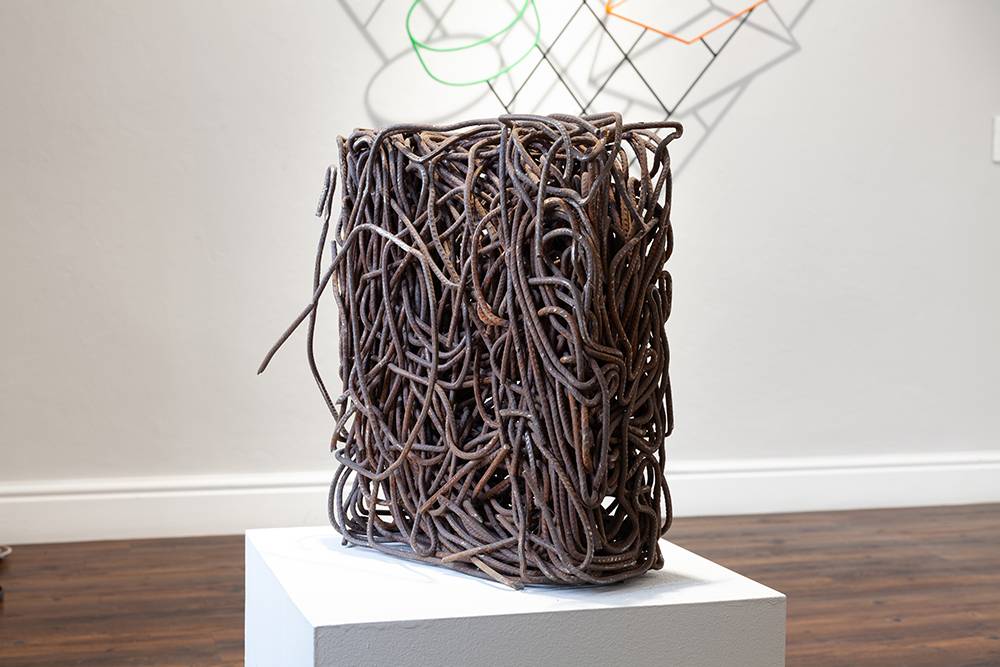 ‘Componentof Division’ by Gaelen Pinnock
Thread of migration
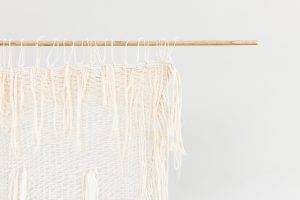
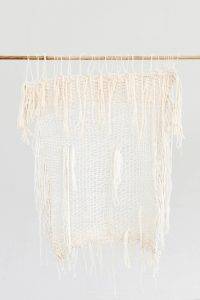
For multidisciplinary artist Bulumko Mbete, her works speak to different forms of craft and design-making, with generational traditions and gestures of love. Her works are explorative and navigate geographic connections, synchronicities in history and its effect on migration, labour, farming and love.
Since committing to her art practice fulltime in August last year, Mbete’s works are interwoven with the study of textiles in ceremonial practices, domestic sentiments and material cultures.
“I’m very interested in how ordinary histories intertwine with broader narratives of South African history,” says Mbete.
Her two works include a woven piece titled Watchu Doing Aunty Mama, which looks at the three generations of women in Mbete’s family, her paternal grandmother, her mother and herself, and their different lines of migration, citing how different women work with textiles, such as weaving and natural dying.
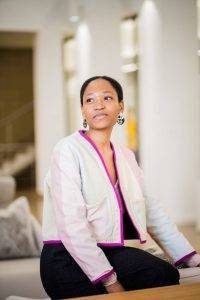 Bulumko Mbete
“There was a body of work I did in 2021, which explored different migration lines of my family’s maternal side,” says Mbete. “That was the first impetus to explore this. But through a mentorship programme with JP Morgan, I realised there wasn’t enough of myself in the story, which does intertwine with looking at these histories.”
This interweaving of her paternal grandmother, her mother and herself, manifested into the artwork seen at INDEX in 2023.
“My paternal grandmother migrated from Limpopo to KwaZulu-Natal, and finally settled in the Eastern Cape. Part of that was because of love, marriage and establishing a family with my grandfather and finding different work in different parts of the country,” says Mbete.
But looking into the very specific places where her grandparents worked, where they were able to raise a family, and find a final home because of apartheid segregation laws, brings a narrative of subjugation of the system into her work.
Mbete’s mother, on the other hand, is from Cape Town and moved abroad for love and to escape apartheid before returning years later.
“Then with regards to how my story resonates with theirs, there is that thread of migration, but for different circumstances,” says Mbete. “I’m looking at their migration as a form of resistance and subjugation of the system, which allows me to freely in the way I do now.”
Mbete weaves maps into her work, and this map is the text to tell the stories of her family’s movement, says Mkhari.
The RMB Latitudes Art Fair is from 26-28 May 2023. Tickets available via Quicket.