Most foul: The Blougatspruit once teemed with life. (Delwyn Verasamy/M&G)
When Trevor Brough first moved to the rolling grasslands of the Cradle of Humankind about 30 years ago, it was for the peace and quiet it provided.
Back then, he would not have imagined the pristine rivers flowing through the sensitive Unesco World Heritage Site, which accommodates the fossil hominid sites of Sterkfontein, Swartkrans, Kromdraai and environs, would become contaminated with sewage. Or, that he would now be conducting what he sardonically calls “Cradle sewage tours”, to highlight the extent of the sewage pollution fouling waterways and threatening human health, tourism, agriculture and groundwater.
Years ago, the Blougatspruit and the Bloubankspruit teemed with life. “They’re totally dead now,” said Brough, who looked stricken as he stood on the banks of the Blougatspruit coated with crusts of rotting sewage.
Brough, a director of the Cradle of Humankind World Heritage Association, said huge quantities of raw or poorly treated sewage had been flowing into the Blougatspruit from the dysfunctional Percy Stewart wastewater treatment works in Krugersdorp for several years.
He said the infrastructure around the plant is failing, with the main sewer pipeline overflowing, at times pouring raw sewage into the Blougatspruit.
Percy Stewart’s wastewater flows into the Blougatspruit, which then runs into the Bloubankspruit running through the Cradle of Humankind and into the Crocodile West area and then into Hartbeespoort Dam.
“Thankfully the rivers are largely hidden from most of the tourists … but they would most probably have some smell in some areas. If the wind is wrong, we can actually smell Percy Stewart in the Cradle.”
Uphill from Percy Stewart, convoys of sewage trucks rumbled down to a manhole in the Blougat Nature Reserve, where they dump raw sewage collected from septic tanks. The truck dumping is uncontrolled, Brough said.
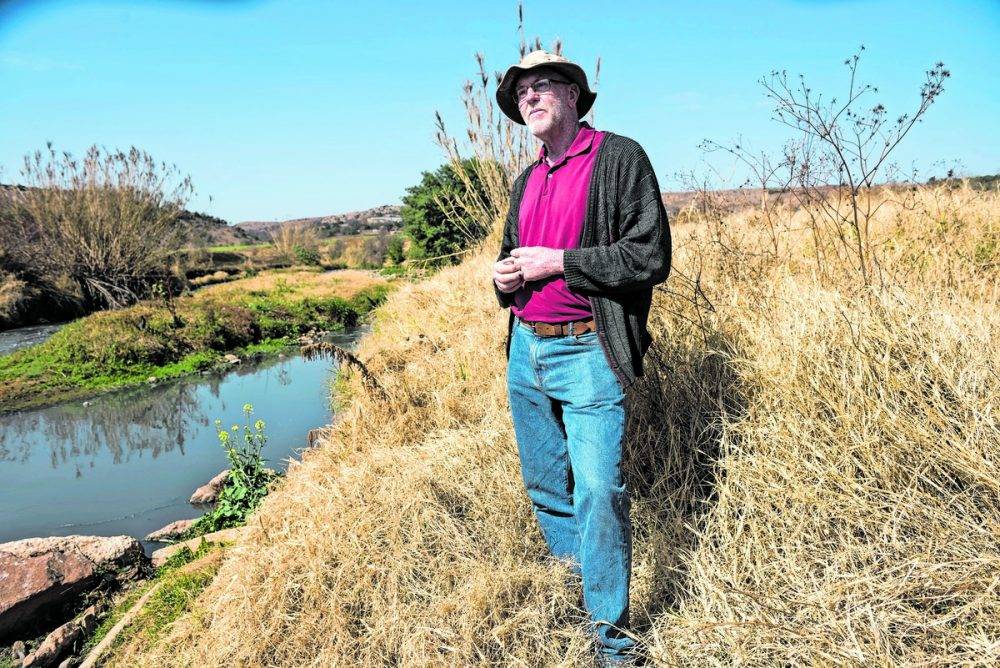 The Blougatspruit once teemed with life, which is why Trevor Brough moved to the Cradle of Humankind. (Delwyn Verasamy/M&G)
“Whatever overspills or splashes here, runs out at the back of this fence and goes into the Blougatspruit, so effectively there is raw sewage going straight down into the Blougat.”
There is no access control or security. “This place is open 24/7 and anybody can dump anything here. They don’t get charged and no one checks what they’re dumping.”
Andy Dott, the owner of the Cradle Moon Lakeside Game Lodge, about 30km from the Percy Stewart plant, said: “You could be putting nuclear fallout down that hole, nobody gives a shit. And then it promptly goes around the corner into Percy Stewart and comes back into our system.”
Dott said businesses in the Cradle have raised more than R1 million “potentially for legal fees to take on the individuals in Mogale City who are responsible” for the collapse of the Percy Stewart plant.
“We are all totally reliant on the river. Just the smell alone makes it unpleasant to go near there and then, of course, you’ve got people wanting to do recreation on the water.”
He has hippo, otters and fish eagles. “It’s critical that the water source is kept clean. All our little venues are just reliant on clean water … It’s ironic that our own government is polluting the river.”
Last month, Ferrial Adam, the executive manager of WaterCAN, tested the Bloubankspruit’s water. “Within 20 metres of getting to the water, I could smell it. It’s pure shit water. We used our indicator test, a clear plate. For open source water, it’s not supposed to have more than 10 spots. The plate was covered in spots.”
Andrew Gaylord runs a restaurant in the Cradle on the banks of what he calls the “shit river”.
“We’ve got two active fossil dig sites on the property so it’s kind of scary when you hear what’s going on with the water,” he said. “At night it’s just pure sewage you’re smelling. For customers coming for dinner or for breakfast, you don’t know if they’re going to complain.”
He remembers standing on frogs walking home. “Now if you see a frog, it’s definitely not from the river because it’s got all four legs.”
In November, Sean Phillips, the director general of the department of water and sanitation (DWS), wrote to Mariette Liefferink, of the Federation for a Sustainable Environment, informing her that his department had issued a directive in August 2020 for the sewage pollution.
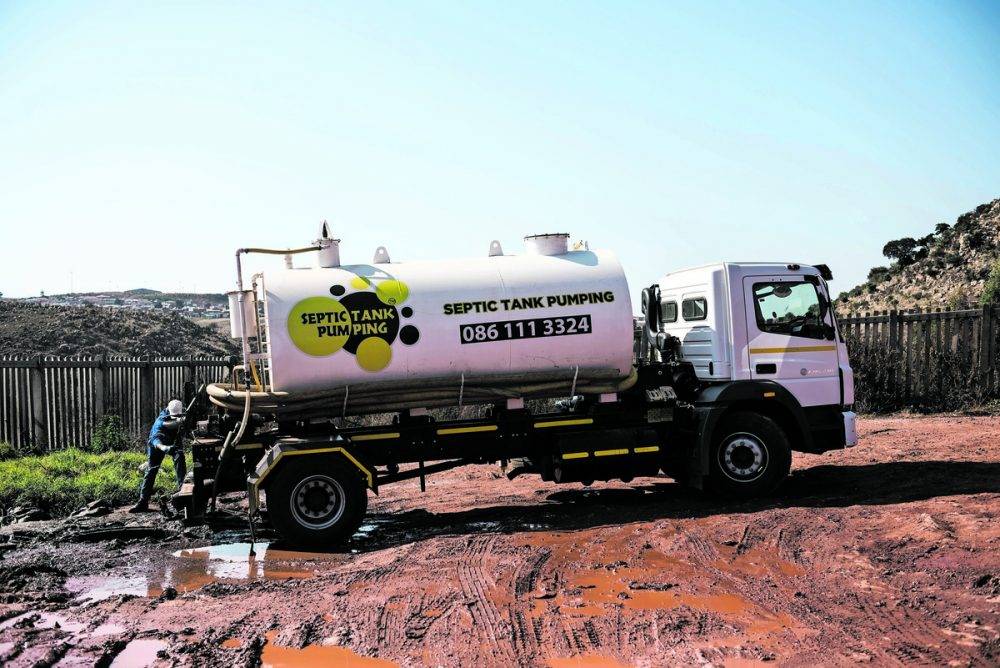 Now faecal matter from a broken treatment plant and sewage tankers coats the river’s banks.
The department was monitoring the municipality’s action plan and the effluent water quality had not improved. “The effluent quality, which is discharged, pollutes the water resources, which affects water users including the Cradle of Humankind and the Crocodile River, which feeds into the Hartbeespoort Dam.”
On 23 June, Phillips said his department had funded phase one and two of the refurbishment of the Percy Stewart plant to the tune of R55 million. While phase one has been successfully implemented, “it seems that there are delays on the execution” of phase two and the department still intends taking “further enforcement action”.
On 20 July, Forestry, Fisheries and the Environment Minister Barbara Creecy wrote to Liefferink informing her that, “even though the primary regulator in relation to sewage matters is the DWS”, her department “also has a responsibility”.
This is because the area is in a World Heritage Site, which falls under the national department’s mandate. Creecy has now instructed officials from the chief directorate of enforcement to “undertake the necessary investigations and collect evidence, which will inform the approach that will be taken”.
Brough, meanwhile, is encouraged by discussions with Mogale City’s new MMC for water and sanitation, Peter Modise, and “it’s almost as if they might be more open to trying to do something about the problem”.
In December, in a state of conservation report to Unesco, Khorommbi Matibe, the acting director general of biodiversity and conservation in Creecy’s department, said the results from microbiological analysis of water samples collected during the 22 September monitoring run showed bacteriological contamination of surface and groundwater resources.
The bacterial pollution is evident by total E coli and coliform bacteria values that routinely exceed a count of 2419.6 per 100ml.
Affected surface water resources include the Blougatspruit, Bloubankspruit, Tweelopies Spruit and Rietspruit. But the Blougatspruit and Bloubankspruit, downstream from the Percy Stewart plant, “show the most severe faecal contamination”, suggesting they receive inadequately treated wastewater.
“Although there are no foreseeable threats caused by the bacteriological pollution on the in-situ fossils, the current concern is focused on the impact of the pollution on the natural environment, the health of the local community and the aesthetic appeal of the property’s natural resources,” the report said.
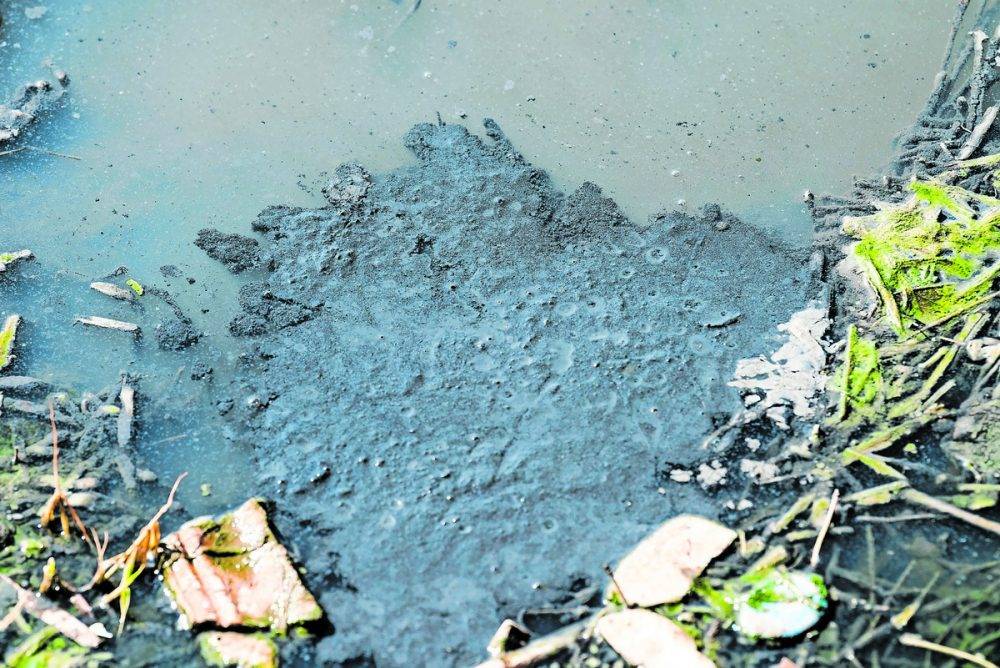 Now faecal matter from a broken treatment plant and sewage tankers coats the river’s banks.
Mogale City responds
Mogale City’s water services department told the Mail & Guardian that in November 2019 that it had appointed a maintenance contractor for three years to repair and maintain sewer pump stations and wastewater treatment works through a tender process.
“This scope of work as per the contract was designed to ensure smooth operation and performance of the system while also minimising downtime of the system, which often resulted in sewer spillage and malfunctioning of the sewer treatment works.” It said the appointment yielded “positive results as sewer spillage and overflow” from sewer pump stations was minimised.
When the contract ended in November, a new bid advertisement process ensued and a new service provider for repairs and maintenance of the water and sewer system infrastructure was appointed in April. “Repair work on malfunctioning sewer pump station components and wastewater treatment works components has commenced and [is] moving swiftly,” Mogale City said.
Additionally, a work order to the appointed contractor amounting to R15 million was issued for the urgent repair of sewer pump stations “and the municipality is confident that this will soon yield satisfactory results”.
Root cause analysis on risks indicate that the main risks are 42% because of maintenance and repairs, 15% attributed to operation and 8% each for human resources and management, Mogale City said. A service provider was appointed to assist with the refurbishment and repair of key equipment such as mechanical screens, pumps and motors.
The municipality said it was putting security measures in place to monitor trucks that are disposing chemical toilet waste to the manhole, ensuring that only trucks with permits issued by the municipality use the disposal point.
Security personnel will ensure “that truck dumpers do not spill on the surface and that all waste in the pipes is disposed into the manhole and spillage around the manhole will be cleaned”.
It said plans are in place to relocate the disposal point from the Percy Stewart catchment point to a sewer manhole disposal point at the Flip Human wastewater treatment works.