Insecure: Florah Tshezi, Lorraine Nair and Libarty Mutyanaviri (above) are among about 100 people who live in the Hawaii East and Central blocks of flats. (Lyse Comins/M&G)
When Lorraine Nair moved into her flat in Durban’s South Beach 24 years ago, it was on the understanding that her first-time homeowner’s state subsidy had helped her to secure the unit — but now she has been told she has a month to vacate her home.
Nair, who has lived in the flat with her husband and two children ever since, said she was shocked to receive a notice in May from Capone Group telling her to vacate her home.
At least 25 other tenants are also affected.
Nair moved into the Hawaii East and Central blocks of flats in Durban’s inner city in early 2000 after signing an agreement with First Metro Housing Company, which had offices on the ground floor of the premises at the time.
She said she found the company after searching for affordable social housing. “They told us that it was a rent-to-buy [agreement]. We don’t have anywhere else to go. And if we want to go and buy [now], we won’t qualify because they took our subsidy,” she said.
Nair’s institutional first homeowner’s subsidy was paid to First Metro when she signed what she thought was a rent-to-buy agreement, but was in fact a lease agreement.
Nair had not anticipated that in about October 2023 the block of flats would be sold on a public auction. This was after First Metro, which took her first homeowner’s subsidy in 2002 and “verbally” sold it to her, got into financial difficulty and later entered into business rescue.
First Metro sold the block to Capone Group, which is already renovating several unoccupied flats.
On 10 May, Capone Group served a month’s notice on Nair and the other families to vacate their homes through its managing agent, Trafalgar, affecting at least 100 people, including children.
Hassan Abu has lived in his flat with his wife Phindile Sithole for 22 years.
“We were part of the people who were told that it was rent-to-own and then it changed at a later stage until finally we find ourselves in this situation where they are telling us to move,” he said.
Florah Tshezi, who said she had moved into the block more than 20 years ago, was advised by First Metro that she was part of the same “rent-to-buy” instalment sale scheme.
The three residents said they feel “betrayed” by First Metro, especially regarding the verbal promise that they were buying the flats through instalment sales.
Their lease agreements — and those of four tenants who moved in more recently, although not under any promise of a lease-to-buy arrangement — also stipulated that they would be given six months’ notice to vacate, if necessary.
Phoenix Tenants and Residents Association founder Mervyn Govender is preparing to file a case with the Rental Housing Tribunal against First Metro and the Social Housing Regulatory Authority, which administers subsidies on behalf of the state.
He said that in terms of the policy, for people to qualify for a first-time homeowner’s institutional subsidy from the government, there should be a sale agreement in place. Govender and the tenants have alleged that First Metro received their institutional subsidies despite having only entered into lease agreements with them.
“They [the tenants] are all worried and stressed. It’s sad. If there is one thing that the state needs to do it is to either ensure they get their title deeds and, if that fails, we will have to review and set aside the sale in the high court. If First Metro comes on board and tells us they can give ownership and they have messed up, then we are also looking at criminal charges,” Govender said.
“You can’t take people’s subsidies and make them live under false pretences.”
According to the National Housing Finance Corporation’s website, “first home finance is a once-off housing finance subsidy” (previously known as the Finance Linked Individual Subsidy Programme) that “enables qualifying beneficiaries to buy or build their first homes on an affordable basis”.
“First Home Finance was developed by the department of human settlement to enable sustainable and affordable for first-time home-ownership opportunities to South African citizens and legal permanent residents whose household income is from R3 501 up to R22 000 per month.”
According to the Social Housing Act of 2008, institutions such as First Metro “must seek permission from the regulatory authority for the sale of any properties in their ownership on the basis that such sale will not endanger the security of tenure of existing residents … and that the grant component of the proceeds receipts from such sale will be used to provide social housing”.
It is unclear whether First Metro obtained such permission from the Housing Regulatory Authority before letting the property go under the hammer. The regulatory authority did not respond to questions from the Mail & Guardian this week.
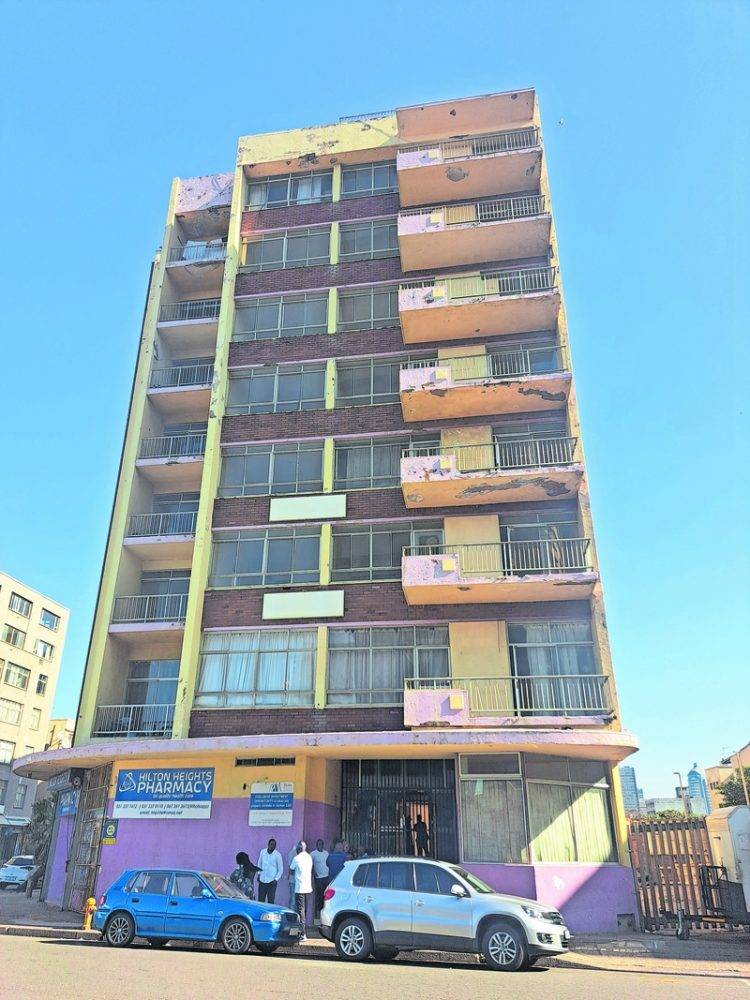 The Central blocks of flats in inner-city Durban. (Lyse Comins/M&G)
But Govender alleges that developers have exploited the system and this has led to insecurity of tenure for residents. He said the tenants had also been “short-changed” when the block was sold because they were not informed that the company was being liquidated until they received the notice to vacate their flats.
“And how can you get the building liquidated when they paid rent?” he asked.
“The Social Housing Act is a farce, made to benefit the rich. It is not benefitting the people it was designed for. The Act must be repealed; you can’t have an Act that doesn’t benefit the people of this country.”
First Metro’s business rescue plan, which is marked “private and confidential” yet is published on its website, states that the company received a government subsidy totalling R1 587 000 (R17 250 for each of the 128 flats) for the redevelopment of the Hawaii East and Central blocks of flats.
But the plan notes that the Hawaii East and Central collects R194 745 in rent a month, while its “total direct project expenditure” is R207 289, which means the development runs at a monthly loss of R12 545. In addition, it notes that according to Deeds Office information there is a mortgage for R1 647 750 in favour of National Housing Finance Corporation registered against the property.
First Metro has listed Couglan Pather on the Companies and Intellectual Property Commission database among its former directors, who served from 2003 to 2023. Pather is the former eThekwini metro head of housing.
Listed as current First Metro directors are business rescue practitioner Pieter Hendrik Strydom, Nokuthula Cynthia Motloli, Nompumelelo Jacqueline Nxumalo, Meera Amrithlal Bhoora and Linda Rose-Anne Ngcobo.
The M&G’s repeated attempts to elicit a response to questions from First Metro regarding the residents’ allegations were unsuccessful this week. Repeated emails, text messages and calls to a landline and cellphone numbers listed on its website did not elicit a response from the company. Questions emailed to the business rescue practitioners also did not yield a response.
Capone Group manager Monawwar Pharos said the company, which attends auctions to purchase property investments, was not aware of the dispute between First Metro and the residents.
“So basically, when we bought this building, we went to the building, viewed it, and it is in a very bad condition for people to live there,” he said. “We are revamping the building; it will take us maybe a year or so, and then we will re-let it.
“But the thing is, any story regarding First Metro and subsidies, we don’t know anything about all of that.”
Pharos added that he did not know First Metro and had only encountered the company as the seller after purchasing the property on auction.
He said his company had not taken a hard line against residents in terms of asking them to vacate their flats at this stage because tenants were still producing their lease agreements.
This is not the first time that First Metro has been at the centre of controversy. In 2021 the company was mentioned in an M&G report about a Special Investigating Unit investigation into the transfer of four blocks of flats in Stanmore, Eastbury, Treehaven and Rydalvale in Phoenix to two Section 21 companies, one of which was First Metro, which collected rentals from tenants and subsides from the housing authority.
Ndabezinhle Sibiya, the spokesperson for Siboniso Duma, KwaZulu-Natal’s new transport and human settlements MEC appointed after the 29 May election, could not comment at this stage.
“As you know, the MEC has just started and is not familiar with a matter that dates back to 2002. We will only comment when we have established all the facts,” Sibiya said.
The national department of human settlement had not responded to questions by the time of publication.