Fleeing for their lives: Tayyib Mahmoud and his family from Al Fashir in Darfur in 2021 going on a bus that will take them to safety in Egypt.
With bullets flying through her window, 21-year-old Hafsa Hussain scrambled out of the door and onto a crowded truck to escape Sudan’s capital, Khartoum.
“We had a home but it was either that building or our lives, and we had to make a choice,” she told the Mail & Guardian.
Hussain, along with five members of her family, fled their home in west Khartoum at midnight in May 2023 after they witnessed people being shot dead on her street.
“There was blood in the drains and we were so scared my father decided that to protect my younger sister and me from being taken by the RSF [Rapid Support Forces], we would leave very quickly and quietly,” she said.
A brutal civil war has raged in Sudan since April last year between the Sudanese Armed Forces (SAF) and the RSF. Both sides have been accused of war crimes and perpetuating a dire humanitarian crisis.
Taking just one bag, Hussain, her sister, grandmother and parents got on the truck carrying 20 others from Khartoum to the town of Renk in South Sudan.
“The journey was bad. First my father had to pay a bribe to the truck driver because we were crossing without documents, then when we got onto the truck we were all squashed together for 12 hours under this heavy black sheet put on top of us to hide us from the soldiers,” the 21-year-old said.
Hussain said although she is safe now, she awaits the day she can return home and be reunited with her friends.
Escaping the troubled region during the first few months of the conflict, 29-year-old Tayyib Mahmoud from Al Fashir in Darfur said he still recalls the sound of gunshots on the first day the RSF took to the streets in Khartoum to declare their power in the region.
“It was a quiet night; we had just broken our fast and all of a sudden we heard gunshots. The RSF soldiers were on the streets and helicopters were loud in the air. My family and I waited it out, thinking that it would only last a few weeks, but we were wrong,” Mahmoud told the M&G.
Mahmoud said when the tensions escalated, he and his family — about 30 people — decided to embark on a 12-hour bus drive from the Sudanese city of Omdurman towards Halfaya Pass in Egypt.
“We were one of the first groups that left Sudan so the experience was not that severe but the crossing itself was difficult because bus drivers would inflate the prices,” he said.
The International Organisation for Migration’s (IOM) Displacement Tracking Matrix, which issues weekly statistics, recorded this week that 9.9 million people have been internally displaced in all 18 states in Sudan — 2.8 million before the April 2023 war and 7.1 million since. More than half are women and a quarter are children under the age of five.
Sudan is also home to the world’s largest hunger crisis, with an estimated 26.6 million people — more than half the population — facing food insecurity, according to the United Nations World Food Programme, while 14 areas in the country have been declared “at risk of famine”.
In June, the World Food Programme warned that “desperation” has forced the Sudanese to eat grass and leaves.
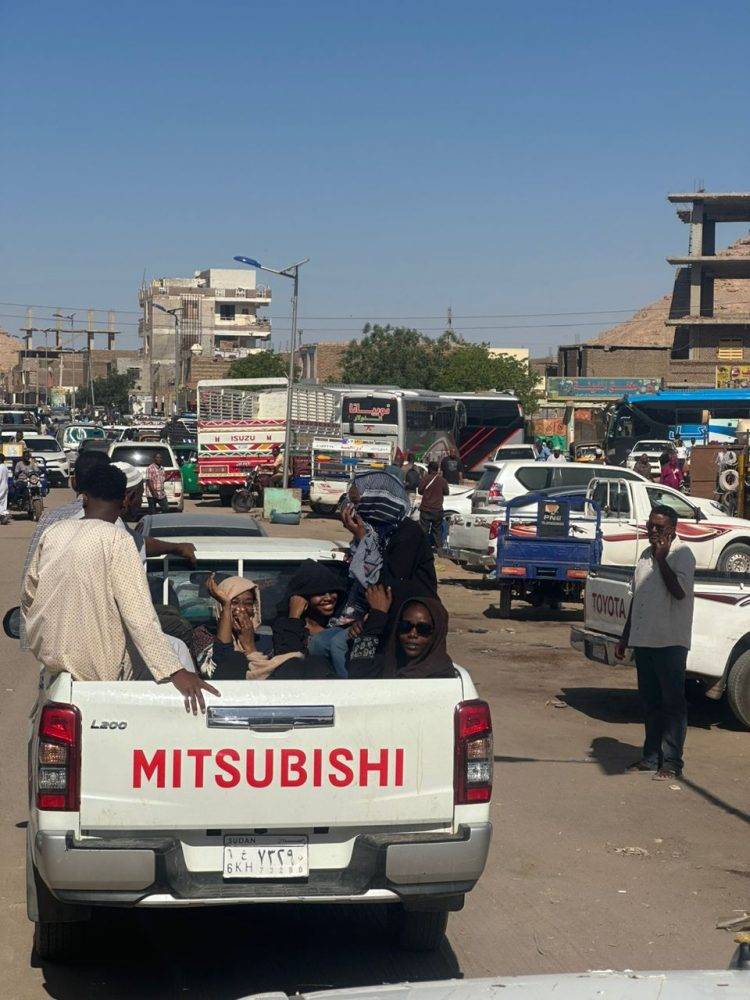
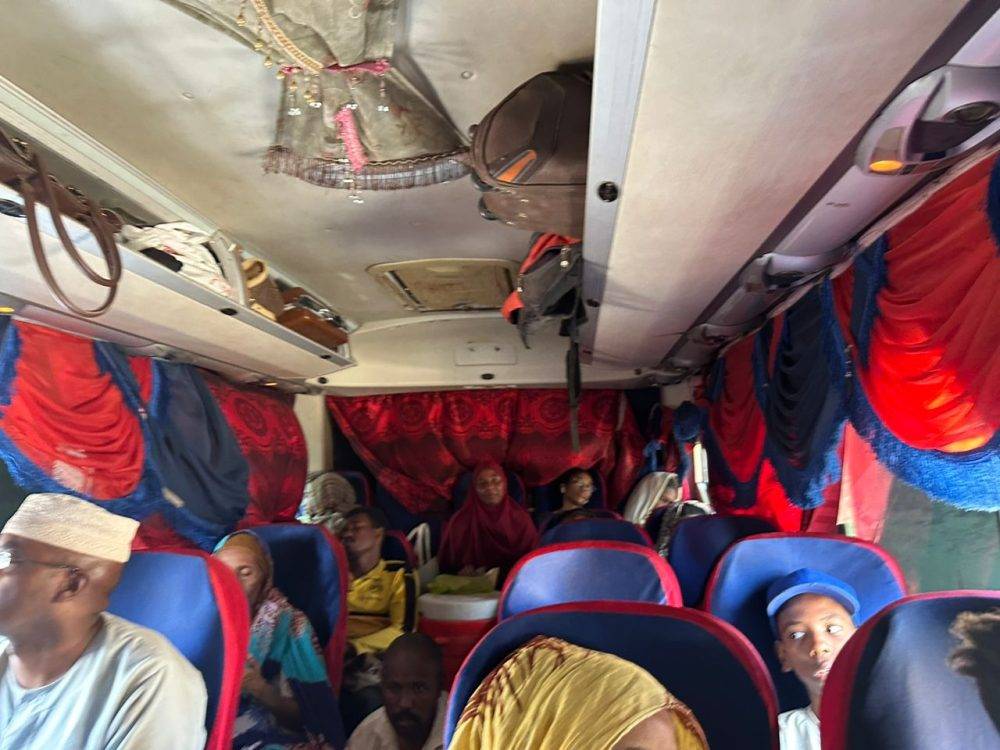 Fleeing for their lives: Tayyib Mahmoud and his family from Al Fashir in Darfur in 2021, on a van going to the bus that will take them to safety in Egypt (left). Mahmoud’s family on the bus (right).
“All refugees I met said the reason they fled Sudan was hunger,” the World Health Organisation (WHO) country director, Shible Sahbani, told reporters after visiting refugees from Darfur who have found refuge in neighbouring Chad.
The WHO stated that the situation in Sudan is dire, with more than 70% of healthcare facilities in conflict areas out of service. The threat of diseases has spread and cholera is already stalking the country, with more than 1 000 suspected cases. The organisation further added that more than 1 200 people have died from a measles outbreak in refugee camps.
The RSF has denied its intent to harm civilians and said its actions have been in response to rogue actors.
“The responsibility similarly falls to both the SAF and RSF, given the accounts of blocked humanitarian access and the parties’ use of starvation as a method of war,” Maram Mahdi, a researcher at the Institute for Security Studies in Addis Ababa, told the M&G.
In the latest set of aggressions in Sudan, the RSF has been reported to have committed widespread acts of sexual violence in areas of Khartoum, “acts that constitute war crimes and crimes against humanity”, according to a report by Human Rights Watch.
The 89-page report, Khartoum is Not Safe for Women: Sexual Violence against Women and Girls in Sudan’s Capital, released on Sunday, details sexual violence, as well as child and forced marriages in Khartoum and its sister cities — which the RSF controls.
According to the report, medical staff who have been treating victims told Human Rights Watch that women and girls are being held by the RSF in conditions that could amount to sexual slavery.
“The Rapid Support Forces have raped, gang raped, and forced into marriage countless women and girls in residential areas in Sudan’s capital,” Laetitia Bader, the deputy Africa director at Human Rights Watch, said in a statement. “The armed group has terrorised women and girls and both warring parties have blocked them from getting aid and support services, compounding the harm they face and leaving them to feel that nowhere is safe.”
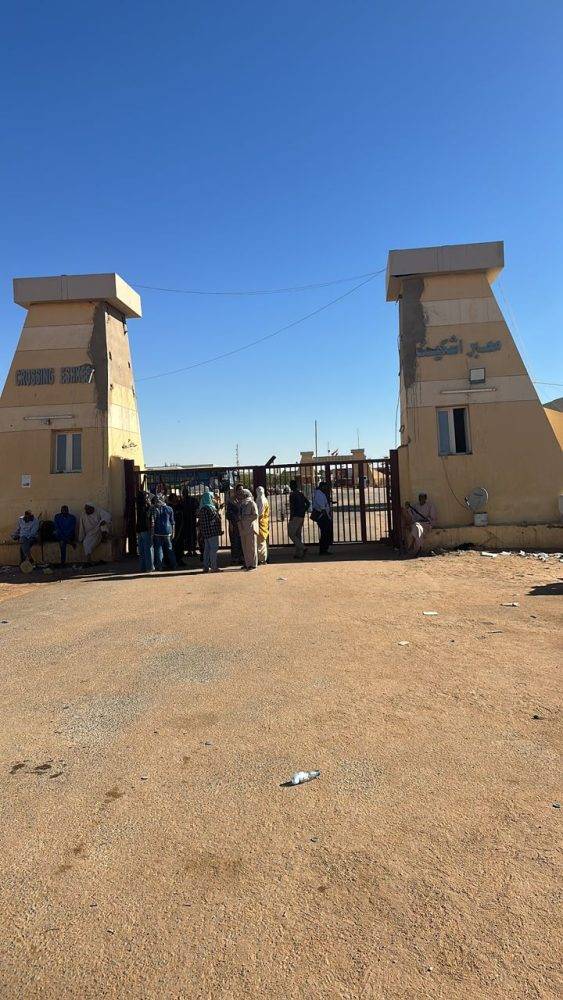 The Argiri border between Sudan and Egypt is where Mahmoud and his family crossed.
Given the restricted access to Khartoum, danger, lack of services and logistical barriers, Human Rights Watch interviewed 42 healthcare providers, social workers, lawyers and local responders in the emergency response rooms it has established in Khartoum from September 2023 to February 2024.
“I have slept with a knife under my pillow for months in fear from the raids that lead to rape by RSF,” a 20-year-old woman living in an area controlled by the Rapid Support Forces told Human Rights Watch early this year. “Since this war started, it is not safe to be a woman living in Khartoum under RSF.”
The physical, emotional, social and psychological scars of survivors are immense, Human Rights Watch found. At least four of the women died as a result of “debilitating physical injuries” they experienced during rapes and gang rapes by RSF soldiers. Many survivors who sought to terminate pregnancies resulting from rape faced significant barriers to abortion care, healthcare workers told the rights organisation.
“I spoke to a survivor who was raped and had just discovered she was three months’ pregnant,” a psychiatrist operating in Khartoum said. “She was traumatised and shivering, afraid of how her family would react. She said to me, ‘If they discover my situation, they will kill me’.”
Survivors told the medical providers they had been raped by as many as five RSF fighters, with many of them abducted and confined in homes and other facilities they occupied in Khartoum, Omdurman and other regions in Bahri.
The report says RSF members have in some cases sexually assaulted women and girls in front of their families and forced them into marriages.
Although the report states that fewer cases of abuse were attributed to the Sudanese Armed Forces members, there was an increase in cases reported after the SAF took control of Omdurman early this year. It reports that men and boys were also raped while in detention centres.
In a 2023 report, Amnesty International detailed “mass civilian casualties in both deliberate and indiscriminate attacks” committed by both factions.
Both warring parties have blocked survivors’ access to critical and comprehensive emergency healthcare, Human Rights Watch found.
The organisation has called on the African Union and the United Nations to deploy a new mission to “monitor the obstruction of, and facilitate access to, humanitarian assistance”.