Full on: The world’s most demanding musical lands in South Africa,
guided by veteran performer Matt Krzan (centre), whose passion and precision
keep Cats alive. Photos: Jesse Kramer
It’s the musical most of us associate with the hit song Memory and with grown men and women prancing around the stage wearing leotards, tails and shaggy feline wigs pretending to be what the poet T.S. Eliot dubbed “Jellicle cats”.
No matter your feelings about it, though, there’s no denying that – for the performers – it’s possibly the most demanding stage show there is.
Many who’ve been in it – from ballerinas to athletically hardwired professional dancers – have spoken about its relentless physicality. Never mind the stamina and arduous rehearsals, there’s also Gillian Lynne’s extremely technical and sinuous choreography, the lengthy pre-show prep of warm-ups, make-up and wigs, the literal blood, sweat and tears, the injuries that dancers invariably dance their way through, and the months-long lack of a social life thanks to extended runs, night after night, weekends and holidays too.
And then there are, understandably, the furrowed foreheads when you explain the show to anyone who hasn’t seen it. No traditional plot, no major character-driven goal, and most analyses of it suggest that it’s more the experience of it than a storyline that fans lap up.
In many ways its very existence defies reason.
“Jellicle cats”, incidentally, is believed simply to be a contraction of the way Eliot heard very young children struggling to say “dear little cats”, though others claim it’s a play on the word “angelical”; whatever the poet meant by it, in 1939 he wrote a children’s book of light poems about them which some 40 years later the composer Andrew Lloyd Webber decided to set to music.
Thus, one of history’s most successful musical theatre shows, Cats, was born, albeit not without considerable pain. A lot of people hated the idea, directors and choreographers included, and Cameron MacIntosh, Lloyd Webber’s producing partner, struggled to raise money for it. Even finding a West End theatre to host it proved nightmarish.
The show even seemed cursed. Actress Judi Dench, who’d been cast in the original 1981 production as Grizabella, the cat who so famously sings Memory, snapped her Achilles tendon shortly before opening and had to withdraw.
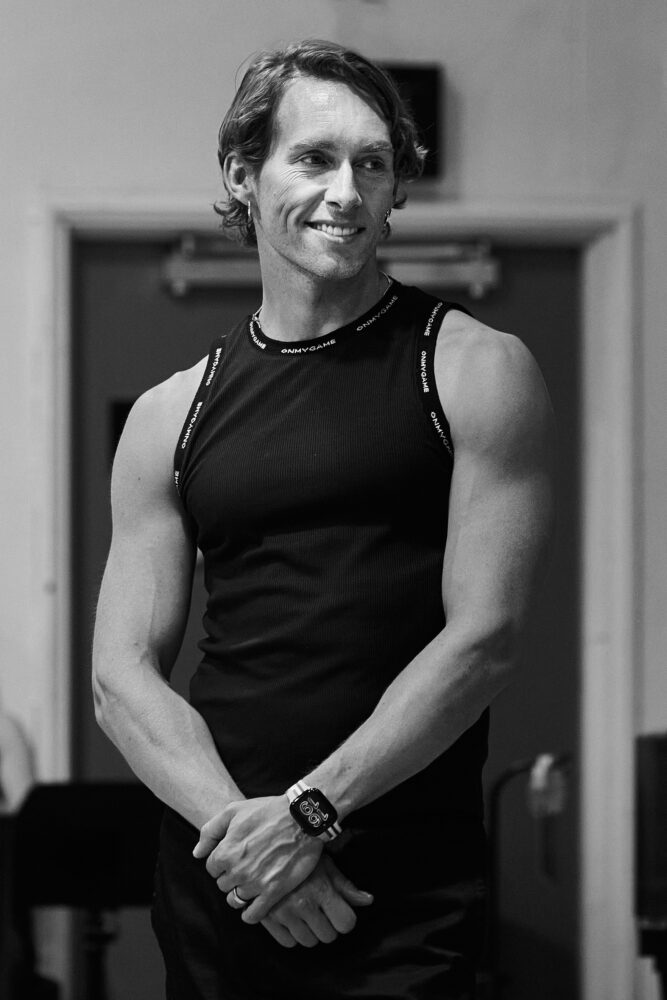 Veteran performer Matt Krzan
“Even if you don’t ‘get’ the show, there’s a lot to appreciate simply in terms of the hard slog and intensive athleticism and physicality of it all,” says Matt Krzan, a UK-based veteran performer who has been involved on and off with various productions of Cats over the last 22 years.
“There are almost 30 people on stage and every one of them is going ‘full on’ for the duration. There’s no single character who steals the limelight or is the focus of the story – it is a true ensemble production, requiring switched-on performances from everyone, all the time.”
Krzan has been in Cape Town for almost two months putting a fresh South African cast through its paces for a new iteration of the show. As assistant director he’s been responsible for getting the large ensemble ready for a world tour that will see them perform in more than half-a-dozen cities, starting with Cape Town and Joburg.
Krzan doesn’t go in for half-measures. Everything about Cats is borderline sacred to him; he’s been obsessed with it since, as a dance student, he dreamed of being in West End musicals.
He got his professional break in Cats as a swing, a member of the ensemble who learns multiple roles and steps in when a cast member is sick or, as happens frequently on Cats, gets injured. Not only has Krzan often had to step into the breach at extremely short notice, frequently mid-show which is when dancers can get hurt, but he has also worked his way through the ranks, been cast in several roles and for years served as dance captain – the person responsible for maintaining the integrity of the choreography once the show starts running.
“As dance captain, you’re constantly cleaning, keeping the dancers tight,” he says. “That’s been a big part of my career – always keeping watch and seeing every piece of the puzzle in order to clean it.”
In Cats, he also got to play what he regards as the role of his career, Munkustrap. “It’s the best part I’ve ever played,” he says. “It’s like playing a cat version of myself – Munkustrap is an organiser, a protector who wants everything done right and everyone to be okay.”
Munkustrap may be the role he’s played most frequently, but he has an incredible all-round understanding of the show – and every character in it. Seeing it from every imaginable angle has given him a complete, three-dimensional, inside-out picture of the production, which makes him the ideal person to teach the show to the new cast.
Amazingly, he has just about every character stored in his brain, is able to show cast members how each cat’s meant to move, discuss their motivations and explain how each part fits into the whole.
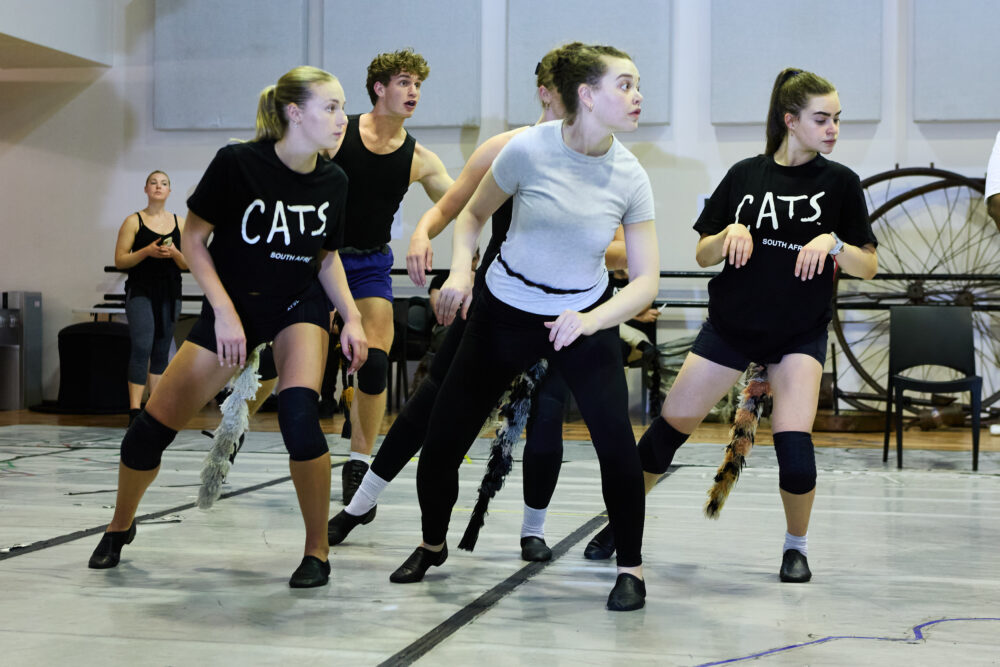
He says that, apart from having learnt all the male parts as a swing, he’s absorbed the entire show, had most of the choreography engrained in muscle memory. “As dance captain, I was at every rehearsal for every character, so by osmosis it’s in me.”
He says, too, that from seeing the show countless times, his brain has developed the capacity to “flip it” in his head. “When I then have to stand in or teach it, I can see it from the outside, from the audience’s perspective.”
Krzan says it takes a certain type of performer to succeed in Cats. It requires not only hard work, but endurance. He says the South African ensemble definitely came into the rehearsal studio hungry to learn, eager to sweat.
And perspire they have. “You can’t do the show and not sweat,” Krzan says. “It’s about building stamina. When you’re learning it, you’re doing it again and again and it’s very exhausting. Once they’ve learnt it and it’s in their bodies, it’s a bit easier, although it never really gets easy. It’s always tough, which is why I love the show. I’m one of those people who loves a physical challenge. I love to feel like I’ve worked hard. It’s almost like running a race.”
He says there isn’t really a moment in either act when the cats can switch off or relax. “From the second you walk on stage until interval and then again until the final curtain, you’re on,” he says.
“In other shows, you come out of warm-up and you can relax, pop out for a coffee, literally sit back, and maybe it’s ‘oh, I’ve got ten minutes till the show, I’ll put my costume on now’, but for Cats, from the minute you arrive, you’re getting ready for the show, preparing the whole time.
“Then you’re on stage the entire time. And during the interval, you’re recovering after the intense physicality of the Jellicle Ball, the hectic scene that’s the culmination of the first act. So, usually it’s legs up the wall for ten or fifteen minutes, a quick drink to see you through, and you’re back to it.”
Krzan says this explains why Cats is “definitely not for the faint-hearted”. The level of commitment is second-to-none.
“On a two-show day, you have to stay in the theatre, because you can’t really take your make-up off. So, it’s two performances back-to-back, then you have to remove the wig and the make-up and usually everyone’s just too tired to socialise, so you go home to sleep. If it’s a four-show weekend, you do it all again the next day.”
While this certainly isn’t the first time Cats is happening in South Africa, for many of the younger cast members, it’s likely they’ve never seen it performed live. Rehearsals are tough, meant not only to get the steps and layout and character work done, but lay a foundation of stamina and fortitude for what is to be a long run. It will consume months, even years of these young performers’ lives.
For some of them it may well be the defining show of their careers – as it has been for Krzan, who says Cats is kind of the embodiment of what musical theatre is all about, conveying a story exclusively through song and dance and characterisation through movement.
He says this aspect of the show – that it does not have spoken dialogue and that the storyline is not laid on in any kind of obvious way – is possibly why some people don’t warm to Cats. He says, though, that there are great rewards for the audience, especially if they pay attention to the details.
“I think it requires an open and inquisitive mind – if you try and take in all the different elements, rather than just seeing a bunch of cats dancing, you’ll realise there’s a dynamic story unfolding,” he says.
He calls it “a really magical show”, far more than the sum of its parts. And, with its underlying themes of forgiveness and acceptance, it’s of genuine relevance – not only to cats, but for humans especially.
- Cats plays in Cape Town at the Artscape Opera House from 10 December to 11 January, and at Joburg’s Teatro Montecasino from 17 January to 22 February.