From left: Founders Kevin Reese, Chase Freeman and Gregory K Burton Jr. Photo: Supplied by Milk + Cookies.
As streaming apps begin rolling out the top tracks that defined our 2025 listening habits, it came as no surprise to me that Haitian-Canadian Grammy-winning producer and DJ Kaytranada dominated three of my year-end lists.
This got me reminiscing about how I, along with 30 000-plus of his fans across Cape Town and Johannesburg finally saw him live.
Kaytranada headlined the first-ever Milk + Cookies Festival in South Africa. A day before the Cape Town show in January, I spoke to three of the founders: Chase Freeman, marketing director; Jhordan Gibbs, who is the artist and sponsor director; and Gregory K Burton Jr, the creative director.
More recently, I caught up again with Freeman, Burton Jr and the fourth founder Kevin Reese, who is Director of Operations, to discuss not only the festival’s return but also the vision behind the Milk + Cookies Music Week (MCMW).
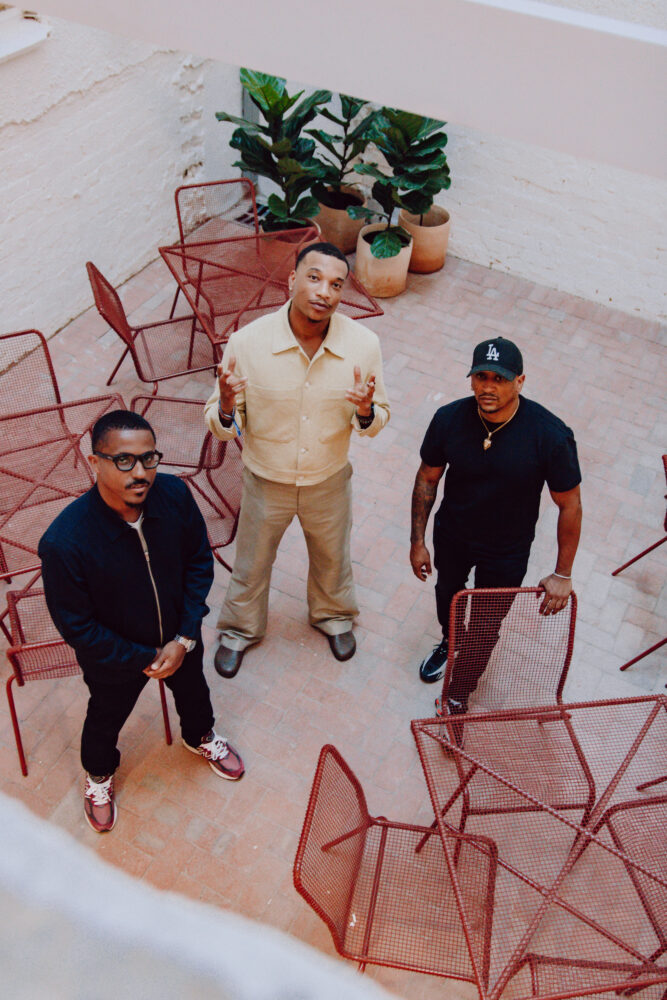 From left: Founders Chase Freeman, Gregory K Burton Jr and Kevin Reese. Photo: Supplied by Milk + Cookies.
The festival was born in 2015 after the four friends met at Morehouse College, one of those colloquially known as historically black colleges or universities (HBCU) in Atlanta. The festival’s portfolio now includes collaborations with global titans like Kendrick Lamar and SZA.
Reflecting on the first edition of the festival in South Africa, Reese says it was overwhelming: “We’ve been building for such a long time in the US since we were 19, 20 years old. And to be able to come to international waters, to come to Africa and be able to pull off one of our largest events was … inspiring, overwhelming, beautiful. It felt like Milk + Cookies became an overnight brand just out of the gate.”
The founders were deeply moved by the diversity of the South African audience. “I think it really hit me; it hit us in Joburg between the landscape of just 15000 people collectively,” Burton Jr said.
“I think one of the major points that hit me and what we’re doing from a community standpoint, in a market where you do hear of divisions being common between races, was looking from the VIP deck overlooking the space, and seeing white kids, black kids, Asians, Indians just all coming together, aligned,” added Burton Jr.
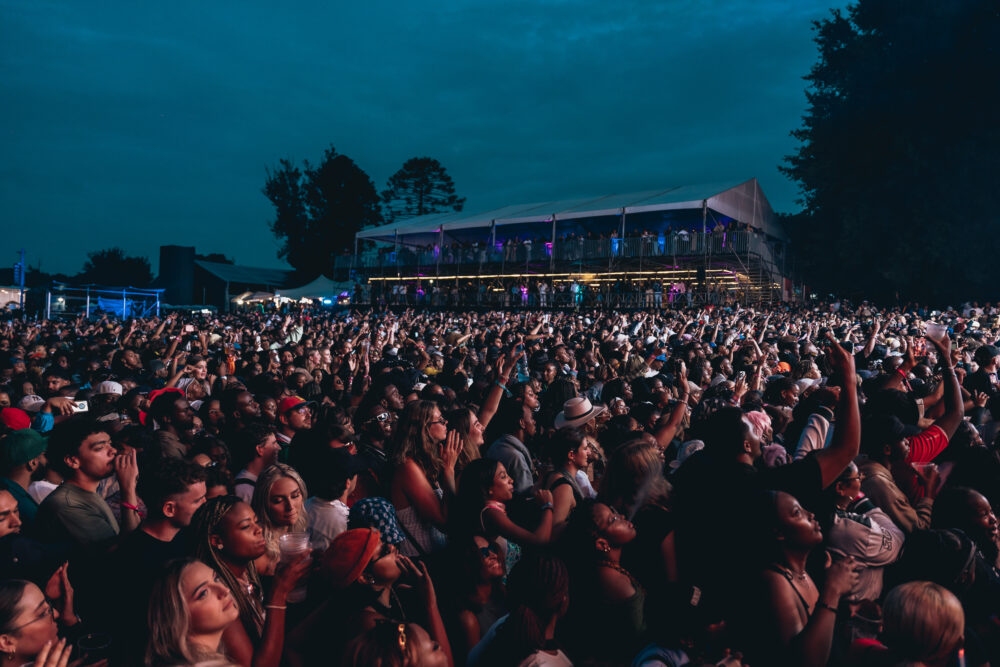 Revellers: A sea of festival goers at the Kaytranada Milk + Cookies Joburg show. Photo: Supplied by Milk + Cookies
Freeman, who recently relocated to South Africa, has a fresh perspective on the local music industry.
“I think it’s so interesting … the parallels of what South Africa is going through right now. It reminds me of Atlanta in 2015, where you had this period of time where a lot of the music that put Atlanta on the map, like trap music, was coming out. And now you’re starting to see that renaissance where South Africa is completely on the map. Shout out to the Uncle Waffles, the Black Coffees and all the piano DJs. And, you’re starting to see them getting nominated for the Grammys. It’s just really dope to see that.”
His move to the country has been marked by inspiring discoveries.
“The most inspiring discovery was just how big the creative scene is between Joburg and Cape Town. It’s just like overflowing with talent and everyone’s hungry.”
The MCMW, a programme that stretches far beyond the festival stage, has officially been announced. Designed as a season of giving back, Music Week blends performances, educational workshops, industry panels, writing camps, and community-focused initiatives into a month-long ecosystem of creativity.
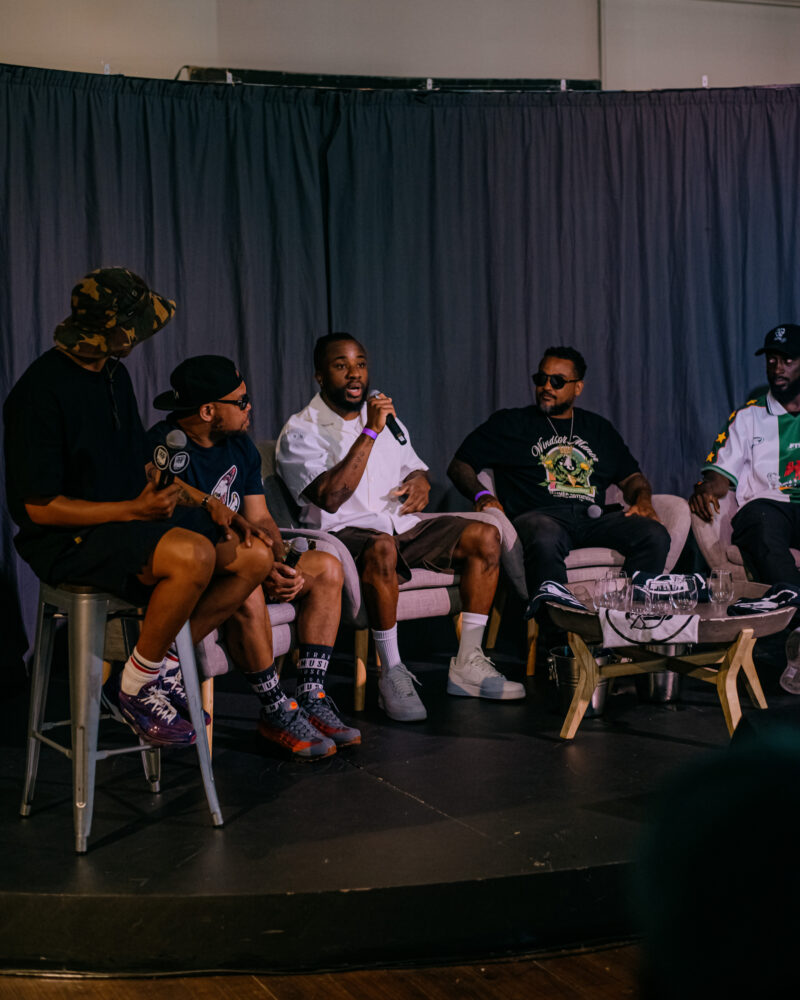
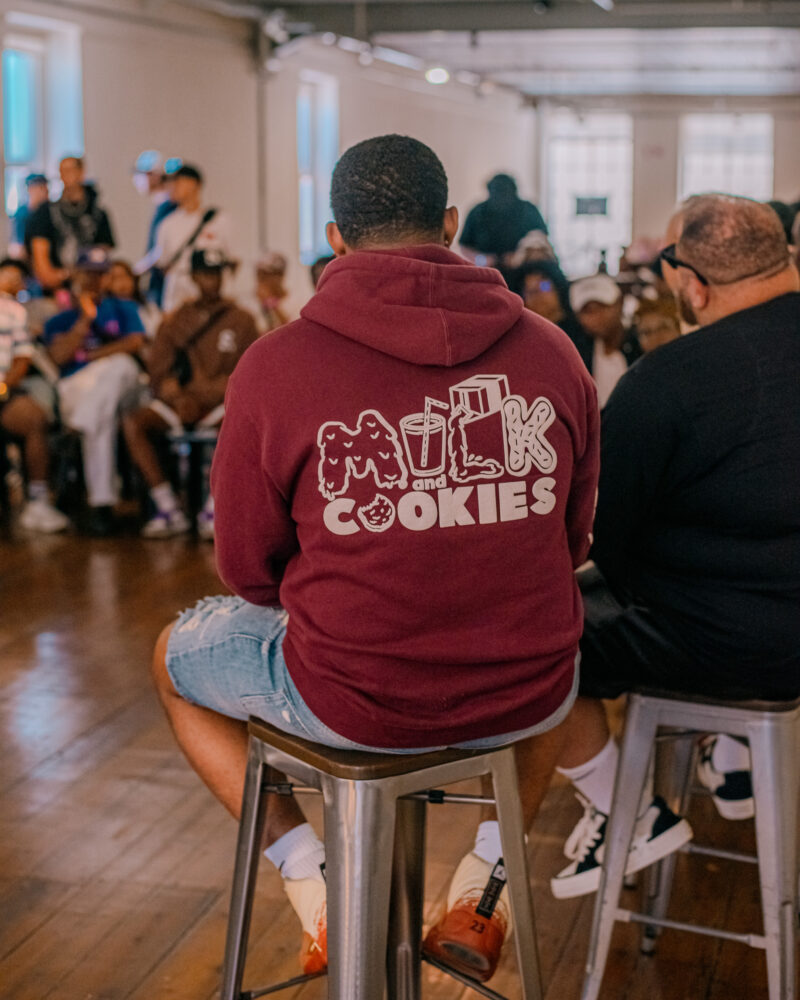 Panel discussions in full swing at the MCMW. Photos: Supplied by Milk + Cookies
MCMW is set to run between 17 December 2025 and 13 January 2026.
“I think for us, being four black kids who met in college, taking the non-traditional route to get where we are, is a sense of giving back. A lot of the times you see that events at this level are owned by gatekeepers. So for us, the goal is to provide knowledge and education workshops. I think a big deal for us is how can we push the brand outside being artist-dependent?” says Burton Jr.
“We want folks to be attracted to the brand without the artist. So I think adding Music Week is a big component to that. We don’t want to be seen as the Americans coming into town as money grabbers. For us, it’s like, how can we give back? How can we contribute?” says Burton Jr.
Milk + Cookies will provide educational workshops through a partnership with ALX, a pan-African education organisation that provides tech training, mentorship and career pathways for young Africans.
“One of the biggest pieces on the panel side is that our partnership with ALX and every women exchange company, is for us to be able to incorporate our learnings and provide paying jobs for students that have an interest in the creative sector,” he adds.
The jam-packed MCMW programme will also feature a writing camp, a carefully crafted two-day event designed to bridge and unite artists, producers, and songwriters from South Africa and the Diaspora.
“I like the producers. We do have a few acts, big acts that I can’t name yet that would be attached to the writing camp. So that’s going to be very exciting to launch that,” Burton Jr says further.
The 2026 programme includes a ‘special delivery community giveback mission’, which the founders describe as “an activation that reflects the heart of Milk + Cookies by meeting communities where they are, providing hope and helping them start a new year”.
“This year we’re looking to go to Khayelelitsha in Cape Town to do a Christmas Eve give-back over there with the students on campus. And then here in Joburg, we’re looking to partner with Lion of Judah. It’s the same thing as in Cape Town. We will be providing resources, gifts, hygiene packs, tech tools, you know, anything that the campus may be in need of that we can provide on our side.”
Alongside workshops and givebacks, the programme is stacked with experiences including the Dot Connector industry panel, a Merch Pop-Up with Socioculture, an Honorary Mixer, the Wunna Run Club 5K Race and the official Milk + Cookies Festival After Party.
The actual Milk + Cookies Festival returns to South Africa in January 2026. It will be in Cape Town on 3 January and Johannesburg on 10 January.
What is the criteria for selecting talent?
When selecting talent, the founders look for artists who align with their sonic direction and are in a pivotal moment in their careers. American rapper Gunna was an immediate fit.
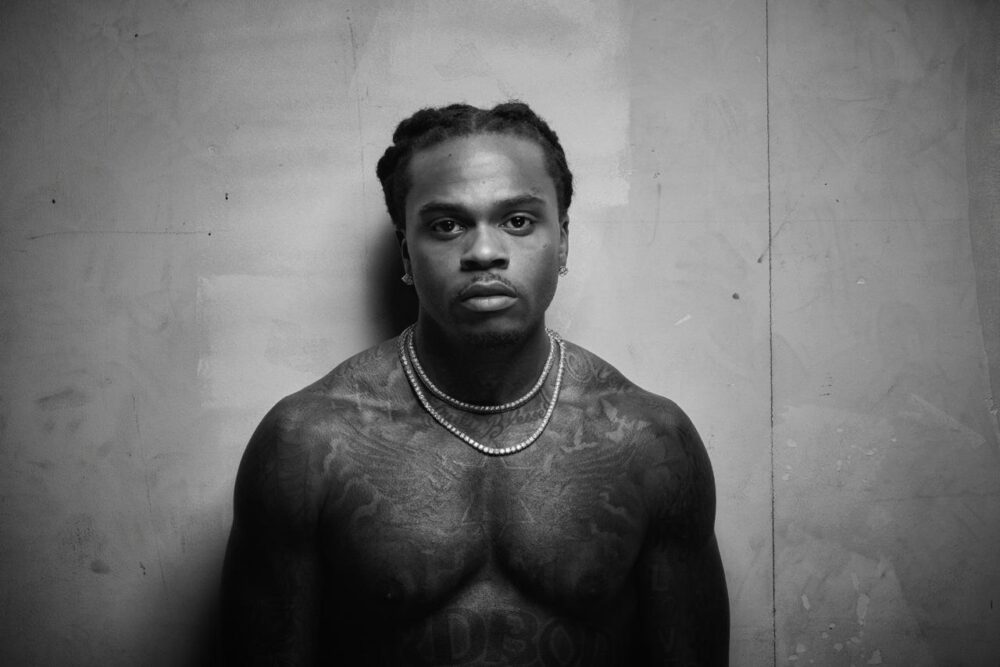 American rapper Gunna is set to headline Milk + Cookies’ return to South Africa
“I think for us, we choose artists in accordance to what we want to do, sonically creating a diverse palette, but we also are choosing in accordance to what kind of year these people are having. Gunna has had an amazing year. He is also setting himself up at this moment to become an international star,” says Reese.
“Gunna’s been working with African artists like Asake and Wizkid and so there’s a few collabs on his album, and that’s cool to see. So it’s so interesting to see three African artists on his new album not singing Afrobeats,” says Freeman.
“It sonically shifts what black people in the US and Africans can do to bend the genres. We’re so diverse culturally that we can create a new genre like we always do. And so Gunna is a bridge between Atlanta and Africa in a musical sense,” Freeman says.
Canadian-Bahraini R&B duo Majid Jordan were revealed as the second headline act.
“They’re artists that are about to reemerge onto this scene. They are R&B. And I just think that R&B resonates so strongly in South Africa. The response we got to Majid Jordan was so strong. The audience fell in love,” says Reese.
The full lineup includes Odeal, Elmiene, Nasty C, A-Reece, DJ Kent, Dlala Thukzin and more.
This year also sees the introduction of the second stage, Move Mzansi, powered by Extreme – a platform dedicated to rhythm-driven sounds and emerging local talent.
“Our brand being multi-genre faceted between EDM, rap or house music and R&B, is just always finding that perfect blend… and this year being more of rap, R&B, we still wanted to make sure that we had a home base attached to the brand which is the dance stage,” says Burton Jr.
“The creation of that second stage was to make sure that we hit all elements sonically. Our goal is to be [world music festival] Coachella in South Africa. So, adding that second stage was us just being intentional on creating a diverse palette of sounds,” says Reese.
The stage features Amapiano, Deep House, Electronic and Dance with artists like Que DJ, Shamiso, Summer Heynes and DJ Capital.
At its core, Move Mzansi is designed as an irresistible call to the dance floor – an experience meant to leave festivalgoers feeling transformed.
Ultimately, the founders see Music Week and the festival as inseparable parts of a single purpose-driven vision.
“The festival brings everything together for the week. So, for me, it’s a big deal. Also, as Chase always mentions, there’s been times where somebody met their wife or husband at one of our events, you know, so whether that’s through the week or at the festival, we’re just always looking to contribute to somebody’s livelihood in that sense,” says Burton Jr.