the household name for printers, projectors and scanners, Epson, has a new CEO at its helm, and he’s planning big things for the African region.
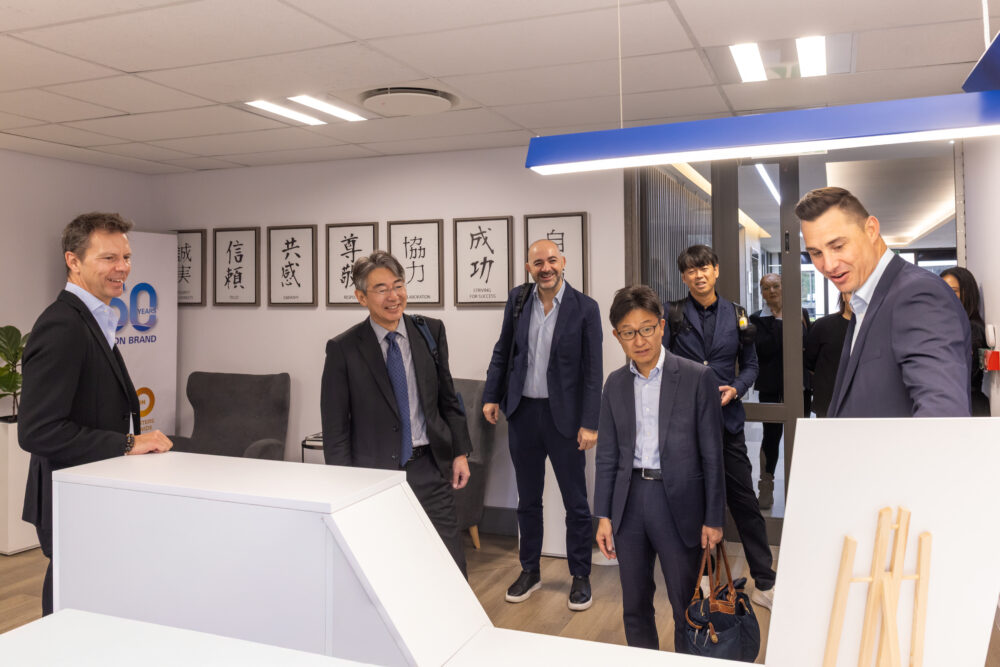
Mr. Junkichi Yoshida became President, Representative Director and Chief Executive Officer in April this year after serving as Director, Executive Officer, and COO of Epson’s Printing Solutions Division. On a recent visit to the South African office, he shared his vision for the company, particularly across the African region.
Mr. Yoshida explains that his focus in this new chapter is expanding Epson’s reach beyond the 170 countries where it already has a footprint. He believes the company’s scalable technology, especially its inkjet printhead, is a core asset. “How we are going to fully optimise and utilise these assets for the company’s growth is the key.”
To date, Epson’s growth strategy in Africa has been shaped by the needs of emerging markets. The continuous ink supply system EcoTank printers, for example, has been a particular favorite. “Africa is definitely the next growth market, with many talented and dedicated people,” he says. “I see great opportunities both in the short and long term.”
The continent’s young population is another strong indicator of future economic growth. This aligns well with Epson’s commitment to providing a complete technology ecosystem that supports everyday needs across homes, businesses, and key sectors such as retail, education, logistics and finance. ‘We have solutions, and we want to bring those solutions in to fit African markets,’ Mr. Yoshida says.
Although Epson has been present in South Africa for years, the past five years have focused on investing in staff and infrastructure. Mr. Yoshida is expecting a period of rapid growth, which includes expansion in both the retail and B2B markets.
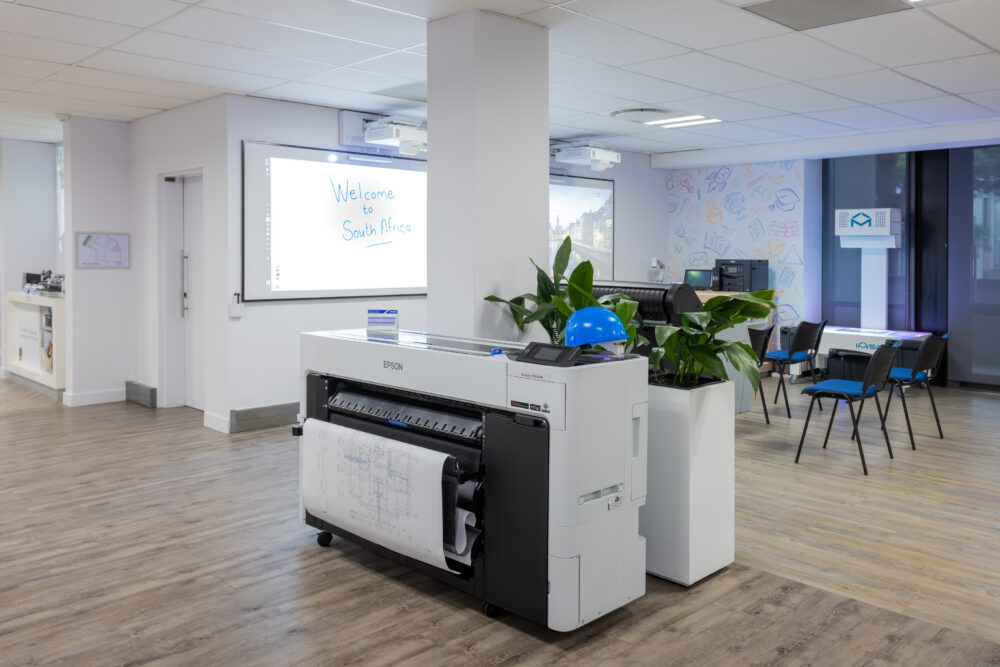
Gareth Jay, the new Regional Sales Director for Epson Africa, echoes that growing Epson’s presence in the region is key. For instance, the Innovation Centre in Johannesburg serves as a space where partners and resellers can engage with the latest technology. “We want to showcase Epson’s solutions that help businesses, schools, and organisations work better, save energy, and reduce waste,” he says.
Jay explains that this vision is important because Africa has unique challenges like unreliable infrastructure, high operating costs, and the need for more energy-efficient technology. “By helping customers choose the right technology and understand how it works, we can support growth and overcome many of the challenges in the region.”
Epson’s global and African strategy is built on both growth and sustainability. The company is committed to the UN Sustainable Development Goals and is an active member of the Responsible Business Alliance (RBA).
“We will do our best to reduce the environmental burden of our operations,” Mr. Yoshida says. “At the same time, our technologies reduce carbon emissions, electricity use and material waste because they are compact, precise and efficient.”
These benefits extend to customers too. Some Epson products can reduce electricity consumption by up to 90%. Many of its Heat-Free inkjet printers use far less electricity than comparable laser models because they don’t require heat in the printing process, which helps lower overall power use and environmental impact.
Mr. Yoshida also stresses the need for responsible development in the era of artificial intelligence. “We are at the core of AI development,” he says, noting existing industry collaborations. “But we have to balance innovation with environmental impact.”
Supporting communities remains a key focus area. Epson has already launched a proof-of-concept project in Senegal to support home-schooling options in remote areas, with plans to expand further.
Looking ahead, Mr. Yoshida wants Epson’s technologies to remain compact, efficient and precise, but also to create meaningful impact. “I cannot emphasise enough how promising Africa is for growth. People want to progress, and how we support the economy and communities with our business is very important to us.”
Jay echoes this “Our long-term plan is to continue building strong relationships with customers, support local skills and expand across Africa.” This includes ongoing investment in innovation and customer support.
“We will continue to refine both the technology and the product side,” says Mr. Yoshida. “While we already have a huge network of global customers, we can still do more.”