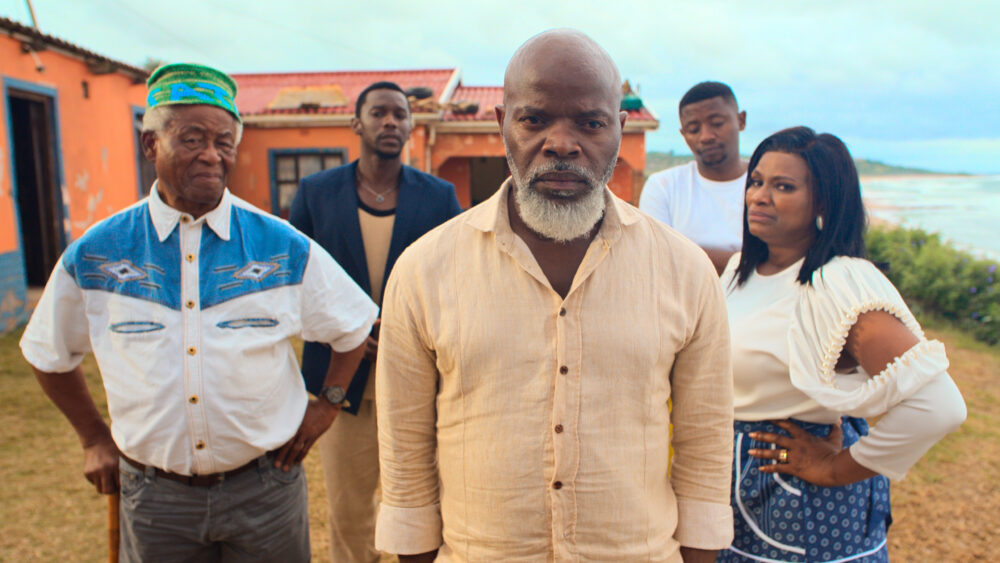
Will they/won’t they: Will Zoleka (Sivenathi Mabuya-Bukani) and Kagiso (Bohang Moeko) make it down the aisle in one piece. Photo: Netflix
For many years, South African television has been dominated by festive entertainment rooted in Western culture. While these films were joyful, they often felt distant from our everyday lived experiences.
Nevertheless, as families, we came together to enjoy timeless laughter through classics such as Home Alone, How the Grinch Stole Christmas, Last Christmas, and various Hallmark Christmas movies.
Locally, both television and cinema screens were largely ruled by Leon Schuster films, including There’s a Zulu on My Stoep and the Mr. Bones franchise. However, as traditional television declined and cinema attendance dropped, the rise of streaming platforms such as Netflix, Showmax, and Amazon Prime has given rise to a strong binge-watching culture, extending even into the festive season.
Celebrating its 10-year milestone in the African market in 2026, Netflix constantly tries to put their best foot forward with festive entertainment for the family. Yoh! Christmas, Trippin’ with the Kandasamys and Disaster Holiday have been binge-worthy Christmas shows for viewers’ pleasure.
It is arguably How To Ruin Christmas in 2020 that set the tone for the global streamer’s intentions to reimagine December viewing. Created by Burnt Onion, the franchise had three seasons subtitled with a different holiday event – The Wedding, The Funeral and The Baby Shower.
 How To Ruin Love S2. (L to R) Zwelakhe Mtsaka as Mzwamadoda, Thembinkosi Ngcukana as Luyolo, Dumisani Mbebe as Martin, Ayanda Daweti as Langa , Tina Jaxa as Liswa in How To Ruin Love S2. Cr. Courtesy of Netflix © 2025
In 2024, the award-winning production company introduced the How to Ruin Love franchise which followed a young couple’s budding relationship. In the second season, premiering 19 December, the couple now must start lobola negotiations.
Shot over five weeks, How To Ruin Love: The Lobola picks up where Zoleka (Sivenathi Mabuya-Bukani) and Kagiso’s (Bohang Moeko) tangled love story left off in How To Ruin Love: The Proposal.
“When returning for a second season, there’s a comforting sense of familiarity as the characters and the world is established,” said co-creator and co-executive producer Rethabile Ramaphakela.
Besides navigating cows on a highway as new experiences for the Burnt Onion team, Ramaphakela said it was important to elevate what was done in the previous season.
 Rethabile Ramaphakela, co-creator and co-executive producer. Photo: Supplied
“We also introduced four new characters to the series, adding depth and variety to our narrative. This season promises to offer something truly different and captivating.”
In 2024 the production company released Lobola Man, a male centric romcom about a professional lobola negotiator. As such How To Ruin Love: The Proposal prompts a concern for duplication and lack of originality.
Ramaphakela, however, confirmed that the two stories are different.
“With Lobola Man we didn’t really get into the intricate details of the process whereas How to Ruin Love is more about the actual process and how families get involved and sometimes take over. These distinct approaches promise to deliver entirely different viewing experiences, each offering its own unique insights into love and tradition,” she said.
Another series making the festive watchlist is rom-com Love and Wine produced by Quizzical Pictures, also creators of Netflix’s shows Savage Beauty and Marked.
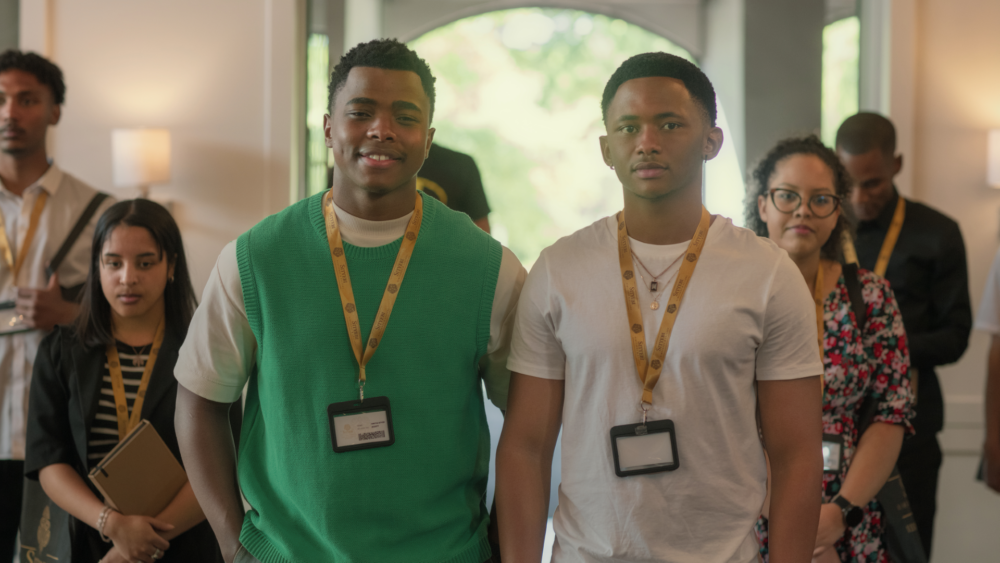 Friendship: Ntobeko Sishi and Thandolwethu Zondi as Ovee and Nathi. Photo: Netflix
Set against South Africa’s breathtaking wine country, Love and Wine is an adaptation of the Brazilian hit Ricos de Amor. The story follows Ovee (Ntobeko Sishi), a privileged heir determined to prove that his name isn’t what defines him.
Taking 23 days to shoot, director and co-writer Amanda Lane, said the themes of privilege and purpose emerged as a touchstone, creating the resonant tension that became the beating heart of the film.
A hopeless romantic, Lane added that the film’s romance elements balanced with hilarity were heightened, with the aim of giving the audience the delicious feeling of falling in love.
Some may however frown at the adaptation of a foreign story for local audiences questioning the global streamer’s intentions. The universal themes of love, friendship and inequalities, Lane said, are what made the project widely relatable.
 Amanda Lane, director and co-writer. Photo: Supplied
“I love making stories about friendship as my friends are the loves of my life. As such, I really related to the idea of two ride or die buddies from different economic backgrounds swapping lives. While there are similarities between Brazil and South Africa, we needed to go beyond a direct adaptation of Ricos de Amor to make the film strike a heartfelt chord with South Africa viewers.”
She added: “To do this we tried to make the tensions in the primary relationships, between father and son, the best friends and our lovers, feel more in line with the tensions that we as South Africans are having with our own fathers, sons, lovers and friends.”
Reimagining December
Growing up, Lane’s family film tradition included watching the cowboy film Bonanza, projected onto a bed sheet hung up in the lounge.
“We saw the same film every year but it never got old. It was all magic to me – the sound of the big old projector, the numinous beam of light it cast on the wall. My brother and I would spend the hours like moths, in the beam of light making stories out of our shadows. I reckon this is where my love for film all began.”
For Ramaphakela and her family Home Alone was a household favourite. “It was the quintessential family film and I rewatched it many times so it brings me joy to know that there are kids rewatching our film Disaster Holiday every holiday break.”
As a result, Ramaphakela and Lane are part of a new wave of filmmakers who are reimagining Christmas narratives, creating fresh viewing experiences for many South African households on the global streamer.
Though local streamer Showmax hosts festive movies like Christmas Clothes, A Zulu Christmas and English-Afrikaans family comedy A Boere-Krismas, the difference with the big red N, is its focus on building a relationship with local filmmakers and viewers by producing binge-worthy content particularly during the festive season.
Having produced shows for the global streamer since 2020, Ramaphakela said it is a really exciting position to be in.
“For years we have been watching Western content with snow and now we finally get to showcase our version of the festive season. It’s truly an honour to see how deeply our content resonates with audiences. We are excited to contribute to the growth of this genre and share even more of our rich cultural narratives in the future.”
Working alongside producers Harriet Gavshon and Roelof Storm in Love and Wine, Lane also shared in the excitement as a filmmaker contributing to the country’s downtime viewing. “It has been a tough year for South Africans and citizens of the world, so to make a film that makes people laugh and open themselves up to love feels delightful and precious.”
The question of when more of our stories will be told through our own platforms still lingers. However, global streaming services are slowly shifting our viewing habits away from the Hallmark mould, delivering high-quality and relatable South African festive narratives.
Watching a Burnt Onion and Quizzical Pictures production, one can certainly relate with that drunk but cool uncle, meddling neighbours or snacking on Bakers Choice Assorted Biscuits with cousins congregated at uGogo’s house.