Paying respects: ANC chairman Gwede Mantashe visiting JB Marks’ grave. Photo: Supplied
Morogoro, a quiet provincial town at the foothills of Tanzania’s Uluguru Mountains, occupies an outsized place in South Africa’s liberation memory.
It was here, far from home and under the harsh conditions of exile, that the African National Congress — banned and battered by apartheid repression — forged the political architecture of what became the January 8 Statement: not a ceremonial address, but a living strategic compass for a movement fighting to survive.
This weekend, that compass completes a symbolic journey. From Morogoro to Moruleng, a modest rural town in the North West, once folded into apartheid’s homeland geography.
The ANC marks 114 years since its founding.
President Cyril Ramaphosa will deliver the movement’s annual January 8 Statement at Moruleng Stadium, as the party mobilises “from branch to branch, door to door”, seeking renewal, relevance and reassurance.
The contrast between these two places tells a deeper story — one of exile and power, principle and performance.
To understand what is at stake in Moruleng, it is worth returning to Morogoro in 1969. The Morogoro Consultative Conference, convened under the quiet but resolute leadership of Oliver Reginald Tambo, was no celebration. It was a reckoning.
The ANC had been devastated by the Rivonia arrests, the crushing of internal resistance and the dispersal of its leadership. Umkhonto we Sizwe commanders, political intellectuals and cadres in exile confronted hard questions: Why had the movement faltered? To whom was it accountable? How could it chart the correct course?
Morogoro became the crucible of renewal. Under Tambo — operating as the de facto global leader of the ANC in exile while his former law partner Nelson Mandela was imprisoned on Robben Island — the movement rediscovered its political coherence.
The January 8 Statement was transformed from a symbolic anniversary message into a strategic political instrument: an annual assessment of the balance of forces, a declaration of intent and a guide to struggle.
Tambo insisted that the Statement must reassert the ANC’s legitimacy as the authentic representative of the oppressed majority; maintain unity across borders and ideological currents; and link political mobilisation to armed struggle, mass action and international solidarity.
His leadership style — consultative, disciplined, deeply principled — anchored debate in non-racialism, democracy and collective leadership at a time when exile politics elsewhere on the continent collapsed into factionalism and cults of personality.
Crucially, Tambo understood exile as temporary. Morogoro spoke simultaneously to underground activists at home, freedom fighters in camps, and international allies lobbying governments and institutions abroad.
The Statement carried a distinctly internationalist tone, situating South Africa’s struggle within African decolonisation, Third World solidarity and anti-imperialism — and cementing Tanzania, under Julius Nyerere, as a frontline sanctuary for liberation movements.
It was here that the January 8 Statement emerged as an annual act of political honesty — a discipline of self-criticism rather than self-congratulation.
More than five decades later, the ANC gathers not in exile, but in government — and the contrast is unsettling.
Moruleng is a deliberate choice. Nestled within the Moses Kotane Local Municipality, named after one of the ANC’s most revered revolutionaries, the town embodies both the historic marginalisation and enduring resilience of rural South Africa. These are communities that bore the brunt of apartheid’s spatial engineering — and continue to shoulder the heaviest burdens of poverty, unemployment and underdevelopment.
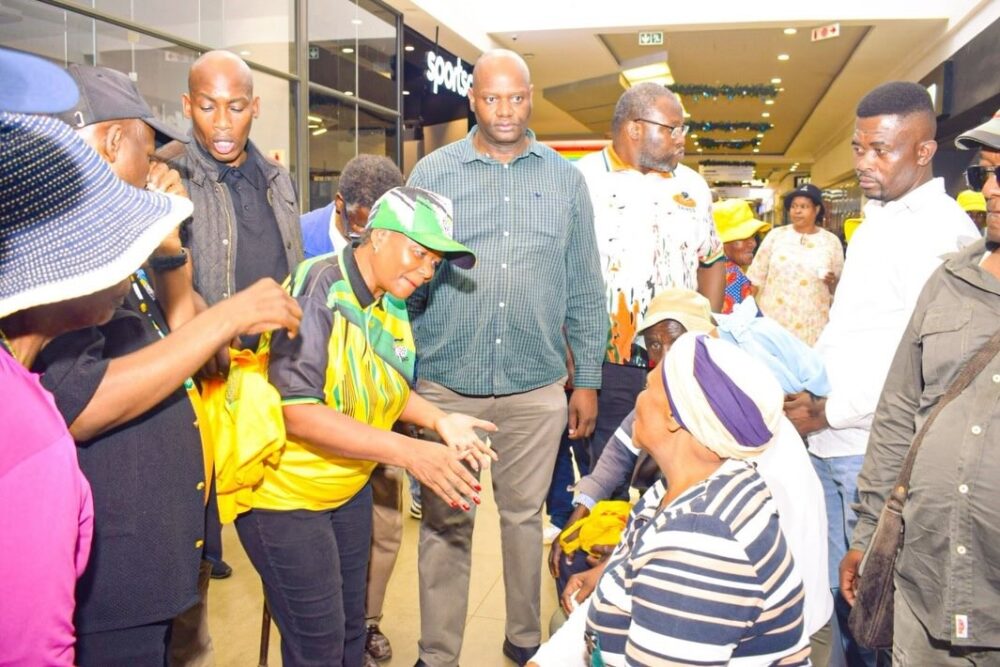
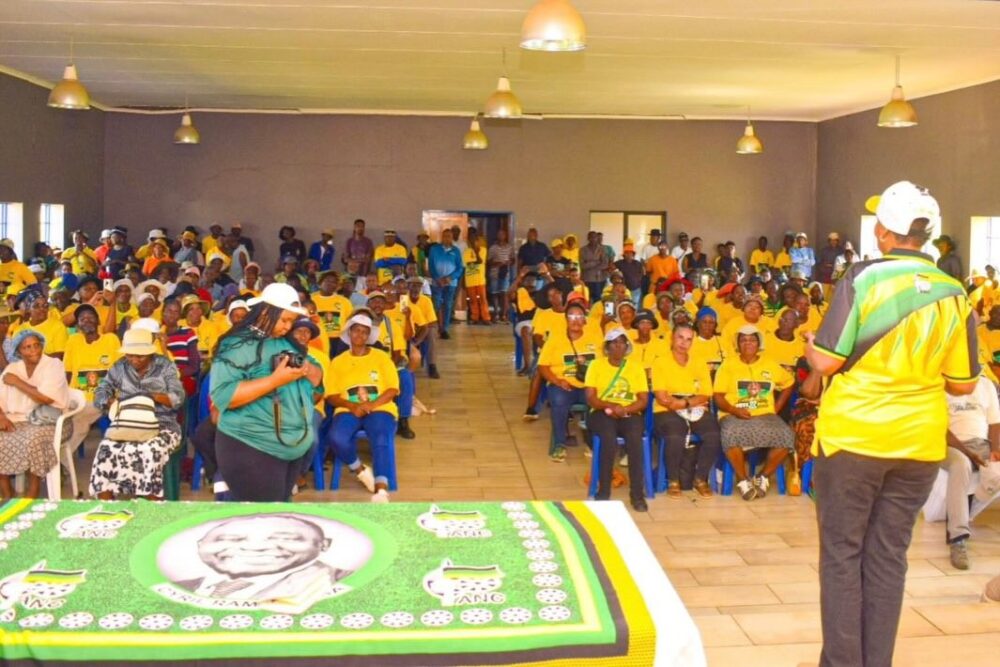 Grassroots engagement: The ANC has chosen well in taking their signature annual event to Moruleng, the writer says. Photos: MyANC
By convening in Moruleng, the ANC signals a return to its grassroots — away from metropolitan comfort and into a space where the promises of democracy remain unevenly realised. Land dispossession, traditional leadership, service delivery failures and the strained relationship between the democratic state and rural citizens all converge here.
Moruleng is more than a venue. It is a mirror — reflecting both the movement’s liberation legacy and the unfinished task of translating political freedom into material dignity.
Yet symbolism cannot mask political reality. The ANC enters 2026 governing as the senior partner in a fragile Government of National Unity, its electoral dominance broken and its moral authority contested. The January 8 Statement, once forged in exile as a compass for survival, must now speak to a movement tested at home — by declining support, coalition arithmetic and a deep crisis of governance.
The internal lobbying for successive plans for possible leaders and future political careers ahead of the 2027 elective congress is also in the mix of the birthday celebrations and uncorking of champagne bottles.
The challenges are stark. A make-or-break local government election looms later this year, against the backdrop of a chequered municipal service delivery record. The South African Communist Party’s decision to contest elections independently has fractured alliance certainties.
The commemoration this week of Joe Slovo at Soweto’s Heroes Acre – a towering figure who embodied strategic clarity, compromise and working-class politics – took place amid open tension between alliance partners.
ANC chair Gwede Mantashe’s accusation that the SACP is committing “political suicide” was met with a sharp rebuke from the party’s Solly Mapaila, exposing ideological drift and organisational strain at the heart of the liberation alliance.
Beyond alliance politics, the ANC confronts a triple crisis: a failing economy, a hollowed-out state and borders so porous they have become conduits for crime and institutional decay rather than regulated regional mobility. The festive-season border crossings laid this dysfunction bare — kilometre-long queues, unmanaged human flows, repeated interception of undocumented migrants and visible coordination failures across state agencies.
What should have been routine migration management became a global spectacle of state incapacity — fuelling organised crime, straining municipal services and deepening public perceptions of a government unable to assert basic sovereignty.
In this context, the January 8 Statement risks becoming spectacle rather than substance. In democratic South Africa it is broadcast live, amplified on social media and wrapped in choreography.
Yet its moral resonance has weakened. What was once a hard-edged political intervention has too often become a performative ritual — rich in slogans, poor in introspection.
Morogoro’s enduring lesson is not nostalgia. It is courage.
The courage to interrogate power — including one’s own. The courage to distinguish between organisational survival and national interest. The courage to confront cadre deployment failures, ethical decay and the widening distance between leadership and lived reality.
Liberation movements change; that is inevitable. The tragedy is not change itself, but amnesia — forgetting that the ANC’s most credible moments came when it was most self-critical, not most powerful.
As the journey continues from Morogoro to Moruleng, the January 8 Statement can still matter. But only if it remembers where it was born — in exile, without state resources, patronage networks or guarantees of power; bound instead by principle, purpose and accountability to a people still in chains.
That remains the standard. Not applause. Not hashtags. Not WhatsApp texting.
But whether the ANC can confront reality with the same clarity that exile once demanded — even amid the singing, the toyi-toying and the cutting of birthday cake and clinking champagne glasses.
As poverty, unemployment and shack-dwelling peak, one uncomfortable question lingers: does the choreography of celebration risk sounding, to the poor in the stands, like a modern echo of “let them eat cake”?
Historical footnote: Our opinion-editorial writer, Marlan Padayachee, has followed the ANC from South Africa into exile and back, reporting across the liberation struggle and its aftermath — from frontline coverage of anti-apartheid politics and sports to documenting President Nelson Mandela’s State visit to India in 1995.
Marlan Padayachee is a veteran political, foreign and diplomatic correspondent from the transition to democracy, freelance journalist, photographer and researcher.