

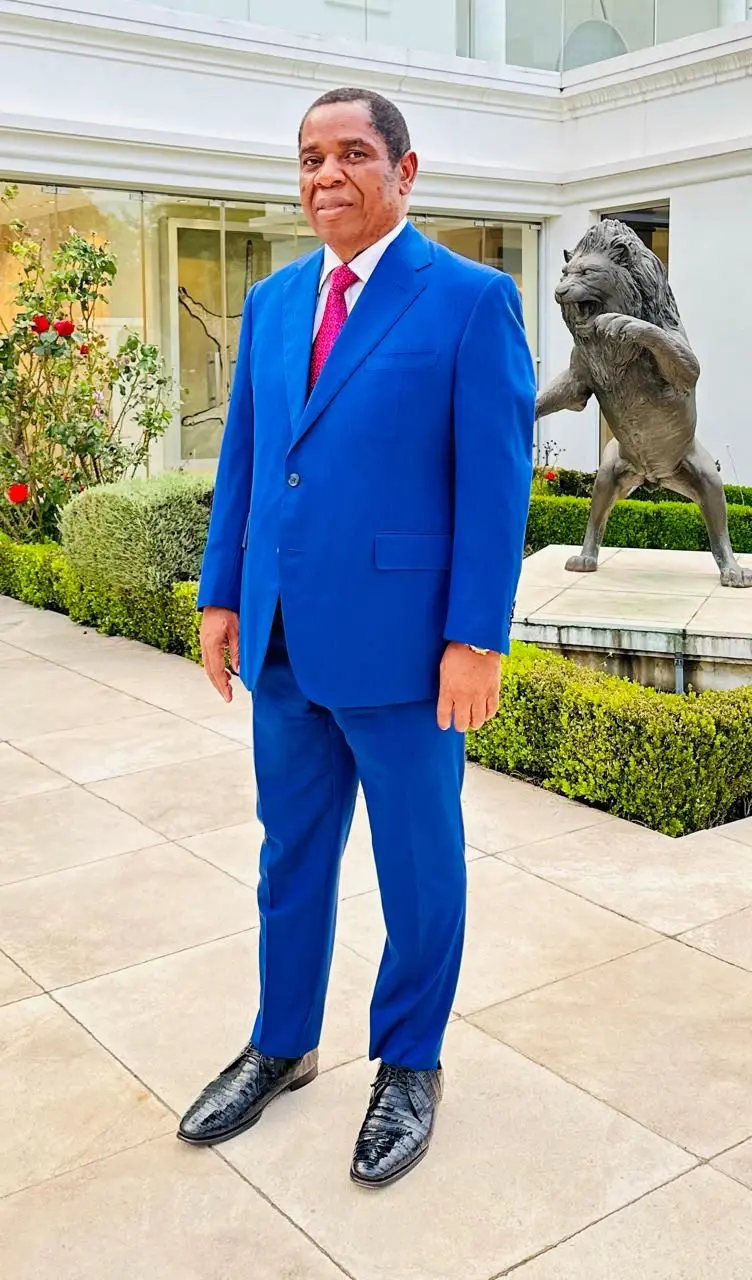


The final meeting ahead of the Africa Forward Summit which takes place in Nairobi, Kenya. (@ForeignOfficeKE/X)
Africa is awash with summits this year. If Europe wants to stand out, it must stay long after the photos have been taken. The Africa Forward summit taking place in Nairobi co-hosted by France and Kenya in mid-May will be a test of whether European governments can shift from symbolism to sustained partnership.
The summit boom and Africa’s growing leverage
Over the past decade, Africa+1 summits have multiplied. What was once exceptional has become routine. China, the United States, Russia, Turkey, Japan, India, Indonesia, South Korea and several Gulf states such as Saudi Arabia, now operate continent-wide diplomatic formats. Italy held its summit earlier this year on the eve of the African Union summit in Addis and within Europe, even smaller or newer partners have joined the trend: countries such as Latvia, Estonia and Slovenia have begun hosting Africa-focused forums, while Serbia’s “Serbia–Africa: Dignity Conference” has emphasised defence exports and Latvia’s Africa forum has doubled as a platform for diplomatic support ahead of its UN Security Council bid.
France’s upcoming Africa Forward summit in Nairobi—the first of its kind outside francophone Africa and Paris— signals an attempt to reset relations after years of political strain across parts of West and Central Africa. Co-hosting the meeting with Kenya signals an acknowledgement that France must politically engage Africa beyond its traditional networks and colonial geographies.
This proliferation of summits reflects a structural shift rather than a passing trend. In a fragmented international system defined by transactional politics and intensifying competition, African states are diversifying partnerships to maximise political autonomy and economic opportunity. Most pursue “à la carte” strategies, matching partners with needs across energy, infrastructure, security, food systems and digital development.
Summits remain a useful tool in this strained multilateral environment. They offer African leaders visibility, diplomatic leverage and access to financing. Alongside government-led gatherings, business forums and investment summits provide platforms for investors, policymakers and companies to discuss sectoral opportunities, from renewable energy and transport corridors to technology and health. Several such meetings are scheduled across Africa in 2026, underscoring how summitry has become embedded in the continent’s diplomatic calendar.
The problem of delivery
Yet the core challenge is no longer convening meetings; it is implementing what they promise. Many Africa+1 summits generate ambitious communiqués but weak follow-through. Commitments often lack institutional anchoring, financing clarity or monitoring mechanisms, reinforcing scepticism among African partners who have heard similar pledges before.
European initiatives face an additional difficulty. They are frequently framed reactively, as efforts to counter Chinese, Russian or Turkish influence. African governments, however, approach partnerships pragmatically and interest driven. Rather than choosing sides, they use geopolitical competition to secure better terms and diversify risk.
Summit diplomacy can also complicate continental norms. The participation of African Union-suspended coup governments at the 2022 Saudi–Africa summit and the 2023 Russia–Africa summit illustrated how bilateral interests can erode collective principles. Europe’s long-standing institutional partnership with the African Union could serve as a stabilising counterweight — but only if it is backed by consistent political engagement rather than episodic attention.
A crowded diplomatic year
The clustering of summits planned for 2026 is striking. Alongside Italy’s meeting in Addis in February and France’s upcoming Summit in Kenya, both Russia and Turkey are expected to convene Africa-wide gatherings, building on formats they have already institutionalised.
For Moscow, summit diplomacy has become a tool for maintaining political relevance despite international isolation. For Ankara, it complements a longer-term strategy of expanding diplomatic presence, trade and security cooperation across the continent.
The risk for Europe is not that African partners will “choose” Russia or Turkey instead. It is that Europe becomes just another episodic interlocutor – highly visible during summit years, largely absent in between.
From summitry to sustained presence
What many African partners increasingly value is continuity. Regular political dialogue, diplomatic presence and implementation capacity matter more than headline events. The agenda in Nairobi shows a shift from security-focussed engagement towards more encompassing cooperation in areas of financial reform, energy transition, green industrialisation, blue economy, agriculture and health.
Symbolism alone, however, will not suffice. If Europeans want to be perceived as strategic rather than performative partners, summits must be backed by credible follow-up mechanisms. That means shifting resources toward implementation: expanding embassies, increasing ministerial visits, strengthening development agencies and mobilising whole-of-government approaches that integrate trade, development, security and industrial policy.
Sustained European presence must also be matched by strong political commitment from African governments themselves. Mutually beneficial economic and industrial partnerships depend on domestic policy stability, regulatory clarity and regional coordination. Without this, even well-designed initiatives risk stalling.
Working with multipolarity – not against it
Africa’s diversification of partnerships is not a problem for Europe to solve; it is a reality to adapt to. European states themselves are seeking to diversify relationships globally, including with African markets and institutions. The most productive approach is therefore targeted cooperation in areas of shared interest: energy transition, infrastructure, trade facilitation, digital connectivity and industrial development.
Triangular cooperation offers one pathway. Joint initiatives involving African partners and third actors—such as Gulf states or India—can reduce zero-sum dynamics and pool financing and expertise. France’s decision to include India and Germany as guests of honour in discussions linked to the summit reflects this emerging logic.
Public–private partnerships will also be critical. Infrastructure and industrial projects, such as transport corridors or renewable energy investments, will only strengthen Europe’s credibility if they generate visible benefits for African economies, including jobs, value addition and technology transfer. Initiatives that appear designed primarily to secure European supply chains risk undermining trust.
A strategic moment for Europe
The clustering of Africa summits in 2026 is not coincidental. It reflects a continent whose geopolitical and economic weight is growing and whose governments are increasingly confident in setting their own agendas. But summits alone will not reshape global politics. They will test how Europe positions itself in a multipolar Africa – and whether it can move beyond symbolic engagement.
Africa does not need more high-level meetings. It needs reliable partners capable of delivering on commitments and staying engaged between summit cycles. For Europe, the task is straightforward but demanding back political rhetoric with resources, align initiatives with African priorities and remain present after the cameras leave.
If Europe wants to be taken seriously, it must trade performance for permanence.
Lena Krause is an Africa programme assistant analyst at the European Council on Foreign Relations.
*** An earlier version of this article was first published by the European Council on Foreign Relations (ECFR).