Boemo Diale’s Sitting on a hammock.
New galleries often arrive carrying the burden of performance. They open rehearsed, speaking in the polished language of prestige before anyone has properly entered the room. The walls are immaculate but cold. You spend more time trying to understand whether you belong there than engaging with the work itself.
Kumalo | Turpin does not feel interested in that performance.
Located inside the increasingly magnetic Nine Yards Precinct, the new Johannesburg gallery, founded by Zanele Kumalo and MJ Turpin, opens with a sense of warmth that softens the intimidation often attached to contemporary art spaces.
It is bespoke, yes. Carefully considered. Chic in the kind of understated way that allows the work to breathe. But it is also inviting. The space does not demand that visitors arrive fluent in the language of galleries. It simply asks that they enter.
Its inaugural exhibition, Gender/Genre, feels intentional in this regard. It features artists such as Boemo Diale, Eva Lundon, Láura Viruly, Kylie Wentzel, Moesha Magagula, Sepideh Mehraban, Sitaara Stodel, Swaline Mkhonto, Thulile Gamedze, Yolanda Mazwana and Ronél de Jager.
They say the show gathers women artists whose practices are reshaping the visual and conceptual language of contemporary South African art.
The exhibition does not attempt to flatten womanhood into a singular experience. Instead, the works move through texture, memory, politics and materiality in ways that feel deeply individual while existing in conversation with one another.
Some pieces feel confrontational. Others sit quietly in contemplation. Together, they create an exhibition that understands multiplicity not as a trend but as a condition of living.
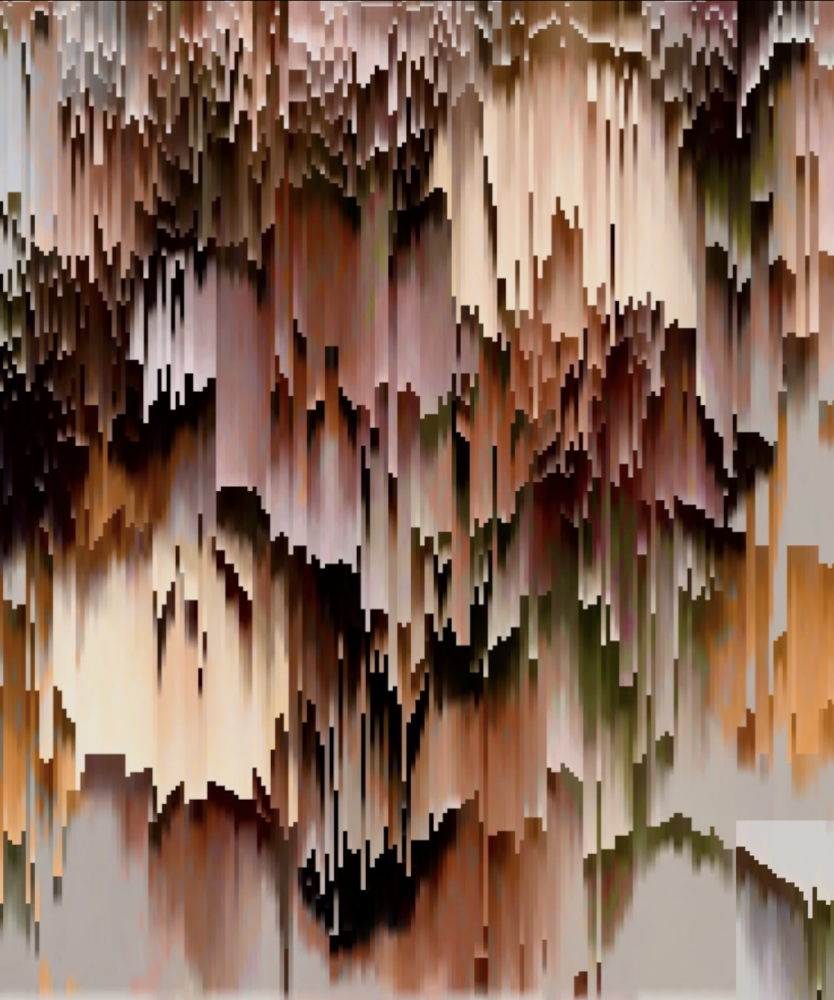 Ronel de Jager’s Spilt Tea.
In many ways, Gender/Genre also becomes a statement about the type of gallery Kumalo | Turpin hopes to become.
Speaking to co-founder Kumalo at the gallery’s opening, it quickly becomes clear that the gallery is less interested in exclusivity than in creating space for dialogue and growth. After she shared what she hoped the gallery would become, I asked her another question: What does she hope the space will not be?
The response arrives without hesitation: “I hope that it will not be exclusive,” she says plainly.
South African art spaces have long carried invisible borders. Sometimes they are economic. Sometimes social. Sometimes cultural. You can often feel them before anyone says anything. The discomfort of not knowing whether you are allowed to ask questions. The anxiety of entering a room that seems to know itself too well.
Kumalo hopes to resist that.
“At the end of the day, this is a business,” she says honestly. “But what we want to do is be there to support the artists.”
It is an important distinction because conversations around galleries often become trapped between commerce and creativity, as though the two cannot coexist.
Yet Kumalo speaks about art less as a singular market and more as an ecosystem that requires care from multiple directions. “It’s incredibly important to think about the whole ecosystem,” she explains. “Because it isn’t just about galleries. It’s about the artists. It’s about museums. It’s about the framers. It’s about canvases.”
The comment lingers because it acknowledges the labour that often disappears behind exhibitions. The people stretching canvases. The writers shaping interpretation. The framers, installers and fabricators whose work allows exhibitions to materialise physically. Art worlds are sustained by communities of labour as much as by artistic genius.
That understanding appears deeply embedded in Kumalo’s own relationship with art.
When asked how long the gallery has been in the making, she traces the journey back through years of immersion. Connecting with galleries. Writing about art. Creating relationships within creative spaces. Slowly understanding how she wanted to position herself in the larger cultural conversation.
The process, she explains, has been unfolding for years.
Perhaps that is why Kumalo | Turpin feels emotionally aware of the environment it is entering. Johannesburg’s art landscape remains both exciting and fractured.
The city continues to produce extraordinary artists and cultural thinkers, yet many spaces feel inaccessible to broader audiences. Certain galleries have mastered the aesthetics of openness while quietly maintaining systems of exclusion.
Kumalo seems aware of the tension.
What makes the gallery compelling is not simply its polished architecture or its carefully curated opening exhibition but its willingness to remain porous. To allow room for uncertainty, experimentation and conversation.
Johannesburg itself feels important to this story. Few cities hold contradiction as intimately as this one does. Wealth and precarity exist side by side. Beauty and exhaustion
coexist constantly. The city moves quickly but also carries deep emotional residue beneath its surface. Artists remain drawn to Johannesburg because it continues to feel unfinished.
The conversations are happening in real time.
Inside Kumalo | Turpin, the energy becomes palpable.
The gallery feels aware that contemporary South African art cannot survive through gatekeeping alone. Audiences are changing. Younger visitors are entering galleries differently. They are less interested in inherited rules and more interested in emotional honesty. Spaces that continue performing elitism risk becoming irrelevant to the very cultural futures they claim to protect.
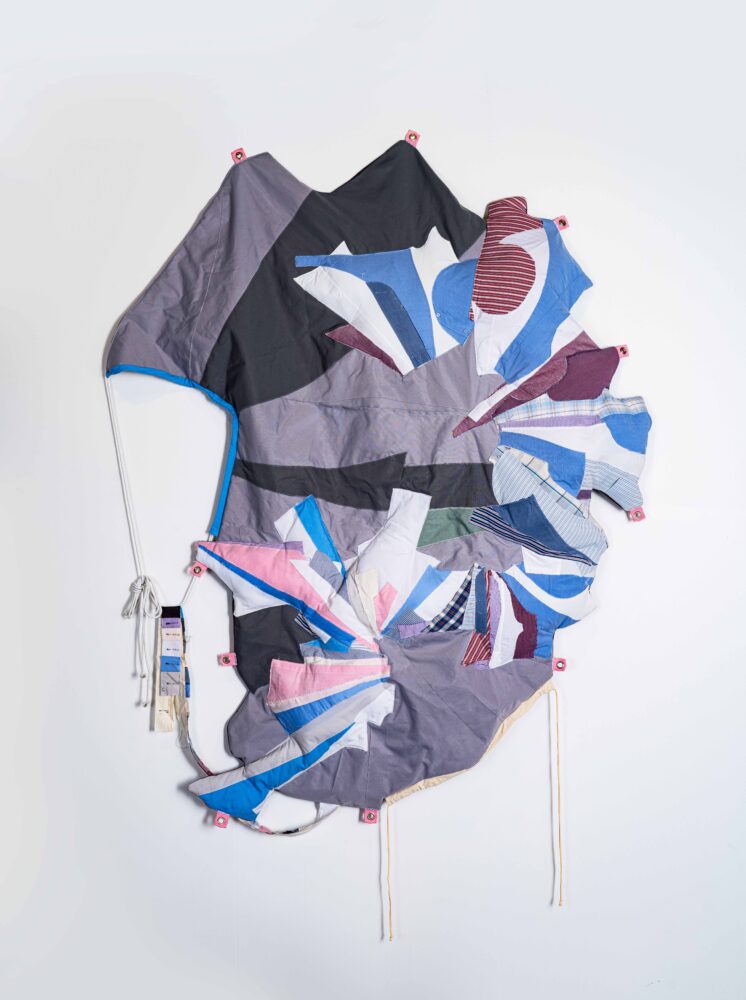 Thulile Gamedze’s Vagal Outflow.
Perhaps this is why Gender/Genre feels like such an effective opening statement. The exhibition resists singular readings. It allows contradiction and softness to coexist.
The artists included in the show move through abstraction, intimacy, politics and embodiment without forcing themselves into easy categorisation.
The sense of openness extends beyond the exhibition and into the atmosphere of the gallery. The space invites people to spend time. To move slowly through the works rather than treating them as content to be consumed quickly and photographed immediately.
In a cultural climate increasingly shaped by speed, that slowness feels radical.
Kumalo also speaks about wanting the gallery to become part of a larger conversation happening in the world. A place where artists can “share dimensions in our voices” and where the space itself becomes responsive to the shifting realities around it.
It is an ambitious vision but perhaps ambition is necessary for new cultural spaces to survive meaningfully. Especially in Johannesburg, where the city constantly asks people to imagine beyond limitation.
As our conversation comes to an end, what remains most striking about Kumalo | Turpin is not that it feels complete. It is that the gallery feels in formation. Open to becoming. Open to listening.
And maybe that is exactly what makes it exciting. Not the certainty of what it is but the possibility of what it could become.