Trouble brewing: Nogwengcela Buhlanu usually sells hundreds of buckets for umqombothi during the Eastern Cape’s initiation season every December, but this year, his business has been wiped out. (Photo: Mkhuseli Sizani)
For one week, Nelson Mandela Bay has been the only area in the country that has been put under a stricter lockdown. Taverns have to close early, alcohol can only be sold at specific times, and the initiation season has been put on hold.
The coastal town is usually a tourist destination at this time of the year for business and entertainment. In townships, women ululate and beat drums welcoming the initiates back from the mountain.
Taverns and shebeens are flowing with patrons spending money and merrily drinking as celebrity events attract scores of fans. Xhosa traditional outfits, beads, sorghum beer, buckets to drink umqombothi, grass mats, clay and sticks for graduated initiates usually sell out fast.
But everything has been brought to a halt until the escalating number of Covid-19 cases sweeping across the province with Nelson Mandela Bay as the centre is under control.
The numbers and the taverns
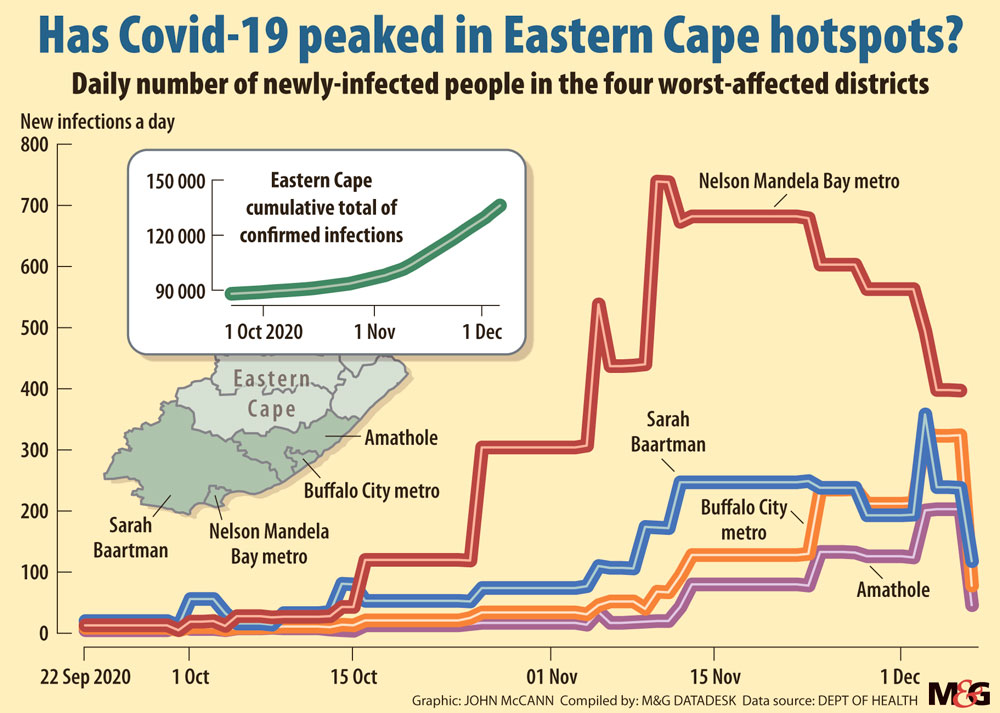
More than 140 000 people have been infected with the virus in the Eastern Cape. Since level one lockdown on 21 September the province has seen more than 48 000 new cases with close to 50% of those cases from the Bay.
The province has about 40% of the newest cases in the country since it moved to level one lockdown.
A week ago, President Cyril Ramaphosa made it clear that the Bay’s numbers were out of control and a localised lockdown with more stringent restrictions would be the only way to curb the spread.
Government has since suspended the circumcision of initiates in the city and put stricter restrictions on social gatherings and the selling of alcohol. The economy and tourism have been severely affected both in the informal and formal sector.
As taverns are superspreaders, several celebrity shows have been cancelled. Last week, Uzalo actress Thandeka Dawn King cancelled a show at Govan Mbeki township’s Emaleydini Tavern and Masinga’s Butchery. A week before, her co-actors attracted scores of fans at the same venue.
Zolani Willie, the owner of Emayuyu Homebrewed Entertainment, had to cancel the annual Uitenhage Picnic scheduled for 23 December which, usually brings in crowds of more than 7 000 people.
“This is a big blow. Not only for me but for my 50 casual workers and economy of Uitenhage. The show draws the influx of people into the area,” said Willie.
The business of circumcision
The deaths of young men have always marred the Eastern Cape circumcision season. This year measures to curb the spread have called a halt to the highly anticipated season. This has been a big blow to business.
Nogwengcela Buhlanu, 67, of KwaZakhele township said the suspension of the circumcision practice had killed his business.
“My buckets to drink umqombothi and pots used to sell like hotcakes during this season. I used to sell about 200 buckets for drinking umqombothi and to carry food for the initiates. I would sell all of them in two days and make R3 500 profit.”
“But now I only sell four or five a day to people who want them for other traditional functions. I have three kids at home in Engcobo and five grandkids.
“We used to have a merry Christmas, but this one is a black Christmas,” he said.
Andile Penxa owner of the Wedge Store in Salamntu Street said his mealie meal and sorghum beer business had ground to a halt and R45 000 worth of stock is gathering dust and is in danger of being damaged by rats.
“There is an ingcibi known as Snake who does not circumcise less than 300 initiates in December. I formed a partnership with him, and the parents of his initiates were buying mealie meal and sorghum beer from me to prepare for umgidi [the homecoming for initiates].
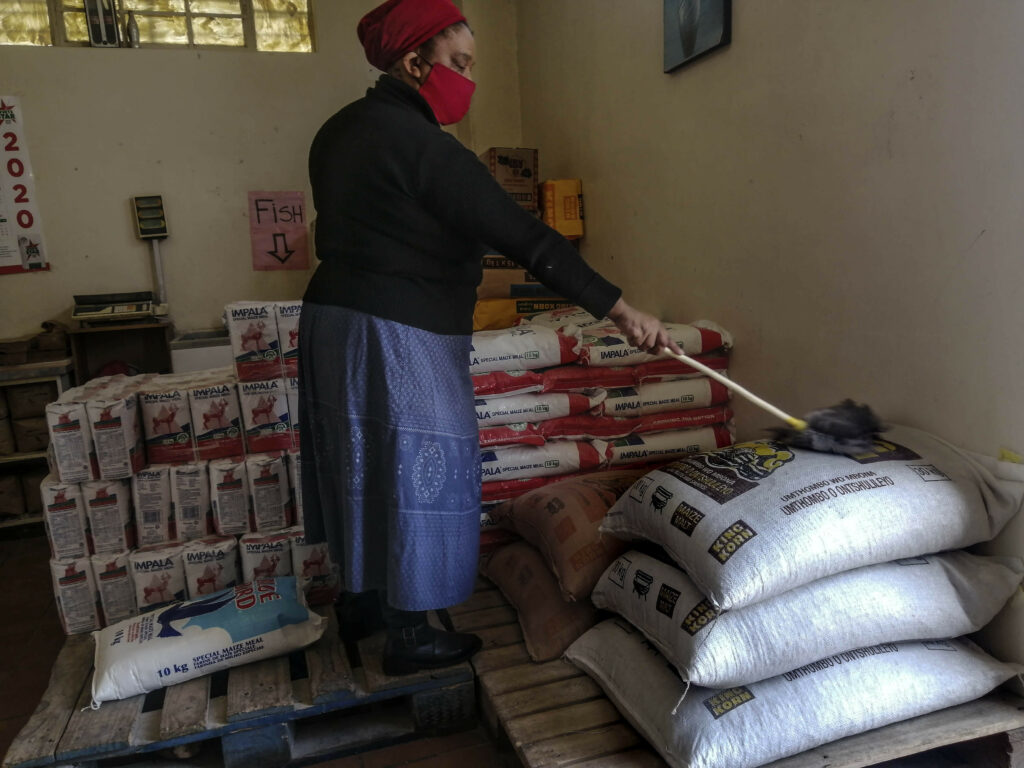 Nokuzola Mhabisa removes dust on stock at Wedge Store in Salamntu Street. (Photo: Mkhuseli Sizani)
“If this lockdown continues I would be forced to cut down my staff of three and the pool of casual workers that help me offload and pack my stock,” he said.
Lilly Makeleni, 53, owner of the Mampehle Herbalist in KwaZakhele township, said she regularly made more than R5 000 profit from the sale of her grass mats and sticks for initiates.
“With that money, I support my child and extended family. The money that I make on selling muthi won’t be enough to support my family. About 13 of my relatives have lost their jobs due to lockdown and are all supported by me,” she said.
Policing the restrictions
Chief Velile Mfunda, chairperson of the Cacadu traditional leaders, said in the few days after the restrictions were imposed they had already arrested three iingcibi (traditional surgeons) for illegal circumcision and rescued five initiates in Uitenhage and Port Elizabeth.
“Two of the iingcibi were from Uitenhage, and one of them is the chairperson of circumcision in the area. A third one was arrested in KwaMagxaki initiation school for illegally circumcising three initiates. He had photocopies of old initiation forms signed by mothers of these initiates,” said Mfunda.
He added that the men had been charged for contravening the Disaster Management Act, and the boys were removed from the school and put under the supervision of their parents.
“We are continuing raiding these illegal initiation schools. Yes, we have a backlog of uncircumcised boys, but it is better than having a high mortality rate of initiates who died of Covid-19,” he said.
Zukile “Snake” Bangani from KwaZakhele said he normally circumcises between 200 to 500 initiates a year at a cost of R500 per initiate.
“But now I am broke because of this lockdown. About six parents who had paid their deposits want their refunds, and I have used their money. I am 25 years married, and I thought I would make a significant wedding anniversary this month. But I couldn’t because this is the only source of income for my family of four and me.”
“Some of the parents even suggested that I go with them out of town and circumcise their children. But I told them we must respect the law.”
However, not everyone is obeying the law and the restrictions.
Pieter Muller of Missionvale township said nothing had changed much in his neighbourhood. “Curfew only affects motorists. We are enjoying the festive season the way we are supposed to. We invite our friends and party the whole night at our homes. All over this municipality, you will find people having braais and drinking together. There are no police to enforce it, that means we are free.”
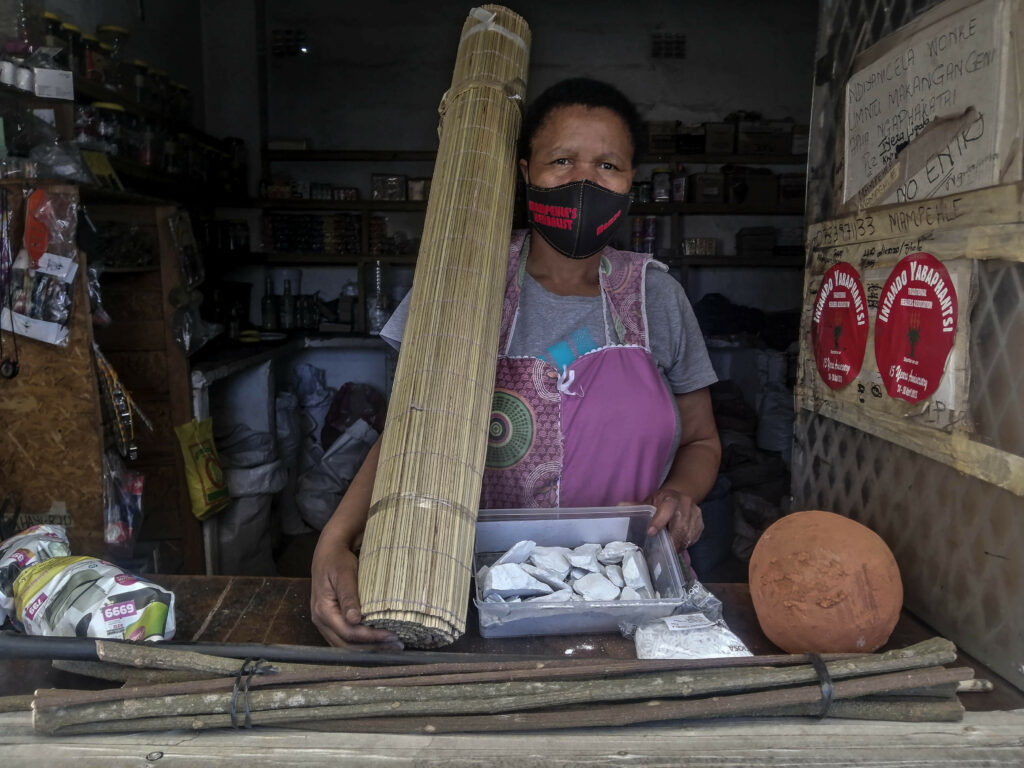 Lilly Makeleni of Mampehle Herbalist stuck with her sticks, clay for initiates, beads and grass mats. (Photo: Mkhuseli Sizani)
Zukiswa Singata from Zwide confirmed this, saying that since March when the hard lockdown was imposed nationally, it has not been useful there.
“It is business as usual because there are no police to enforce the curfew in the townships. It’s worse now it’s the festive season, and we want to be free and party. But if police are enforcing it, then we will comply because we don’t want to go to jail in December.”
However, municipal spokesperson Mamela Ndamase said the metro police have expressly noted the new curfew hours, restrictions on alcohol sales and drinking in public.
“As such, we have immediately amended our operational focus to address these issues. The metro police has further engaged with the SAPS to strengthen the law enforcement efforts starting from the past weekend, as well as engagements with Eastern Cape Liquor Board to assist in various operations.”
Ndamase added that vehicle checkpoints had been set up and 52 vehicles were stopped on Sunday alone.
[/membership]