Without providing any specifics as to which form it would take, the United States embassy has warned of a possible terror attack in Johannesburg’s wealthy Sandton area this Saturday.
 Dr Nthabiseng Moleko: ‘Discard SAP-type economic management of the economy’
Let’s not repeat the mistakes of the past
In the 1980s we saw the devastation that hit many African economies when they adopted structural adjustment programmes (SAPs). Despite the hopeful dreams of democracy, new leadership and the discoveries of oil, platinum, copper and diamonds, this mineral surge was inadequate to bring the economic revival our continent desired. Financial mismanagement, coupled with the blind adoption of SAPs, worsened many nations’ economic conditions. The inadequate increase in per-capita gross domestic product (GDP) growth was coupled with stagnant or worsened welfare of the poor.
The supply-side response showed terms of trade decline and agricultural and industrial exports stagnate.
The question is, are we going along the same path, and if so, why, in light of the historical outcomes?
South Africa’s economic crisis was evident in 2018. By the time pandemic reached our shores, we faced an economic recession and lacklustre growth resulting in more than 10-million people without jobs. The lockdown added to the current downturn, resulting in revenue losses estimated at R304-billion and GDP contractions of 7.8%.
The response of the South African economic cluster was to opt for a similar path to SAPs.
We approached the International Monetary Fund (IMF) for loan financing of about $4.3-billion despite a capital market surplus of R8-trillion. It appears we are privatising vital state-owned entities, and the austerity measures being implemented, simply put, match precisely what the IMF required of African nations in the 1980s.
We persist blindly along this path, hoping our fortunes will change. In a climate where output determines revenue, the revenue generated by a services-led economy that was inadequate before Covid-19 is worsened by the slow recovery of an inadequate stimulus package.
We cannot rely on external inflows but must use our investment to crowd in partners. We need to look inwards by using the R200-billion in our existing fiscus to reignite the local economy, get our people working using the social cluster, reorganise our current budget towards local economic activities, and target youth unemployment.
We should invest R100-billion from the Public Investment Corporation into manufacturing and local companies over the next five years. The money can be sourced from disbursing our savings into financial injections to reform our growth path.
We must forge a new path. This requires agreeing to discard SAP-type economic management of the economy, which will end in disaster.
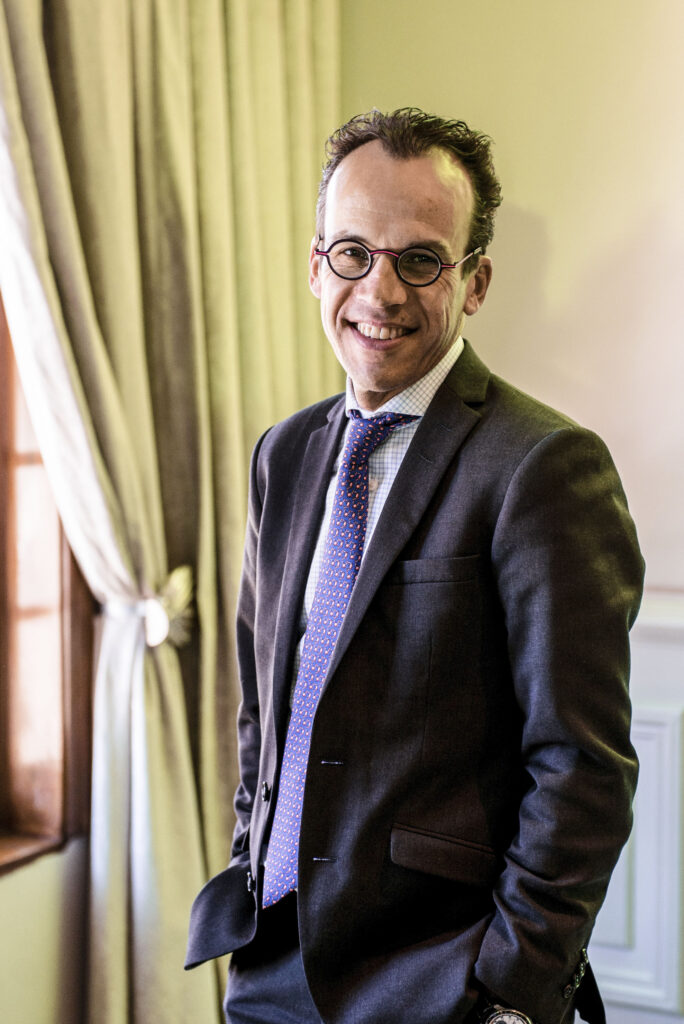 Dr Martyn Davies: ‘Real structural reform will remedy the apparent financial risk’
A reset or a replay for South Africa?
The World Economic Forum titled its (now delayed) annual meeting in Davos “The Great Reset”. With the second wave of Covid-19 that is now overwhelming many developed and developing economies, a more accurate description could be “The Great Replay”.
This year is rapidly turning out to be as dramatic — in a bad way — as the notorious 2020.
GDP contracted somewhere close to 10% last year. However, I argue that GDP calculations will in future have far less meaning as an accurate measure of an economy’s health.
But to make economic predictions, one needs to predict the behaviour of the virus, which is impossible. Economics will thus only become more certain following a successful vaccination campaign. What, then, is to be done to support growth beyond a vaccination strategy?
Our economy is not in a cyclical crisis, but a structural one that has been deeply worsened by the pandemic.
The damage that Covid-19 has done to the national economy provides an opportunity, no, an imperative, to proceed with boldness to implement a dramatic reform agenda in South Africa.
Without deep structural reform, South Africa will underperform in growth terms in the future. This will result in an increased divergence from the global economy.
I propose three broad policy proposals.
First, considering the fiscal constraints that the country faces — caused by errant state spending over the past decade — directing capital toward key implementable and economically enabling infrastructure programmes will unlock economic growth. Much of this should focus on alleviating supply-side constraints to exports, such as rail and port infrastructure.
Second, policy reform to allow for the participation and investment of private capital into (traditionally) state-owned infrastructure will drive efficiency through enhanced competition. And recognising the South African government’s inability to use fiscal policy to drive growth, such reform does not cost anything; in fact, it’s free.
Third, sweeping reform of government institutions and downsizing of costly state-owned enterprises will not just save the fiscus much-needed money but enhance efficiency and contribute to a capable state.
Real structural reform will remedy the apparent financial risk that we face and inject the necessary confidence into domestic and foreign capital to invest for the long term in our economy.
Another decade of rebuilding awaits
After a “lost decade” in terms of economic development, during which GDP per capita did not grow between 2009 and 2019, South Africa’s economy is witnessing the shocks of a crisis that could eviscerate the dreams of its liberation.
With GDP per capita expected to decline by up to 10% during 2020, South Africans will be only 15% richer than they were in 1994 after enduring one of the world’s most brutal lockdowns and an inadequate economic response.
In six months, the lockdown wiped out all the jobs that had been created during the previous 12 years. But there is nothing to show in terms of improved public health outcomes.
South Africa has had more than 1.1-million infections (16th in the world) and more than 30 000 deaths (15th in the world). There have been more than 72 000 excess deaths since 6 May 2020.
The national treasury says: “The economy will only recover to 2019 levels in 2024.”
Given that the treasury’s forecasts have been wrong every year for the past decade, and that the population will continue to grow at about 1.4% a year, it will take much longer for the economy to return to 2019 levels of GDP per capita.
Current policies of unprecedented austerity — planned cuts of R274.1‑billion from public sector wages over the next three years — will impede recovery. South Africa is likely to have a second “lost decade” until 2030.
The world economy is set to grow by 4% in 2021 and emerging and developing countries by 5%, according to the World Bank’s latest Global Economic Prospects report. But there is more uncertainty about South Africa’s immediate economic outlook than ever before.
With the country having returned to a soft lockdown and the government unlikely to stop the Covid-19 pandemic in its tracks, deliver vaccines to most South Africans by the end of 2021 or provide stimulus measures to support households, there is an unfolding disaster scenario for the economy.
Treasury will have to revise its GDP growth forecast of 3.3% for 2021 downwards. All the numbers in the medium-term budget policy statement will have to change. The only way out of the crisis is for the government to change course. It must implement effective public health measures to reverse the pandemic and inject new money into the economy.
[/membership]