Military intervention: The South African National Defence Force is assisting the police in trying to maintain order. Soldiers and police officers detained suspected looters (right) at Soweto’s Jabulani Mall on 13 July 2021. (Luca Sola/AFP)
The South African National Defence Force (SANDF) has started its biggest single mobilisation since 1994 of some 25 000 soldiers in an attempt to quell the violence in KwaZulu-Natal and in Gauteng.
From an initial 2 500 soldiers deployed, the figure escalated to 25 000 after President Cyril Ramaphosa, in his position as the Defence Force’s commander-in-chief, expressed dissatisfaction about such a small number while looting and criminality continued to spiral out of control.
The mobilisation of Defence Force soldiers, its reserve force members, air force aircraft, including helicopters, and support personnel to KwaZulu-Natal, however, will also become a logistical nightmare of its own, senior officers told the Mail & Guardian this week.
The N3 highway from Harrismith to Durban has been closed to traffic for the past few days. Currently, there is little to no fuel in some of the most affected areas in the province such as Empangeni, Pinetown and Pietermaritzburg.
Shell and BP South African Petroleum Refineries announced a shutdown of its refinery due to safety concerns for its staff and damages to its vehicles on the roads, the company announced in a statement on Wednesday. More than 35 trucks were set alight on the N3, especially close to the Mooi River plaza toll gate.
Fuel, and the availability of fuel, is of crucial importance to the military as its vehicles, armoured personnel carriers and support vehicles run on diesel and petrol, said the officers. None of the military bases in the province has nearly enough fuel supplies to keep a mass of vehicles on this scale fuelled up.
The defence budget has been cut to shreds in the past few years, and therefore limited stocks of consumables such as ration packs or dry rations to provide food for thousands of soldiers were available this week.
An urgent order for 10 000 of these packs was placed this week in anticipation of the mass deployment. One of the packs is enough to feed one soldier for one day.
Nosiviwe Mapisa-Nqakula, the minister of defence, told parliament’s joint standing committee on defence on Wednesday that Ramaphosa has indicated that the Defence Force should not worry about finances at this stage.
According to the officers, even the availability of heavily armoured vehicles such as Ratel personnel carriers, Mambas and Rooikat fighting vehicles was a challenge as the same budget constraints have left the Defence Force with only the minimum deployable fleets.
Behind on maintenance and repairs
The demise of Denel, which was responsible for the maintenance of most of these vehicles, the air force’s helicopters and the supply of ammunition and other equipment, has left the military hardware sorely behind on scheduled maintenance and repairs.
On Wednesday, the military scrambled for as many mini and large busses as possible to assist with the deployment of soldiers as the air force only has two serviceable Hercules C-130 cargo aircraft left.
These two aircraft have been flying nonstop since Tuesday to move soldiers from bases all over the country to Gauteng and to KwaZulu-Natal.
In the meantime, the Defence Force’s mechanised battalion group based at Lohatla Army Combat Training Centre in the Northern Cape is expected to also start its journey of 2 000 kilometres to KwaZulu-Natal. The group is expected in that province at the earliest on Friday.
The officers stated that it is of crucial importance to reopen the N3 highway before the Defence Force can deploy en masse.
Recovery vehicles from 5 South African Infantry Battalion based at Ladysmith, KwaZulu-Natal have been moving burnt trucks and clearing the debris from the road since Wednesday.
The rules of engagement of the Defence Force were gazetted on Thursday. These stipulate in detail what the military will be allowed to do as part of its support to the South African Police Service (SAPS) under the current disaster management regulations. They include patrols, preservation of life and the protection of property and national key points.
Up to now the military was mostly only used to protect government installations and national key points, but will now be asked also to protect all lives and property.
The initial deployment period of soldiers will be from 12 July to 12 October, depending on the evaluation of the safety situation.
“Upholding and enforcement of the law within the Republic remains the primary responsibility of the SAPS. When the SANDF is employed in cooperation with the SAPS, SANDF members have the same powers and authority as the SAPS, excluding the investigation of crime.
“Notwithstanding this, SANDF members may perform tasks and duties they are adequately trained and equipped for… [Soldiers should ensure they] exercise personal restraint and do not assault members of the public [and] use less than lethal ammunition where possible,” states the gazette.
Soldiers are not issued with crowd control ammunition and only use assault rifles and live rounds. They are warned to “exercise a high tolerance level to provocation/insults and/or disrespect aimed at you or SAPS members.”
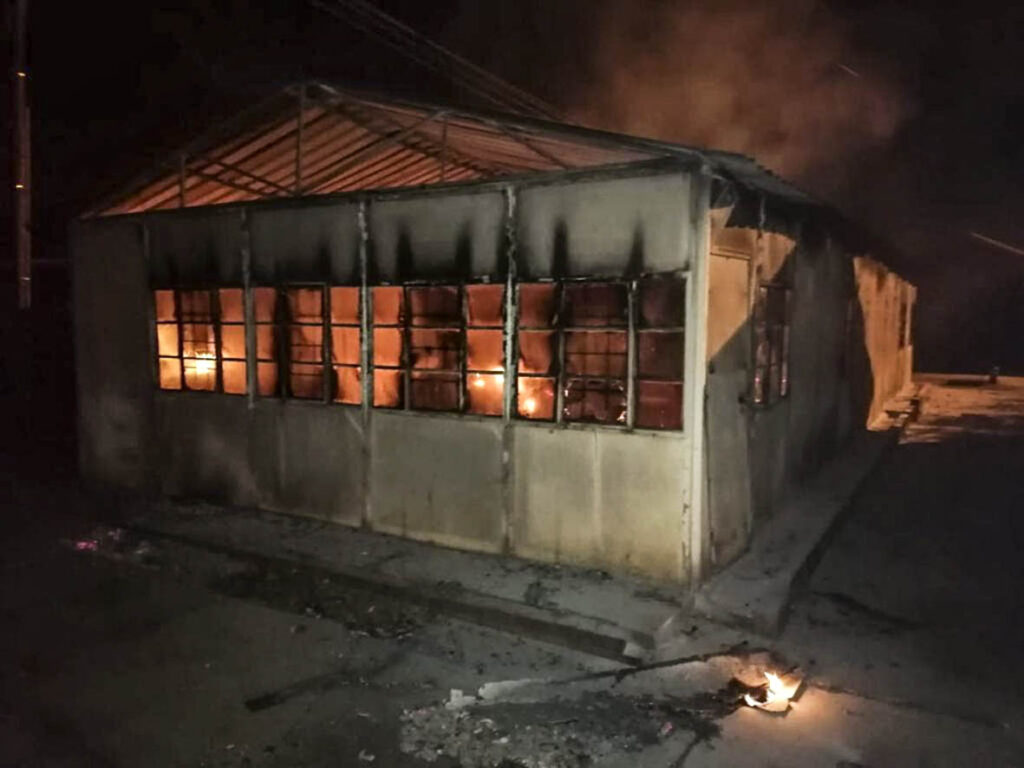 Who will guard the guardians? At the Joint Support Base Garrison in Pretoria, a soldier doing guard duty sabotaged the unit’s fire truck and set fire to the guardhouse, presumably in solidarity with looters.
12 000 called up
The Defence Force has issued call-up instructions to all of its reserve force members, totalling some 12 000 individuals, on Wednesday. According to military analyst Helmoed-Römer Heitman, this would probably result in about 8 000 responses.
“But it should also be kept in mind that a number of these members are already deployed in protection of the country’s borders and as part of the UN’s intervention brigade in the Democratic Republic of Congo.
“The 25 000 figure was the total deployment. The army has about 37 000 regular soldiers. Add 12 000 reservists and deduct 3 000 or so for border duties and the DRC, we have a total of 46 000 warm bodies,” he said.
“But not everyone can deploy and some have to run and protect bases. Then you have to rotate and divide each rotation into at least two shifts. That cuts us down to a realistic maximum of 9 000 to 10 000 at any one time for a short period in both Gauteng and KwaZulu-Natal,” said Heitman.
Specialised units such as the South African Special Forces Brigade (known informally as the Recces) and the 44 Parachute Regiment have been placed on standby, but are not expected to be utilised as a part of the mass deployment, military officers told the M&G.
They said the military has to also factor in the possibility of some soldiers’ resistance to act against looting individuals based on their own convictions and ethnicity.
In one such incident this week a lone soldier doing guard duty at the entrance to the Joint Support Base Garrison in Pretoria set fire to the guardhouse after sabotaging the unit’s fire truck, presumably in solidarity with similar acts of vandalism elsewhere. The soldier was arrested by the military police at the scene, but the guardhouse was destroyed in the fire.
[/membership]