Fleetwood Grobler Sasol Group CEO at the company's annual financial results presentation at the head office in Sandton. (Photo: Freddy Mavunda/Business Day)
Fleetwood Grobler describes his last 23 months as Sasol chief executive as “a rollercoaster”. One only has to look at the petrochemical giant’s share price — which plummeted even further from a 10-year low amid the 2020 oil price crash — to know that this is true.
When Grobler took office in late 2019, he was saddled with the challenge of squaring away the United States Lake Charles chemicals project. Prior to his tenure, Sasol shareholders had their holdings shrink by 90% as the company grappled with increasing debt levels while completing the project.
“When I got the job, we had the challenge of delivering Lake Charles … I have delivered that. The company has delivered. Lake Charles is running. It has contributed to our profits. It’s really adding value to the reset of the company,” Grobler told the Mail & Guardian.
“We have gone through a crisis, a pandemic. Oil prices went negative. We announced drastic measures with respect to Sasol 2.0 to reset the company.”
Last week Grobler announced a new twist in Sasol’s course: the decision to triple its 2030 greenhouse gas emission reduction targets.
For South Africa’s biggest private polluter, this will require overhauling its coal-reliant business and transitioning towards natural gas and eventually to green hydrogen.
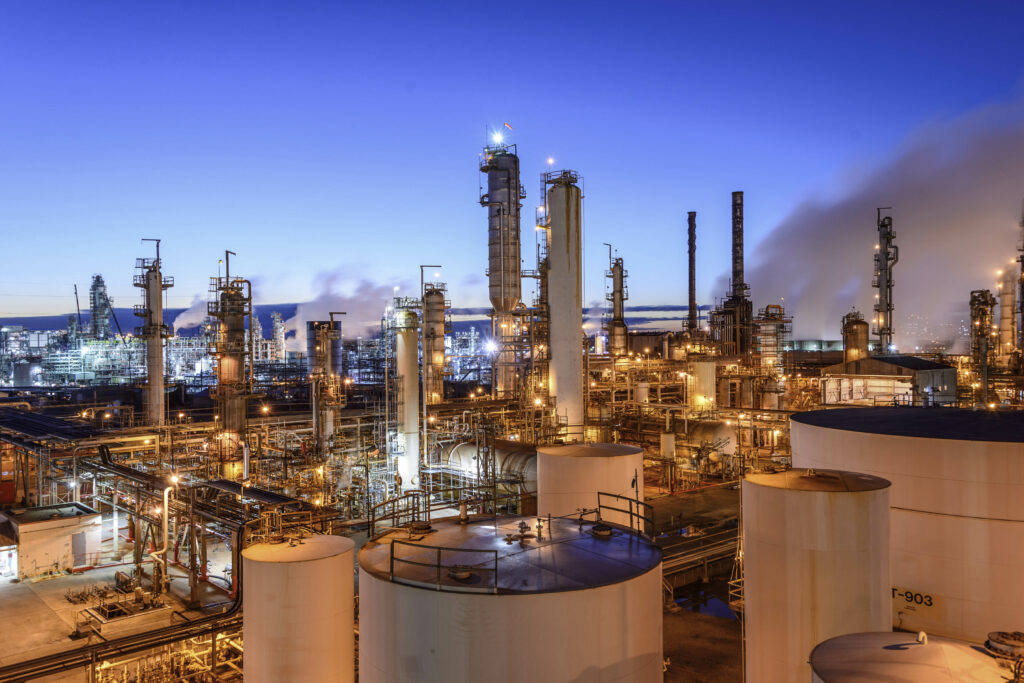
Sasol and national power utility Eskom together accounted for more than half of the country’s greenhouse gas emissions. In 2020, Sasol’s Secunda plant was the largest single emitter of greenhouse gases in the world. At 56.5-million tonnes of greenhouse gases a year, the plant’s emissions exceed the individual totals of more than 100 countries.
Green hydrogen has been tipped as a future export commodity for South Africa, which is well-endowed with the platinum group metals needed to produce it. According to Sasol’s climate change report, released last week, the company plans to leverage its Fischer–Tropsch technology (used to process gas into liquid fuels), which can be used to consume green hydrogen.
“Green hydrogen is not yet cost effective and requires further progression along the electrolyser and renewable energy learning curves. However with scale, partnerships and greater financing opportunities, its affordability can be significantly improved,” the report notes.
Responding to Sasol’s announcement, the Centre for Environmental Rights said it was “heartening to see a corporation responding to the global race towards net zero, increased government regulation and pressure to reduce carbon emissions”.
“We started participating as activist shareholders during Sasol’s AGMs a few years ago and we can see the change in how they are responding to climate related financial and other risks,” the centre said, further noting that Sasol “clearly recognises that the only financially viable option for its business, particularly in South Africa, is to ensure an urgent and just transition to renewables, green hydrogen, biomass and direct air capture.”
Talking to the M&G this week, Grobler said his job was to create a Sasol fit to survive in the future. “It is a daunting task, but I believe that we have got all the building blocks to be able to walk that road and to be successful in the end.”
The only variable, he said, is the price of green hydrogen and how that changes over time. “If that comes down, it becomes more viable to do what we have announced … There is so much momentum going for green hydrogen and for carbon reduction that I believe can be a catalyst for our vision of getting to a net zero position in the end.”
It has been important for Sasol to communicate to the market that the company can reinvent itself, Grobler said, noting that the management team has been preoccupied with Sasol 2.0, an overhaul of the business.
The Sasol 2.0 aspirations, including reducing the company’s fixed costs by 15% to 20% and restoring dividends, are expected to be delivered by the end of 2025. “We are tracking on that. We haven’t delivered it all. There is still a road ahead to fully deliver … but I feel we have turned a corner,” company’s boss said.
The capital required for Sasol’s 30% emissions reduction target is estimated at between R15-billion and R25-billion. The company, which has not declared a dividend since March 2019, plans to do so again once the capital required for the emissions reduction has been serviced.
Grobler said Sasol only has two options: stay relevant by adapting as pressures to go green mount or do nothing and go out of business.
“We have decided that we will work with our talents, our technology and our natural endowments in South Africa … and that will enable us to reinvent,” he added.
“And that is the choice we have made. And yes, it will cost a lot of focus and investment and work to get there. But that is the option that is feasible, compared to just going out of existence.”
[/membership]