The supreme court of appeal on Wednesday upheld the state’s appeal to the controversial acquittal of a paramedic accused of raping his girlfriend in the case of S v Coko.
A man whose lengthy legal battle to get custody of his six-year-old daughter hit another snag when it was dismissed in the Polokwane high court recently is set to lodge an appeal in the supreme court of appeal.
At the beginning of June, Judge Matsaro Violet Semenya, in the high court in Polokwane, dismissed MM’s application for leave to appeal a 2019 ruling that denied him the right to custody of his child. MM cannot be named to protect the identity of his minor child.
The legal battle ensued when the child’s mother, who was in a relationship with MM, died when the child was three months old. MM lodged a legal battle to get custody of the child after the grandparents refused to let him see her.
The case brings into focus the difficulties facing fathers seeking custody of their minor children. The department of social development is in the process of finalising the Children’s Amendment Bill which will clarify the parental responsibilities of unmarried fathers. The amendments would mean that unmarried fathers would have the same rights as the mothers.
MM, who is a father of four, argues that he is a fit parent who can take care of his children, including his last-born. He said the maternal grandfather was angered by the pregnancy and has never acknowledged him as the biological father.
This is rregardless of a 2018 interim court order granting MM access to the child on alternating weekends and school holidays. Chapter three of the Children’s Act 3 states that any person who has custody of a child and refuses access to them contrary to a court order may be found guilty of an offence, may be fined or convicted and imprisoned for up to a year.
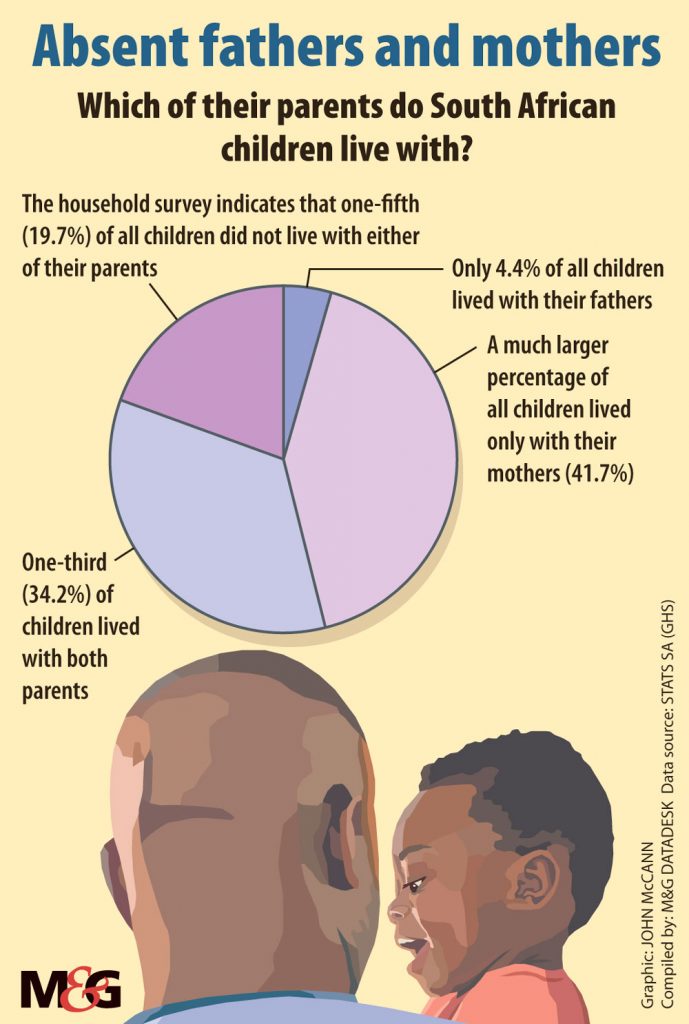 (John McCann/M&G)
“My legal team told me that they would engage the grandparents’ attorney to see if she cannot convince them to adhere to the interim court order that is in existence. Failure for them to comply would lead me to open a case of contempt of court against them,” he said.
“I know it’s not going to be a quick process but I am ready for it because it’s going to be worth it. If I don’t pursue this correctly the consequences are overbearing,” MM said.
MM said he has complied with all legal demands since 2019 but believes he has not been treated fairly by the courts since the case had been moved from Thohoyandou to Polokwane, including other instances where he and his legal team were not notified of due processes.
“I believe the idea was to dismiss my application of leave to appeal due to non-appearance before the court. I feel that the judge came in with a certain attitude because she came in after the previous judge recused himself due to him labelling me a cock and my daughter a hen,” MM added.
“Although the judge dismissed our application for leave to appeal, we are not bothered. We expected it especially when we saw that the opponents were not in court and were not opposing,” MM said.
His lawyers, Malose Monene and Sigwavhulimu Maano, said the only inference that can be made from the judgment is that the judge ruled against him because he is an unmarried father.
“In her judgment, there was nothing that she said which discounted him as a parent that can take care of a child, or discounted him as a parent that can have primary custody as they used to call it,” Monene said.
The legal team believes that had the father been married to the mother, the issue of custody or parental plans would have not been an issue.
“She (the judge) failed to give effect to what the law says when it states that parenting is not a gender role, even a father can mother a child. In her judgment she didn’t tell us why she ruled against him,” Monene said.
Monene and Maano, who have taken on the case pro bono, said the father couldn’t be faulted for no contact with the child because it was the grandparents who made it impossible for him to visit her.
The 2021 State of South Africa’s Fathers report, compiled by Sonke Gender Justice and the Human Sciences Research Council, said that 87% of children’s biological fathers are alive, 11% are deceased and 1% have the status “unknown”.
 Bafana Khumalo, co-executive director of Sonke Gender Justice.
“There are millions of maintenance files in magistrates’ courts of fathers who do not want to take care of their children. Now, when you find a father who is prepared to fight for a child, you know it’s a good fight,” Monene said.
The Parental Alienation Governing Association of Southern Africa (Pagasa) is a new organisation that focuses on the aftermath of parental alienation on children and parents.
Pagasa’s Deidre Geldenhuys highlighted the effect of custody battles on children’s development and parents’ mental well-being.
“We know at least one to two alienated parents commit suicide a day and young adolescents, whose brain is at its most fragile stage of development, are increasingly committing suicide because of high conflict separation of parents,” Geldenhuys said.
The 2021 State of South Africa’s Fathers report further indicates that 41% of children were living with adult men who are not their biological fathers, whereas 37% of children were living with their biological fathers.
MM, through the nonprofit organisation We are Fathers, We are Parents Forum, said he is assisting many other fathers who are faced with similar difficulties where, on average, fathers get 70 days out of 365 days in a year to see their children.
One such father is LN, a parent of a seven-year-old girl from Ngovhela village in the Vhembe district, who said he initially had an agreement with the mother of his child that it would be best for the child to stay with him, because he was better able to take care of her. After disputes and the mother randomly demanding the child, LN decided to take the legal route in hope of getting custody of his child.
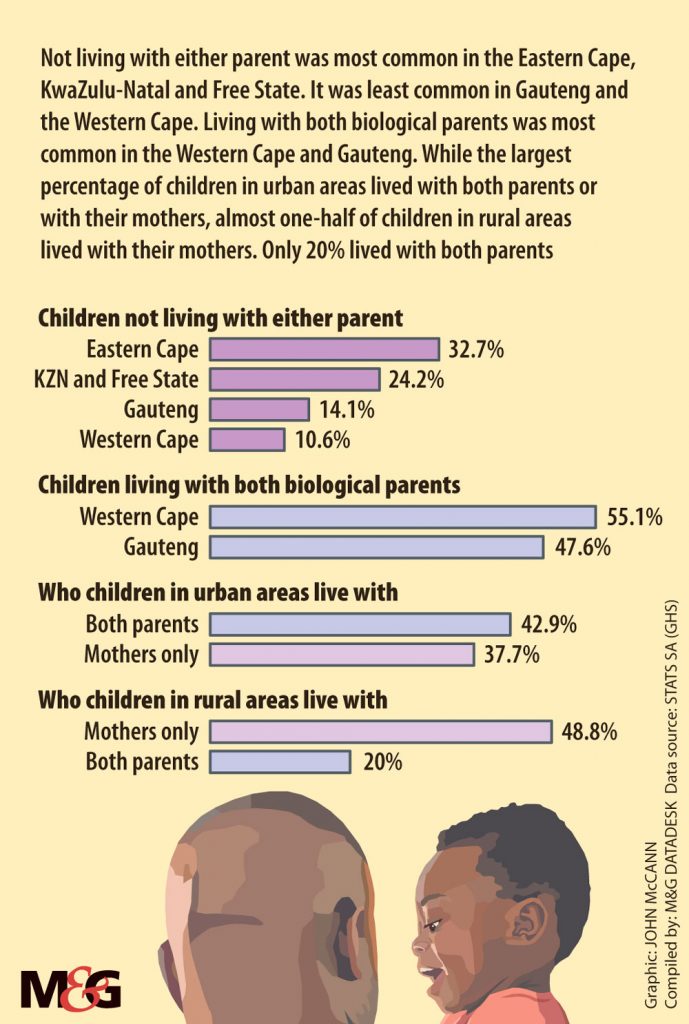
“We have been going back and forth with the case and at times she doesn’t even pitch to court, which drags the process longer,” LN said. “I am hoping that the courts change the court order to say that now I must stay with the child, and her mother can get visits, especially because she moves around a lot. With me at least my child has a central place where she calls home.”
The father of one said the issue is that cases like his are handled by different magistrates, where some do not go through the entire file and instead simply conclude that children need their mothers.
Thembi Ndeya, a member of Fathers 4 Justice, said courts require a father to prove first that he qualifies to see his children yet the mother’s boyfriend or partner has immediate access to the child.
Ahead of his case at the supreme court of appeal, MM said: “I have grown numb to these processes. I know that the system is designed to break me as a party to this matter, but I refuse to be broken so I kind of almost resist any feelings about it,” said MM. – Mukurukuru Media
[/membership]