

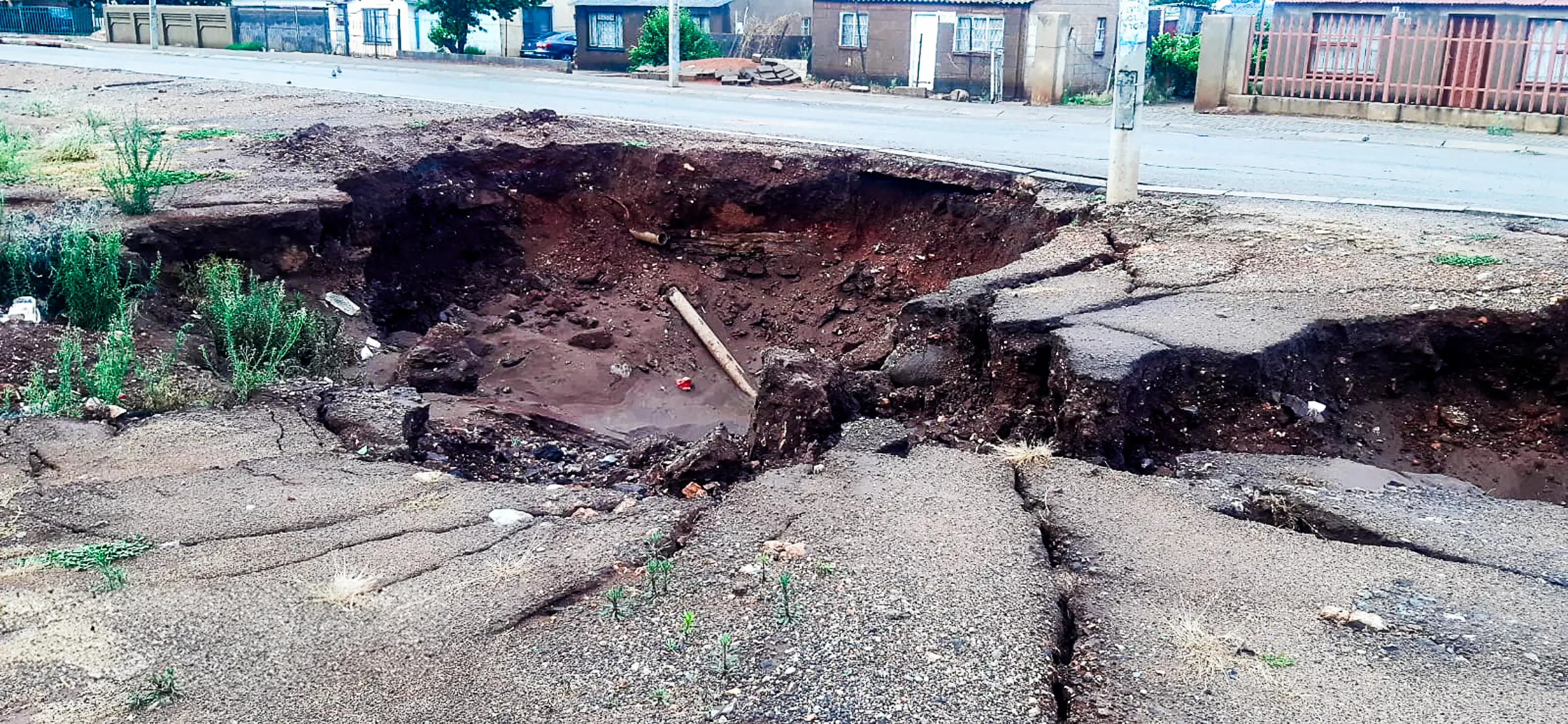
Underground mining operations are particularly vulnerable to the dangers of flooding and water ingress, which can result from heavy rains, groundwater inflow, or even burst dams. (Waldo Swiegers/Bloomberg via Getty Images)
Mine fatalities still plague the industry today as they did when the first diamond and gold deposits were discovered, although experts insist the situation is improving.
Twenty-five fatalities have been reported in the mining industry this year so far. This is a 14% decrease from the 29 reported deaths in the same period last year, according to the Minerals Council South Africa.
Mining fatalities is an age-old problem in South Africa. In 2003, the industry reported 270 deaths but this had declined to 128 by 2010. In 2020 and 2021, the industry reported 60 and 74 fatalities, respectively, compared with the previous all-time low of 51 in 2019.
The Minerals Council recently held its annual national day of health and safety where it announced an investment of R46-million over five years to achieve zero harm and reduce fatalities in mines.
The 14% reduction in fatalities from the previous comparative period is encouraging but the number remains unacceptable and there is a long way to go to zero harm, said Themba Mkhwanazi, the chair of the Minerals Council’s zero harm leadership forum and the chief executive of Kumba Iron Ore.
Those present, including David Msiza, the chief inspector of mines at the Minerals Council, as well as representatives of labour groups Association of Mineworkers and Construction Union, the National Union of Mineworkers, Solidarity and the United Association of South Africa committed themselves to working together towards the target.
Mines are getting safer
Julian Grieve, co-head of the resources sector solutions at Rand Merchant Bank, said the mining industry was becoming safer, ironically partly because of declining employment. Fewer people going underground each day minimised the number of people exposed to harmful conditions.
“Overall, even though employment in mining has dropped by over 10% in the last 10 years, the fatality rate has dropped by much more than that, by 70%,” Grieve said.
In the past 16 years, employee numbers at South African mines have fallen 41% and production has dropped by 67%, according to data platform globalEDGE.
Statistics South Africa confirmed this in its 2019 mining census, saying there had been a notable decline in the number of workers employed directly by mines, with a decrease of 22 622 people compared with 2015. The bulk of jobs lost were in coal, followed by platinum group metals, gold and uranium.
Mechanisation had also reduced the number of fatalities, Grieve said: “Part of the idea of mechanisation is that, if there is a dangerous area where mining is taking place, it’s better to put a machine in there than humans. That’s generally the plus of mechanisation in terms of safety. The downside is that you still need a person operating that machine.”
But many mines in South Africa don’t lend themselves to mechanisation. Grieve said the companies making the equipment have not made equipment suitable for most of the local ore bodies. However, “some of the bigger and more successful mines are quite safe because they are mechanised, such as Gold Fields’s South Deep gold mine and Anglo American’s Mogalakwena PGM mine”, he added.
The Minerals Council said there had been no fatalities as a result of rock falls in gold and platinum mines in the first seven months of this year — a first on the safety front. A year ago, there were at least six fatalities in the first quarter. Measures have been put in place in the industry to mitigate such fatalities, including safety netting where rock-drill miners operate.
Mine companies must do better
Multinational mining and metals group Sibanye-Stillwater said last year had been a difficult year for it in terms of safety, with 20 fatalities.
“Our in-depth analysis of these fatal incidents highlighted several incidents of noncompliance to our operating standards and a key focus moving forward is learning from these unfortunate circumstances surrounding the fatalities and how to ensure compliance is improved across the business,” it said in its integrated annual report for 2021.
Anglo American had one fatality last year, according to its annual results. “While we have reduced our fatal events by 93%, we are not yet at zero and, for me, that is a tragedy … But, at the same time, I am extremely proud of where we have come from – back in 2007, when I first joined AngloGold, the Anglo Group had 70 fatal incidents,” former chief executive Mark Cutifani said.
Royal Bafokeng Platinum also lost one person last year, while Harmony Gold said it had had a “disappointing safety performance” in 2021 with 11 deaths.
South Africa has some of the world’s deepest gold mines which record the highest fatalities, followed by platinum mines. Gold mining companies such as Sibanye-Stillwater and Harmony Gold have the most fatalities.
“Coal mining is often opencast while PGMs [platinum group metals] and gold are deeply underground and down there is where you’d expect there to be some kind of incident, such as a rock falling down or just human error and getting caught in the machinery, causing fatalities,” Grieve said.
The world’s deepest mine, according to the Guinness World Records, is AngloGold’s Mponeng gold mine which is 4km in depth. The journey from the surface to the bottom of the mine takes just over an hour.
Every fatality affects a mine’s production and output, due to routine shutdowns ordered by the government for investigations, and work stoppages for a day by union members to mark the death. Sibanye-Stillwater said safety stoppages last year were estimated at about R526.8-million at its South African gold operations and R758-million at the PGMs operations.
The 11 fatalities at Harmony Gold translated to 106kg of lost production and required 208 hours in safety training, the company said.
Policy for mine safety
The government has just gazetted its draft Mine Health and Safety Amendment Bill, with proposals for changes to sections relating to protective personal equipment, the definition of mining areas and training.
The Mine Health and Safety Act requires employers to properly assess and respond to risk and take measures to safeguard the health and safety of employees, said Kate Collier, an occupational health and safety legal specialist at Webber Wentzel. This does not change with the proposals in the bill.
“The current bill does seek to streamline administrative processes and increase possible sanctions [on employers], which on their own are unlikely to have a direct impact on employee safety without employers actively seeking to remove, or control, risk in the workplace,” she said.
Collier said the bill, if passed in its current form, could highlight the business and compliance risk to employers who fail to take steps to protect employees’ health and safety through, for example, proposed increased sanctions.
“Employers should be striving to avoid fatalities and to have employees be safe in their workplaces because it is the correct and sustainable approach to business and not merely to avoid sanction or legal risk,” she added.
Anathi Madubela is an Adamela Trust business reporter at the M&G.
[/membership]