File photo by Delwyn Verasamy)
In the leafy, agricultural suburb of Farmall in northern Johannesburg, the Zandspruit sewage pump station is overflowing with sewage.
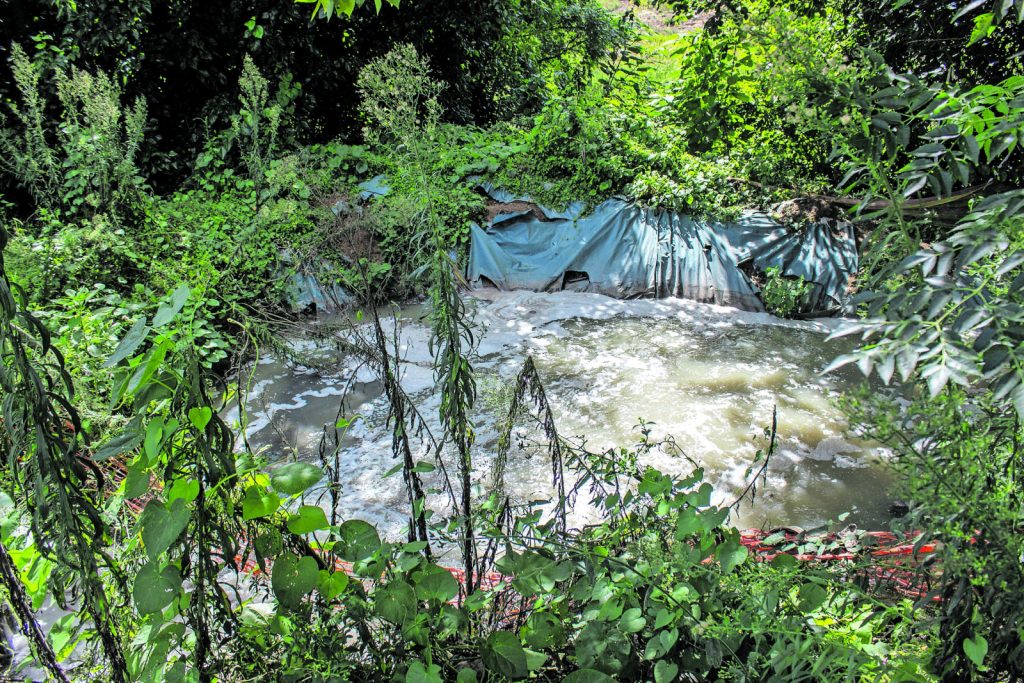
Pools of stinking water stream from the facility, which is run by Joburg Water, gushing torrents from open manholes pouring into the Klein Jukskei and Sandspruit rivers.
“It’s disgusting,” said Julian Walker, who lives in nearby Chartwell Country Estate. “You don’t expect this in Joburg.”
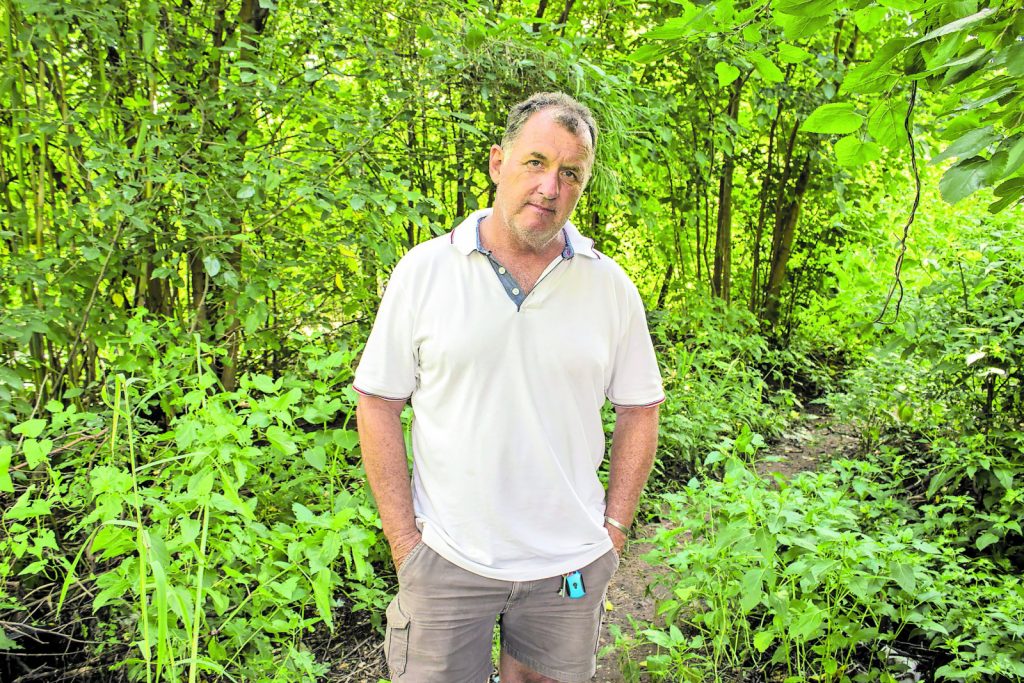 Natural waste: Joburg resident Julian Walker says torrents of effluent from open manholes pour into the Klein Jukskei and Sandspruit rivers.
The pump station, which is situated just below his property, has to pump the entire sewage component from Cosmo City, the new Lion Pride development, and Craigavon in Fourways, he said.
The blockage, he said, resurfaced in early January from an existing problem that started last year because of the deteriorating pipeline system.
“The problem is that we have a failed system. The system is letting effluent flow downhill, gravity feed, to a pump station where it then all has to get pumped uphill again.
“We’re basically creating a problem in that we’re dealing with load-shedding, lack of maintenance, with an increase in development so the volumes that were there before are way, way exceeded now, and substandard infrastructure,” Walker said.
The culmination is a failed system, he said. “The gravity feed works really well because gravity doesn’t sleep, it doesn’t need electricity. It’s when you’re trying to pump it back uphill again that everything has to be running like a well-oiled machine, otherwise it breaks … There is only one pipeline that is still working.”
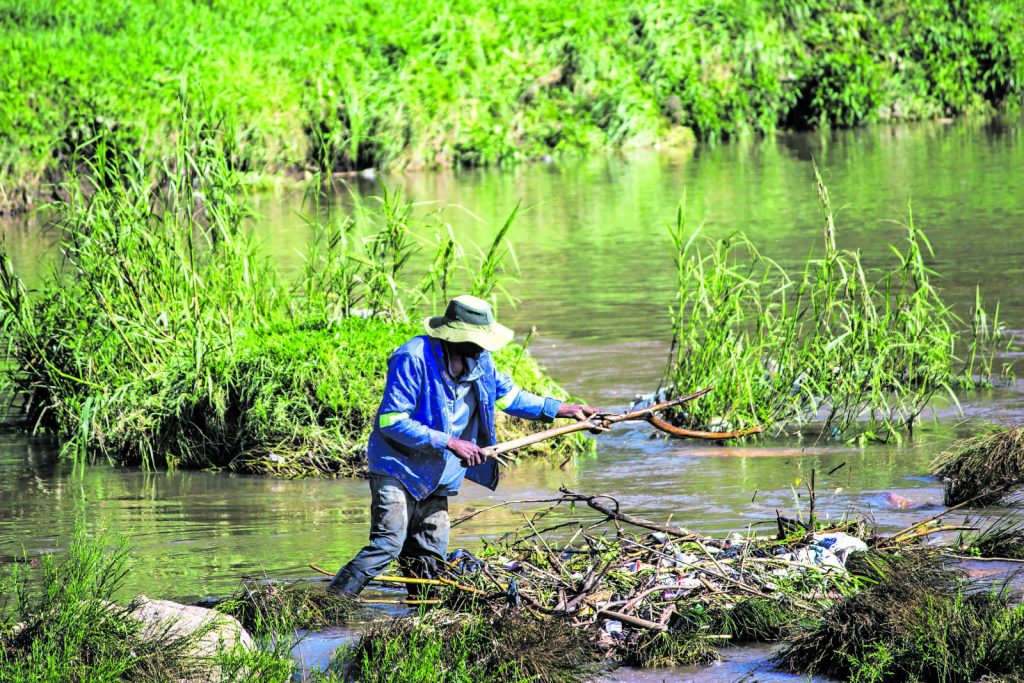
“Having completed the repair work, the pumping resumed, only to fail again at a different position on the line … So we’re back down to one pipeline that is doing the work and for the volume of effluent we’ve got, it just doesn’t even come close.”
Walker estimates about 25 litres of sewage a second are pouring into the river from the plant.
“This problem has been identified since the middle of January. We are still awaiting a report as to the extent of the problem and the timeline required to rehabilitate it. We’re talking over two million litres of raw sewage a day that has been going into the river system,” he said, bemoaning the distinct lack of urgency in Joburg Water’s maintenance programme.
The Klein Jukskei had been polluted by sewage for years, he said, worried about the downstream impact of the sewage contamination.
“I can safely say this is affecting everybody between here and Hartbeespoort Dam, [though] whether they realise it or not is a different matter …. The sheer volume of what you’re putting into the system, it’s not a little one-week leak, or a bit of stuff coming out that’s fixed in four days, this is a gargantuan amount of sewage going into our river system.”
The situation at the Zandspruit pump station is a “complete mess”, said Ferrial Adam, manager of WaterCAN, an initiative of Outa.
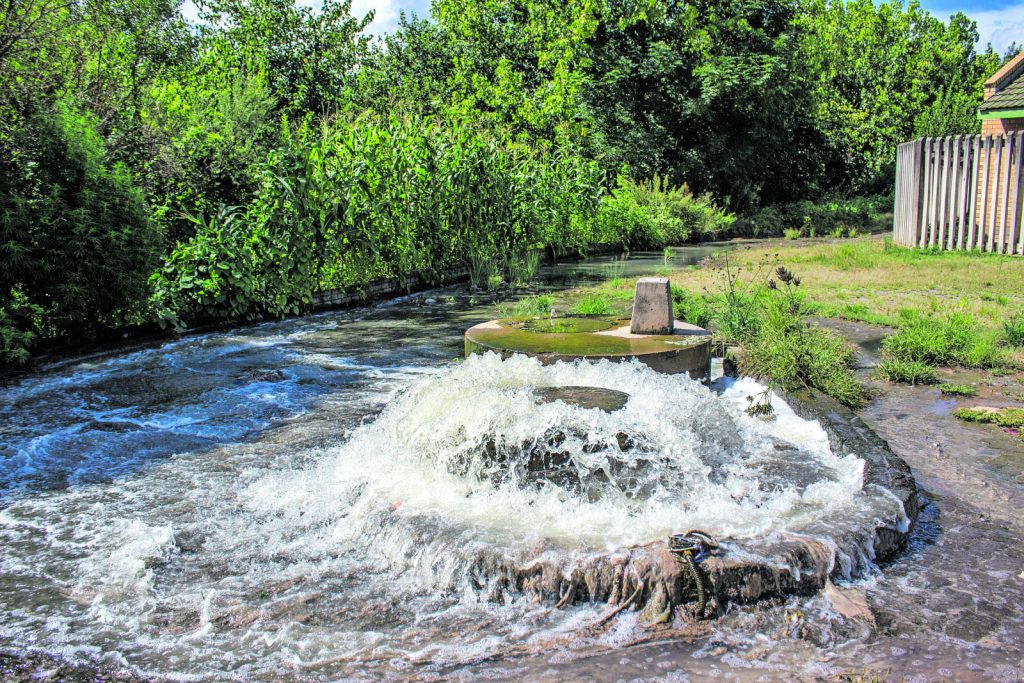
“The Zandspruit pump station has been overflowing for years, not just a few weeks,” she said.
“We know there are infrastructure challenges but it is criminal when a pump station has been a problem for years and there is very little evidence of action to improve the situation.”
Wastewater treatment works are in an appalling state, irrespective of the city or governing party, said Anthony Turton, a professor at the Centre for Environmental Management at the University of Free State.
“The most functional I have seen is in George. It was in an immaculate condition and sets the standard for how these things ought to be.”
Joburg Water spokesperson Puleng Mopeli said while the sewage spillage is occurring in and around the pump station, this is not because of the plant malfunctioning.
During the past 18 to 24 months the pump station has been refurbished and upgraded to ensure efficient operability.
On the root cause of the spillage, Mopeli explained that the main pump station has two pump stations within it, pumping sewage along two separate rising main lines, namely the new PVC line via pump station one (ZPS 1) and the older steel line via pump station two (ZPS 2).
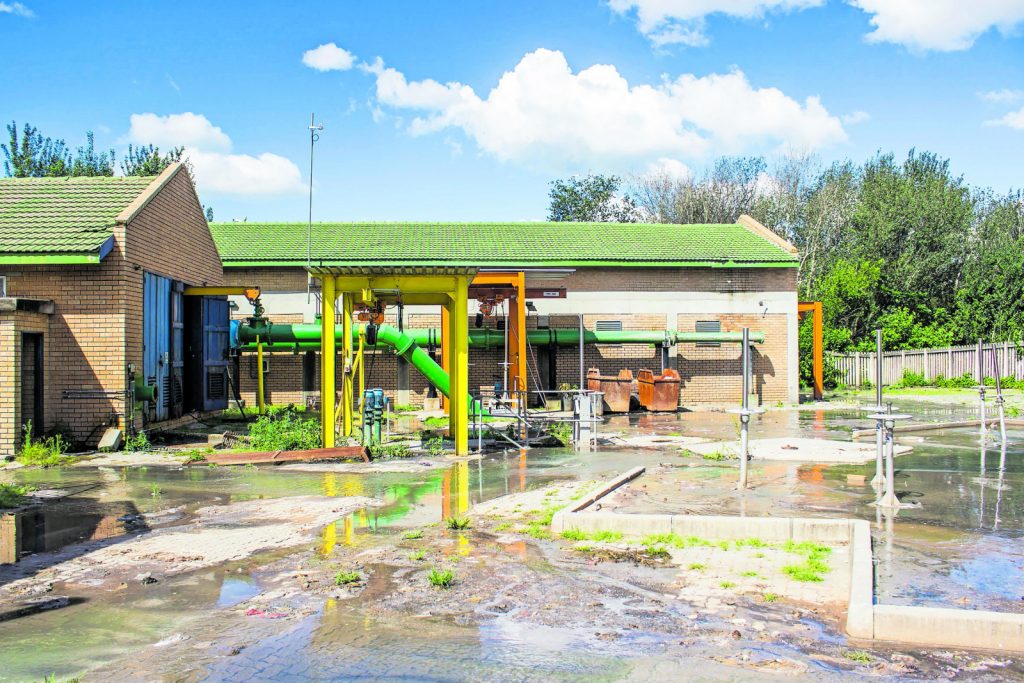
“ZPS 1 is currently fully operating with two pumps currently running. However, ZPS 2 is not operating, as it has been switched off, resulting in spillages due to challenges, investigations and repairs being done on the ZPS 2 rising main in the section along Inchanga Road in Craigavon.”
In January 2021, Joburg Water experienced “sporadic failures” in the dense residential area of Craigavon.
“The spillages were not continuous since 2021 but intermittent as and when issues arise on the rising main. Challenges with the ZPS 2 line have been more regularly experienced since May 2022 with the pump station working on and off due to fixes being done on the steel rising main.”
The cause of the constant failure of the steel rising main is because of the age and condition of the steel pipe, which requires a total capital replacement of about five kilometres in the residential area of Craigavon, Mopeli said.
“A condition assessment was carried out and a pipe replacement project has been initiated to address the challenge,” Mopeli said, noting the pipe replacement is complex, capital-intensive and requires several environmental projects “implying that this is a medium-to-long-term project over the next two years”.
Operational and maintenance plans are underway to ensure the line is operable.
“As at February 2023, Joburg Water has contracted a CCTV expert to conduct detailed inspections of the critical line. The aim of the inspection is to detect blockages and possible failures and to advise on interventions needed. In conjunction, a specialised jetting truck is used to unblock the line as and when found during the CCTV inspection.”
In the latest Green Drop Certification Programme report, which was released by the department of water and sanitation last year, the City of Johannesburg attained a 73% municipal score, failing to meet the Green Drop standard. Green Drop certification is awarded to wastewater systems that obtain scores of above 90% when compared against the criteria set for wastewater management.
In 2013, the city’s Green Drop score was 86%, in 2011 it was 91% and in 2009, it was 94%. The report noted how the city must prioritise maintenance of critical equipment to ensure wastewater treatment is not compromised. Of the city’s six wastewater treatment plants, four plants are in medium-risk position and two plants are in low-risk positions.
According to the report, of the city’s six wastewater treatment plants, Driefontein has 100% effluent quality compliance, Ennerdale and Olifantsfontein comply with two out of three effluent categories, Bushkoppies and Northern Works comply with one out of three effluent categories, and Goudkoppies fails all three categories.
“The lack of microbiological compliance at all plants except for Driefontein presents serious health risks to downstream users.”
Mopeli cited backlogs in capital investment to replace and upgrade and inadequate budget to implement projects, demand and growth and development, abuse of the sewer network and the ingress of stormwater into the sewer network, which results in “loading of the system”.
The Green Drop report noted that for Johannesburg, budgets had been secured for upgrades at all plants and for replacement of sewer networks and building of new wastewater treatment works to accommodate future demand.
Adam added that budgets on infrastructural maintenance were not being adequately used.
“We all know that our infrastructure is failing. You just need to go through a drive in greater Joburg and you will find sewage, if there’s a river close by, there’s a possibility of high levels of E. coli.
“We can’t keep going at this rate. Our water is going to be completely polluted and that directly impacts our drinking water because then you need to spend more money cleaning your water.”
[MEMBERSHIP/]