Coffee beans being sorted and selected by hand
South Africa has the potential to become a major coffee producer, with more than half a million hectares of fallow land that could potentially be used to grow, for export, the high-value crop that has spiralled in price and demand in recent years.
The global and domestic demand for coffee, both instant and speciality, has risen significantly, and prices have doubled since 2019, creating an opportunity for growth, local coffee growers and experts say.
Several factors, including a spike in demand and climate change, are driving the global price of coffee, according to Cultivar Coffee co-founder Charles Denison, who has worked in the industry around the world and now grows the world’s rarest coffee, Cof fea racemosa, on the KwaZulu-Natal North Coast.
Coffee is also traded as Robusta and Arabica beans on the London and New York stock futures markets, respectively.
The local price of instant coffee has increased by 87% since 2019, Denison said.
“In 2021, we were paying an average price of R42 a kilogramme for Brazil, which is our most common coffee. It’s now gone up to R98 a kilogramme on average,” he said.
The latest available data shows the local off-trade coffee market alone — this includes places such as supermarkets, where you do not consume the beverage immediately — grew 15.8% to R6 billion from 2022 to last year, according to Denison.
The market is forecast to grow by 11.2% annually to an estimated value of R10.4 billion by 2028.
“Total coffee volume is expected to increase from approximately 13 337 tonnes in 2023, to approximately 17 144 tonnes in 2028,” Denison said.
South Africa imports most of its coffee — R1.8 billion worth last year from R1 billion in 2021 — because local production is minimal.
But, while the potential to cultivate coffee locally is “massive”, high labour rates compared to coffee-growing countries such as Kenya and India present a barrier.
“It is extremely labour-intensive but it’s tough because, if you look at our minimum labour costs — a good thing for farm workers — it’s 10 times that of East Africa. They are still paying $1.50 [R30] a day, where we are paying at least $10 a day.
“We have to produce good quality, speciality coffee. We can’t just produce cheap coffee, because we won’t be able to compete with the likes of East Africa and Asia, which have got much cheaper labour, and Brazil, that’s mechanically harvested because they’ve got flat lands, which we don’t have,” Denison said.
The South African Coffee Industry Landscape Report 2024 by Insight Survey said the global coffee market was expected to reach an estimated $495.5 billion in revenue last year, up 14.3% from $433.6 billion in 2022.
“The global coffee market is expected to see strong volume growth in coming years, expected to amount to 7.78 billion kilogrammes by 2025,” it noted.
All this, and the fact that local consumption is estimated to grow by 10.5% annually, represents an opportunity for South Africa to develop local coffee growers and get its share of the export market.
Interestingly, by next year, about 84% of spending and 21% of volume consumption will be attributable to “out-of-home” consumption, which has strongly fuelled growth post-Covid-19 due to changing working patterns and people choosing to work at coffee shops.
“This is resulting in the rapid expansion of the number of coffee outlets by major players, such as Starbucks, which expanded its retail network from 33 833 outlets in 2021 to 35 711 outlets by the end of 2022.
Another key driver is the growing Gen Z population group, and its adoption of affluent lifestyles, including visiting cafés and restaurants, and a preference for gourmet coffee,” the report added.
Denison said the growth of the middle class in countries such as China and India had also fuelled global demand.
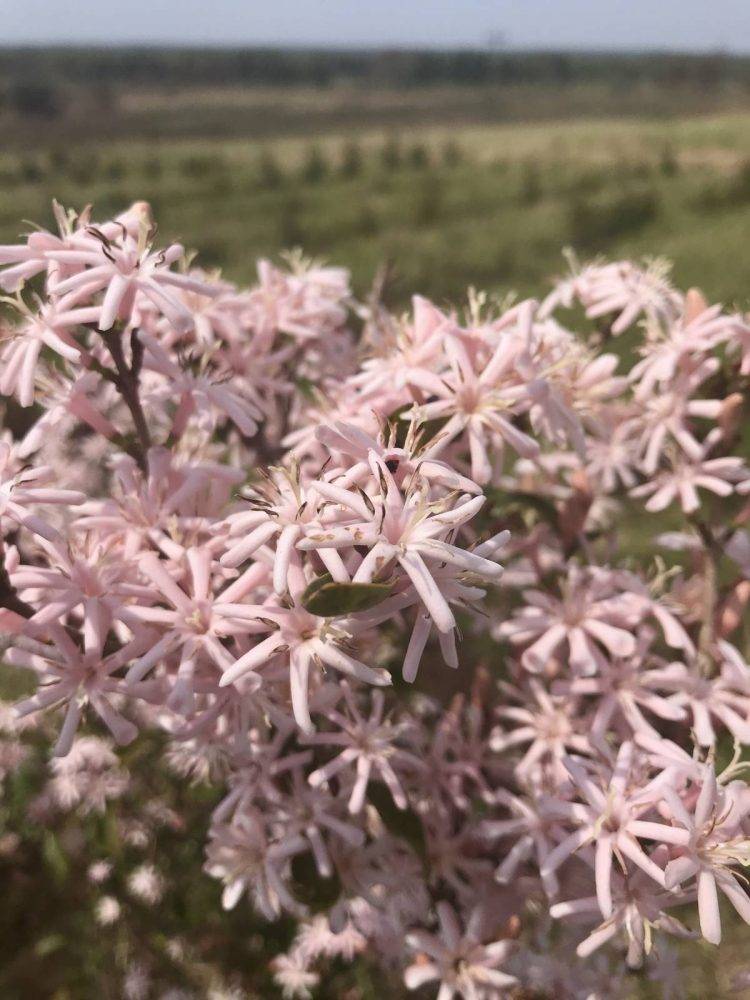 A coffee plant in flower
But the international market faces problems such as adverse weather conditions caused by climate change, which is negatively affecting coffee bean crops; rising prices because of increasing logistical costs such as fuel; as well as demand for alternatives to coffee because of environmental and health concerns.
“We rely on Brazil and Vietnam to produce most of the world’s coffee, and both of those countries have been hit by serious weather events this year, so it’s really affected the quality and the quantity of their coffee,” Denison said.
“We have had this huge consolidation of all the world’s coffee in five countries that produce 75% of [it] now — it is really scary that we put so much reliance on five countries.”
The other three big producers are Columbia, Indonesia and Ethiopia.
WM Cahn green coffee broker and trader Sarah Schach estimated local coffee consumption higher than Denison at 40 000 tonnes a year. But only 50 tonnes is grown locally, meaning about 99.9% is imported, she said.
Some coffee is imported, then processed and exported by multinationals such as Nestlè, which could explain the local volume difference.
Schach said in the past, when the country had many coffee estates, there was a viable export market.
According to a recent report in Cof fee Magazine, South Africa produced 1 800 tonnes of green coffee in 1987 and had forecast 6 600 tonnes by 2000. But high labour costs, pests, diseases and low international prices decimated the industry.
“Production was reasonable but once South Africa became part of the SADC [Southern African Development Community] region, it was evident that, because our labour costs were too high in comparison to the other regions, this coffee was not competitively priced,” she said.
“There was a government regulation in place at the time — this was that South African roasters had to buy a specified amount of South African-grown coffee before they could import cheaper African coffees from the SADC region,” she said.
“They produced good quality. In the end, the labour costs became too high and it was no longer viable. It was a sad end to the South African coffee estates,” she said.
Third-generation farmer Dylan Cumming, of Beaver Creek Coffee on the KwaZulu-Natal South Coast and who formed the RedBerry Coffee Collective comprising 50 growers, has researched the viability of reversing the dearth of local producers.
Cumming, whose family has farmed coffee since the early 1980s, formed RedBerry to develop the sector and to help growers expand up the value chain into activities such as roasting and packaging.
He said the local industry was composed of a large number of cafés and manufacturers, including 600 to 700 roasters and equipment suppliers, but with only about 70 growers nationally, who account for less than 100 hectares of production.
“A lot of those growers are what we call ‘gardenistas’ — people who have a couple of coffee trees in their garden, like more than 50, and then there are a few that are fairly large, and growing, which have half a hectare to one hectare,” Cumming said.
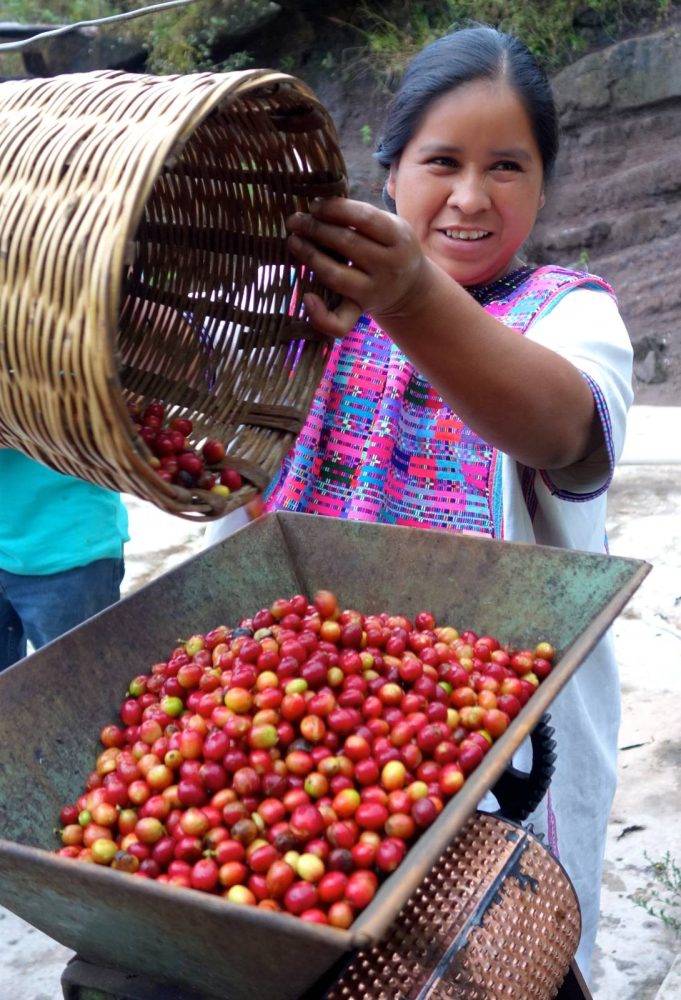 A woman weighing coffee beans.
“There’s a huge opportunity for growth. We are supporting growers and developing coffee agriculture.
“In terms of the land available, we’ve done a climate suitability study and we’ve identified over half a million hectares [of fallow land] that is suitable for coffee agriculture.”
This land stretches along the KwaZulu-Natal and Eastern Cape coast and is found in the highlands of Limpopo and Mpumalanga.
“There is significant potential that falls into the rural areas, where we have high levels of unemployment and poverty, so there’s a lot of potential for coffee agriculture as an economic driver which we are also trying to engage with the government on,” he said.
RedBerry is negotiating with the KwaZulu-Natal department of economic development, environmental affairs and tourism and the department of agriculture and rural development to get support for start-up farmers.
Denison, who started growing coffee seven years ago and has already found a market for the rare racemosa coffee bean he cultivates on two farms, sees the potential for South Africa to become a significant producer of specialty coffee.
Coffea racemosa is a protected tree in South Africa that grows only in indigenous coastal dune forests and on river banks and rocky outcrops in KwaZulu-Natal, north of Lake St Lucia, and into Mozambique.
“We have 9 000 plants in total between the two farms and we sell it overseas as the world’s rarest coffee. That’s probably about 90% of what there is in the world. It’s a tiny little bean, completely different to normal coffee, because it’s a totally different species,” he said.
“This year, we sold most of it to Australia, Japan, England, America, France and China. We produced just under 100kg last year. It’s known as very rare — we sell it for $300 per kilogramme, so it’s a very valuable coffee.”
There is a growing demand for unique coffees around the world, Cumming said.
“South Africa is not a known origin but we have the potential to grow coffee at scale. There is an opportunity to market and sell South African coffee globally because of that uniqueness.
“That’s the real opportunity — to export another roasted coffee from another country is really competitive but South African coffee has the edge in that it’s a very unique origin.”