
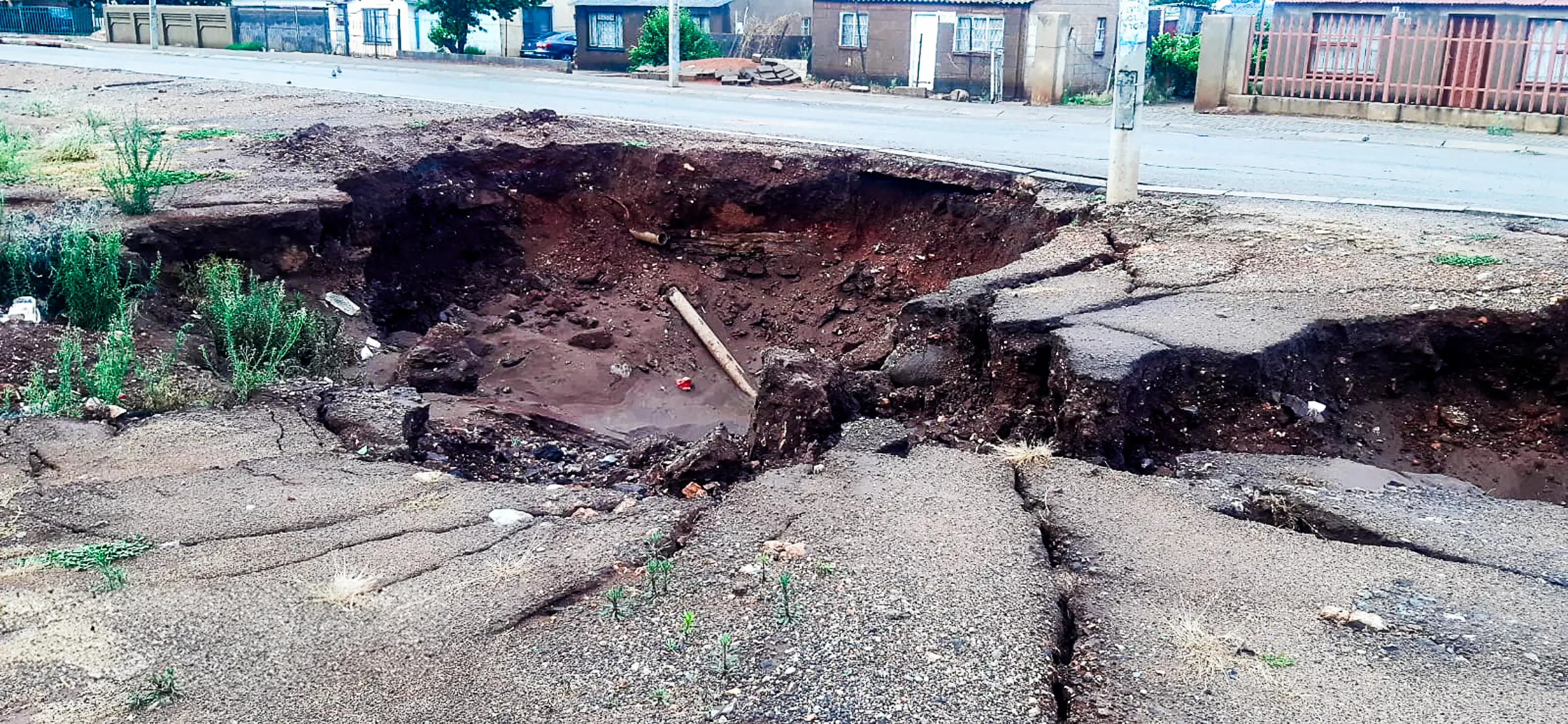
South Africa’s water crisis is not about a lack of resources; it’s about corruption. Photo: Mlungisi Louw/Volksblad/Gallo Images/Getty Images
Johannesburg residents are turning to bottled water and filling stations as alternatives to tap water as the city grapples with frequent disruptions to the supply and quality of the essential commodity.
The city is facing a severe water crisis caused by a combination of infrastructure problems, illegal connections, theft, leaks and burst pipes. It imposed level 1 water restrictions from 1 September to 31 March, which prohibit the use of hosepipes during the day to water gardens, wash cars, clean driveways and fill up swimming pools and water features.
“About three million South Africans do not have any access to safe drinking water,” according to Charlotte Metcalf, the chief executive of the South African National Bottled Water Association (Sanbwa).
“Our current water woes now affect the rest of us that are supposed to have safe drinking water in our taps. This creates an attractive market for entrepreneurs to supply the demand for safe drinking water when the tap runs foul or dry.”
Metcalf said the health department legislated bottled water as a “food” that could be used during heatwaves, droughts, water interruptions and “when the safety of drinking water is doubted”.
“Gone are the days where we can blindly trust our taps to have safe water or any water at all. The challenges range from no water supply to brown and foul-smelling water to water-borne disease like the recent cholera outbreak in Hammanskraal.”
‘Substandard products’
Cheaper products are being marketed under the same category as bottled water, but as re-filled water from shops, kiosks and restaurants, Metcalf said.
“There are also new entrants into the packaged water market selling substandard products. These businesses lack the knowledge about the requirements to produce food-safe products,” she said.
While the bottled water market has grown steadily there has not been any significant spikes, but re-filling stations have seen stronger growth because of their perceived better affordability, Metcalf said.
A five-litre bottle of water costs R15 to R30, while a refill for the same quantity costs R5 to R7.
“The two products cannot be price compared because the re-filled version does not adhere to the many safety requirements, quality management systems and tests as for packaged water in order to assure safety, quality and a shelf-life,” Metcalf said.
Tina Vezyrtzis, a manager at a Spar store in the south of Johannesburg, said that since the outlet had installed a water refill system in November 2023, sales for the service had increased month-on-month, although this had not affected the sale of bottled water.
Shoprite told the M&G that the demand for bottled water had increased significantly in the last few years, and that almost 300 Checkers stores sell reverse osmosis treated municipal water for R1 per litre.
“Customers can refill their own bottles, offering an affordable option, particularly in areas with unreliable water supply.”
Metcalf urged consumers to ensure that the products they purchased were Sanbwa-approved.
“We advise people who make use of refill stations to ensure that the water is filled in front of them and not to store it for long periods,” Metcalf added.
“Look for mould growth in pipes and tanks and ensure that taps are sterilised prior to filling and are away from the floor and that your container is sterilised and not open to the environment for long periods while filling in the open area.”