A group of captive-bred southern white rhino have been successfully moved to their new home at the Dinokeng Game Reserve
A group of captive-bred southern white rhino have been successfully moved to their new home at the Dinokeng Game Reserve, Gauteng’s only Big Five game reserve.
The move on Tuesday marked the third rhino translocation this year by the nonprofit conservation organisation, African Parks. It is part of its 10-year Rhino Rewild initiative to move 2 000 southern white rhino, which previously belonged to controversial rhino breeder John Hume, into protected areas on the continent.
This will establish or supplement strategic populations of the mega-herbivores, where their presence contributes to healthy ecosystems that benefit biodiversity.
“It went very well; the rhinos are doing well,” said Hartogh Streicher, the chairperson of the Dinokeng Management Association. “They seem to be very happy and they like their new home.”
Dinokeng Game Reserve is a 19 000 hectare conservation area in the City of Tshwane metropolitan municipality, and is a collaboration between 180 landowners, including the Gauteng provincial government.
Originally an agricultural landscape, it was established in 2011 to create a Big Five ecotourism destination, which benefits the environment and local residents.
“With more than 800 permanent jobs generated and a successful track record of rewilding key species like the white rhino, Dinokeng is an ideal location for additional wildlife introductions,” according to African Parks and Dinokeng.
Streicher said Dinokeng is a public-private partnership. “Our first intention is to create jobs for the surrounding community and the only way we can create those jobs is through tourism.
“People in Gauteng are blessed to have a Big Five game reserve, literally less than an hour from the centre of Gauteng. And obviously the more animals, especially the top species, that can be seen, the better for tourism, which leads to more job creation.”
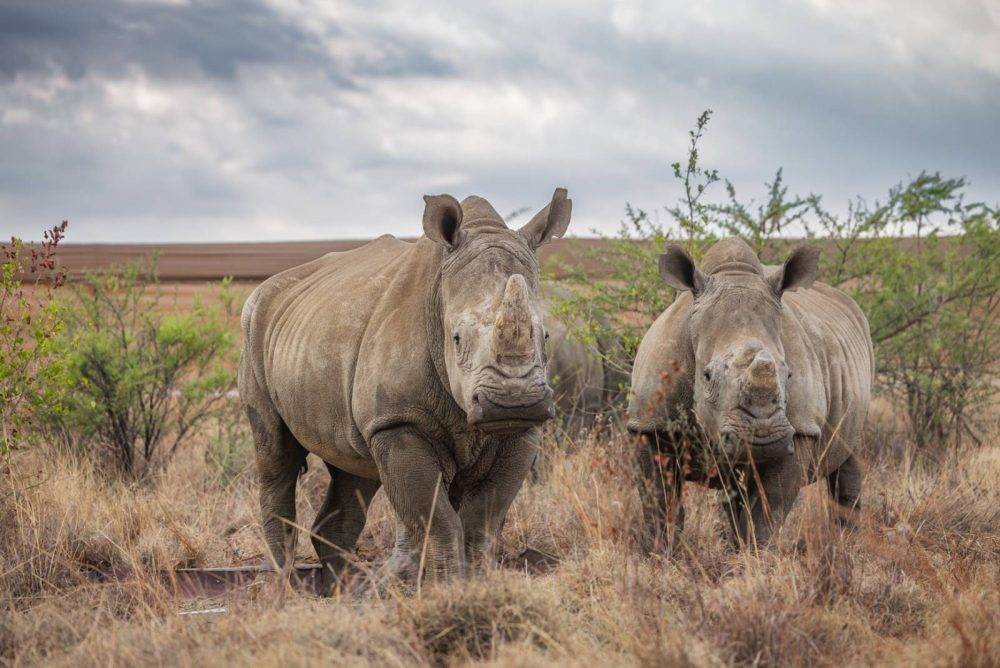 White rhinos play a crucial role in maintaining healthy ecosystems. As mega-herbivores, they shape savannah landscapes, which store about 30% of the world’s terrestrial carbon
To help in the long-term success of the translocation, the rhinos will be monitored and protected in accordance with Dinokeng’s security measures.
Dinokeng had lost three rhinos in 13 years to poaching, which was “three too many”, Sreicher said. “However, compared to national statistics, it’s extremely good. Unfortunately lately there has been quite a bit of snaring going on, not only in Dinokeng, but it’s a national increase.”
White rhinos play a crucial role in maintaining healthy ecosystems. As mega-herbivores, they shape savannah landscapes, which store about 30% of the world’s terrestrial carbon.
The rhino were offloaded on Tuesday night after the operation encountered a few bumps on the way.
“We were set to be in at about 2pm and then a couple of things happened with the trucks and then we hit traffic in Pretoria so we arrived just before last light,” said Donovan Jooste, the project manager of African Parks’ Rhino Rewild Initiative.
“We were at the release pens this morning — all the rhino are calm so obviously now we hand them over to Dinokeng. They will monitor the rhino for the next 72 hours and the moment they’re comfortable with that, they’ll open the smaller holding bomas and release them into the bigger reserve.”
Dinokeng’s work on rhino conservation has been “amazing”, Jooste added.
Key funders of the Rhino Rewild initiative include the Rob Walton Foundation and the Pershing Square Foundation. WeWild Africa and the Aspinall Foundation provide ongoing support for translocations, with the Global Humane Conservation Fund of Africa funding the move to Dinokeng.