Poisonous: Solomon Mabena does his cleansing ritual in the cancer-causing, hormone-disrupting, neurologically damaging Klip River. (Delwyn Verasamy/M&G)
Stripped down to his boxer shorts, Solomon Mabena* stood nearly knee-deep in the polluted Klip Riverr in Soweto and bathed as part of his weekly cleansing ritual.
The water ran a sickly grey-black, smelled of sulphur and sewage and was covered in thick curls of foam. But a resolute Mabena insisted the water met his spiritual needs.
“This is holy water,” he said. “I feel better now because I need pure water like this one to do my rituals. There’s many people who come here to bathe and to pray, like me.”
Standing nearby, Godfrey Makomene, of the Johannesburg Mining and Environmental Forum, shook his head in dismay. “See how black and terrible this river is? It’s a mix of sewer and mine water. It’s poisonous. And you have cattle drinking here and people doing their baptisms. It’s not right.”
The Klip River winds through Soweto and Lenasia and is a critical water resource for surrounding residents and livestock.
But beneath its surface is a hidden danger: cancer-causing organic pollutants accumulating at levels high enough to harm human health, animals and aquatic life.
This is the warning from a new study by scientists from the University of Johannesburg, who has found alarming levels of the cancer-causing chemicals in the Klip River.
The researchers have exposed the presence of polycyclic aromatic hydrocarbons (PAHs) in the river’s sediments. These organic chemicals are linked to organ damage, developmental disorders and cancer.
The World Health Organisation has identified and classified PAHs as a priority group of environmental pollutants because of their harmful effects on life — aquatic, animal and human.
The research, published in the journal Environmental Monitoring and Assessment, was led by Samuel Makobe, Mathapelo Seopela and Abayneh Ambushe, of the university’s department of chemical sciences.
They analysed river sediments from nine sites along the Klip River, in wet and dry seasons in October 2021 and July 2022. Their findings were that the total concentrations of polycyclic aromatic hydrocarbons in river sediments reached up to 7.41 milligrams per kilogramme, far exceeding environmental safety thresholds.
The research also found that high-risk toxins peak in dry seasons when water levels are lower and increase the exposure risks because people rely more heavily on the river.
Zebrafish embryos exposed to sediments suffered severe malformations, delayed hatching and an 80% mortality rate, signalling dire risks.
Zebrafish testing is the gold standard for determining the toxicity of water, effluents and sediments.
The study described the Klip River as one of the most economically important wetlands in South Africa, which serves as a local supply of water and has evolved as a purifier of pollutants from the Witwatersrand Basin’s diverse human-caused activities.
It noted that the river, along with its tributaries, is “one of the most extensively contaminated rivers in the country”.
The Klip River wetland ecosystem could be contaminated with polycyclic aromatic hydrocarbons stemming from a variety of sources, including acid mine runoff, industrial and municipal waste, untreated and treated sewage, vehicle emissions, the burning of garbage and of coal in industrial complexes near the river.
Polycyclic aromatic hydrocarbons — notorious for their persistence and toxicity — primarily originate from oil spills, industrial runoff and leaking fuel tanks as well as from burning of coal, waste and biomass.
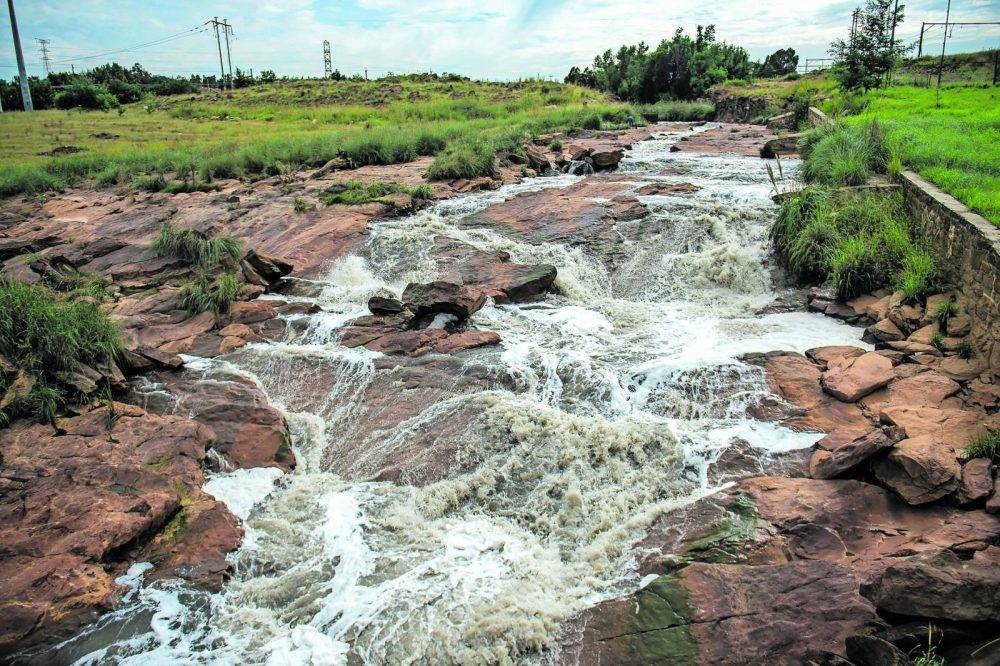 Researchers have uncovered cancer-causing chemicals in the sediment of the river that runs through Soweto and into the Vaal River. (Delwyn Verasamy/M&G)
“These toxins don’t just vanish,” said Ambushe. “They linger in sediments, enter the food chain and accumulate in humans and animals over time. This is a public health crisis in slow motion.”
Using percentage composition and diagnostic ratio analysis, the team traced more than 70% of PAHs to these sources.
“The problem is systemic,” Seopela said. “Urbanisation, inadequate waste management and historical pollution have turned the Klip River into a chemical reservoir.”
The danger the river carries spreads. Seopela said the Klip River feeds into the Vaal River system, which is a critical water source for millions of people.
“Contaminated sediments threaten communities using river water for drinking, laundry or irrigation; livestock graze along banks risking toxin transfer to meat and dairy; and biodiversity, with PAHs disrupting fish reproduction and amphibian survival.”
The toxicity study using the zebrafish embryo found that heart defects and spinal deformities occurred within days of exposure.
Zebrafish share about 70% of their genetic and physiological characteristics with humans, so these findings strongly suggest that similar developmental and cardiovascular impairments could occur in humans exposed to PAH-contaminated environments, the researchers said.
“If these toxins can devastate aquatic life so quickly, imagine their long-term impact on humans,” Makobe said.
The study also noted that the risk the contaminated sediment pose to zebrafish embryos suggest there are risks for biotic animals — animals, plants and microorganisms that interact in an ecosystem — livestock, agriculture and people who consume the water.
The study isn’t only exposing the Klip River’s pollution crisis — it is leading the charge for solutions, said Ambushe.
“By integrating advanced chemical analysis with bioassays, the research team pinpoints seasonal pollution hotspots for targeted cleanup, advocating for stricter industrial regulations and empowering communities with data to demand safer water policies.”
Andrew Barker, the chairperson of the Klipriversberg Sustainability Association (KlipSA), was not surprised by the study’s findings. “We are getting E coli counts in the millions — two to three million — in the Klip River.
“It’s from the wastewater treatment works, the infrastructure failures, the informal settlements who are just pouring sewage straight into the stream … This has been going on for decades.”
He worried about the lasting damage to nature and aquatic biodiversity. “You go to the river and it’s just pure black. It’s an open sewer,” he said.
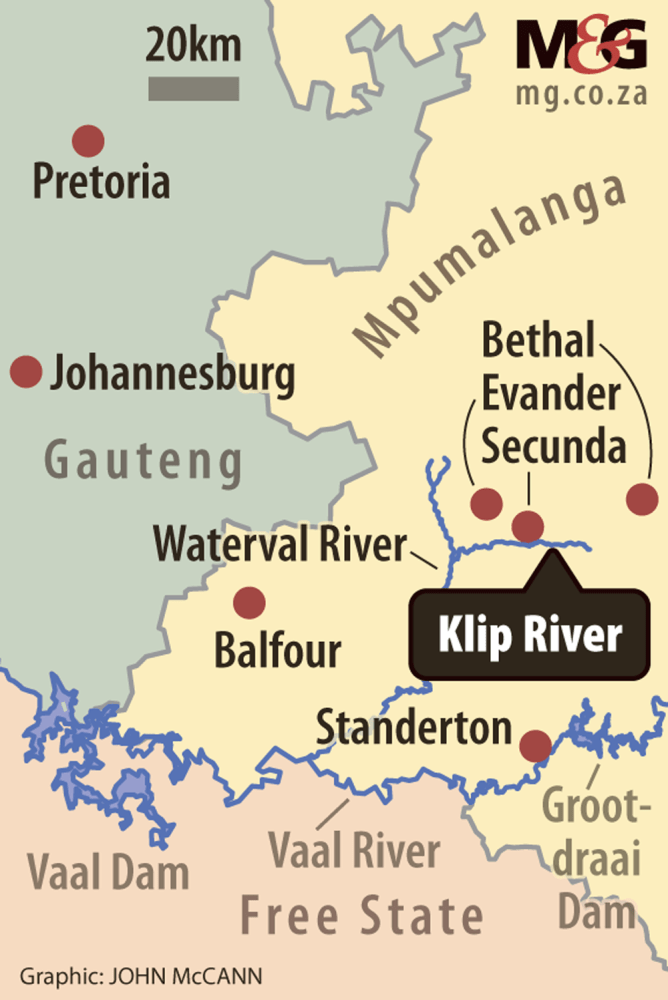 (Graphic: John McCann/M&G)
The Water Community Action Network (WaterCAN) said decades of industrial waste and sewage spills had turned the Klip River into a health hazard.
It cited how, in March 2023, the Klip River was linked to cholera cases in Gauteng when a 10-year-old girl from Katlehong tested positive after being baptised in the river.
By July 2023, WaterCAN had filed a criminal complaint against the City of Johannesburg, former acting municipal manager Bryne Maduka and then-municipal manager Floyd Brink for failing to address sewage pollution in the Klip River.
“We believe that until individuals, whether in government or business, are charged and prosecuted, pollution will continue unchecked,” said Ferrial Adam, WaterCAN’s executive manager. “Yet, two years after our criminal complaints, no one has been held accountable.”
The university’s study exposes the decades of contamination, particularly from industrial sources. “Such pollution is criminal. It’s time to hold individuals accountable.”
Adam urged the public to see rivers not as distant problems or as “dead things”, but as something that affects their daily lives and health.
“This pollution is hurting you. The toxic chemicals in the Klip River can cause cancers, hormonal disruptions, respiratory illnesses and neurological damage,” she said.
“We cannot wait for studies to pile up while our rivers — and our people — get sicker. We need action, not more silence.”
The contamination of the Klip River runs deep, said Mariette Liefferink, the chief executive of the Federation for a Sustainable Environment, who is a member of the Klip River Forum.
As she swept her eyes over the filthy river, she said: “The pollution here is not just sewage pollution; it is also historical mining activities — the historic tailings storage activities, which all contribute.
“In the Klip River catchment management forum meetings, the City of Johannesburg, City of Ekurhuleni, Midvaal Municipality, Rand Water and the department of water and sanitation found that in some of the tributaries of the Klip River, you have E coli counts of up to tens of millions.”
In the last quarter, there were counts of more than 14 million. “This shows that that in-stream water quality is totally unfit for any use because it cannot exceed 400 counts per 100ml [yet] the sulphate levels are about 2 700mg per litre and the in-stream resource water quality must be 600mg per litre.
“It’s a combination of microbiological contaminants and mine-influenced water.”
Her daughter, Simone Liefferink, added: “As an aquatic eco-toxicologist, it is very depressing when we come and monitor these rivers because we don’t find life in them. We, in fact, can’t sample them anymore because they’re too polluted.”
She smiled as she remembered fly-fishing for yellowfish in the Magaliesberg. “They’re the most stunning fish, like bars of gold in the water, and they used to occur in this [Klip River] and it always blows my mind that we managed to take all of them out.”
On the use of zebrafish in the UJ study, she said: “The truth is if you were to expose them in situ, they wouldn’t survive even a few minutes because there are so many acutely toxic chemicals.”
*A pseudonym.