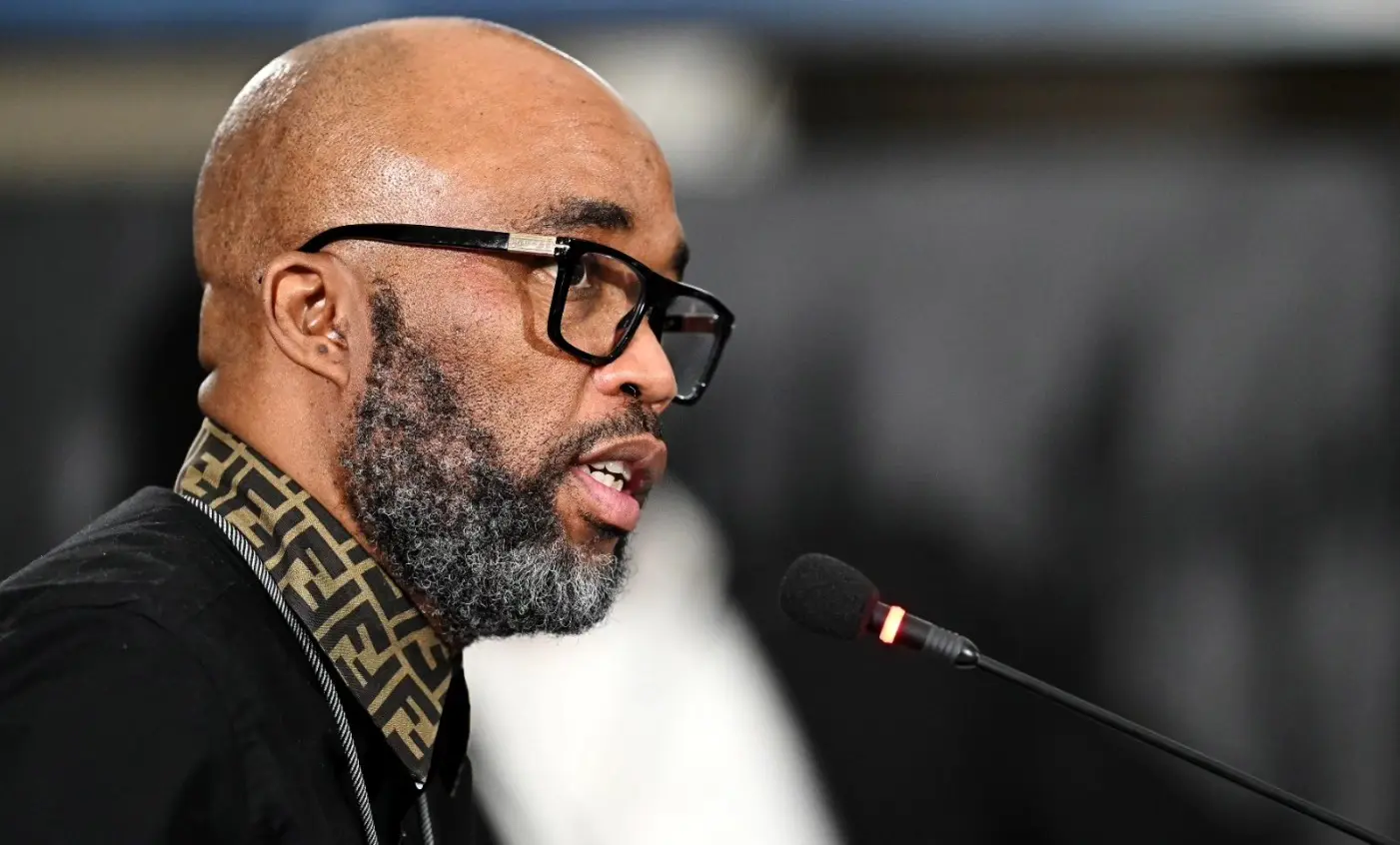

The Special Investigating Unit (SIU) has raided the Sandton, Johannesburg, home of businessman Hangwani Maumela, seizing high-end vehicles and artworks as part of an R820 million asset recovery operation linked to wholesale looting at Tembisa Hospital, in Ekurhuleni.
Photo: File
For years, Vhahangwele Lethole has not had the heart to change her WhatsApp profile picture: it’s a relaxed-looking portrait of her only son, Shonisani Lethole.
Wearing sunglasses and clad in a T-shirt with an image of the African continent, Shoni, as he was known, appears to be in the prime of his life. “This photo, I cannot take it away even though I have two other kids,” she said.
In June 2020, during the Covid-19 pandemic, the 34-year-old starved to death while being cared for at Tembisa Hospital on Gauteng’s East Rand. “Shoni was not fed for 100 hours … That hospital killed my son,” she said.
In his damning report, former Health Ombud Professor Malegapuru Makgoba found that Lethole received “substandard and negligent” care at the hospital and his death could have been avoided. He was not fed for more than 100 hours and was put in a room near corpses and patients who had tested positive and negative for Covid-19.
Lethole’s mother does not know how to feel after the Special Investigating Unit’s (SIU) revelations this week of the sprawling corruption at the hospital.
“I don’t know whether I was shocked or what. Maybe the pain was too big. I am just surprised how a human being can do this to another human being … You know what greed can do,” she said.
In an interim report the SIU revealed how a network of syndicates “ruthlessly siphoned off” more than R2 billion from Tembisa Hospital through three key syndicates enabled by junior officials at the institution and in the Gauteng health department.
It said these syndicates are linked to activities of money laundering, fronting, collusion, fraud, corruption and racketeering; and “made use of conduit companies and accounts for the benefit of singular person(s) and/or family/ies”.
The money was intended for the provision of healthcare to the most vulnerable, but instead was “ruthlessly siphoned off through a complex web of fraud and corruption, representing an egregious betrayal of the nation’s trust,” SIU head Andy Mothibi said.
Two days after being admitted to the hospital, Lethole sent a tweet to then minister of health Zweli Mkhize, which went viral.
Victim: Shonisani Lethole. Photo: Facebook
“@DrZweliMkhize Mkhize can I respond to your tweets if the problems I have at one of your facilities continues it is becoming unbearable, and they don’t seem to care. Didn’t eat for 48 hours,” he posted.
He died a week after admission, prompting Mkhize to ask the health ombud to urgently investigate the circumstances surrounding his death. Thousands of South Africans signed a petition demanding action.
“When he was admitted, he was calling us to say that he is hungry … We were not allowed to see him because of Covid-19 rules and regulations,” his mother said this week.
“If he was still underage he would be on my medical aid, only to find that he is no longer on my medical aid. That’s why we took him to Tembisa Hospital. I didn’t know how bad it was there. And even by that time, the hospitals were full. When he went to the hospital, he was walking. And then, we had to call many times, not getting a response.”
Vhahangwele Lethole, who manages a Unisa campus, still undergoes counselling and birthdays are hard for her family to get through. She had to defer her PhD as she is not coping.
The SIU’s analysis of 2 207 procurement bundles had revealed serious maladministration and procurement fraud, at Tembisa Hospital, Mothibi said.
“Key officials from the Gauteng department of health and the hospital are accused of benefitting from corrupt payments that facilitated the irregular appointment of service providers, involving money laundering and fraud through fronting and the use of false Supply Chain Management documentation,” he said.
The value of corrupt payments linked to officials at the Gauteng department of health as well as Tembisa Hospital amounted to R122 228 000, the interim report showed.
At least 15 current and former officials were proven to be involved in corruption, money laundering, collusion and bid rigging with “improperly appointed” service providers at the hospital. “These individuals abused their positions throughout the procurement process to benefit these providers and enrich themselves,” Mothibi said.
The officials range from entry-level clerks to management-level officials, but the junior officials have caused “more losses” to the hospital.
The SIU has prepared 116 disciplinary referrals against 13 officials, 108 of which were delivered to the Gauteng department of health for maladministration as well as irregular appointment of service providers at the hospital.
Two hundred and seven service providers traded with the hospital under 4 501 purchase orders and each purchase order was linked to a “purported three-quote procurement process purportedly involving three competing bidders”, the investigation showed.
The first of the syndicates mentioned was linked to Hangwani Morgan Maumela, in which the SIU reviewed 1 728 bundles worth R816 560 717 and completed 924 analyses. The SIU traced 41 service providers linked to this particular syndicate and three of the companies that were awarded contracts to the tune of R13 538 292 were linked to Vusimuzi “Cat” Matlala.
Matlala has been implicated in the ongoing Madlanga Commission of Inquiry on allegations KwaZulu-Natal police commissioner Nhlanhla Mkhwanazi made about the infiltration of the criminal justice system by syndicates.
Some of the allegations against Matlala are that his private vehicles were fitted with blue lights and registered as official municipal vehicles in Ekurhuleni. He was also allegedly involved in the improper appointments of senior police officials. He is also facing murder charges.
In the assets identified in the Maumela syndicate, headed by President Cyril Ramaphosa’s previous nephew by marriage, Hangwani Maumela, the SIU is reviewing 1 728 three-quote procurement process bundles valued at R816 560 710.
The SIU finalised the analysis of 924 of these procurement bundles. “All procurement bundles reviewed thus far resulted in the identification of countless procurement irregularities and fraud.”
The SIU identified numerous secondary conduit accounts, which were used to launder funds from the service providers trading with the Tembisa Hospital to the ultimate beneficiary. “It would appear that Tembisa Hospital contributed to lavish lifestyles and the acquisition of phenomenal assets,” the report said.
To date, the SIU has been able to identify a number of assets linked to the syndicate with a combined value of approximately R520 000 000. Through a trust account and two companies, numerous luxury vehicles and properties were purchased.
The SIU identified numerous properties linked to the syndicate with a combined value of R293 434 000. These properties include, but are not limited to, properties in Port Zimbali; a property in Bantry Bay purchased at R75 000 000; and various properties in and around Gauteng, including Sandhurst and Hurlingham, valued at R151 300 000.
The SIU identified the numerous luxury vehicles linked to the syndicate with a combined value of R223 598 516. The vehicles include numerous Bentleys and Lamborghinis.
The SIU also identified a syndicate linked to Rudolph Mazibuko, in which 651 bundles to the value of R283 504 291 were reviewed; and 392 completed analyses showed assets totalling R42 646 356, which also included properties in Gauteng and the Western Cape.
The SIU is also reviewing 1 237 procurement bundles to the value of R596 424 356 linked to an unnamed syndicate “X”. Assets tied to this syndicate were valued at R 150 000 000.
In addition, the SIU identified six other smaller syndicates operating in the Tembisa Hospital, the details of which are still undergoing investigation. The SIU said the service providers were appointed using fraudulent documents with many of the procurement processes being circumvented.
“The SIU’s findings indicate severe breaches of trust and authority within Tembisa Hospital’s operations, including fronting and syndicated activities,” Mothibi said.