A new climate-smart horticulture centre at Eskom’s Grootvlei power station, backed by the Netherlands, is testing how South Africa’s energy transition can deliver jobs, food security and skills
Within five years, success at the Grootvlei Climate Smart Horticulture Centre should be tangible, measurable and firmly rooted in the local economy.
For Joanne Doornewaard, the Netherlands’ ambassador to South Africa, that success looks like a climate-smart horticulture centre that has moved well beyond its pilot phase and become embedded in Mpumalanga’s economic landscape.
Eskom and the Netherlands embassy launched the centre on Tuesday at the Grootvlei power station as a pilot initiative under Eskom’s Just Energy Transition (JET) programme. Initially operating as a demonstration and training site, it is designed to expand incrementally over time.
The longer-term vision is more ambitious: a fully fledged agrihub that brings together agriculture, energy, skills development and logistics, with increasing private-sector participation.
“For us, in five years, success means that Grootvlei is operating as a fully functional 20 hectare training and demonstration facility,” Doornewaard told the Mail & Guardian.
“Right now, we are starting with half a hectare, but in five years’ time it will extend, with continuous training in place and a steady flow of farmers, technicians and entrepreneurs acquiring very relevant skills.”
Beyond training, success will also be measured by whether the centre is able to catalyse commercial investment.
“The private sector will take over. They will attract commercial investments. We hope that it will show that the model works, not only in training but also in attracting businesses willing to expand production, processing or other services related to the site,” Doornewaard added.
The centre is intended to demonstrate how existing energy infrastructure, including coal-fired power stations, can be repurposed for future-oriented economic activities beyond the energy sector. Grootvlei power station is scheduled to be decommissioned in 2030.
By combining clean energy solutions with climate-smart horticulture, the project linked South Africa’s energy transition with agriculture, skills development and food security, Eskom and the Netherlands said in a joint statement.
Climate-smart horticulture enables food to be produced more efficiently and reliably, using less water and fewer inputs — a critical consideration in Mpumalanga, where communities face the combined pressures of climate change, water scarcity and economic transition.
The centre will serve as a demonstration and training facility, supporting farmers, technicians and young professionals with practical, market-relevant skills.
Eskom and the Netherlands said it marked an important step in linking South Africa’s energy transition with climate-smart food production, skills development and new economic opportunities.
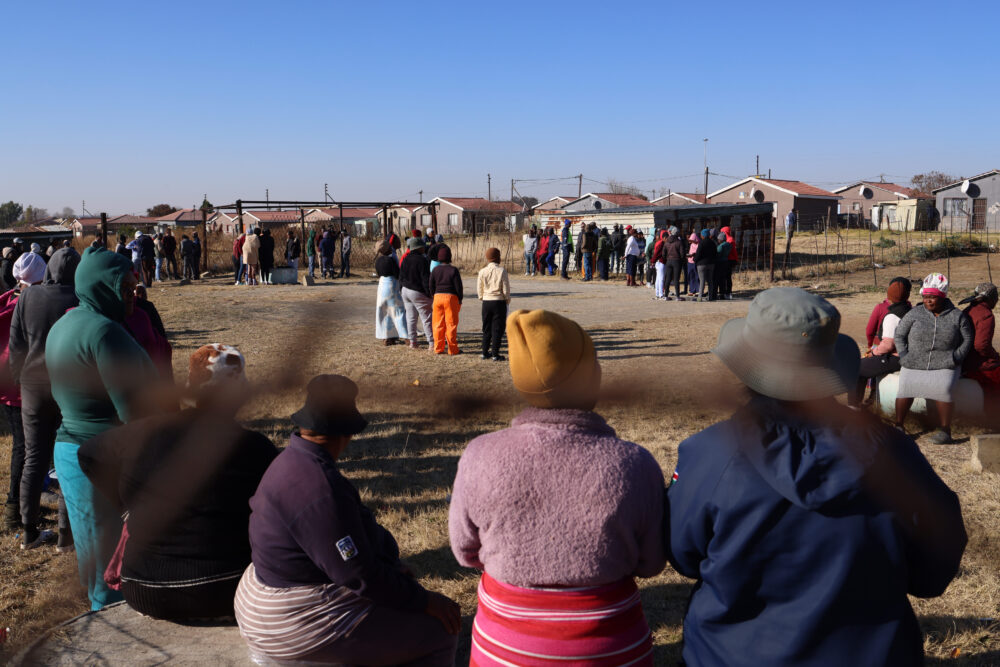 A new climate-smart horticulture centre at Eskom’s Grootvlei power station, backed by the Netherlands, is testing how South Africa’s energy transition can deliver jobs, food security and skills
For the Netherlands, the partnership is deliberately practical. “We are committed to deliverables. We will continue to support knowledge transfer and training,” Doornewaard said.
As part of that commitment, the Netherlands will appoint a full-time liaison to support coordination and development of the agrihub concept, while the embassy’s agriculture team will remain closely involved to ensure continuity.
“The idea is to make this work so that it can scale up later on. Sustainable jobs come from enterprises and investment — not only from the demonstration site itself.”
Local ownership has been central to the project’s design from the outset. Planning began in 2022 and progress was deliberately measured.
“It really takes time,” Doornewaard said. “You want that ownership, working with the local community.”
The centre has also been designed with young people in mind.
“It’s going to be high-tech,” she said. “It’s not just being a farmer — of course, it’s a respectful job — but it’s also to attract the youth so that farming with high-tech, climate-smart technologies, to offer that and to train people in that and to take it forward, is very exciting.”
In its first phase, eight community members will be trained as greenhouse facilitators. Over time, about 75 local agripreneurs are expected to pass through a structured, multiyear development programme. Many are expected to establish their own small enterprises, creating additional sustainable employment beyond the centre itself.
“It’s about skills and local pride and that will give this initiative credibility and also make it sustainable,” Doornewaard said. “That is what makes this initiative sustainable. From the start, the centre has been designed to be locally operated and locally anchored, so we work with local partners.”
Operationally, the centre is locally anchored. Day-to-day management is handled by Earn, a specialised agricultural project in Mpumalanga, with training programmes and engagement developed alongside local farmers and partners.
Doornewaard noted that partnerships were based on business relationships and shared interests, not dependency. “That is essential for long-term continuity.”
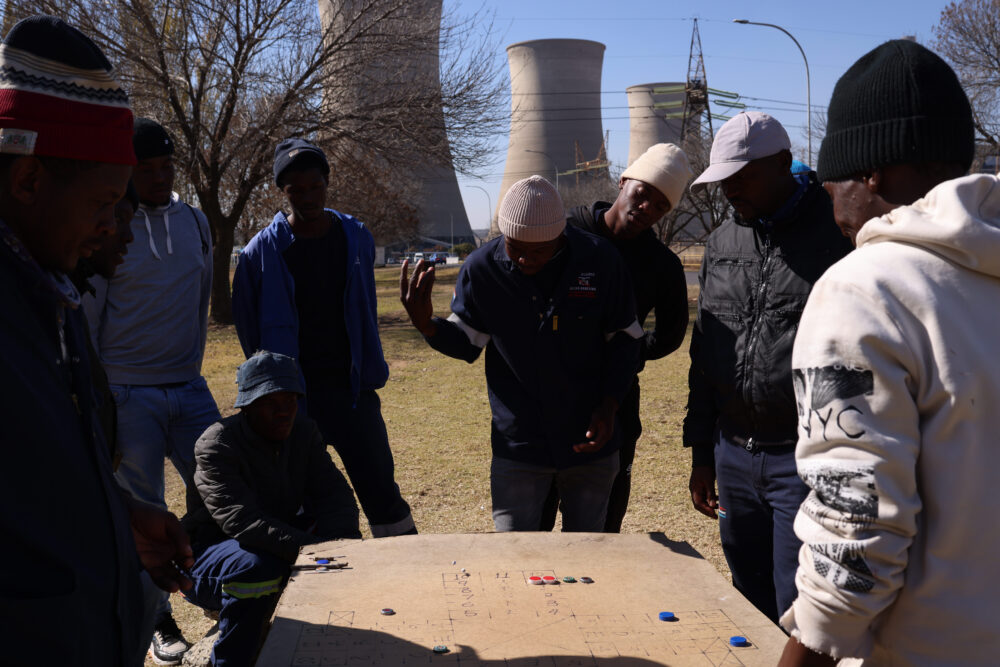 A new climate-smart horticulture centre at Eskom’s Grootvlei power station, backed by the Netherlands, is testing how South Africa’s energy transition can deliver jobs, food security and skills
The project is not positioned as a blanket solution for job losses linked to the eventual repurposing of the power station. Instead, it aims to open pathways and demonstrate alternatives. Training will be offered at different levels, with participants screened by Earn.
“For everybody, there should be an interest in being trained in these new technologies but also, there will be in the future, agripreneurs who will set up their own little businesses and greenhouses with the new technologies but they will also employ people who work in their little enterprise.”
Water has been a central concern from the outset. Before construction began, multiple environmental and water studies were conducted to assess local conditions and potential impacts — a process that contributed to delays but was considered essential.
“We did not want to move forward without a clear understanding,” Doornewaard said. “Responsible water management is very close to our hearts as the Netherlands.”
Climate-smart horticulture, she added, was among the most water-efficient ways of producing food and offered practical pathways to strengthen food security in Mpumalanga and South Africa more broadly, both of which are under increasing water stress.
“To show with land that’s right now at Eskom; is it wasteland land that cannot be used but you can use the area right now with new technologies to circulate the water in a very efficient way to grow your vegetables.
“Hopefully we can demonstrate that with the centre, so food production can be both productive and responsible in a very constrained environment …We hope to show something that can be taken forward; the Netherlands will be at the background, but to give people the skills to develop that further because we see a lot of possibilities.
“South Africa is such a vast country; there is such a lot of land and especially in these areas close to big urban centres where there’s a need for food, you have the communities there willing to step into that. We think it could offer a bright future … It shows that there are other ways, alternative ways to contribute to the energy transition.”
For now, the centre remains in its early stages. Crops such as tomatoes and cucumbers are being established, with harvests still to come. What is already evident, however, is strong local interest and participation, she said.
Eskom and the Netherlands said that the project illustrated how the just energy transition could deliver tangible socio-economic benefits by linking the repurposing of energy infrastructure with productive new land use.
Through climate-smart horticulture, the centre supported alternative livelihoods and inclusive growth, creating opportunities across the agricultural value chain — from production and training to processing and distribution.
“The partnership with the Netherlands reflects a shared focus on practical, integrated solutions. Dutch expertise in high-tech horticulture, efficient water use, energy-smart production systems and agricultural value chains is internationally recognised and directly relevant to the challenges facing Mpumalanga.”
Combined with South African knowledge and local leadership, the centre offers a “strong foundation for a future agrihub and long-term private-sector investment”, they said.
Doornewaard added that Dutch companies might become involved at a later stage but these partnerships would be driven by local choice and commercial viability. Eskom, she said, was providing the land, while the training facility laid the groundwork for what could evolve into a full agrihub.
“If it works — if it shows that it can deliver jobs, food and wellbeing for communities — then this is the way forward,” she added. “Adapted to this climate, these circumstances and contributing to the energy transition by showing that there are alternative ways to build a future.”