


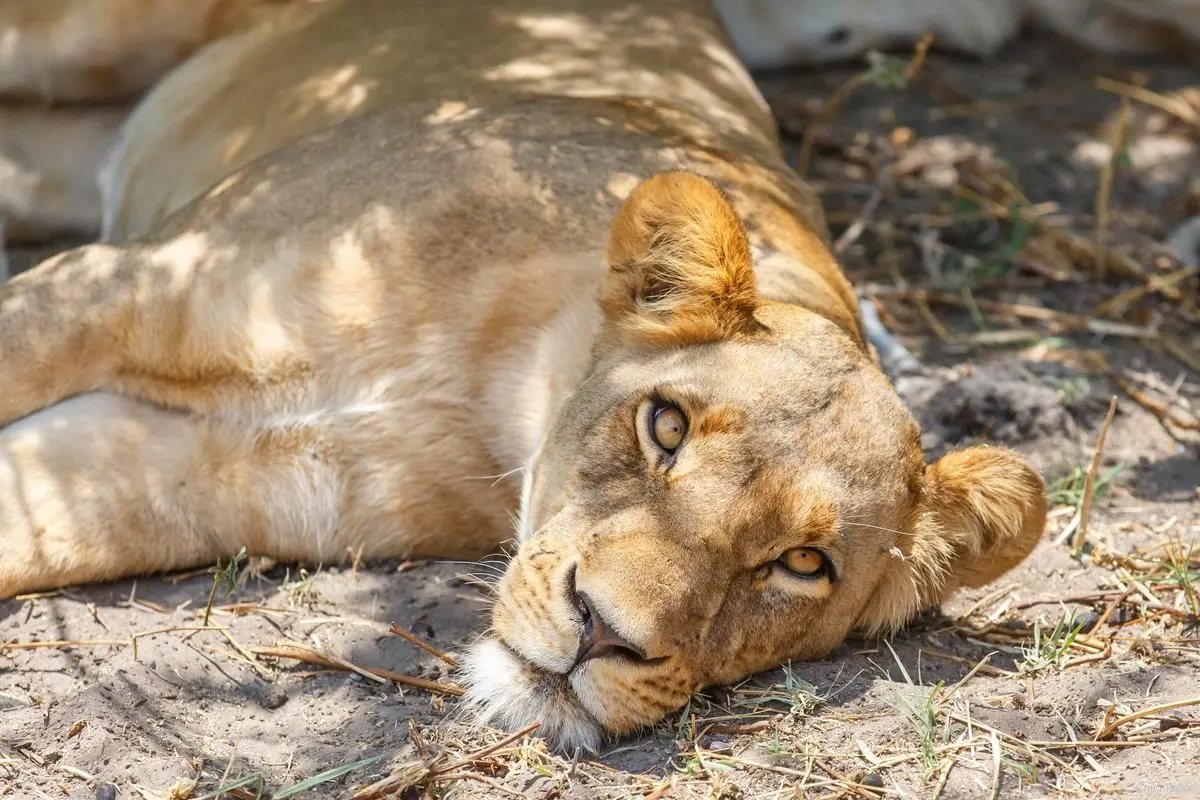
The targeted poaching of lions for their body parts is emerging as a major threat, putting African lion conservation at a critical crossroads, a new study has found.
Urgent action is needed because this represents a “potentially existential threat to the species,” the authors warned.
Published last week in Conservation Letters, the research was conducted by scientists from organisations including the Endangered Wildlife Trust, the Mammal Research Institute at the University of Pretoria, the Wildlife Conservation Network, the Wildlife Conservation Research Unit at the University of Oxford, Panthera and African Parks.
Lions have suffered one of the largest range declines of all carnivores. Only about 25 000 adult and sub-adult lions remain, occupying roughly 6% of their historic range. Threats include habitat loss, the depletion of their prey, retaliatory killings, cultural hunting, bycatch in snares and poorly regulated trophy hunting.
Even in protected areas, prey depletion and bushmeat snares pose serious risks. Many African countries have set aside significant protected areas that could support three to four times the current lion population if they were adequately funded and managed.
“The challenge will be ensuring the persistence of lions and other wildlife through the next few decades,” the authors said, noting rapid human human and livestock population growth, weak governance in many countries, widespread political instability and chronic underfunding of conservation.
Rising demand for lion parts
Over the past decade, reports of targeted poaching for lion body parts have increased, driven by local and transnational demand for traditional medicine and cultural practices, much of it supplied through the illegal wildlife trade.
While lion parts have been used for thousands of years, the trade appears to be changing. Although most parts are likely sourced opportunistically from natural deaths or other human-caused mortalities, direct and deliberate poaching is becoming “increasingly prevalent”, the study said.
Expanding cultural use within Africa, combined with persistent demand in Asia, has intensified both the scale and intent of poaching. Lions’ communal hunting and feeding behaviour also makes them particularly vulnerable to poisoning, where a single bait can kill multiple animals.
The study documented several recent cases in which giraffes were deliberately killed and used as poisoned bait to attract lions, a method that “demonstrates a level of forethought and coordination characteristic of organised poaching networks”. Poisoning frequently affects other species too, including vultures and eagles.
Complex, cross-border trade
Demand spans cultural, spiritual and commercial purposes across Africa and Asia. Lions are revered for attributes such as strength, power, protection and nobility.
In South Africa, parts are linked to the Umndawu ancestral spirit; in Uganda, fats and oils are used in spiritual practices; skins signify royalty and supernatural power. In western Tanzania and West Africa, lion parts are incorporated into amulets, rituals and commercialised spiritual services, sometimes far from their natural range.
Market surveys highlight the scale of demand. In Senegal, domestic use may require between 32 and 169 lions annually, despite the country having only 35 to 45 wild lions.
Molecular analysis has linked seized skins to Cameroon, while lion parts continue to be sold in West African countries where lions have long been locally extinct.
In Southeast Asia, demand is largely linked to perceived medicinal and cultural value, sometimes as substitutes for tiger parts. Lion bones, teeth and claws from South African breeding facilities have been exported to countries including Vietnam, Thailand, Laos and China since the early 2000s.
The authors said growing Asian diaspora communities in Africa and expanding trade links may further facilitate cross-continental trafficking. Seizures, arrests and investigations point to overlap between lion part trafficking and other illicit wildlife trades, including ivory, rhino horn and pangolin scales.
Some trade is highly organised. Seizures include 17 lion skulls in Lusaka in 2021 and more than 300kg of body parts in Maputo in 2023. Many parts likely came from captive-bred lions, but these incidents indicate cross-border crime networks, the study said.
“Neither the motives nor the body parts targeted are limited,” the study said, noting that trade networks range from small-scale local activity to highly organised international operations.
Captive breeding and poaching dynamics
Captive breeding on private land in South Africa and to a lesser extent elsewhere, produces lion skeletons, teeth, and claws for trade, permitted under legal quotas until 2018 and reduced to zero in 2019.
“Although this supply may affect market dynamics, its effect on wild-sourced demand remains uncertain,” the study said.
Initially motivated by hunting sales, captive breeding later created a secondary trade in lion parts. Between 2008 and 2017, legal exports of skeletons from South Africa mainly went to Southeast Asia.
“Some commentators suggest that opening trade with Asia created links that did not previously exist,” said the report. “Others argue that restrictions on legal trade pushed traders to poach wild lions.”
The authors noted that the link between legal trade volumes and poaching of wild lions is unclear, though Mozambique offers insight. Between 2010 and 2023, 326 human-related lion mortality events were recorded, with 25% because of deliberate poaching for body parts. Known annual poaching cases rose from one (2010 to 2017) to seven (2018 to 2023).
Geographic spread
Targeted poaching for lion body parts is increasing in frequency and geographic spread across the continent. While some body parts are taken opportunistically, such as from lions caught in bushmeat snares, the researchers warn this still reflects a growing and recognised value for lion parts in trade.
Although lion poaching in Mozambique has been documented for years, evidence suggests it is spreading into neighbouring countries, particularly protected areas along its borders.
In the Kruger National Park, lion populations in the northern 20% of the park have declined by up to 63% over 18 years, a drop anecdotally linked to increased targeted poaching and snaring bycatch.
In Zimbabwe’s Gonarezhou National Park, a 2021 survey recorded unexpectedly low lion numbers in the park’s southern region. While the precise causes are unclear, targeted poaching may be a contributing factor. In response, conservation authorities have implemented focused lion monitoring to enable rapid responses to emerging threats.
In northern Botswana, poaching syndicates historically focused on elephants and rhinos have increasingly targeted lions, driven by growing demand in the illegal wildlife trade.
Several lion poaching incidents occurred alongside elephant poaching in the same areas, suggesting coordinated cross-border syndicate activity and a diversification of illicit operations.
In West Africa, lion and leopard products are widely sold in Senegal, with demand rising.
A Panthera survey found that nearly 80% of markets visited sold products from both species. Researchers estimate that between 32 and 169 lions are killed annually to supply this trade, potentially sourced from the W-Arly-Pendjari Complex and neighbouring countries.
Conservation response
Safeguarding the future of Africa’s lions requires adequately funded, staffed and equipped parks, the authors said.
General anti-poaching patrols are often insufficient; targeted monitoring of prides, intelligence-led enforcement and rapid response mechanisms are more effective.
Local communities are critical to success. Addressing human–lion conflict, improving livestock protection and creating conservation-linked livelihoods can reduce incentives for poaching.
Stronger laws, consistent prosecution and meaningful penalties are also essential, alongside demand-reduction efforts that respect cultural practices while promoting alternatives to wild-sourced lion parts.
The authors concluded that if poaching pressures are reduced and governments, NGOs, communities, and landowners are supported, declines can be stemmed and recovery achieved. Conversely, unchecked poaching could lead to rapid extirpation in some areas and severe reductions in others.