


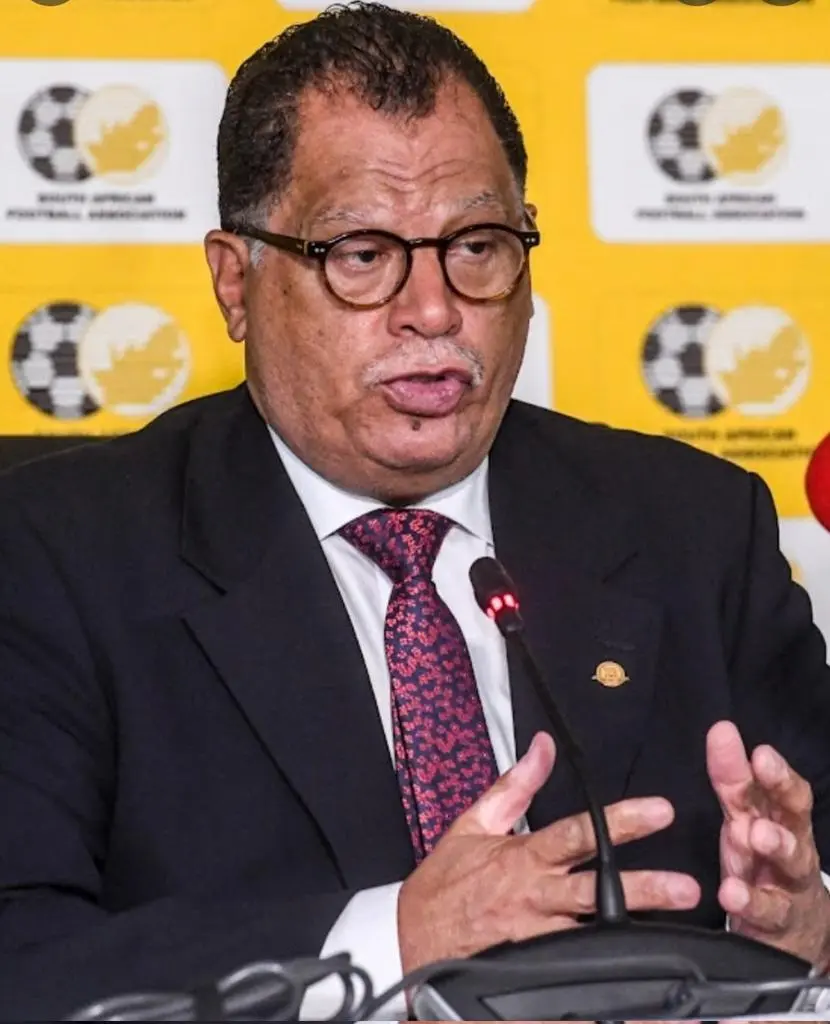
In the aftermath of Danny Jordaan’s re-election as president of the South African Football Association (Safa) for a fourth consecutive term, defeating businessman and AmaZulu FC president Sandile Zungu, a revealing statement from Tankiso Modipa has brought long-simmering questions about leadership renewal into sharp focus. Modipa, a Safa national executive committee (NEC) member, Western Province chairperson and national convenor of the Football Transformation Forum (FTF) that backed Jordaan, articulated a philosophy that appears to define the organisation’s approach to power. “We were taught by our elders at Safa that we can never have someone who comes from outside the regions to lead Safa, for various reasons,” he said. He added that candidates must understand the organisation “from the lowest to the highest structures,” arguing it “cannot be correct that we get someone from outside Safa to lead Safa” because the body must protect its integrity when competing with other African nations at COSAFA and CAF levels. Zungu, in this framing, “only understands business” and would need to start at the local level if he wished to try again.
These remarks are more than post-election commentary. They crystallise why Safa continues to operate without a credible, transparent succession plan and why that absence is deeply concerning for the future of South African football.
Succession planning is a basic requirement of any serious organisation. It ensures institutional knowledge is transferred, leadership pipelines are developed and the entity is not held hostage to the longevity or personal networks of a single individual. Jordaan has led Safa since 2013. He previously indicated after the 2022 elections that the term would be his last, only for the FTF to mobilise support for a fourth run. At 75, and with the next cycle taking him toward 79 if he completes it, the question of who comes next cannot be deferred indefinitely. Yet Modipa’s comments suggest the preferred answer is someone already deeply embedded in the regional structures and the prevailing organisational culture. Outsiders — even those with proven administrative, commercial or sporting credentials — are viewed with suspicion unless they first serve lengthy apprenticeships within the system.
This stance creates an obvious structural problem. If only those who have risen through Safa’s regions and internal culture are deemed acceptable, the pool of potential leaders shrinks dramatically. It privileges continuity of networks and loyalty over fresh perspective, specialised expertise or demonstrated results elsewhere. The result is an organisation that risks becoming self-referential, resistant to external scrutiny and slow to adapt. Red tape, whether formal constitutional requirements, informal cultural gatekeeping or the practical difficulty of building regional support without existing patronage, functions as a barrier. A talented administrator, corporate leader or football innovator who has never chaired a local Safa region may possess exactly the skills needed to modernise governance, professionalise commercial operations or overhaul youth development. Under the doctrine Modipa describes, that talent is effectively disqualified before the conversation begins.
The consequences are not abstract. South African football has long struggled with governance controversies, delayed regional grants, factional battles between groups such as the FTF and Save Our Safa and questions about financial transparency and accountability. When leadership selection prioritises cultural fit and regional tenure above all else, these problems become harder to resolve. New ideas are filtered through the same entrenched interests that may have contributed to the difficulties in the first place. External talent that could inject commercial discipline, independent oversight or different approaches to talent identification and coaching pathways is kept at arm’s length. The organisation thereby forgoes the possibility of genuine elevation.
Modipa’s defence of the system rests on the claim that understanding grassroots realities is essential and that outsiders lack the necessary insight into South African football’s particular dynamics. There is partial validity here. National leadership that is completely divorced from local structures can become out of touch. Institutional memory matters. Yet the argument is stretched beyond reason when it becomes an absolute bar. Many successful federations and sporting bodies deliberately recruit leaders with hybrid profiles, people who combine insider knowledge with external experience in business, law or other sports. They create pathways for capable outsiders to enter at senior levels while still requiring them to engage with the grassroots. Safa’s apparent preference for pure insiders does the opposite: it elevates the culture of the regions and the NEC as both the training ground and the exclusive qualifying criterion.
This approach also undermines accountability. If the only people who can lead are those already steeped in the organisation’s ways, criticism of those ways is easily dismissed as coming from people who “do not understand”. Succession then becomes less about preparing the next generation of capable stewards and more about managing the transition among those who already share the prevailing worldview. Workshops on “succession plans” that primarily serve to consolidate support for the incumbent, as occurred in the lead-up to the recent elections, illustrate the point. Genuine planning would identify and develop multiple potential successors over years, give them visible responsibility and measure them against clear performance metrics. Instead, the conversation remains dominated by loyalty tests and regional mobilisation.
The missed opportunity is significant. South African football possesses undoubted talent, on the pitch, in coaching and in the broader ecosystem of administrators, sponsors and community organisers. Some of that talent sits outside Safa’s formal structures or has only limited exposure to them. By treating regional immersion as a non-negotiable prerequisite for the highest office, the association signals that it values cultural continuity more highly than the possibility of transformation. Great talent that could elevate the organisation, improving its commercial sustainability, strengthening its developmental pathways or restoring public confidence through transparent governance, is prevented by red tape and an inward-looking philosophy from ever reaching the leadership position where it could make the greatest difference.
None of this requires the abandonment of grassroots engagement. It does require a more open, merit-based approach to leadership selection. Safa could maintain requirements for familiarity with the structures while still creating accelerated pathways for proven outsiders, independent evaluation of candidates’ records and formal succession processes that look beyond the current factions. Until that shift occurs, the organisation will continue to appear more concerned with protecting its internal culture than with securing the best possible leadership for the game. Modipa’s statement has made the underlying logic explicit. The concern it raises about the absence of meaningful succession planning is not alarmist. It is a straightforward observation about an institution that risks prioritising who belongs over what the game needs.
Lelo Mzaca is an award-winning, multitalented journalist, copywriter and presenter of The Big Breakfast Show on Radio 2000. He has an overwhelming passion for sport, lifestyle, music, arts and culture.