


The discovery of 11 women’s bodies in Ekurhuleni since July has left communities demanding answers, but it has also raised a difficult question about how the killings should be understood while police are still investigating whether they are connected.
For some, the number of women killed in a relatively short period has placed the deaths firmly within South Africa’s wider crisis of gender-based violence and femicide. Others believe investigators should first establish who killed each woman and why before the cases are collectively described as femicide.
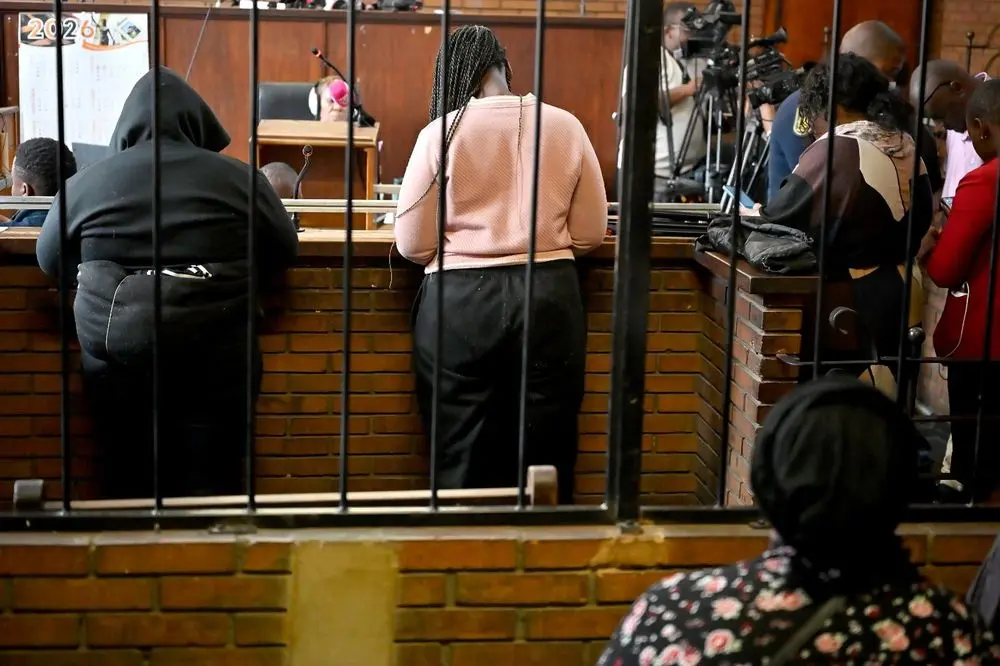
The recent arrest of two women in connection with the murder of Jabulile Ntimba has added another layer to the debate. Fortunate Masilela, 31, and Tsakane Nester Msithini, 38, are facing charges in connection with Ntimba’s murder and the alleged defeating or obstruction of the ends of justice. A male suspect who was arrested with them was later released without charge.
Their case does not establish any link to the other killings, but it has challenged assumptions about who may be responsible for the deaths. It also illustrates why investigators are being urged to follow the evidence in each case rather than work from assumptions about a possible perpetrator.
Kwa-Thema resident Katlego Nhlapo, who has been closely following the developments, believes the cases should initially be approached as individual murders while investigators work to establish the identity of the perpetrators and their motives. “I’m not ruling out that these are femicide cases. It is better to investigate them as crimes against life first because that is what they first are, before they become femicide cases,” Nhlapo said.
He argues that investigators do not yet know whether the killings were committed by one person, several people or by perpetrators acting for completely different reasons. He also cautions against assuming that the perpetrator is male simply because all the known victims are women. “We don’t know why they’re happening. Motive is what determines whether these cases are femicide cases or simply crimes against life,” he said.
For Nhlapo, establishing the motive is important because prematurely treating the cases as one gender-based crime could influence how the public understands them before investigators have established the facts. He believes the focus should remain on finding those responsible, understanding why the women were killed and giving their families answers.
“If they are treated separately, we might find that there might probably be multiple killers, multiple perpetrators,” he said.
His view comes as the state faces growing pressure to demonstrate that it is responding to the killings with urgency.
President Cyril Ramaphosa has confirmed that the investigation has been elevated to a national level, with detectives, Crime Intelligence, forensic specialists, investigative psychologists, digital investigators and other specialised capabilities involved.
Investigators are examining DNA, blood samples, clothing, cellphone devices and cellphone records, while the Council for Scientific and Industrial Research is assisting with digital forensic work.
Police have also made arrests in some of the cases, although they have continued to stress that the fact that the bodies were found in the same broader area does not by itself prove that the killings are connected.
The investigation is taking place against a backdrop of growing fear among women in Ekurhuleni, many of whom say the uncertainty has changed how they move through their communities.

Women For Change founder Sabrina Walter said women could not simply wait for investigators to establish whether the cases were linked before taking the threat seriously. “Women are already changing routes, sharing live locations, avoiding walking alone and avoiding going out after dark,” Walter said.
She welcomed the arrest of a suspect in the murder of Ntombifuthi Nxumalo but stressed that an arrest is only the beginning of the criminal justice process. She said communities need investigations that lead to successful prosecutions and appropriate sentences, while authorities need to communicate more regularly with residents without compromising active investigations.
For Walter, the responsibility cannot continue to fall on women to make themselves safer while the systems meant to protect them struggle to respond.
She called for visible policing around transport routes, stations and isolated areas, faster responses when women and children are reported missing, properly investigated GBV cases, functioning forensic systems and stronger cooperation between police and prosecutors.
The disagreement over how the Ekurhuleni killings should be understood reflects a broader tension between the need to identify patterns and the need to avoid drawing conclusions before evidence is available.
For Nhlapo, the immediate priority is establishing who is responsible and what motivated the killings. For women living with the fear created by the deaths, however, the fact that 11 women have been found dead is already enough to change how they experience everyday life.
Walter said women should not have to calculate the risk involved in ordinary activities such as travelling home, going for a run, using public transport or simply walking through their neighbourhoods.
As investigators continue trying to establish whether the cases are connected, the central questions remain unanswered.
Who killed the women, why they were targeted and whether the deaths form part of a wider pattern are questions that only evidence from the investigations can settle.
Until then, the debate continues between those calling for the killings to be understood within the country’s wider femicide crisis and those urging investigators to establish the facts of each murder before drawing broader conclusions.