


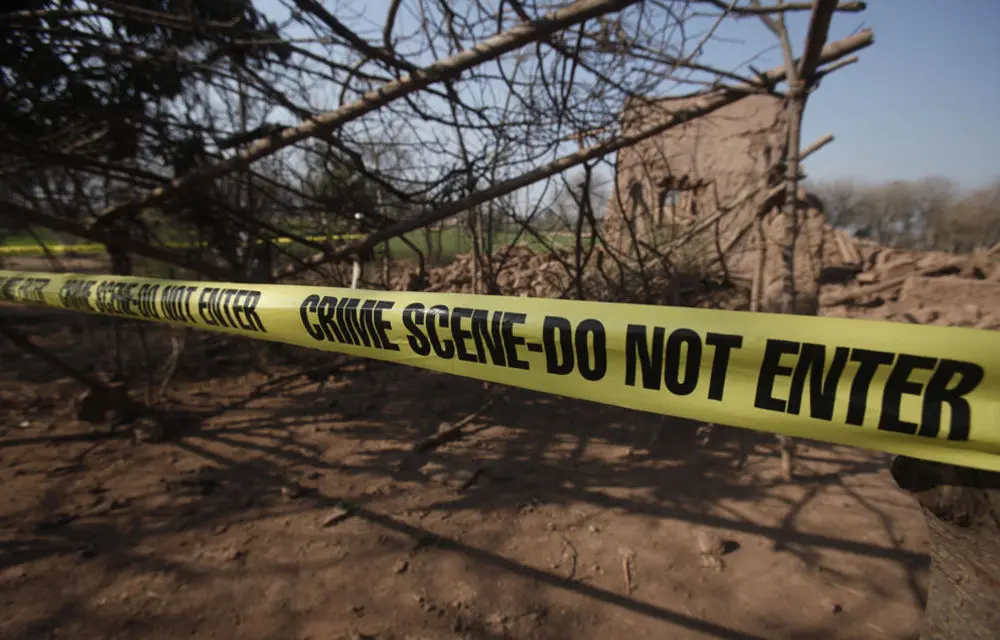
A child goes to a shack in Jeffsville, Atteridgeville, hoping to get money for food before school. Instead, the child discovers the bodies of nine people who have been shot dead. It is a devastating discovery that has once again brought South Africa's mass shooting crisis into focus.
The attack on Sunday night, 15 November, was followed by another tragedy in Sweetwaters, KwaZulu-Natal, where eight men were found dead inside a bullet-ridden vehicle. Seventeen people were killed in two separate incidents within hours, in communities more than 500km apart.
But these shootings are not happening in isolation. Across the country, mass killings are raising questions about the influence of organised criminal networks, the availability of illegal firearms and the competition for control of lucrative criminal activities.
Research by the Global Initiative Against Transnational Organised Crime recorded at least 41 mass killings and around 196 deaths in South Africa between January and September 2026. The organisation warned that the figures could be an undercount.
The scale of the problem becomes clearer when looking at some of the incidents that have left communities devastated this year.
In June, the Jumpers informal settlement in Cleveland, Johannesburg, was left reeling after gunmen opened fire, killing 13 people and injuring 14. Three suspects were subsequently arrested, although police continued searching for other alleged participants.
In August, five people were killed in a shooting in Langa, Cape Town. The attack formed part of a wider pattern of deadly violence across the Cape Flats, where communities have repeatedly raised concerns about gang activity, territorial disputes and illegal firearms.
In September, another devastating attack took place at a tavern in Wedela, near Carletonville. Eighteen people were killed and 18 others injured. Police have since confirmed the arrest of a Lesotho national in connection with the killings, while investigations and efforts to trace other suspects continue. The incident also raised questions about possible links to illegal mining activities and rival groups operating in the area.
The possible motives behind these attacks vary.
Police investigations and reports have pointed to armed robberies, extortion and protection rackets, illegal mining rivalries, taxi route disputes and gang-related territorial battles.
These are not interchangeable explanations, and each incident requires its own investigation. However, the recurrence of these criminal activities points to a broader challenge involving control of territory, money and illegal markets.
Extortion, for instance, has become a concern for businesses and communities in parts of the country. Small business owners, including spaza shop operators, can face demands for protection fees, while those who refuse may be threatened or attacked. In areas where illegal mining operations are active, competition over access to resources and territory can also fuel violent confrontations. Taxi-related disputes and gang rivalries add another layer to an already complex security environment.
In Atteridgeville, police are examining a possible connection between the latest killings and the December 2025 Saulsville hostel massacre, which claimed 12 lives and left 13 people injured. One of the nine victims was a person of interest in that earlier investigation. Police have also identified possible territorial disputes and extortion involving spaza shops as lines of inquiry. These remain investigative leads, rather than established motives.
The wider consequences are difficult to ignore. According to figures cited by the Associated Press from official police statistics, South Africa recorded 5 427 murders between April and June 2026, with firearms used in more than 2 500 of those killings.
For communities struggling with poverty, unemployment and limited access to reliable policing, the threat is not confined to those involved in criminal disputes. Residents, children, business owners and people going about their everyday lives can become victims. A tavern, a family home, a small business or a residential settlement can suddenly become a crime scene.
The challenge for law enforcement is therefore bigger than identifying the people who pull the triggers. It requires disrupting the networks that finance criminal activity, tracing illegal firearms, strengthening intelligence operations, protecting witnesses and ensuring investigations result in successful prosecutions.
Arrests are important but they cannot be the only measure of progress. Communities also need to see sustained action against the people who organise, finance and benefit from criminal operations. Without addressing those structures, investigations risk dealing with individual incidents while the conditions that allow violence to continue remain in place.
South Africans should not have to weigh the risks of attending a tavern, running a small business or spending an evening at home. When ordinary places become crime scenes, the cost of organised violence is carried by entire communities.
The question is how many more lives must be lost before the networks behind this violence are effectively dismantled?