No comment (yet): Given Mkhari’s MSG Afrika is a majority shareholder in Rhythm FM. Disgruntled shareholders are concerned about the fate of the radio station. Photo: Gallo Images/City Press/Elizabeth Sejake
Shareholders of the Eastern Cape’s Rhythm FM, which received taxpayer funding of R49.5-million, have criticised the “dead air” at the station, seven years after its licence was approved.
The station was meant to provide coverage to the Eastern Cape, and has been beset with delays ranging from signalling problems and the alleged failure to convene a board.
The Independent Communication Authority of South Africa (Icasa) had given the station eight months from October to go live, after Rhythm FM had missed successive previous deadlines.
That deadline ends at the end of this month. However, shareholders say they have heard nothing about any progress to going live.
Documents seen by the M&G show that the Industrial Development Corporation (IDC) and the National Empowerment Fund (NEF) provided a collective R49.5-million funding facility, with the station’s shareholders investing the remaining R2.5-million.
The IDC provided R41.1-million and the NEF R8.4-million, according to a Rhythm FM document dated November 2018. According to the share register, the NEF was issued its shares in May 2017 and has a 15.76% stake in the station.
The M&G reported in December that Given Mkhari, the chair of MSG Afrika, which owns Power FM and Capricorn FM, has a 19.8% shareholding in Rhythm FM, had been accused by shareholders of mismanaging monies from the development funders. This, sources claimed, was the reason for the stalled launch.
[related_posts_sc article_id=”369737″]
MSG Afrika was the only entity not to have its shareholding diluted to incorporate the NEF into the business.
In December Mkhari had delegated his response to the station’s sole director, Nkhume Kudzingana, who dismissed mismanagement claims, saying the delays were caused by signalling issues. Kudzinga also said Icasa had given the station eight months from October to launch.
Both Mkhari and Kudzingana failed to respond to questions sent on Monday, and ignored repeated calls and messages asking for comment.
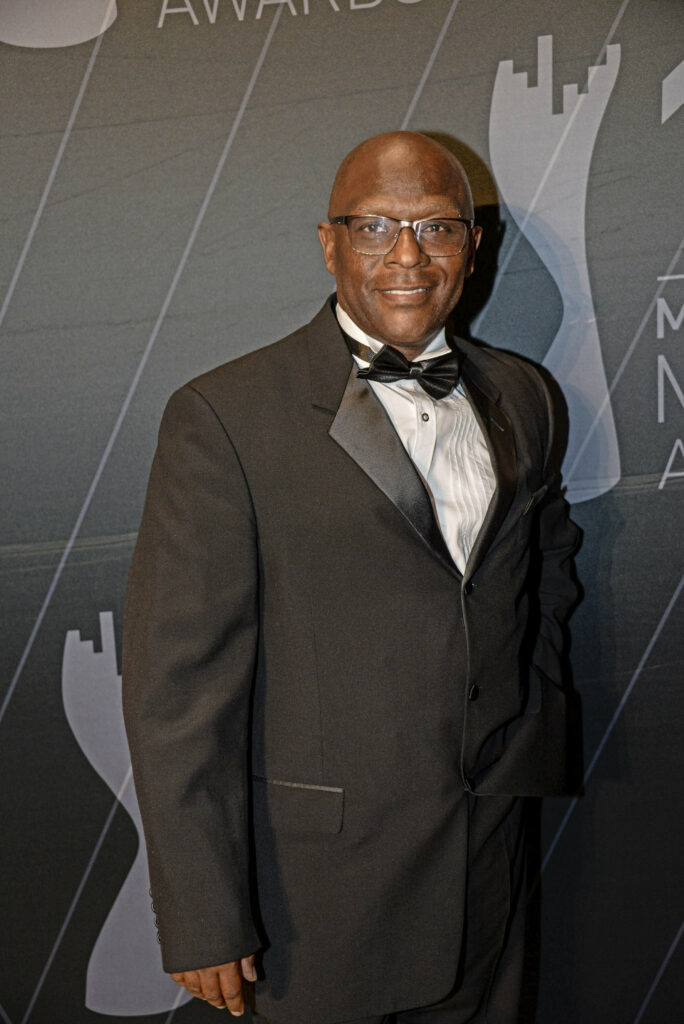 Award winner: Putco Mafani. (Photo by Gallo Images/Oupa Bopape)
Meanwhile veteran broadcaster and radio presenter Putco Mafani, who left the SABC in 2017 to become Rhythm FM’s station manager, spoke of his “pain” because of the station’s delayed launch.
Mafani said it had become apparent to him that something was amiss when he was not paid for the latter part of 2019, nor all of 2020.
“The whole thing cost me emotionally and financially with the creditors. My phone hasn’t stopped ringing with young talent I was recruiting still trying to find out when Rhythm will be going on air,” Mafani told the M&G. Mafani was part of the Amazomoya Media Consortium, which had a 12.9% stake in the business.
In April, Mafani was approached to return to SABC radio station Umhlobo Wenene, where he spent nine years building a significant fan base from his award-winning breakfast show.
Mafani said he still has hope that the station will one day go on air, stating that the launch “remains a dream, ambition and passion, but it has to be done the right way”.
“I don’t believe in the seriousness of the launch without the consent, endorsement and participation of the rest of the shareholders. If MSG wants to launch they must do the right thing,” he said.
Bonnke Shipalana, who was a director at the station before he resigned, said he was unaware of the daily running of the station because shareholders had been kept in the dark. Shipalana, who is part of the Shimama Consortium of shareholders, has a 16.1% stake in the station.
“Nothing much has changed since you spoke to me in December. Shareholders have not received any new information about Rhythm FM. I don’t know what is happening inside the company because I have resigned as a director,” he said.
He added that he was still hoping that the station would launch “soon” because he believed that black people should begin owning their platforms, and in provinces owning their own radio stations.
“I don’t have any regrets from investing in Rhythm FM … the process must never take away from the objective. It is the same [as asking], ‘Do blacks need to own their land?’ The answer is yes.”
Thabiso Phethuka, the chief executive of the Eastern Cape Disability Economic Empowerment Trust, also registered his displeasure and disappointment at the delayed launch, saying it was detrimental to enlightening the public about issues related to people living with disabilities.
We “hoped that we will at least have one radio station in the country that could mainstream disability and ensure full inclusion. It could have brought correct terminology in the media space [and] break down barriers to access to information and entertainment,” Phethuka said.
“However, [the empowerment trust has] observed a lack of transparency and poor governance. We feel [we were] used to secure the licence and are considering pulling out of Rhythm FM.” The trust has an 8.04% shareholding. Other shareholders include Women in Media, Bridge IT Communicators and AWCA Investment Holdings.
The Icasa, NEF and IDC failed to respond to questions sent on Monday.
[/membership]