In an historic conservation milestone, four cheetahs have been returned to the plains of a rewilded reserve in Mozambique, where the large cats were wiped out more than 60 years ago.
The two males and two females, sourced from private reserves in South Africa, were flown to the Maputo Special Reserve for the translocation project.
The reserve is managed by the National Administration of Conservation Areas (Anac) of Mozambique and the Peace Parks Foundation.
The cheetahs will remain in holding bomas for a three-week acclimatisation period, before being released into the larger 104 200ha reserve.
“We have been committed to expanding and safeguarding the precious ecological assets of Maputo Special Reserve, a region that protects the best of Mozambique’s natural heritage,” said Mateus Mutemba, the director general of Anac, in a statement.
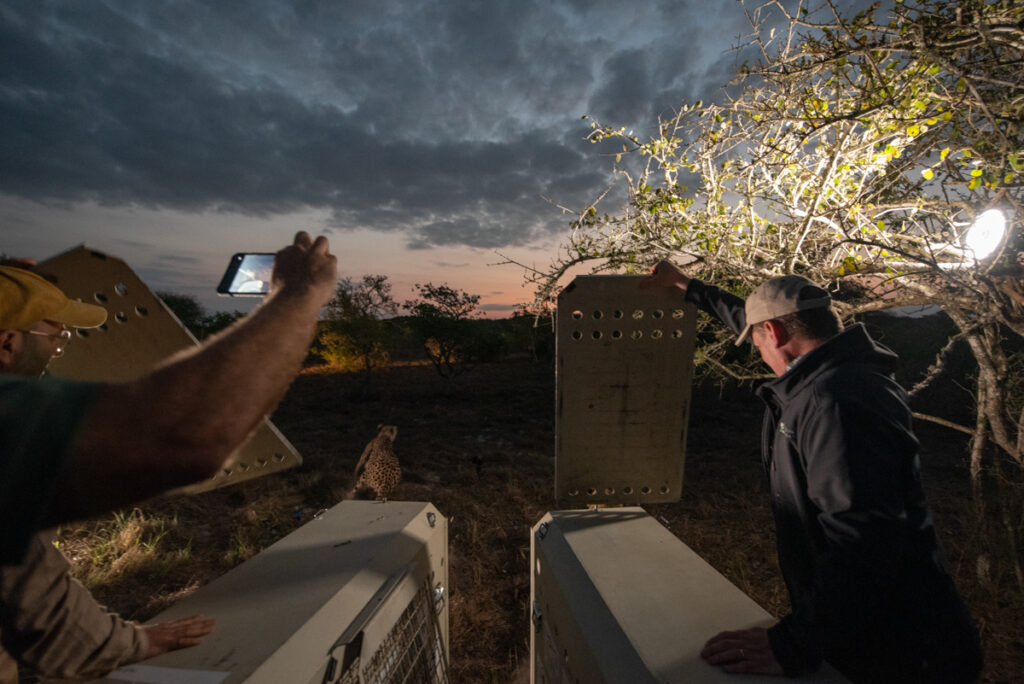 4. A night-time release of the second pair to arrive within their own holding boma in Maputo Special Reserve. Photo: Peace Parks Foundation
“Through our partnership with Peace Parks, the reintroduction of cheetah is yet another historic conservation milestone in Mozambique and in the ongoing development of the reserve into a self-sustaining operation that generates revenue for the communities living in the area.”
According to the Peace Parks Foundation, in 2010, the governments of Mozambique and South Africa, with support from the foundation, started a wildlife translocation programme to Maputo Special Reserve, reintroducing animals that were historically found in the area to enable the fast recovery and subsequent increase of the reserve’s wildlife populations.
The return of cheetahs to the reserve is part of an ambitious goal to establish a healthy metapopulation — a group of spatially separated populations of the same species that interact at some level — and contribute to cheetah conservation.
Cheetahs, which are listed as vulnerable by the International Union for Conservation of Nature, have been eliminated from 90% of their range on the continent, with an estimated population of only 6 600 left on earth.
The project was a collaborative effort by the Endangered Wildlife Trust (EWT), Ashia Cheetah Conservation and the Mozambique Wildlife Alliance.
A feasibility study by the EWT’s cheetah range expansion programme found that the richly biodiverse reserve is well suited to welcome back the cheetah.
The foundation said that expanding the range of cheetahs by relocating them into safe protected areas where they historically occurred is crucial to save the large cats from extinction.
The males were sourced from the &Beyond Phinda Private Game Reserve in KwaZulu-Natal, while an adult female and her subadult female cub are from the Waterval Private Game reserve near Kimberley.
Ashia donated the cheetahs and covered the costs of the translocation, including transportation, vaccination and the fitting of tracking collars, which will be used to carefully monitor the animals.
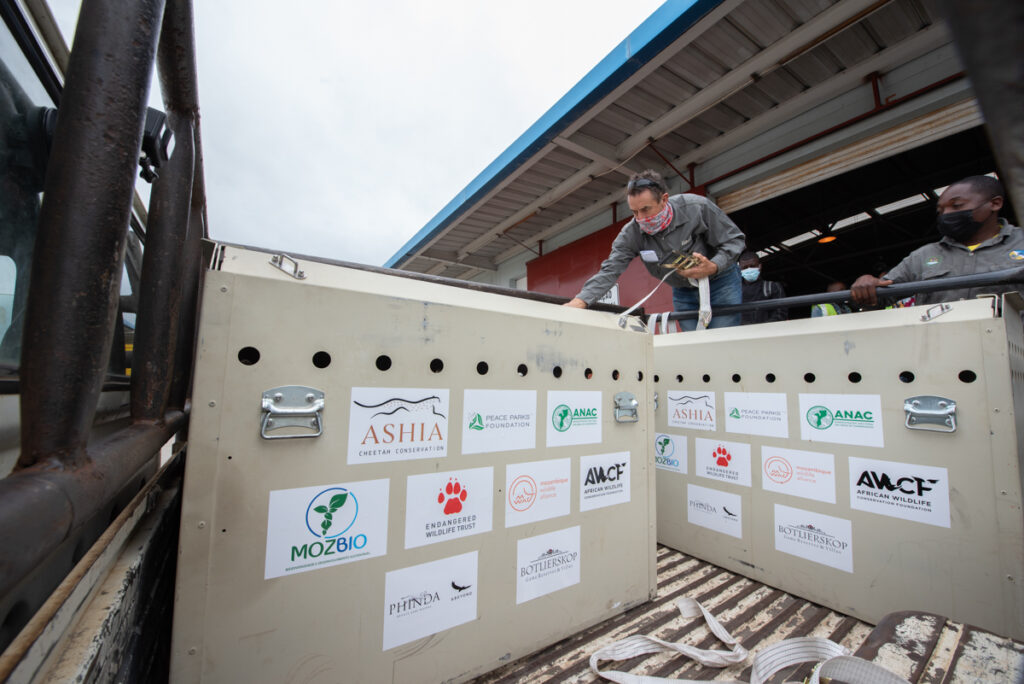 The four cheetahs were safely flown in by plane, from two private game reserves in South Africa. Photo: Ashia Cheetah Conservation
Vincent van der Merwe, project coordinator of the EWT’s project, said its reintroductions have doubled the cheetah metapopulation from 217 animals in 48 protected areas to 478 cheetahs in 67 protected areas across South Africa, Mozambique, Zambia and Malawi.
“The metapopulation in this network of protected areas constitutes the only growing wild cheetah population worldwide,” he said.
Nearly 5 000 animals, mostly antelope species, have been translocated to the reserve over the past decade, largely through funding support from the World Bank’s Mozbio programme, with animal numbers now estimated between 15 000 and 17 000.
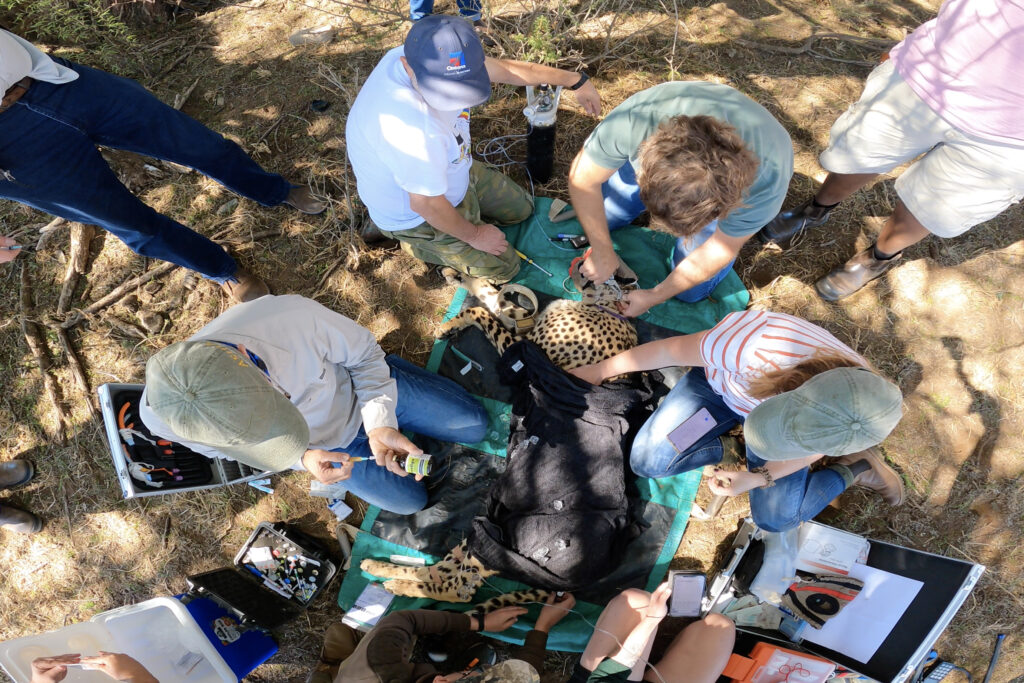 3. Decades of combined expertise between various conservation partners was harnessed to ensure the success of this milestone translocation. Photo: Ashia Cheetah Conservation
Reintroducing carnivores to ecologically restored landscapes is vital, according to Werner Myburgh, the chief executive of Peace Parks. “Not only is the rewilding programme in Maputo Special Reserve contributing to the reserve becoming a world-class wildlife and tourism destination, but restored ecosystems such as these are also critical carbon sinks to help contribute to mitigating climate change.”
The reserve falls within one of the world’s 36 most biologically diverse and threatened ecosystems, and is an essential component of the Lubombo Transfrontier Conservation and Resource Area, combining lakes, wetlands, swamp forests, grasslands and mangrove forests with a pristine coastline.
[/membership]