Week of hell: Armed residents gathered around fires at a ‘road block’ they’d set up in Phoenix on 15 July. Guillem Sartorio/AFP/ Getty Images
By tea time on day two of the public hearings on the deadly violence that swept Phoenix in KwaZulu-Natal and other parts of the country in July, questioning turned to racial prejudice, by way of semantics.
Members of the South African Human Rights Commission (SAHRC) asked Phoenix activist Sham Maharaj why he resisted terming the killing of the 36 mainly African victims of the violence that swept the area a massacre.
“That is something that the politicians and the media have sought to put out. I don’t think that it has been a massacre. It has been killings, that is true, people have died,” came the reply.
Evidence leader Smanga Sethene asked what his understanding of a massacre was, and Maharaj replied that, in his view, the murder of mineworkers at Marikana fell under the definition of the word.
Ntethelelo Mkhize was one of the victims. His friends were murdered that night while he himself spent two months in hospital after a brutal attack in Phoenix. He dismissed Maharaj’s testimony.
“Mr Maharaj was here for his own intention and purpose. On that day, there was no humanity shown. The Indians were killing people. And it seems to have been somewhat properly orchestrated. There was no one trying to assist us or maybe trying to help us to stop them from doing what they were doing to us,” he said.
Monday 12 July began as a typical day for Mkhize, he told the commission. He went out with his friends in Eshowe, just more than an hour’s drive from his home, KwaMashu, situated near Phoenix.
On their way back to KwaMashu, the group of nine adult men made a fatal decision to take a shortcut through Phoenix.
Testifying on day three of the public hearings Mkhize — a lecturer at a technical and vocational education and training college, who was severely injured during the unrest — told the SAHRC that, when the group returned from Eshowe, they entered Phoenix at about 3pm, which is when the “first phase of the victimisation” started.
They were stopped by a group of some 20 men, including children, whom Mkhize referred to as “Indians”. He claims the group insulted them by calling them “monkeys” and “Zuma’s people” before searching their vehicle. A confrontation ensued and, according to Mkhize, his vehicle was hit by an axe.
“People were lying down bleeding. Some were hacked or assaulted,” said Mkhize.
Three of Mkhize’s friends died that evening. He explained to the panel that he only heard of his friends’ deaths after he woke up from a three-week coma in hospital. He also found out his vehicle had been torched.
On Tuesday, 16 November, though, Maharaj was told by evidence leader Sethene that he seemed more concerned with the perception that people may form of Phoenix and not for the families who had lost their loved ones, indiscriminately killed during the unrest in Phoenix, in particular.
He reminded Maharaj that his testimony was meant to shed light on what had happened in Phoenix, but said that instead he repeatedly attempted to cast it as merely a part of the wider unrest that shook KwaZulu-Natal and parts of Gauteng for more than a week in mid-July.
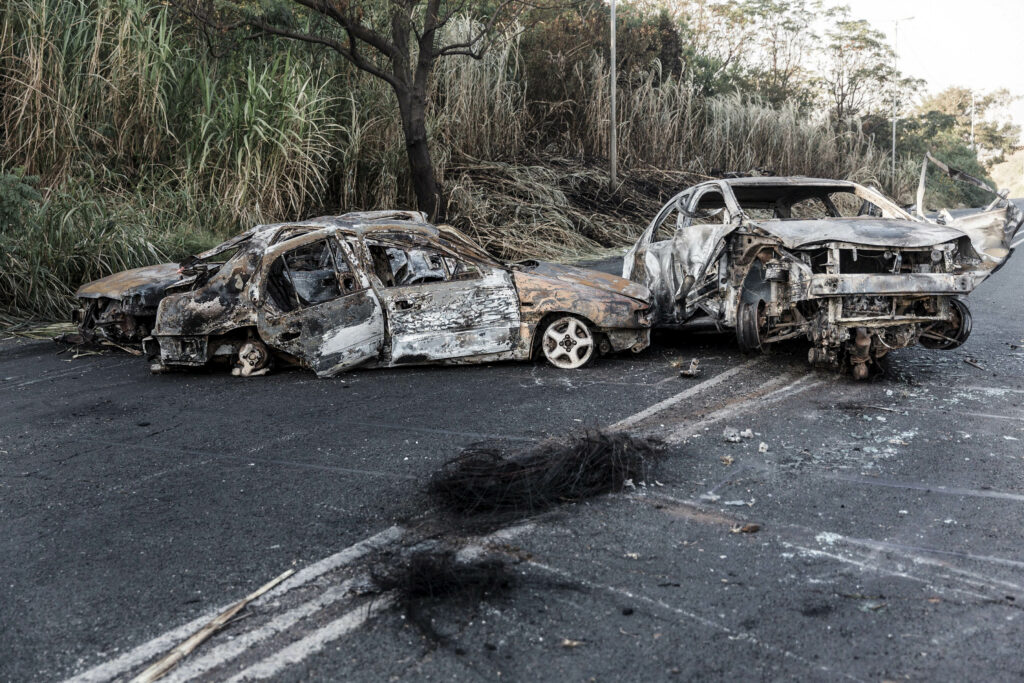 Cars were burnt and malls looted in the unrest in which 359 people died. (Rajesh Jantilal/AFP via Getty Images)
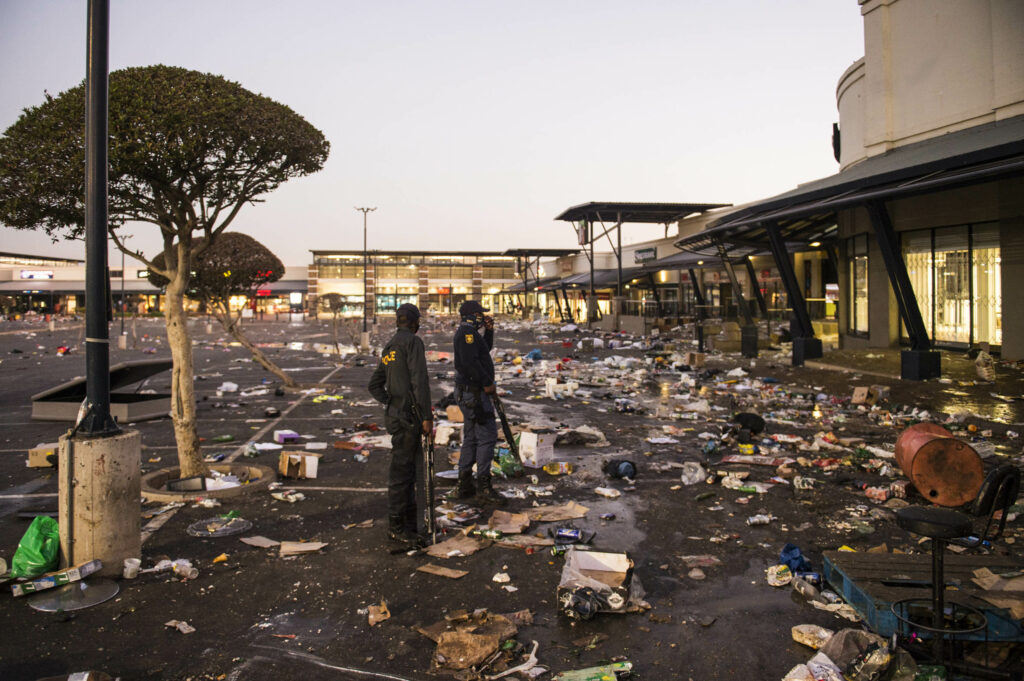
According to police figures, the death toll reached 359, with the vast majority of victims killed in KwaZulu-Natal. Hundreds of malls, banks and post offices were vandalised in the eight-day wave of violence estimated to have caused R50‑billion in damages.
Maharaj testified that prior to the unrest, triggered by protest against Jacob Zuma’s imprisonment for contempt of court, there was peace in Phoenix, which was founded in 1976 northwest of Durban and has a population of roughly 70% Indian and 30% African residents.
“There has been nothing. I have been an activist since 1997 and we have built a very cordial relationship. People worked together, people ate together, people played soccer together. In one week in July, this relationship got destroyed, the trust got broken.”
He recalled that hundreds of informal neighbourhood-watch groups sprang up overnight as people tried to protect their homes and families, and said he, too, had formed part of a group of 50 people who, unarmed, stood guard over their corner of the neighbourhood.
But Maharaj ventured that the events of July made plain how politics can put a match to tensions regarding inequalities in society, and that if the culprits were not brought to book and the underlying social problems not resolved, the country risked a repeat at any moment.
On Monday 15 November, the first day of the hearings that will run until 3 December, the first witness was Zama Nguse, whose teenage cousin died in the violence in Pietermaritzburg’s Khan Road Corner informal settlement, which borders two suburbs with a population of mostly Indian South Africans.
She described how, after businesses, including an Indian-owned liquor store, were ransacked, people from private security companies raided homes looking for the culprits and loot.
Later, amid the mayhem, she said “Indians” descended on the area and started shooting at people. She told the commission she was certain that she saw Nicholas Moodley, who was arrested and faces charges including murder and arson, shoot another woman in the settlement.
 Delwyn Verasamy
Thobani Nguse, a family member and fellow resident of Khan Road Corner settlement, said he was shot when the violence spread through the settlement. He testified that, along with other residents, he had stood up to looters and seized stolen liquor from them, with the hope of later returning it to the owners of ransacked stores.
He said he did not know who shot at him, leaving wounds he tended to himself because it was impossible to get medical treatment amid the chaos.
[/membership]