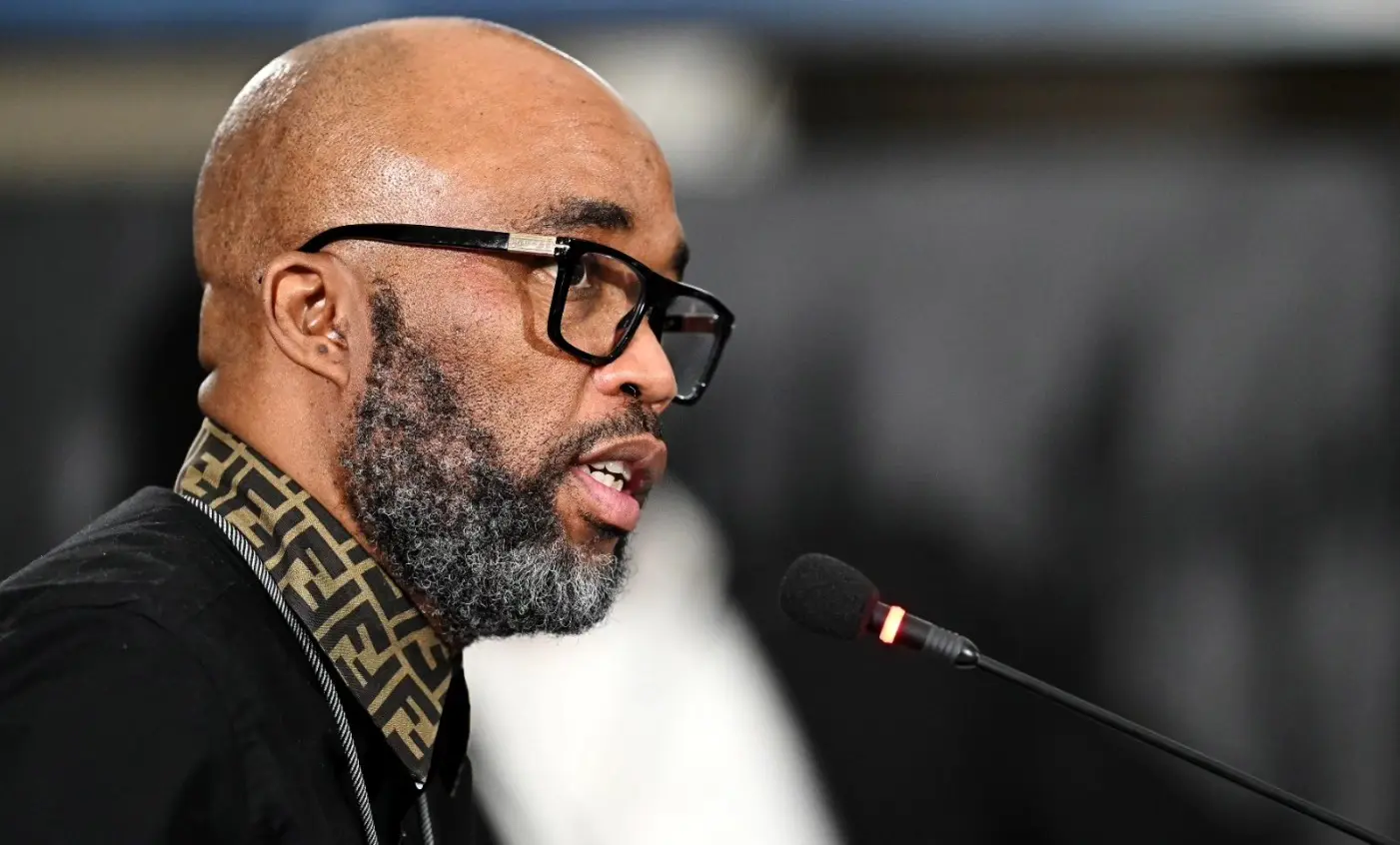


Balancing act: South African Reserve Bank governor Lesetja Kganyago has aimed to keep inflation anchored to 4.5%. (Waldo Swiegers/Bloomberg/Getty Images)
The South African Reserve Bank has hiked interest rates for the first time in three years, sparking criticism that the move will throw cold water on the country’s already glacial economic growth.
The 25 basis point hike — announced last week amid mounting inflation risks — comes ahead of another important event on the domestic calendar: the release of the country’s jobs data, which for each quarter since the advent of the Covid-19 pandemic has indicated record levels of unemployment.
Critics of the Reserve Bank’s inflation-targeting mandate have pointed out that the interest rate hike may only add to the country’s unemployment woes. Others argue that keeping interest rates at a record low would jeopardise price stability, hurting the poor.
In 2020, the Reserve Bank slashed the repo rate by 300 basis points to aid the country’s ailing economy, as it reeled from the effects of the pandemic, including lockdowns that hurt business activity.
But inflationary pressures, induced by supply-chain bottlenecks affecting countries recovering from the global health crisis, have stirred fears that advanced economies will start to dial back accommodative monetary policy. As they feel the itch to adjust rates to guard against high inflation, financial markets react and the rand stands to depreciate. A weaker rand means higher domestic inflation.
Hiking the repo rate, which affects the cost of borrowing, makes it less attractive to take out a loan, thus reducing the amount of money in the economy. As spending slows, it becomes more difficult to increase prices and inflation is kept in check.
‘Awful timing’
Trade union federation Cosatu’s parliamentary officer, Matthew Parks, said the hike is another obstruction to the country’s hamstrung job-creation efforts. “It means that consumers have less money to spend in the economy. They must spend more of that money paying loans to the bank. So that is money being taken out of the economy, which means less goods are being bought from companies and less jobs can be created at a manufacturing level.”
Businesses also lose out as a result of the hike, Parks added. “Companies have debt. So they would also struggle to expand production and create new jobs. A restaurant may be forced to hire one less waitress,” he said. “So it hits the economy on both fronts. It also sends a negative message to the public. When the repo rate is reduced, it gives a boost to confidence among businesses, investors and consumers.
“The hike does just the opposite and the timing is just awful,” Parks said. “We’re in a recession. We expect the jobs numbers to look worse next week. And we just had a medium-term budget in which there was not much in the way of new funding.”
The Reserve Bank’s monetary policy committee (MPC) flagged South Africa’s slower-than-expected economic growth in its statement last week.
It revised the country’s growth forecast slightly downwards, on the back of “the larger negative effect on output than was previously estimated from the July unrest and other factors”. The MPC has now forecast the economy will grow 5.2% this year, down from a previous forecast of 5.3%.
“The July unrest, the pandemic and ongoing energy supply constraints are likely to have lasting effects on investor confidence and job creation, impeding recovery in labour-intensive sectors hardest hit by the lockdowns,” last week’s MPC statement read.
“High export prices are expected to fade, perhaps faster than previously expected. Very weak job creation will moderate household consumption. Investment will remain constrained by the high risk of further load-shedding and ongoing uncertainty.”
The Reserve Bank must safeguard the value of the currency and protect the economy, Parks said. “The two are not separate. If inflation was escalating and was out of control, you would understand the Reserve Bank’s intervention. But this has not happened.”
‘A vague aspiration’
Domestic inflation has yet to breach the upper band of the central bank’s target range of 3% to 6%. South Africa’s latest consumer price index shows that inflation was unchanged, at 5% year on year in October compared with the previous month. However, the bank under its current governor, Lesetja Kganyago, has aimed to keep inflation anchored to 4.5%.
In the past Kganyago has defended the bank against criticism that it has failed to use monetary policy to stop South Africa’s unemployment death spiral.
An employment mandate for the Reserve Bank, Kganyago said during a public lecture in September, would have played out in one of two ways: “It might have been a vague aspiration, adding nothing to our existing concern for the state of the real economy. Or it would have been an excuse to make policy mistakes.”
“The easiest way to destroy price stability in South Africa would be to insist on low interest rates because of unemployment. Our labour market is so dysfunctional, this excuse would rule out ever raising rates — a policy that would leave us in the worst-case scenario of high unemployment and high inflation,” he said.
Economist Thabi Leoka said that when the MPC deliberates a rates hike, it considers a number of factors affecting the country’s economic health, including unemployment. “They will look at it [unemployment], but they don’t target it.”
Keeping interest rates low has little effect on the poor, many of whom don’t have bank loans in the first place, Leoka added. But the poor certainly do feel the pinch of inflation.
“To me this means that it is not so much about monetary policy … We’ve had the lowest interest rates in history for a long time now and yet unemployment is at its highest. And if you ask the average man in the townships or the rural areas whether the MPC’s decision to cut rates has made a difference to their lives, they will say ‘no’,” Leoka said
Time to de-link?
The role of monetary policy in aiding employment should not be exaggerated, said Dick Forslund, the senior economist at the Alternative Information and Development Centre: “You need a host of different measures. But, if you look at the literature, it is accepted that higher interest rates … lead to lower investments.”
Forslund called the rate hike “very unfortunate”.
“It also coincides with the worst austerity budget, reinforced by the mid-term budget, since 1994. Typically, you increase the interest rates when the economy is overheating,” Forslund said, adding that both fiscal and monetary policy were now acting as a block to South Africa’s economic recovery.
A 25 basis point hike might seem small, he said, but it “corresponds to billions of rands”.
“That money is basically taken away from the producing companies, businesses and consumers and instead handed over to the finance industry, the claimants of these credits,” Forslund said.
Policymakers are beholden to financial markets, which dictate the value of the rand and “are very powerful today”, Forslund said, adding that any move by the treasury and the Reserve Bank perceived to be progressive or pro-working class would provoke a reaction from the financial markets.
“To deal with that, you have to consider trying to de-link from the financial industry and from global financial markets. A progressive government would try to do that,” he said.
[/membership]