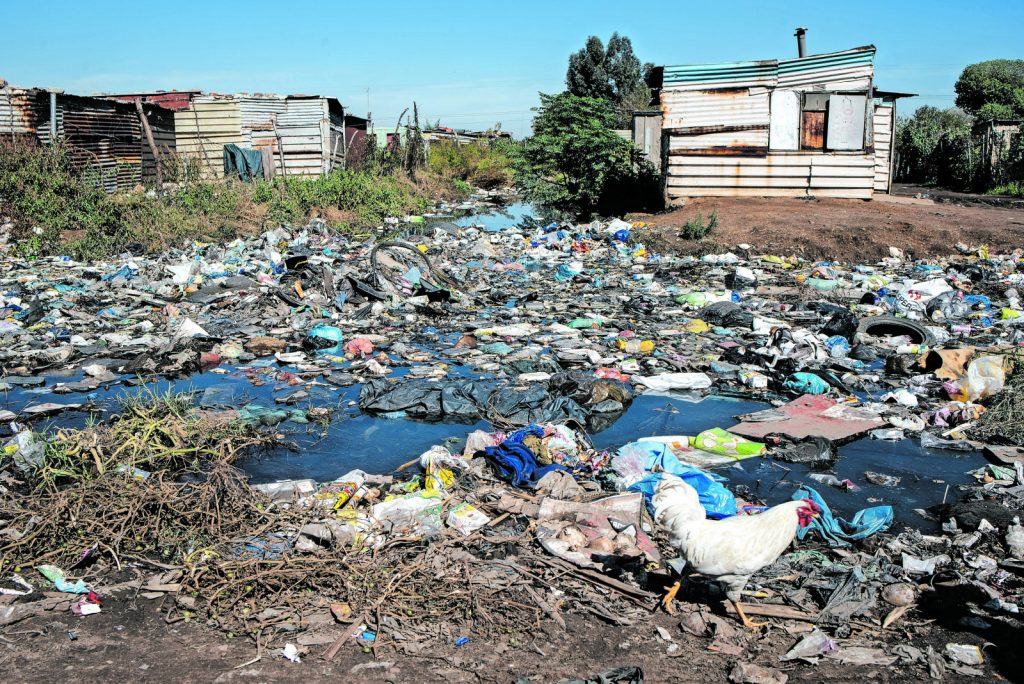
Desperate: Polluted water accumulates where rubbish blocks a stormwater drain in Bophelong township. Photos: James Puttick
Tsekiso Lefisa’s chainsaw and angle grinder gather dust on a plastic chair in his dark shack in the Bophelong township near Vanderbijlpark. Outside, the garden is a stinking sewage swamp.
With a haunted look in his eyes, the 26-year-old says he put his tools there to try to protect them from the sewage that pools on his floor. But the damage had already been done.
“This sewage has destroyed my tools and now I’m doing nothing,” he said. “For us to eat, I have to sell wood and cut grass for people. Without that, there is nothing for us. I’m the only one who is responsible for supporting my mother and my little sister, so you can imagine the stress.”
Lefisa’s mother, Mmatsekiso, who is mopping the floor of her adjoining home, remembers how it, too, was flooded with sewage in February. “We used to sleep in this dirty water,” she said, grimacing. “My daughter had to do her homework on the sofa. We couldn’t cook or clean. The smell was so bad, it would burn your nose.”
She shows how the damp is rising in her bedroom. “The foundation is full of kaka,” she said. “I’m so scared that the house will collapse when we’re asleep … This problem is much better now, but it comes back when it rains.”
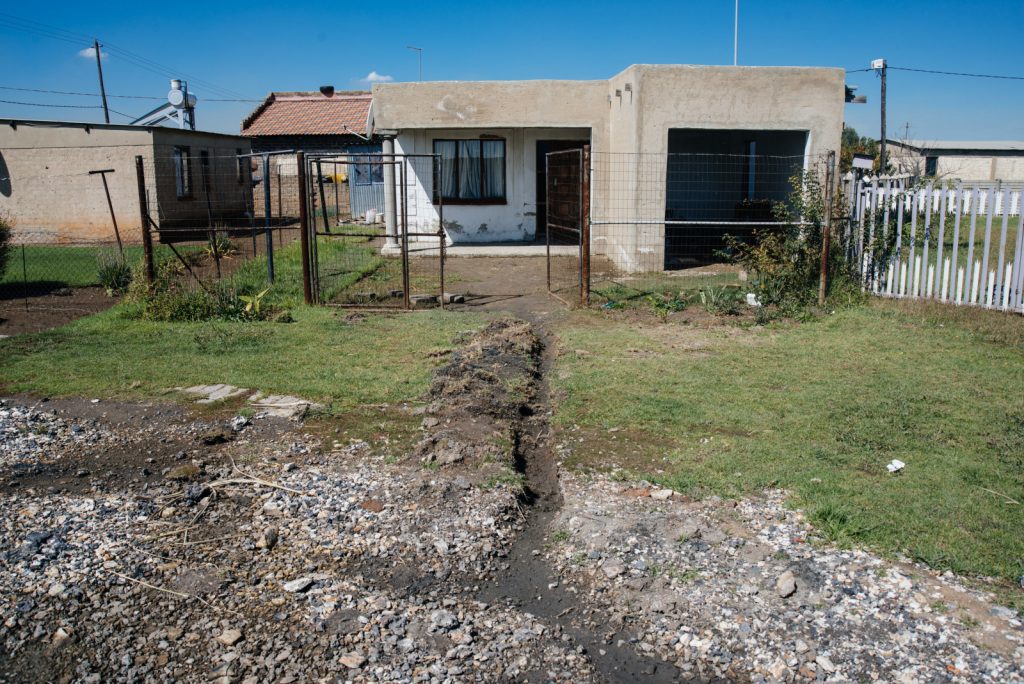 Residents had to dig ditches to divert overflowing sewage and stormwater.
In February last year, a report by the South African Human Rights Commission on the sewage contamination found that millions of litres of untreated sewage enter the “irreparably damaged” Vaal River system daily from the collapsed wastewater treatment infrastructure in the dysfunctional Emfuleni local municipality.
This affected 19-million people who rely on the polluted river for drinking, domestic and commercial use — ultimately threatening Gauteng’s water security.
In October, the department of water and sanitation appointed Rand Water to stop the pollution of the Vaal River from Emfuleni’s wastewater system in terms of Section 63 of the Water Services Act. This entitles the minister of water and sanitation, Senzo Mchunu, to take over the operation, maintenance and refurbishment of the wastewater treatment system.
Rand Water is the implementing agent for the upgrading and expansion of the Sedibeng Regional Sewage Scheme, to provide additional capacity to meet the demands of the fast-growing region, where many major development projects are underway and planned.
Elsewhere in Bophelong, Thabo Seholoba, of the Greater Bophelong Environment, Water and Sanitation Forum, sees signs of progress. Work has been done clearing and rebuilding the sewage mains and now some of the trenches that residents dug to channel sewage overflows to the road, away from their properties, run empty.
“Listen,” he said, as he inspected a newly covered drain on one resident’s property. “You can hear the water is flowing nicely. That’s what we want,” he smiled.
Bophelong residents have battled against sewage pollution for years.
“Now, there’s a proper change happening. It’s long overdue,” Seholoba said. “Before, it was only talk but now with this Section 63 intervention, there’s light at the end of the tunnel.
“They’ve changed the pipes underneath in Bophelong and the sewage has started to flow now, which is positive.
“But the contractors haven’t been here for three weeks. When this work is finished, it has to be maintained otherwise it will still be a problem.”
Mmatsekiso Lefiso’s home (left) has been intermittently flooded (above right) with raw sewage.
Mike Gaade, of Save the Vaal Environment (Save), is less optimistic. “Some work has been done to avoid people living with sewage flowing through their houses and down their streets but in the case of where there is a pump station, they’ve got no pumps to get it up to the treatment works and then when they do get it to the works, the works are not processing it, so it’s still getting discharged into the Vaal River.”
He points out that although the recent heavy rains diluted the sewage contamination of the river, “we can’t wait for heavy rains or expect heavy rains” to clear the sewage sludge in the river. Most of the 44 pump stations are not working, and even if they were, we would need to get the treatment plants working otherwise we’ll still be discharging sewage into the river.”
The manhole in Oupa Sejake’s immaculately tended garden in Bophelong is not overflowing with sewage now but it’s been a regular problem, he said quietly. “It’s terrible. All the vegetables I planted were destroyed by this dirty water. I can’t grow them anymore.”
According to Save, the total cost of the intervention has been estimated at R7.6-billion to R11-billion. Of this, R600-million is for operations and maintenance and R2.2-billion to refurbish and repair the system of pipes, pump stations and water treatment plants over the next three years.
Between October 2021 to February, Rand Water received R100-million from the Gauteng provincial government, most of which, Save said, “has been spent on unblocking pipes, resourcing Emfuleni’s water department and replacing a collapsed pipe” in Vereeniging.
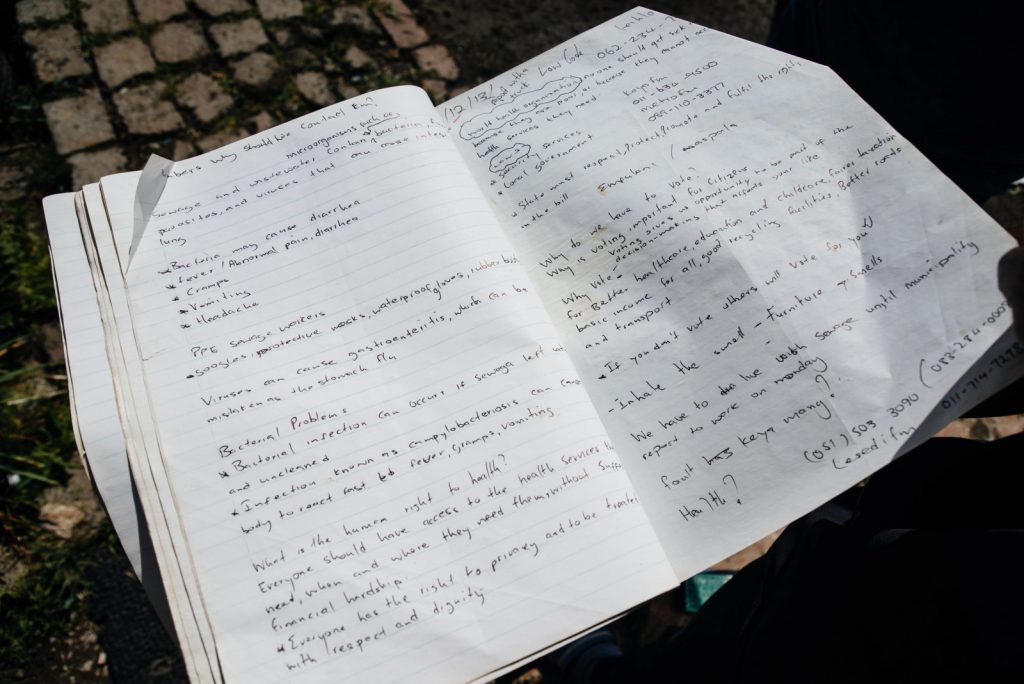 Endless battle: Tsekiso Lefisa kept a notebook of the research he conducted after his home was flooded with sewage.
“It is of concern that little or no focus has been placed on the water treatment plants except for replacing cabling, which is stolen within days of installation or even before fitment.”
The department of water and sanitation, which did not reply to the Mail & Guardian’s request for comment, is processing an application to have the wastewater system declared a national keypoint or key infrastructure. Among the major problems Save has identified are insufficient funding, theft of infrastructure by armed people and protests by job seekers.
Save is proceeding with further legal action against several respondents, including the municipality and the ministers of water and sanitation; finance; and forestry, fisheries and the environment, in the form of a structural interdict.
This, it said, is to enforce legislation and ensure the three tiers of government remain committed and accountable to the section 63 project with a planned sustained and funded maintenance programme to “avoid any recurrence of the disaster we’re living with today”.
Save maintains that the Sedibeng Regional Sewage Scheme is a long-term project that has been “stagnating” for years. In its supplementary affidavit, Save’s chairperson, Malcolm Plant, said the focus on the Sedibeng Regional Sewage Scheme and its funding have been to the detriment of the upkeep of the wastewater treatment plants — Rietspruit, Sebokeng and Leeukuil — which have “virtually collapsed” and the failure of the pipelines and pumps that supply them.
Little progress has been made on restoring the municipality’s wastewater management system. “If anything, the current position is that matters have regressed,” Plant said.
Rand Water has spent R27-million on the intervention, according to its spokesperson, Justice Mohale. “The intervention has been guesstimated at over R7-billion.
“There are many challenges that lie ahead but the biggest one is to manage the unrealistic expectation of solving a decades-long problem in a few months.”
He said Rand Water has prioritised the scope of work into resources allocation, which includes qualified, competent staff; vehicles and equipment; plumbing material and chemicals.
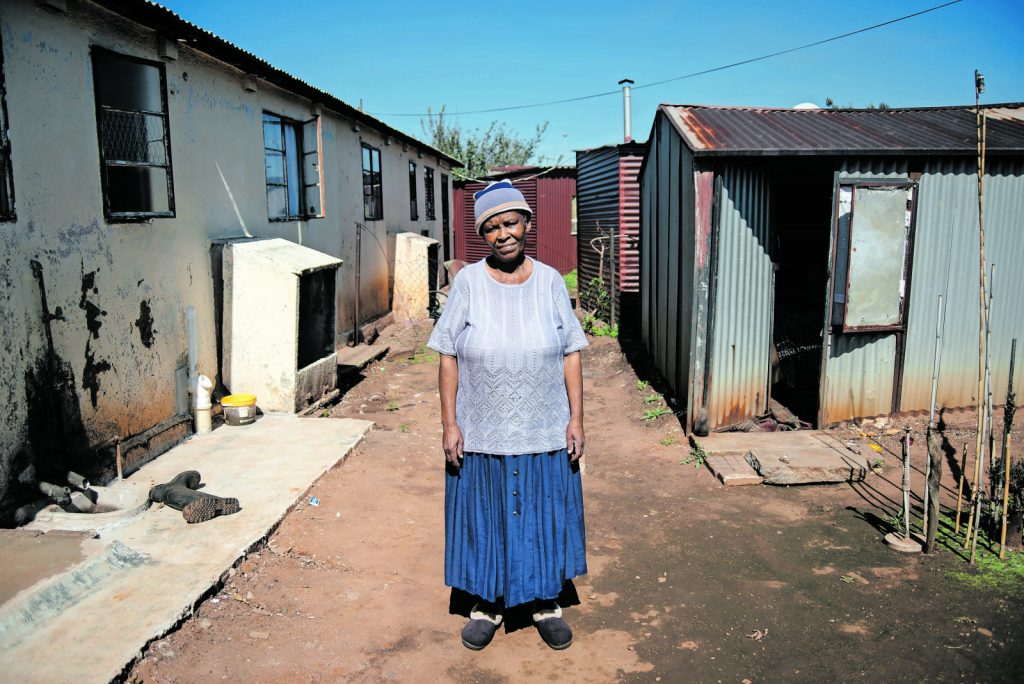 Despair: Sosi Letsela stands in her backyard, which was repeatedly flooded with sewage until the pipes outside the house were recently fixed
It has repaired water leaks and worked on Vaaloewer Water Treatment’s process optimisation and potable water quality monitoring and compliance. It has also replaced cables in the wastewater treatment plant “to put the infrastructure back to operations”.
Mohale said Rand Water’s work includes effective operations and maintenance of the Sebokeng wastewater treatment plant and water quality monitoring. Work on the collapsed sewer pipelines in Sebokeng Zone 10 has been completed and is in progress for the Union Street area.
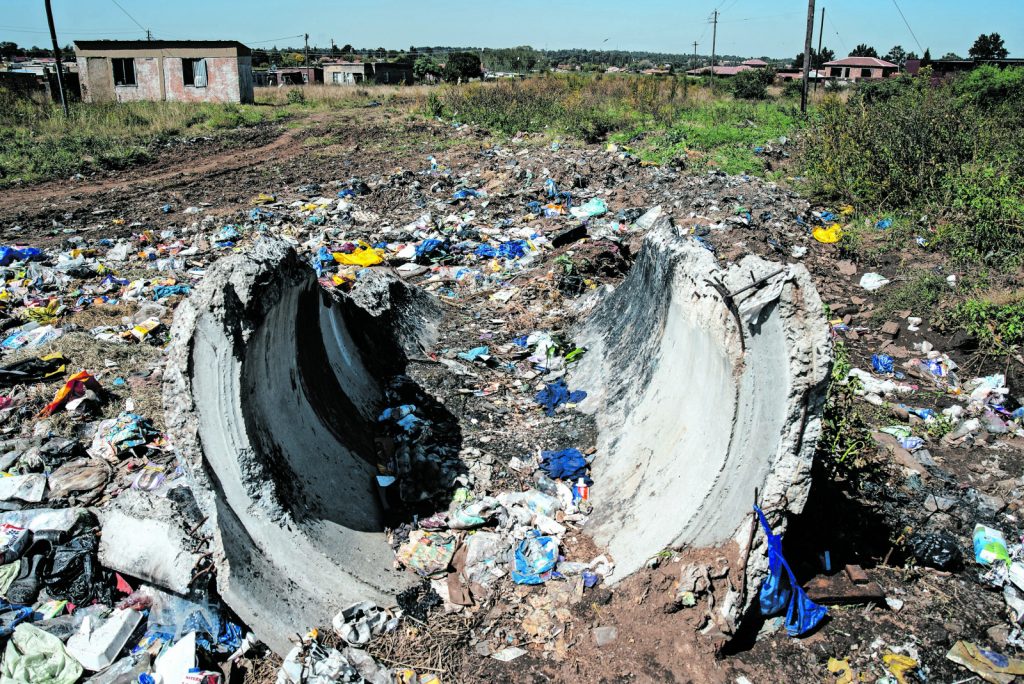 Foul: Rubbish from flooding has accumulated around a broken stormwater pipe in Bophelong township
He added that although there have been work stoppages in the past because of “community issues”, none are being experienced currently.
“Rand Water has recruited operators’ assistant who conducts day-to-day operations and maintenance of the pump stations,” Mohale said.
Back in Bophelong, Lefisa shows how he has kept a record of his battle to get the sewage problem fixed —to no avail. “I started vomiting from this sewage and there were these red worms in this dirty water in our garden. I started researching how dangerous this sewage is,” he said. “It’s not healthy to live like this.”
[/membership]