Former health minister Zweli Mkhize has been singled out by the ANC’s integrity commission but the body’s recommendations have been ignored. (Rajesh Jantilal)
The ANC’s integrity commission has come out against two national executive committee (NEC) members who have played a prominent role in president Cyril Ramaphosa administration.
In the annual report tabled by commission head George Mashamba at the last NEC meeting in July, the party elders picked apart Deputy Intelligence Minister Zizi Kodwa’s defence over his involvement with a former executive of tech company EOH and called him a liar.
The commission was also unequivocal in recommending that the NEC suspend former health minister Zweli Mkhize until such time that the Digital Vibes corruption matter is resolved. In August last year the Mail & Guardian reported that the commission had recommended that Mkhize step aside but the NEC failed to act on the ruling.
“His association with Digital Vibes and corruption are seriously damaging the organisation,” the commission’s annual report stated.
The report could not have come at a worse time for Ramaphosa and Mkhize because both have made known their intentions to run for the highest office in the ANC when the party holds its national conference in December.
Although the commission has made no findings against Ramaphosa — who is facing a slew of allegations regarding his Phala Phala farm in Limpopo — the recommendations against one of his key allies, Kodwa, will result in more scrutiny over his handling of those close to him suspected of corruption.
Mkhize will also have to fight to ensure that he does not suffer the same fate as suspended secretary general Ace Magashule, who has been cast out in the political wilderness.
The report said Kodwa had appeared three times before the commission and each time the deputy minister tried to justify unjustifiable conduct.
“His relationship with [EOH executive Jehan] Mackay and [businessman Edwin] Sodi has brought the ANC into disrepute. Zizi was found to be dishonest and lied to the IC [integrity committee]. He has denied the existence of the ethical framework, which was distributed to all NEC members. He has accepted a huge loan/gift, which does not seem to have any repayment arrangements,” the report stated.
“Since the IC first engaged with Zizi in 2019, he continues to abrogate ethical values to [an] unbridled desire for material wealth or even just personal interest, making him very vulnerable to a range of hostile and dangerous forces.”
The report details how it is working under increasingly difficult political conditions, adding that the commission had not received feedback on any one of its reports and that the NEC appears not to consider its work, “because it appears that our reports are not tabled”. Mashamba said this concern has been raised numerous times with the secretariat office and twice with the ANC’s officials.
 Named, not shamed: Deputy Intelligence Minister Zizi Kodwa (right, next to Gwede Mantashe). (Gulshan Khan)
Accusing the officials of ignoring and suppressing its work, the commission said this was the reason they decided to send reports directly to NEC members.
“Crucial issues of integrity and thus organisational renewal have been at best avoided and at worst, deliberately hidden. Failure by the NEC to discuss IC reports undermines the work of the IC and deprives the NEC of an opportunity to learn lessons from the reports which could have improved its organisational work, its approach to deployment and leadership, and the broader challenges the movement is facing.
“The IC believes that its recommendations, had they been discussed, could have served as a platform to unite our leadership and assist in organisational renewal,” the report reads.
The report also said the commission was in need of additional secretariat capacity because its administrative leg consists of three members who also have duties in the national working committee (NWC) and the NEC.
“Ten out of the 14 engagements held by the IC in 2021 dealt with issues that have badly damaged the reputation and credibility of the organisation. This reinforces the point that had the NEC seriously considered IC reports and respected the work of the IC, this could have contributed to organisational renewal and regained some of the credibility and lost support. The integrity commission is calling on the NEC to take the work of the IC with the seriousness it deserves,” the report reads.
Among those whom the commission investigated are key Ramaphosa allies David Makhura, Andries Nel, Refilwe Mtshweni-Tsipane, Tina Joemat-Pettersson, Pemmy Majodina, Khumbudzo Ntshavheni and Thoko Didiza.
Other notable names are national assembly speaker Nosiviwe Mapisa-Nqakula, ANC treasurer general Paul Mashatile, former intelligence minister Ayanda Dlodlo, former Mpumalanga MEC Mandla Msibi and ANC Mpumalanga deputy secretary Lindiwe Ntshalintshali.
Although the commission made no adverse findings against the 12 ANC heavyweights, it took a strong stance against Msibi, Kodwa and Mkhize.
Mkhize’s communication adviser Vuyo Mkhize said, “The integrity committee did, indeed, present a summary of its report on Dr Zweli Mkhize, dated 19 June 2021, but this was shelved when the NEC discovered that Dr Mkhize had lodged an appeal against same, as far back as 17 December 2021.”
Mkhize said he had sent an email to the commission to alert them of his appeal but he had not received a response.
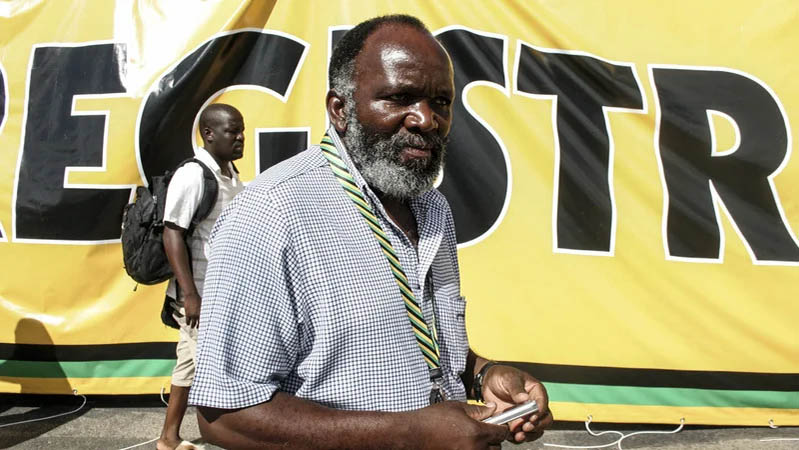 Frustrated: George Mashamba heads the ANC’s integrity commission.
The commission also came out hard against the NEC, calling for it to take responsibility for how the organisation is being run.
“It is tedious and insulting to the South African public to continually hear that we are renewing, we are sorting things out, we are changing, etc, when there is no evidence of this. The ANC is losing credibility at an alarming rate. We recommend the NEC to take time to identify and examine what mechanisms should be put in place to correct its mistakes, whereby young comrades may be given the chance to grow politically and develop into our new leadership.”
ANC spokesperson Pule Mabe responded, saying: “As you know the integrity committee reports are dealt with internally by the national executive committee once processed. There has not been anything untoward …”
He said Kodwa remained a member of the NEC and NWC. “Nothing has been brought to our attention which suggests that he will not be able to discharge his responsibilities as a member of the NEC.”
Mabe said the commission should be supported. “We have encouraged that when they are so invited by the IC they should honour such invitations … We have even made available our own admin team through the secretary general’s office.”
Although the ANC has proposed that the commission should be cemented in its constitution, calls by former presidents Thabo Mbeki and Kgalema Motlanthe to have its recommendations become binding have been ignored in the latest draft policy amendment document, which was circulated to provinces.
The ANC has proposed that it remain a recommendation-making structure but that it strengthen and fix the processes around decisions made by the NEC in relation to matters of integrity.
The committee’s recommendations come on the back of the state capture commission’s findings, where Chief Justice Raymond Zondo recommended that the president reconsider Kodwa’s ministerial position, arguing that he was beholden and financially indebted to EOH, which allegedly donated millions of rands to the ANC in exchange for City of Johannesburg tender awards.
While holding an influential position as ANC spokesperson and NEC member, Kodwa benefited from payments totalling more than R1.7‑million, including a “loan” for the purchase of a Jeep motor vehicle that he bought on 6 June 2015.
EOH-related entities and Mackay made cash payments amounting to R1.68-million to Kodwa and another R30 000 for his benefit from 2 February 2014 to 28 April 2015.
Zondo described this as an attempt by Mackay to manipulate his relationship with Kodwa to distort public procurement practices.
Kodwa told the commission that the R1-million was a loan, but the transaction reference on the business statement for the account from which it was paid described the payment as “NG Kodwa (ANC Dona-JM)”. The report said this suggested that the paying entity, Tactical Software Solutions, “had been informed that the million-rand payment was a donation to the ANC, or possibly to Mr Kodwa himself”.
In addition, companies linked to Mackay and EOH paid hundreds of thousands of rands for luxury rental accommodation for Kodwa, who told the Zondo commission he believed Mackay owned the properties.
Kodwa had also testified that the payments totalling R1.71-million were made at his request, by or on behalf of Mackay, at times when he was in “financial difficulties”.
“On his own version, Mr Kodwa has never been in a position to repay Mackay the amounts of the loans … and has not repaid any of these amounts. However, he insists they were not payments made as a quid pro quo for any assistance on his part. In particular, he denies that the payments and the luxury accommodation were in any way related to the procurement of government contracts by EOH or related companies,” Zondo stated.
Mackay had also regularly contacted Kodwa regarding “substantial donations” to be made to the ANC by the EOH group.
“Whatever the subjective intentions of Kodwa, it is clear Mackay was attempting to buy influence by making the ‘loans’ that he made to Kodwa and by providing Kodwa with luxury accommodation. He repeatedly attempted to engage Kodwa in relation to pending EOH Group tenders,” the Zondo report said.
Barely a month after Kodwa bought the Jeep, Mackay e-mailed him to ask him to “look into” the disqualification of EOH from an R360‑million department of home affairs tender. He also reminded Kodwa “to talk to the regional funding coordinator to understand what their funding requirements are”.
“This point is made here in general and not necessarily suggesting that the commission is aware of any evidence that Mr Kodwa did not influence anybody to do anything improper or unlawful … However, as deputy minister for state security, Mr Kodwa now finds himself in an impossible position,” the Zondo report said.
 (John McCann/M&G)
Kodwa is facing another investigation by parliament’s standing committee on intelligence on allegations that an intelligence slush fund was used to finance an undercover operation to investigate the Phala Phala burglary, amounting to almost R2-million a month spent on a special elite task force to guard Ramaphosa’s farm.
The commission will also investigate whether Kodwa accompanied the head of presidential protection unity, Major General Wally Rhoode, to secret meetings with the Namibian government related to the Phala Phala burglary.
Former health minister Mkhize is considered to have been influential in the KwaZulu-Natal provincial conference that took place in July.
Mkhize’s ally, Bheki Mtolo, was elected as a provincial secretary, making him a powerful player in the province ahead of the December showdown. KwaZulu-Natal is the biggest ANC province with 40 000 more members between it and the second-biggest province of Limpopo.
Mkhize retreated to his home province in August 2021 after he had to resign from his cabinet post when impropriety in two contracts awarded to Digital Vibes came to light, implicating him and his family.
Mkhize was then seen meeting regional and traditional leaders in the province in an attempt to consolidate his base. In May, Mkhize announced that he would stand for party president against Ramaphosa.
Mkhize would need the majority of the province as leverage for a position in the ANC’s top six.
At the height of his popularity during the Covid-19 hard lockdown, Mkhize found himself in the middle of the Digital Vibes corruption scandal involving some of his closest associates and family members.
A Special Investigating Unit (SIU) report said Mkhize ignored a cabinet resolution on the health department’s National Health Insurance and the Covid-19 communications strategy and paid out R150-million to his “close associates” Tahera Mather and Naadhira Mitha.
Mather was Mkhize’s spokesperson and was part of his campaign to be elected ANC president in December 2017 at the party’s Nasrec conference.
Mkhize has filed a high court application to review and set aside the SIU’s findings against him, saying in an affidavit that the unit’s conduct against him was “unlawful and unconstitutional”, and that its report accusing him of criminal conduct had “effectively ruined my reputation, my dignity and my political and professional career”.
[/membership]